
The first time I skin-seared salmon in cast iron, I understood why chefs swear by the method - that skin turns almost potato-chip crisp. This Cajun lemon pepper version layers smoked paprika and fresh zest over that crackling skin, then finishes hands-off in the oven. Fifteen minutes of prep, and it looks like you tried a lot harder than you did.
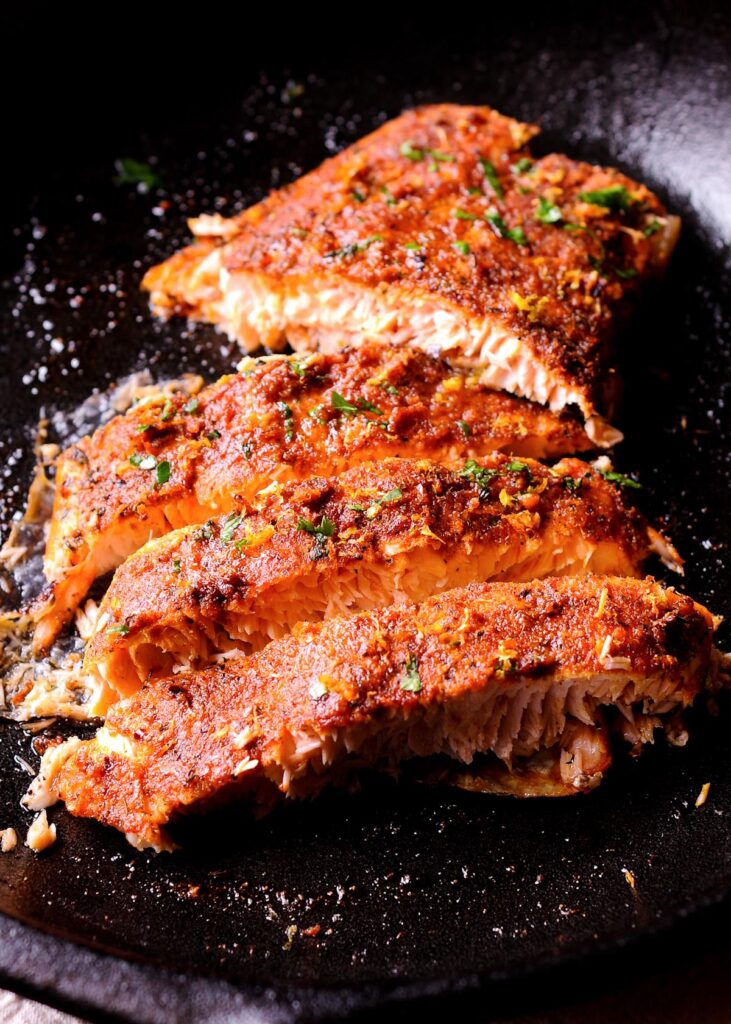
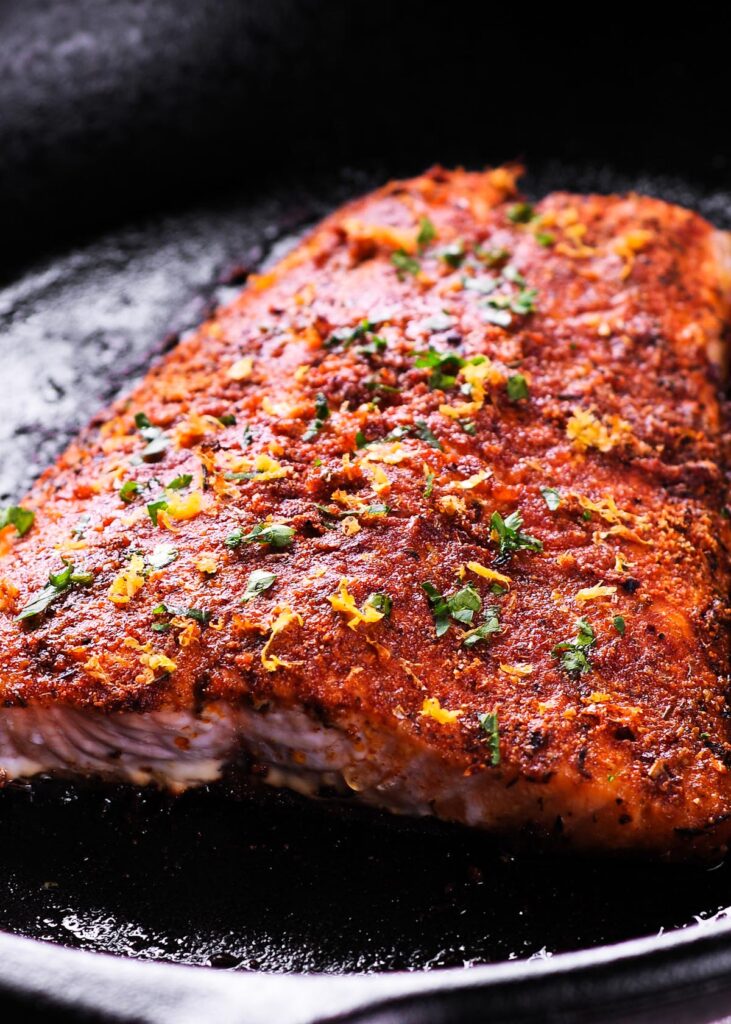
I've made this Cajun lemon pepper salmon so many times my son can smell smoked paprika from the driveway and know what's for dinner. It's a skin-on salmon fillet rubbed with Cajun seasoning, garlic, and smoked paprika, seared in a hot cast iron skillet, then finished in the oven for a crisp edge and a flaky, buttery center. Fresh lemon zest goes on right before it bakes, which keeps the whole thing bright instead of heavy. It comes together in about 20 minutes, it's naturally gluten free, and it's one of those recipes where the ingredient list looks short but the flavor doesn't taste like it. Did I mention that this Cajun salmon is gluten free and only 2g carbs per serving?
If you love bold spice on salmon, my harissa salmon quinoa is another one worth putting on rotation.
Why Cast Iron Gives This Salmon Recipe A Clear Advantage
I didn't always sear salmon skin-side down before it hits the oven. For years I just laid fillets on a sheet pan, baked them, and called it done. Then one night I was out of parchment paper, grabbed my cast iron skillet instead, and put the salmon skin-down straight into the hot pan before it went into the oven.
The skin came out crisp in a way I'd never gotten from a sheet pan - almost like a potato chip, shattering slightly when you press a fork into it. That direct contact with hot metal does something a sheet pan just can't: it renders the fat under the skin fast, so the skin dries out and crisps while the flesh above it stays moist. Once I figured that out, I stopped baking salmon any other way.
One thing to keep in mind: this recipe is built around a 1 lb fillet, so if you're working with smaller farm-raised or wild-caught portions, you'll want to shave a few minutes off the oven time. I broke down exactly how much in my salmon cook time guide.
Ingredients for Cajun Lemon Pepper Salmon
Best Salmon Cut for This Recipe
I only buy skin-on fillets for this one. The skin isn't just there for looks - a good chunk of salmon's omega-3 fat sits right under it, and leaving it on also keeps the flesh from drying out as it cooks. Skinless works in a pinch, but you lose that crisp layer entirely, and the fish tends to cook drier without it.
As for wild versus farmed, I keep both in my freezer and reach for whichever looks better at the store that week. Wild salmon runs leaner with a slightly deeper color, farmed is fattier and more forgiving if you overcook it by a minute. Either works here.
Building the Cajun Spice Rub
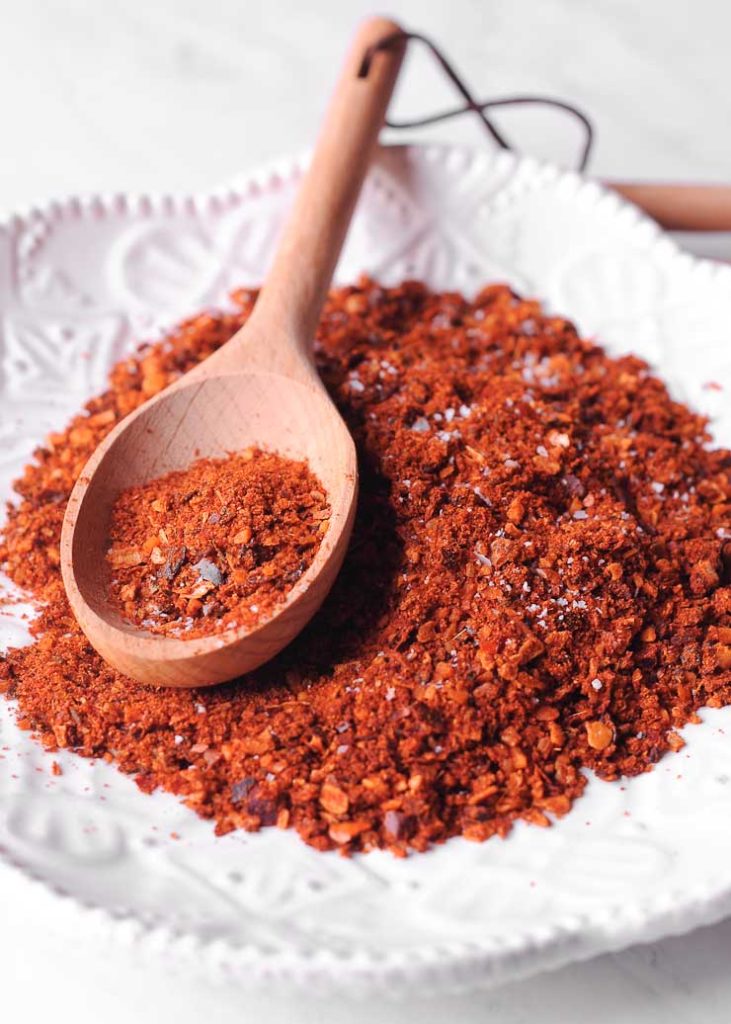
The base is Cajun seasoning and smoked paprika, then I add garlic powder, onion powder, and black pepper on top of that. Smoked paprika is doing more work than people give it credit for - it's what gives the crust that deep red-brown color and a faint smokiness that plain paprika just doesn't have.
If you only have Creole seasoning in your pantry, swap it in one-for-one for the Cajun blend. They overlap enough that you won't notice a big difference. Sweet paprika will work too, but the flavor comes out milder and the color is more orange than red.
How to Cook Salmon in a Cast Iron Skillet
Searing the Skin First
This is the step most Cajun salmon recipes skip entirely, and it's the one that matters most. Get your skillet hot, add oil, and lay the salmon skin-side down for a couple of minutes before it ever sees the oven. That short sear is what starts the crisping process - skip it and go straight to baking, and you'll get soft, rubbery skin instead of something with actual crunch.
Add Lemon and Seasonings
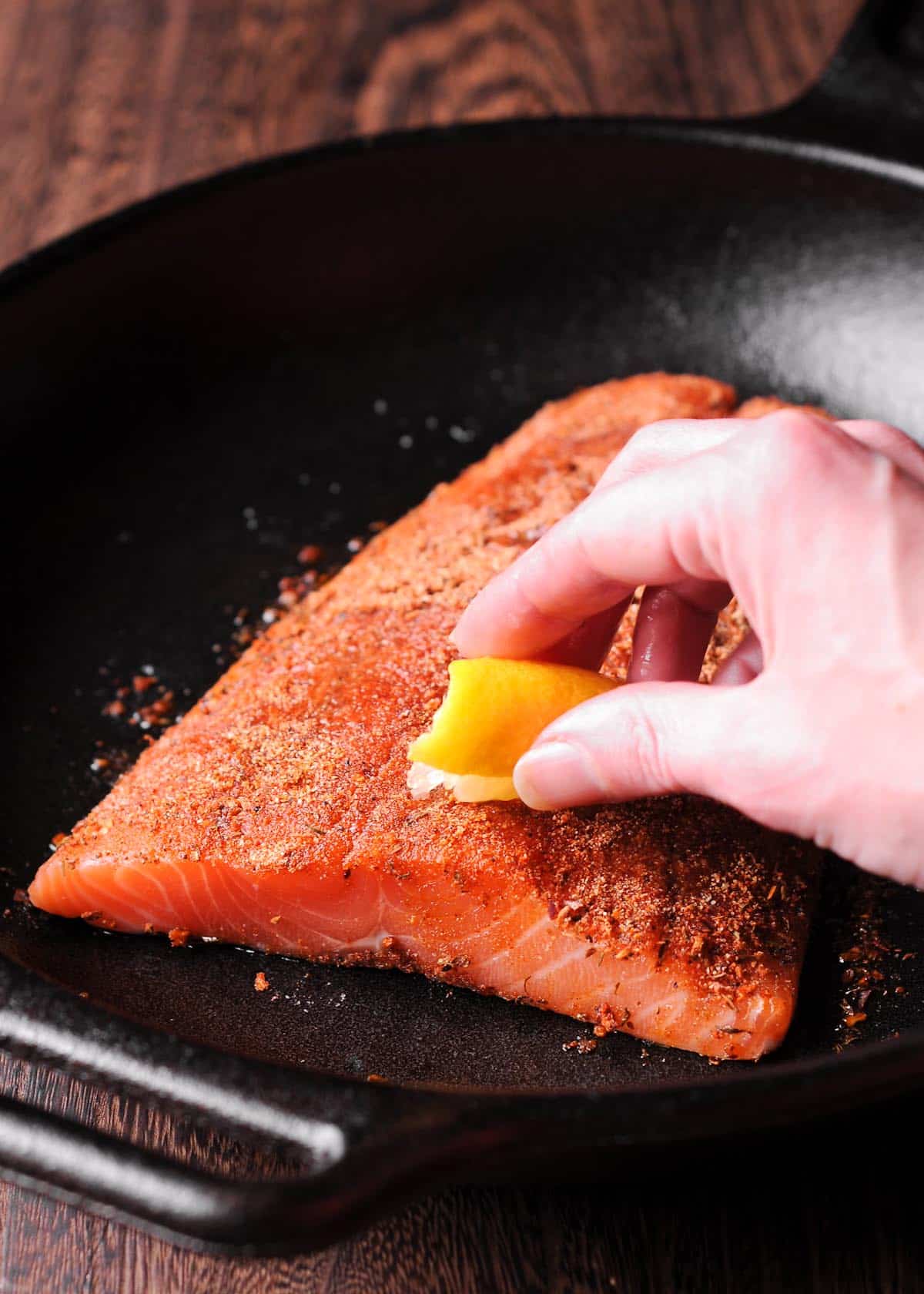
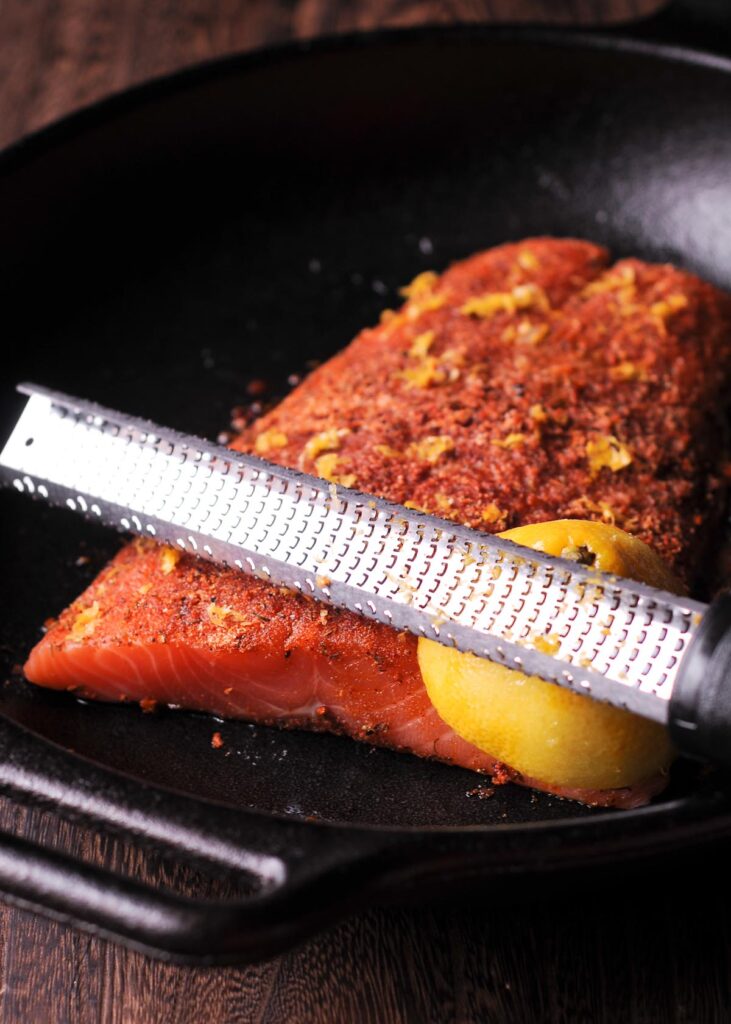
Add lemon juice and lemon zest on top of salmon surface and generously season with the Cajun seasoning rub.
Finishing in the Oven
Once the skin has had its head start in the skillet, the whole pan goes into a 425°F oven for the rest of the cook. This is where the fillet finishes gently, so the inside stays flaky and moist while the skin keeps crisping from the residual heat of the pan underneath it. Twenty to twenty-five minutes and it's done - no flipping, no babysitting.

Cajun Lemon and Pepper Salmon
Ingredients
- 1 lb. salmon fillet (skin on, boneless)
- 2 tablespoons extra virgin olive oil
- ¼ teaspoon salt
Seasoning Blend:
- 1 teaspoon Cajun or Creole seasoning
- 1 teaspoon garlic powder
- 1 teaspoon onion powder
- 1 teaspoon smoky paprika
- Black Pepper to taste
- ¼ lemon (zested, juiced)
- Italian parsley (for garnish)
Instructions
- Preheat oven to 425 degrees.
- Mix seasoning blend together.
Sear
- Rinse salmon and pat dry. Add 1 tablespoon olive oil to the skillet and place salmon in the skillet skin side down. Add 2nd tablespoon olive oil and sear the skin until browned, about 3-5 minutes
Season
- Season with salt and rub seasoning blend into salmon's surface.
- Top with lemon juice and zest.
Bake
- Bake at 425 for 20-25 minutes.
- Remove from oven, top with parsley and serve with extra lemon zest and garnish with finely chopped Parsley.
Notes
- Let your skillet fully preheat before the salmon goes in, a cold pan is the main reason skin doesn't crisp properly
- Pat the fillets completely dry before seasoning, any surface moisture will steam the skin instead of crisping it
- Don't move the fillet once it's skin-down in the pan, let it sit undisturbed so the skin can seal against the metal
- Use a fish spatula or thin metal spatula when transferring the skillet, cast iron handles get just as hot as the pan
Various Salmon Filets I tested
How to Make Cajun Salmon Rub
- First, you will mix Cajun seasoning and paprika.
- Next let's add garlic and onion powders, as well as black pepper.
- You can also use Creole seasoning and regular, smoked, or Chipotle Paprika. Depending on what kind of paprika you use, the color can range from a bright orange-red to a deep blood red. And the flavor can be anything from mild to bitter and hot.
Serving and Storage Tips
I usually pull the skillet straight from the oven to the table since cast iron holds heat so well, dinner stays warm even after everyone's gone back for seconds. A scatter of fresh chopped parsley and a squeeze of extra lemon right before serving wakes the whole dish back up. This salmon pairs well with something simple on the side since the spice rub is already doing a lot of the flavor work, I go with steamed rice, a green salad, or roasted vegetables most nights.
For leftovers, let the salmon cool completely before moving it to an airtight container, then refrigerate for up to 3 days. I don't recommend freezing this one since the texture of the skin suffers badly once it thaws, it goes from crisp to soggy almost immediately. To reheat, a low oven around 275°F for about 10 minutes keeps the inside from drying out, the microwave works too if you're not fussy about the skin staying crisp.
Yes. Smoked paprika gives the deepest color and a faint smoky note, but regular or chipotle paprika both work here too. Chipotle paprika will push the flavor spicier and slightly bitter, so start with a little less if you're using that swap.
You don't have to, but I think it's worth the extra two minutes. Skipping the sear and going straight to the oven still cooks the fish through fine, you just lose the crisp texture on the skin that makes this version stand out.
It'll still work. You'll miss out on that crackly skin texture, and the fillet may cook slightly faster since there's no skin insulating it, so start checking for doneness a couple minutes early.
Yes, it comes in at under 2 grams of carbs per serving, which makes it an easy fit if you're watching carbs or eating low-carb or keto.
Quick Tips for the Best Cast Iron Salmon
- Bring salmon closer to room temp (10-15 minutes): Cold fillets straight from the fridge tighten up in the oven and cook less evenly. Taking the chill off helps the center cook at the same pace as the outside.
- Thickness matters more than weight: A thick center-cut fillet can take closer to 25 minutes, while thinner tail pieces may be done in 15-18. Keep an eye on thickness, not just the clock.
- Don't drown it in lemon juice: A light squeeze before baking and a little zest is enough. Too much liquid can soften the spice crust and interfere with browning.
- How to tell when it's done without guessing: Press gently on the top with a fork - the layers should separate easily but still look slightly glossy in the center. If it flakes apart dry, it's gone a bit too far.
- If your spices start to darken too fast: Tent loosely with foil during the last few minutes of baking. This protects the paprika and garlic from turning bitter while the inside finishes cooking.
- No cast iron? Here's the workaround: Preheat a sheet pan in the oven first, then place the salmon skin-side down on the hot surface. It won't be quite the same, but you'll still get some crisping underneath.
- Scaling the recipe: Give each fillet space. Crowding the pan traps steam, which works against that crisp skin you're aiming for.
More Salmon and Seafood Recipes
If Cajun lemon pepper salmon is on your dinner rotation now, here are a few more seafood recipes from my kitchen worth trying next:


Karina says
I've made this several times and we usually eat it with veggies. My favorite go to veggie here is asparagus.
Olya Shepard says
Love asparagus and salmon!
allan says
Cooking time seems long with normal filet thickness. Don't want to dry it out. Cooked mine for 10 minutes on convect 425 then used a torch to sear.
Julian says
Cook for however you wish I guess
Olya Shepard says
The cooking time is for thick salmon filet that is wild caught. If yours is farmed and smaller, I listed the adjustments that can be made.
Steve Schad says
Louisiana Remoulade Sauce on top of the salmon after cooking added an extra flavor.
Olya says
Those two make a perfect combo!
Lucy says
What side dishes go well with this fish?
Olya says
I would go with this Asparagus with Bacon and Asiago dish or Green Beans.
Kelli Douwes says
Do you cook this uncovered?
Olya says
Yes, uncovered.
Ginny says
I made this Salmon and it was delicious!
Charm says
will it be ok if i use king salmon and not the pink salmon?
Olga at Whatsinthepan says
Yes, both king salmon and pink salmon will cook very quickly.
Ariele says
Made the salmon with some steamed broccoli so good
Olivia says
So good and easy. I used little bit more of creole seasoning.