
This is my go-to shrimp pasta when I want something that feels like it came from a restaurant kitchen, but I'm still standing at my own stove on a Tuesday. Juicy seasoned shrimp, golden mushrooms, and fettuccine all get tossed in a savory mushroom garlic sauce spiked with white wine and basil pesto. No heavy cream needed - the sauce gets its richness from the mushrooms, the pesto, and a good glug of Parmesan.
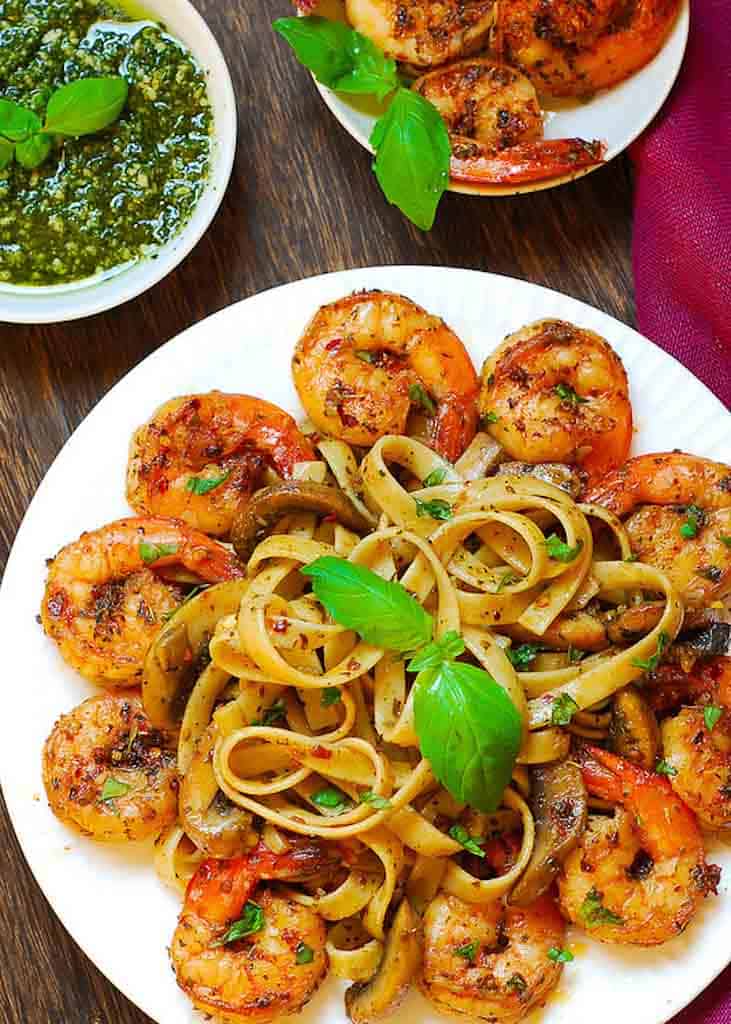
Hand on heart, this is the pasta I make on the nights I've spent all day thinking about what else to cook for the blog and genuinely don't want to think about dinner anymore. It comes together fast enough that I don't have to choose between "easy" and "actually good."
📝 Pesto Shrimp Pasta Summary
✅ Prep Time: 10 minutes
⏲️ Cook Time: 20 minutes
🍽️ Serves: 4
💰 Cost: ~$18 total (about $4.50 per serving)
👨🍳 Skill Level: Easy
🍷 Wine Used: Pinot Grigio (dry white)
📦 Equipment: Large skillet, pasta pot
The sauce gets its richness from browned mushrooms, a splash of wine, and a good spoonful of pesto and Parmesan - no cream, no fuss, just big flavor built right in the skillet. 🧄🍄
💬 Why You'll Love This Pesto Shrimp Pasta
- Tastes like a restaurant dish but comes together in one skillet in 30 minutes 🍷
- No heavy cream, yet the sauce is still rich and silky ✨
- Fancy enough for date night, easy enough for a Tuesday 🎉
- Pesto and Parmesan work together well, so the ingredient list stays short 🌿
- Leftovers reheat beautifully with a splash of broth 🍲
This has become one of my go-to shrimp pastas, right alongside Cajun Stuffed Shrimp and Hawaiian Shrimp when I want something quick but still feels special. 🦐 If you love shrimp dinners as much as I do, my full shrimp recipe collectionhas plenty more where this came from.
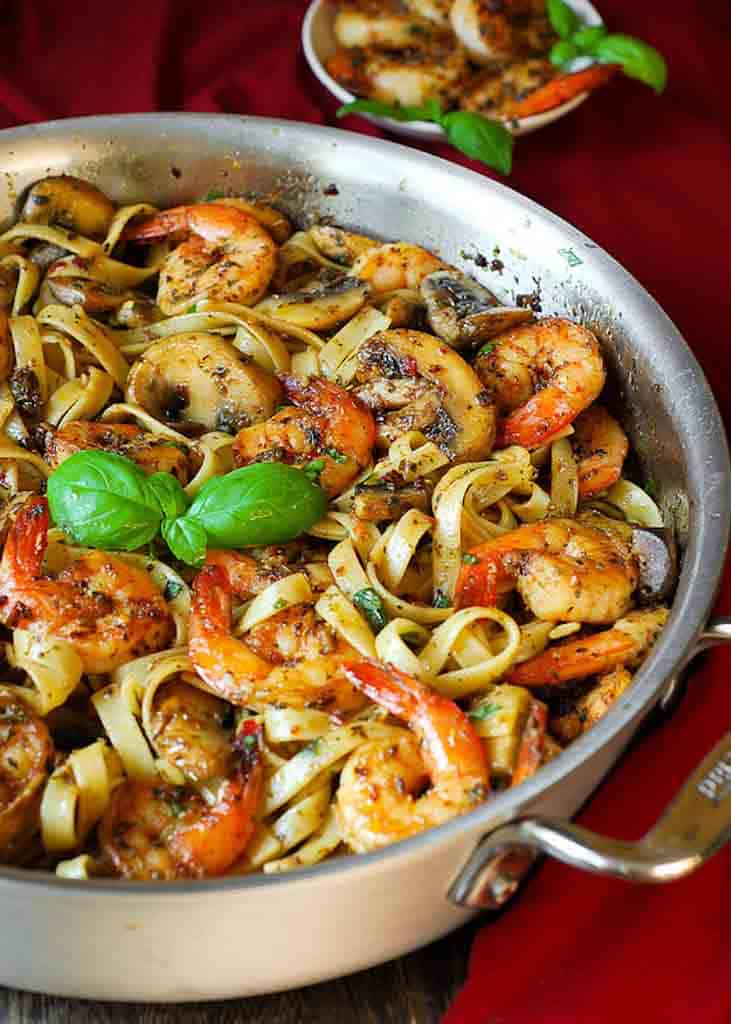
Ingredients in Pesto Shrimp Pasta
1. For the shrimp and mushrooms
- Shrimp - Fresh or frozen both work here, just thaw completely and pat very dry before it goes anywhere near the pan. Wet shrimp steams instead of sears, and you lose that golden color you're after.
- White mushrooms - Sliced and browned in the same skillet the shrimp came out of, so they pick up all that flavor left behind. Give them space in the pan and don't touch them for a couple of minutes - that's what gets you the caramelized edges.
- Garlic - Added late, once the mushrooms are browned. Garlic burns fast and turns bitter, so it only needs about 30 seconds in a hot pan.
- Seasonings - Salt, Italian seasoning, paprika and a pinch of red pepper flakes on the shrimp. Nothing fancy, but it makes a real difference against the richness of the sauce.
2. Mushroom garlic pesto sauce
- Dry white wine - I always use Pinot Grigio because it's inexpensive and does exactly what I need it to do here: deglaze the pan and lift up all those browned bits stuck to the bottom. Chardonnay or Sauvignon Blanc work just as well if that's what's open. I get into that in my guide to cooking with wine for Italian food.
- Chicken broth - This thins the sauce out just enough so the pesto and wine turn into something you can actually toss pasta in, rather than a paste.
- Basil pesto - The heart of the whole sauce. Store-bought is completely fine, though a good-quality one with real basil and Parmesan makes a noticeable difference here. I use ⅓ cup - enough to flavor the sauce without turning the whole dish green.
- Parmesan - Stirred in at the end, off direct heat, so it melts smoothly instead of clumping or turning greasy.
- Fettuccine - I like a wide ribbon pasta here because it holds onto the sauce so well. Linguine works too if that's what's in the pantry.
Step-by-Step: How to Make Pesto Shrimp Pasta
This is an overview with step-by-step photos. Full ingredients, measurements & instructions are in the recipe card below.
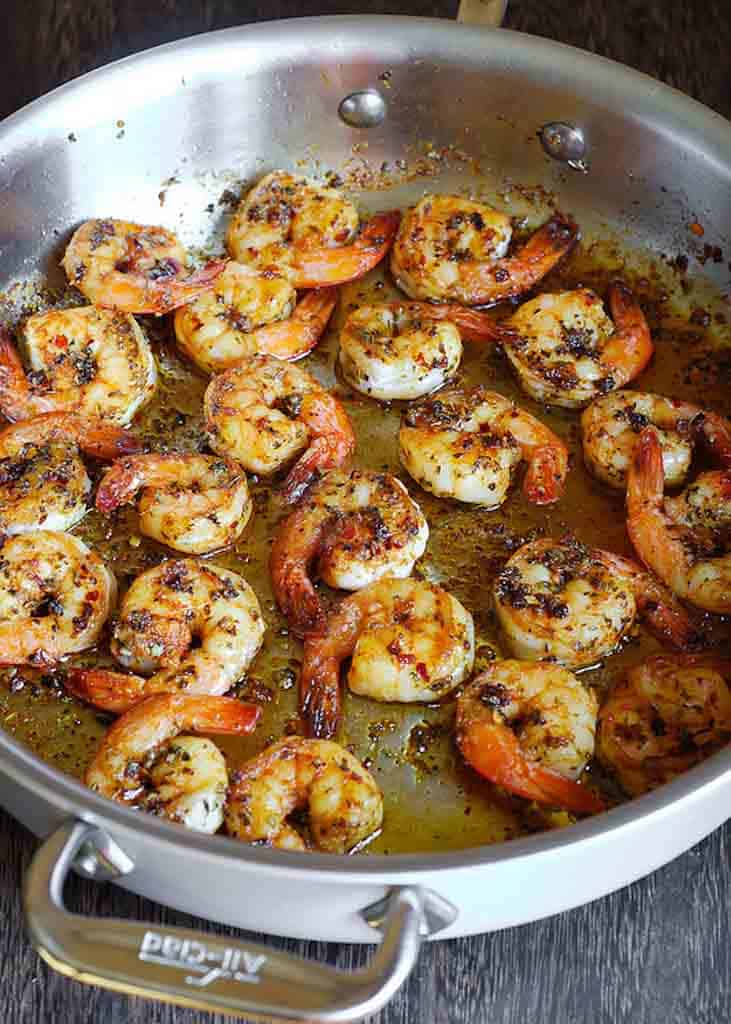
1. Season and Sear the Shrimp
- Toss shrimp with a simple seasoning mix of salt, Italian herbs, paprika, and red pepper flakes. This adds flavor before cooking and enhances that golden sear.
- Heat olive oil in a large skillet and add shrimp.
- Cook just until they turn pink and opaque-about 2-3 minutes per side. Remove and set aside.
2. Sauté the Mushrooms
In the same skillet, add a bit more oil and the mushrooms. Let them sit for a couple of minutes without stirring to achieve that golden crust. Sprinkle lightly with salt to help them release moisture.
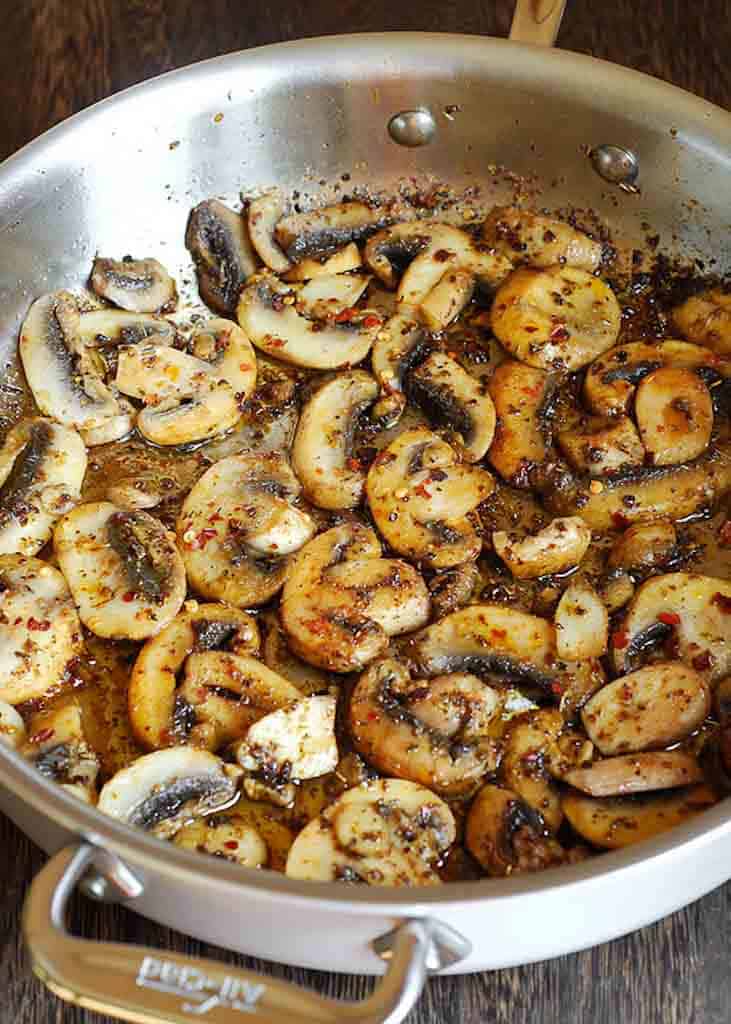
3. Add Garlic, Wine, and Broth
Once mushrooms are browned, stir in minced garlic and let it cook briefly until fragrant. Pour in white wine to deglaze the skillet, scraping up the browned bits. Add the broth and reduce slightly.
4. Stir in Pesto, Parmesan and Shrimp
Add the pesto to the pan, stirring gently to combine. Add Parmesan and return the shrimp to the skillet and toss in the sauce over medium heat until heated through.
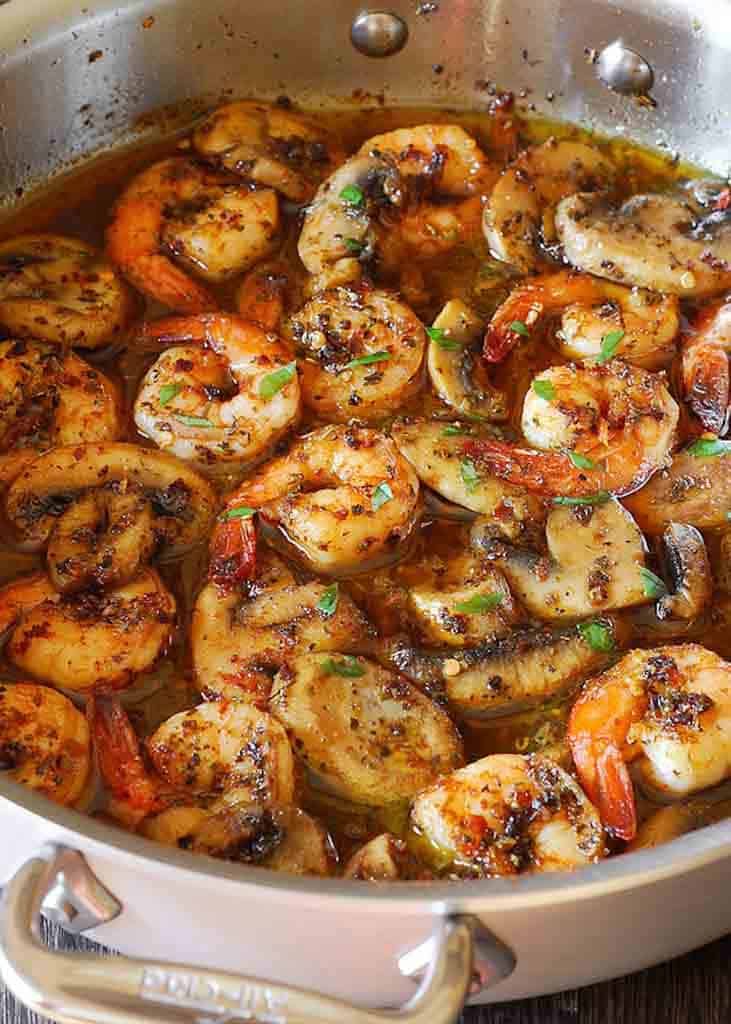
5. Combine with Pasta
Add cooked pasta (make sure to Cook Pasta Al Dente) to the skillet and toss until it's fully coated in the pesto sauce. If the sauce feels too thick, add a small splash of pasta water to loosen it.
Pesto Shrimp Pasta in Mushroom Garlic Sauce
Ingredients
Main Ingredients:
- 2 tablespoons olive oil
- 1 lb shrimp (peeled and deveined)
- 10 oz white mushrooms (sliced)
- ⅓ cup basil pesto
- ½ cup Parmesan Cheese grated
- 4 garlic cloves (minced)
- 2 teaspoon garlic powder
- 1 teaspoon onion powder
- ¼ cup dry white wine (plus more if needed)
- ½ cup sodium free chicken broth (adjust salt if not sodium free)
- ¼ teaspoon salt
Seasoning Mixture:
- 1 teaspoon Italian Seasoning (thyme, oregano, basil - combined)
- ¼ teaspoon red pepper flakes
- 1 teaspoon paprika
- ½ teaspoon salt
- chopped fresh basil
Pasta:
- 10 oz fettuccine pasta (use gluten free for gluten free version)
Instructions
- Heat 1 tablespoon of olive oil in a large skillet over medium heat. Put shrimp in a mixing bowl and rub in seasoning mixture.
- Mix well to make sure shrimp is coated well. Add to the hot pan and cook for about 2-3 minutes on each side, turning once midway, until shrimp is pink and cooked through. Remove shrimp from the skillet.
- Add second tablespoon of olive oil to the skillet. Once the pan is hot, add sliced mushrooms and ¼ teaspoon of salt and cook, stirring, until mushrooms release liquid and reduce in volume and get soft, for about a minute or two.
- Add minced garlic for the last few minutes, when mushrooms are almost ready. Next add wine, onion and garlic powders. Cook for 1-2 minutes and then add back the cooked shrimp.
- Add pesto and parmesan, and stir. Finally, add the stock and allow to reduce, about 2 to 3 minutes.
- In the meantime, bring a large pot of water to boil, add pasta and cook it according to instructions. Drain the pasta, but do not rinse.
- Add pasta to the skillet and stir until pasta is fully coated in sauce.
- Allow to warm for 2 minutes, and then portion and serve. Season with more salt and additional red pepper flakes, if desired.
Video
Tips for the Best Shrimp Pasta Every Time
- Don't overcook shrimp. Shrimp cooks quickly and as soon as the flesh changes from opalescence to opaque, they're done. It should be only 2 or 3 minutes depending on the size.
- Use a large pan: For both shrimp and mushrooms, a wide cooking surface helps achieve even browning.
- Preheat the pan before adding the oil and shrimp and don't over crowd the pan with shrimp or mushrooms
- Avoid tossing pesto in the same pot used for boiling pasta; the residual heat can scorch the basil and break the sauce. Instead, transfer the pasta to a mixing bowl before adding the pesto.
- Temperature control tip: Always mix pesto off the heat and never reheat pesto pasta on the stove or microwave, which can cause greasiness and blackened basil. Keep in mind that both Basil and Parmesan are temperature-sensitive-high heat causes separation and discoloration.
- Add a bit of salt to the mushrooms as you cook them.
- Resist the urge to move the mushrooms too soon. You want to get a little browning on the mushrooms by cooking them undisturbed for about 2 minutes.
- Add garlic late: This prevents it from burning and turning bitter.
- Deglaze effectively: Use wine or broth to lift those flavorful browned bits from the pan-this forms the base of your sauce.
Troubleshooting Common Issues
- Shrimp too tough? Shrimp cook in minutes - remove as soon as they turn opaque.
- Sauce too thick? Add a touch of pasta water or broth to loosen it.
- Sauce too thin? Simmer uncovered for a few extra minutes to reduce.
- Lacking flavor? A small squeeze of lemon or a pinch more salt can wake up the sauce.
How much pesto should I use in pesto shrimp pasta?
For this pesto shrimp fettuccine recipe, ⅓ cup of basil pesto strikes the perfect balance - it flavors the sauce without overwhelming the mushroom garlic base or turning the pasta too green. If you prefer a lighter pesto flavor, you can go as low as ¼ cup and still get a delicious result. The white wine and chicken broth dilute the pesto into a well-rounded sauce rather than a heavy coating.
What is the best shrimp seasoning for pasta?
The best shrimp seasoning for pasta is a simple blend of Italian seasoning, paprika, red pepper flakes, and salt. This combination adds warmth and depth without overpowering the basil pesto. Coat the shrimp well before searing so the spices form a light crust that locks in flavor as the shrimp cooks.
How do I keep shrimp from getting rubbery in pasta?
The secret is to never overcook your shrimp. Shrimp cooks in just 2 to 3 minutes - the moment the flesh turns from translucent to opaque and pink, it's done. Remove the shrimp from the pan immediately, then add it back at the very end just to reheat. Overcooked shrimp turns rubbery because the proteins seize up - pulling it early and finishing it in the sauce keeps it tender.
What kind of white wine is best for pesto shrimp pasta?
Use a dry white wine you'd enjoy drinking - Pinot Grigio is ideal because it's light, affordable, and its citrusy acidity cuts through the richness of the pesto. Chardonnay or Sauvignon Blanc also work beautifully. Avoid cooking wine, which is loaded with sodium and lacks the actual wine flavor needed to properly deglaze the mushroom garlic sauce.
How much white wine do I need for this recipe?
You only need ¼ cup of dry white wine to deglaze the pan and lift all the savory bits from the mushrooms and garlic. You can use up to ½ cup if you want a more pronounced wine flavor in the sauce. The wine cooks off quickly, leaving behind a subtle brightness that balances the pesto.
Can I substitute the fettuccine in this recipe?
Yes - linguine, spaghetti, or pappardelle all work well as substitutes for fettuccine in this pesto shrimp pasta. For a gluten-free version, simply swap in your favorite gluten-free fettuccine or rice noodles; the sauce clings just as well. Avoid very thin pasta like angel hair, as it won't hold up to the weight of the mushroom garlic sauce.
Can I make pesto shrimp pasta ahead of time?
This dish is best served fresh and hot, straight from the pan. If you need to prep ahead, cook the shrimp and mushroom garlic sauce separately and refrigerate for up to 2 days; boil fresh pasta when ready to serve. Reheat the sauce gently on low heat with a splash of chicken broth to loosen it before tossing with the pasta.
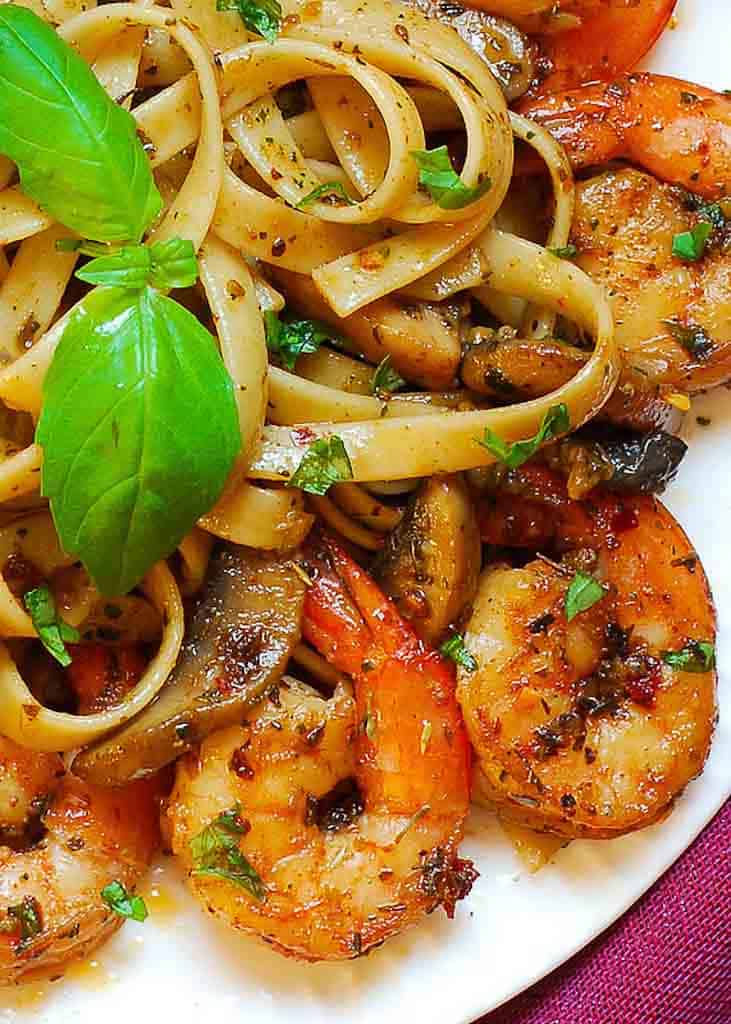
How to Keep Shrimp Juicy (and Avoid Overcooking)
- Cook shrimp separately: Make the pesto sauce and pasta first, then add shrimp at the endso it only reheats gently in the sauce instead of overcooking.
- Know the timing: Shrimp need just 2-3 minutes per side until they turn pink and opaque. Once they curl slightly into a "C" shape, they're done.
- Avoid crowded pans: Overcrowding traps steam and prevents searing, leaving shrimp pale and watery. Use a hot skillet in a single layer.
- Pat shrimp dry before cooking: Moisture is the enemy of clean browning-it can cause steaming instead of searing.
- Skip reheating: Reheating cooked shrimp leads to toughness. If making ahead, store shrimp separately and toss them in just before serving for heat and freshness.
How to Prevent Oily or Clumpy Pesto Pasta
The number-one fix for oily or dry pesto pasta is using starchy pasta water. The starch helps the pesto bind to the noodles, creating a glossy emulsion instead of separating into oil and solids. Before draining, reserve at least one cup of starchy water and add it gradually while tossing the pasta with pesto until smooth and creamy.
Avoid overheating or boiling pesto; it will separate and turn oily.
Tip: Add the pesto to warm-not hot-pasta, then toss with a few tablespoons of pasta water at a time. The starch thickens and prevents the oil from pooling.
What to Serve With Pesto Shrimp Fettuccine
- Dutch oven bread or crostini for mopping up the sauce
- Blackberry and Avocado Salad with a light lemon vinaigrette
- Honey Roasted Carrots or a bowl of Spicy Sweet Potato Soup alongside it
- A chilled glass of Sauvignon Blanc or Pinot Grigio, since you'll already have the bottle open for the sauce
Variations and Substitutions
- Protein swaps: Try chicken, scallops, or tofu instead of shrimp.
- Add cream: For a richer sauce, stir in a splash of heavy cream or half-and-half after the pesto.
- Use other vegetables: Spinach, cherry tomatoes, or asparagus add color and nutrition.
- Gluten-free option: Use your favorite gluten-free pasta.
- Dairy-free pesto: Choose vegan pesto or make your own using nutritional yeast instead of cheese.
Storage and Leftovers
- Refrigerate: Store pesto shrimp pasta leftovers in an airtight container up to 3 days.
- Reheat: Warm gently in a skillet with a splash of water or broth to restore the sauce.
- Freeze: Not recommended, as shrimp can toughen when reheated.
Storage and Reheating Tips
- Never reheat pesto pasta on direct heat. Instead, let it sit at room temperature and stir in a spoonful of olive oil or warm water before serving.
- For meal prep, keep pesto separate and toss with warm pasta just before eating to preserve texture and color
More Easy Shrimp Pasta Recipes to Enjoy
- Creamy Cajun Shrimp and Sausage Pasta
- Shrimp and Pancetta Pasta
- Lemon and Herb Shrimp Orzo
- Instant Pot Orzo with Shrimp, Tomatoes and Feta


Darlene says
I love pesto and use it on almost anything, but I've never used it with shrimp. I really like it with shrimp and the pasta just gets coated in the sauce so perfectly - so yummy!
Carolyn Darling says
Oh my goodness, just tried this and YUM!!!!
Olya says
Yum is what I like!