If you tried this recipe I would love to see it!Tag me on Instagram @whatsinthepanblog
Oven Brisket with Coffee Dry Rub
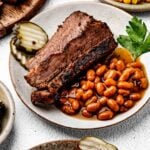
This oven brisket is a small, 2-pound brisket coated in a coffee and brown sugar dry rub, braised in beef broth, and finished uncovered for a dark, caramelized bark. The coffee adds depth and makes the beef taste richer without making it taste like coffee, and a small brisket is much easier to manage than a backyard-sized one. Slice it against the grain, spoon over the pan juices, and serve.
Servings: 4
Equipment
- Small mixing bowl
- Measuring spoons
- Dutch oven or oven-safe roasting pan with a tight-fitting lid
- Tongs
- Foil
- Instant-read thermometer
- cutting board
- Sharp slicing knife
- paper towels
Ingredients
For the Brisket
- 2 lb beef brisket, preferably flat cut
- 1 tablespoon oil
- 1 cup beef broth
- 1 tablespoon Worcestershire sauce
For the Dry Rub
- 1 tablespoon finely ground coffee
- 1 tablespoon packed light brown sugar
- 2 teaspoons smoked paprika
- 1 ½ teaspoons kosher salt
- 1 teaspoon garlic powder
- 1 teaspoon onion powder
- 1 teaspoon chili powder
- 1.2 teaspoons freshly ground black pepper
- ½ teaspoon ground cumin
- ¼ teaspoon cayenne pepper
Instructions
Make the Rub and Season the Brisket
- Grab a small bowl and stir together the coffee, brown sugar, smoked paprika, salt, onion powder, chili powder, black pepper, cumin, garlic powder, and cayenne. Give it a good mix, so all those little bits of seasoning are evenly distributed.
- Give the brisket a good little pat down with paper towels so the outside is nice and dry. This little step matters because you want the outside nice and dry so the seasoning has something to grab onto. Dress the brisket with olive oil, and rub it all over. Sprinkle the dry rub generously over every side, pressing it into the meat as you go. If you have a few extra minutes, let the seasoned brisket sit at room temperature while the oven heats up.
Cook the Brisket
- Preheat your oven to 300°F. Place the seasoned brisket in a Dutch oven with the fat side facing up. Pour the beef broth and Worcestershire sauce around the brisket rather than directly over the top. We work way too hard on that rub to wash it away! Cover the pot tightly with the lid.
- Slide the covered brisket into the oven and let it cook for about 3 to 4 hours. Start checking it around the 3-hour mark. You’re looking for the brisket to become very tender, and a fork or thermometer probe should slide into the meat with very little resistance. For brisket, tenderness matters more than simply getting to a particular temperature. A finished brisket will generally be around 195°F to 205°F internally, but don’t pull it just because the thermometer says a number if the meat still feels tough.
- Once the brisket is tender, carefully remove the lid. If you’d like a darker, more pronounced bark, turn the oven up to 425°F and return the uncovered brisket to the oven for about 10 to 15 minutes. Keep an eye on it because that brown sugar in the rub can go from beautifully caramelized to too dark pretty quickly.
Rest and Slice
- Take the brisket out and transfer it to a cutting board. Tent it loosely with foil and let it rest for about 30 minutes. I know, waiting is the worst part. But this is one of those times when giving the meat a little breathing room really does make a difference. It gives the juices time to settle back into the brisket instead of running all over your cutting board when you slice it.
- Take a good look at the brisket before you start cutting because the direction of the grain can be easier to see before it’s sliced. Find the direction the grain is running, then use a sharp knife to cut across it into thin pieces. Spoon a little of the flavorful pan juice over the top before serving.
Nutrition Facts
Oven Brisket with Coffee Dry Rub
Amount per Serving
Calories
413
% Daily Value*
Fat
21
g
32
%
Saturated Fat
6
g
38
%
Trans Fat
0.01
g
Polyunsaturated Fat
2
g
Monounsaturated Fat
10
g
Cholesterol
141
mg
47
%
Sodium
1341
mg
58
%
Potassium
880
mg
25
%
Carbohydrates
6
g
2
%
Fiber
1
g
4
%
Sugar
4
g
4
%
Protein
48
g
96
%
Vitamin A
703
IU
14
%
Vitamin C
1
mg
1
%
Calcium
34
mg
3
%
Iron
5
mg
28
%
* Percent Daily Values are based on a 2000 calorie diet.
Nutritional information is provided as a courtesy only. This information comes from online calculators. Although whatsinthepan.com attempts to provide accurate nutritional information, these figures are only estimates.
