If you tried this recipe I would love to see it!Tag me on Instagram @whatsinthepanblog
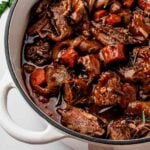
Dutch Oven Pot Roast
A big, beautifully browned chuck roast braised low and slow in a Dutch oven with onions, carrots, garlic, red wine, beef broth, herbs, and tomato paste. The beef turns fork-tender, and the strained braising liquid becomes a rich homemade gravy for mashed potatoes, noodles, or plenty of crusty bread.
Servings: 6 plates
plates
Equipment
- Large Dutch oven with lid
- Sharp chef's knife
- cutting board
- Wooden spoon or heat-safe spatula
- Tongs
- measuring cups and spoons
- Small bowl for mixing seasonings
- Ladle or large spoon, for serving
Ingredients
For the pot roast
- chuck roast, 4 pounds, boneless
- 2 teaspoons kosher salt
- 1 ½ teaspoons freshly ground black pepper
- 2 tablespoons olive oil
- yellow onion, cut into thick wedges, 1 large
- 4 large peeled carrots, cut into 2-inch pieces
- 4 garlic cloves, smashed
- tomato paste, 2 tablespoons
- 2 cups beef broth
- 1 cup dry red wine
- Worcestershire sauce, 2 tablespoons
- 2 teaspoons fresh thyme leaves
- fresh rosemary, just 2 sprigs
- 2 bay leaves
- 1 tablespoon balsamic vinegar
For the gravy
- 2 tablespoons unsalted butter
- 2 tablespoons all-purpose flour
- 2 ½ cups strained braising liquid
Optional garnish
- Fresh parsley, chopped
- Fresh thyme
- Flaky salt
Instructions
- Let the roast have a minute to lose the chill: take the chuck roast out of the fridge for about 30 minutes before you're ready to cook. Pat it really well with paper towels. This is not a time for a damp roast. We want a nice dry surface, so we can get that gorgeous brown crust. Give the roast a good, even coating of salt and pepper on all sides.
- Get that Dutch oven nice & hot: place a large Dutch oven on the burner over high heat, and add your two tablespoons of oil. Once the oil is hot and glistening, carefully lay the roast in. Now comes the part where you have to resist the urge to move it around. Brown each side of the roast for about 5 minutes per side, getting a deep golden crust all over. Don’t rush this step. Those browned bits on the bottom of the pot are basically the beginning of your gravy. Move the roast to a plate for a minute.
- Let the veggies cook: lower the heat to medium and add the onions and carrots right into the same pot. Cook for about 5-7 minutes, stirring occasionally; let them cook until they lose their crispiness and pick up some of those browned bits from the bottom. Add the garlic and tomato paste. Mix everything together and give it another minute or two on the heat. The tomato paste should darken slightly; that’s exactly what we are looking for.
- Build the braising liquid: go ahead and add the red wine, and use a wooden spoon to scrape up all those stubborn little brown pieces stuck to the bottom. Let the wine bubble for 3-4 minutes. Add bay leaves, thyme, beef broth, Worcestershire sauce, rosemary, and balsamic vinegar. Give it a stir, then nestle the roast back into the pot. Pour enough liquid to come partway up the sides of the roast. You don’t want to completely drown it-the oven is going to take care of the rest.
- Into the oven: once everything is tucked into the pot, cover it with a lid and let hte oven take over at 325*F.. Let the roast braise for about 3 ½ hours, checking around the 3-hour mark. You’re not really looking for a specific clock time here. You're looking for fork-tender beef. If you poke the meat with a fork and it still feels like it's putting up a fight, put the lid back on and give it another 30 minutes. A good pot roast should practically fall apart.
- Make the gravy: once the roast is beautifully tender, carefully transfer it to a cutting board and loosely tent it with foil. Remove the carrots and onions and set them aside. Strain the braising liquid into a measuring cup or bowl, discarding the herbs and solids. Let it sit for a couple of minutes and skim some of the excess fat from the surface. Now grab a saucepan. Melt the butter over medium heat, sprinkle in the flour, and whisk for about 1 minute. Slowly pour in the strained braising liquid while whisking. Let the gravy simmer for 5-8 minutes, stirring occasionally, until it's thick enough to coat the back of a spoon. Taste it and see if it needs any salt and pepper.
- Slice: let the roast rest for about 15-20 minutes before serving. You can slice it, but honestly, if your roast is properly tender, I love pulling it into big, rustic pieces. Arrange the beef with carrots and onions, pour that gorgeous gravy over everything, and finish with fresh parsley and thyme.
- And then immediately put some mashed potatoes underneath it. Because. Obviously.
Nutrition Facts
Dutch Oven Pot Roast
Amount per Serving
Calories
130
% Daily Value*
Fat
9
g
14
%
Saturated Fat
3
g
19
%
Trans Fat
0.2
g
Polyunsaturated Fat
1
g
Monounsaturated Fat
4
g
Cholesterol
10
mg
3
%
Sodium
1075
mg
47
%
Potassium
69
mg
2
%
Carbohydrates
5
g
2
%
Fiber
0.3
g
1
%
Sugar
0.4
g
0
%
Protein
1
g
2
%
Vitamin A
153
IU
3
%
Vitamin C
2
mg
2
%
Calcium
16
mg
2
%
Iron
1
mg
6
%
* Percent Daily Values are based on a 2000 calorie diet.
Nutritional information is provided as a courtesy only. This information comes from online calculators. Although whatsinthepan.com attempts to provide accurate nutritional information, these figures are only estimates.
Notes
Use a Dutch oven that gives the roast breathing room. You want enough exposed pot surface for browning, rather than a roast wedged so tightly into the pot that it steams. If the roast is too large to sit flat, brown it in sections and use tongs to hold the sides against the hot pot.
If the bottom of the Dutch oven starts looking very dark after searing, lower the heat before adding the vegetables. Dark brown bits are flavor; black bits can make the gravy bitter. A small splash of broth can help loosen stubborn browned bits while the onions cook.
Choose a dry red wine you would happily drink, such as Cabernet Sauvignon, Merlot, Pinot Noir, or a red blend. The wine cooks down in the pot, so it has a noticeable place in the finished gravy. If you are not using wine, replace it with additional beef broth.
Braising liquid should come partway up the roast, roughly halfway is a useful visual target. The roast does not need to be submerged; the covered pot traps steam while the exposed portion slowly cooks and the meat becomes tender.
