

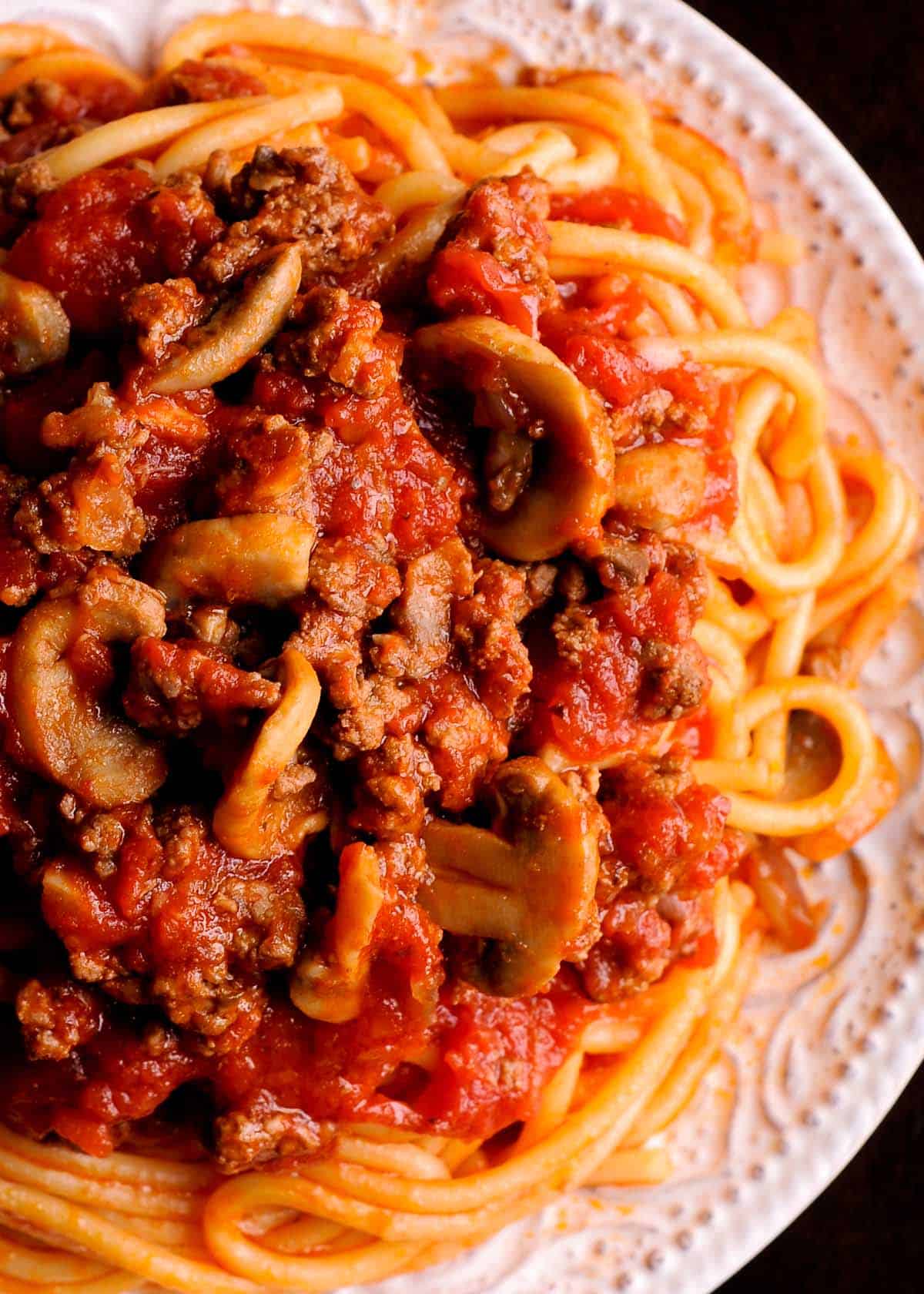
If you've ever made spaghetti sauce and thought, "Why is this so thin?", "How can I make it thicker?", you are very much not alone. It happens all the time, especially when you start with jarred sauce, add extra tomatoes, or just need dinner to come together a little too quickly.

The good news is that watery spaghetti sauce is usually an easy fix. In most cases, you just need to let it cook a little longer, add something concentrated like tomato paste, or use a quick thickener if you're in a rush. Once you know the tricks, it's one of those cooking problems that stops feeling like a problem at all.
Why sauce gets watery
Spaghetti sauce can turn thin for a bunch of reasons. Sometimes there's just too much liquid from the tomatoes. Sometimes the sauce hasn't simmered long enough. And sometimes it needs to be finished in a way that helps it cling to the pasta instead of pooling at the bottom of the bowl.
The easiest place to start is always the same: simmer it longer, uncovered, on low heat. That lets the water evaporate and gives you a thicker sauce with a deeper tomato flavor.
The easiest ways to thicken Spaghetti Sauce
Simmer the Sauce
If you want the most natural fix, just let the sauce reduce. That's the best option when you have time, and honestly, it usually gives you the best flavor too. For homemade spaghetti sauce, that means simmer on low for a few hours. Or, for those of you who don't have hours to stand by the stove, just on high heat, stirring constantly, in a wide pan.
Add Tomato Paste
If you want a faster fix, tomato paste is my go-to. A spoonful or two adds body right away and makes the sauce taste more concentrated. Stir it in, let it cook for a few minutes, and see where you are before adding more. Tomato paste has the added benefit of giving spaghetti sauce a more slow cooked flavor, especially if you caramelize it first. It's a great flavor boost.
Add Pasta Water
Take some of the water from the pasta when it's cooking and put it in the sauce. Not much, just 2 or 3 tablespoons. Also for starchy pasta water to work well, cook the pasta in less water than you normally would. You have to baby it more but that starchy water is gold.
Use Pasta Itself to Thicken The Sauce
Cook your sauce. Cook your pasta to al-dente (5-8 min depending on brand/type).
Add pasta to the sauce to finish cooking the pasta. Don't strain the pasta first. You want the pasta water from the pasta in your sauce. As it thickens it creates a very creamy finish that sticks to the pasta. It will cook down, at that point add more pasta water a few tablespoons at a time to the consistency and volume you want.
I'm a cheese girl as well. So I add pecorino/romano (shredded from the actual cheese block - here's more on Benefits of Grating Your Own Cheese Versus Pre-Shredded Cheese) to my sauce/pasta while finishing. It adds a nice flavor and helps further thicken the sauce.
Add Cornstarch Slurry
For an even quicker rescue, a cornstarch slurry works well:
- Mix 1 tablespoon cornstarch with 1 tablespoon cold water.
- Whisk until smooth.
- Stir it into the simmering sauce.
- Cook for a few minutes until it thickens.
Flour can work too, but it's not my first choice for red sauce. It can leave a slightly raw taste if it doesn't cook long enough.
Add Parm Cheese
Freshly grated or shaved parmesan cheese will thicken spaghetti sauce significantly.
If you want a richer sauce
If you're after a thicker sauce with a little more richness, there are some good options there too.
Heavy cream makes the sauce smoother. Cream cheese gives it a thicker, slightly tangy finish. And if you're making meat sauce, extra browned ground beef can naturally help the sauce feel heartier.
Xanthan gum is another option if you already use it and know how little you need. It's flavorless and works fast, but the key is using just a tiny amount so the texture stays pleasant.
Final thoughts
If your spaghetti sauce is watery, don't overthink it. Start by simmering it uncovered. If it still needs help, add tomato paste or a quick starch slurry. If you want a richer finish, parmesan or a little cream can do the trick too.
Once you get the texture where you want it, toss in the pasta and let everything come together in the pan. It's a simple step, but it makes a big difference.

Comments
No Comments