
Soffritto is an Italian cooking base of finely diced onion, carrot, and celery, cooked slowly in olive oil until soft and sweet. I use it in bolognese, ragù, minestrone, braised beef, and lentil soup, and rarely notice it.

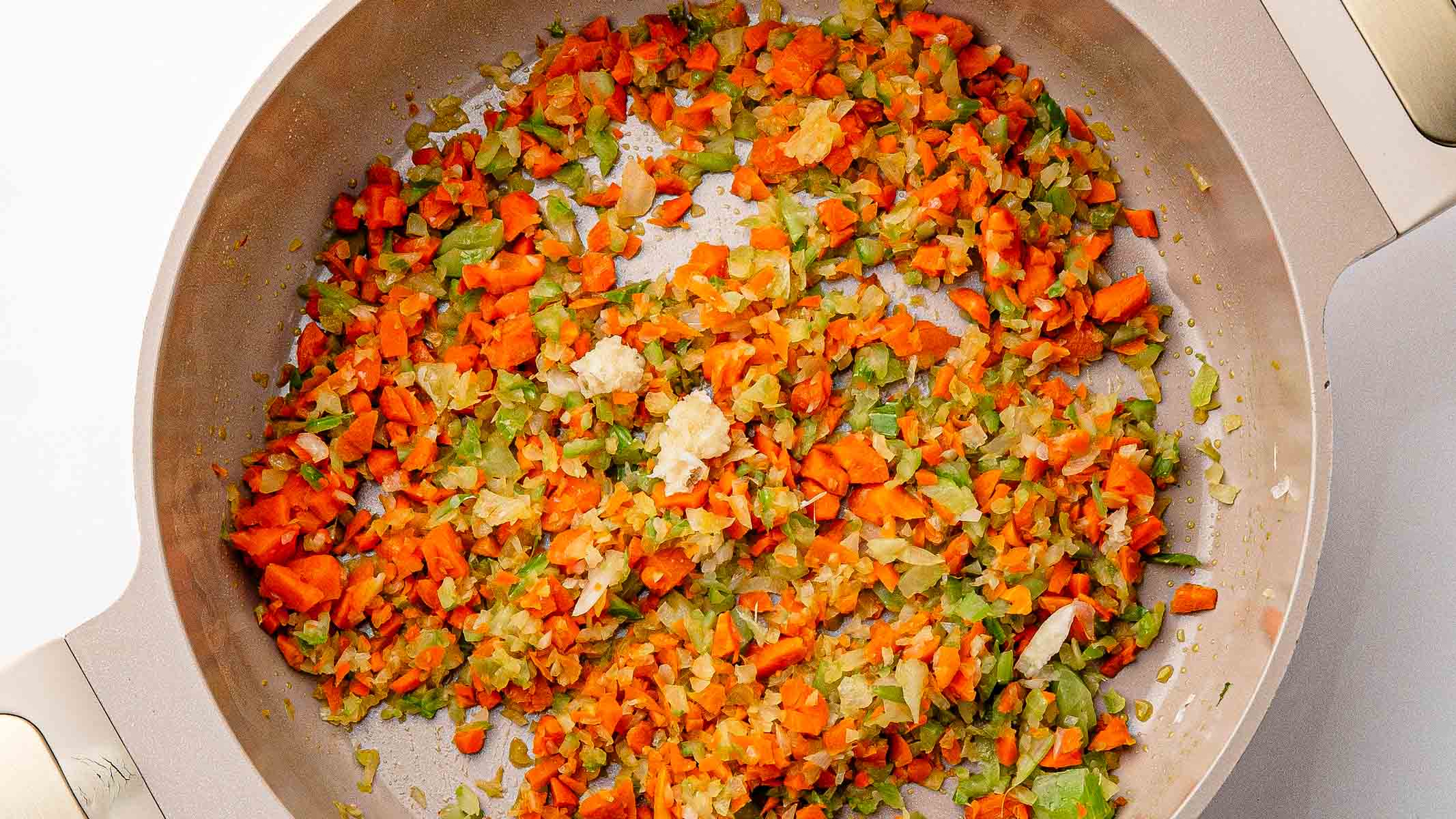
What Is Soffritto?
Soffritto is the starting point for a huge share of Italian cooking: diced onion, carrot, and celery, softened in olive oil before anything else goes in the pot. The name comes from a verb meaning to stir-fry, the same root as Spanish sofrito. Italians use soffritto for what the French call mirepoix.
Soffritto vs. Mirepoix vs. Sofrito
The three get mixed up constantly, and they aren't the same at all.
| Mixture | Soffritto | Mirepoix | Sofrito |
|---|---|---|---|
| Origin | Italian | French | Spanish and Latin American |
| Vegetables | Onion, carrot, celery | Onion, carrot, celery | Onion, garlic, tomato, often peppers |
| Fat | Olive oil | Butter | Oil or rendered fat |
| Cut | Fine to minced | Larger dice | Fine, sometimes blended |
| Usually left in the dish? | Yes | Sometimes strained out | Yes |
Mirepoix is traditionally cooked slowly in butter without browning, and soffritto is cooked in olive oil. Sofrito belongs to a different family of bases, built on garlic and tomato.
The Ratio
The traditional ratio is 2:1:1, meaning two parts onion to one part carrot to one part celery. That's measured by volume of diced vegetables, not by counting vegetables.
As a rough guide, one medium onion, one medium carrot, and one celery stalk give you a good starting amount. More carrot makes the base sweeter. More celery makes it greener and more savory. I keep the onion ahead because it's the vegetable that does the most work.
How to Cut It
Cut it small. Aim for a dice of about ¼ inch or less. Smaller pieces soften faster and melt into the sauce, which is the goal in a bolognese.
Keep the pieces about the same size, because uneven pieces cook unevenly. Some of them will be raw while others are already brown.
Hand or food processor? Many Italian cooking sources recommend hand-dicing, since a processor can bruise the vegetables and change the texture. A processor is faster, and it can work if you pulse in short bursts. It can also turn the vegetables into a wet paste that steams.
How to Cook It
You need: olive oil, the diced vegetables, salt, and a wide pot such as a Dutch oven or large skillet.
- Warm a few tablespoons of olive oil in the pot over medium-low heat.
- Add the onion with a pinch of salt and let it soften for about five minutes, then add the carrot and celery.
- Stir often. The vegetables should soften without browning at first.
- Keep cooking until the pieces are soft, sweet, and fragrant. Depending on how small you cut them and how low the heat is, that's usually 10 to 15 minutes, and some recipes run as long as 25.
- Add garlic in the final minute if the recipe calls for it. It burns quickly.
Why It Takes Time
Onions, carrots, and celery are mostly water, so the first minutes are an evaporation step. The pot can't brown the vegetables until much of that water has left. A wide pot helps, because there's more surface for steam to escape. A crowded pot traps the steam, and the vegetables stew.
Salt early. It draws moisture out of the vegetables and helps them soften sooner.
Soft or Golden?
Many traditional recipes just soften the vegetables gently, and browning isn't the main goal. I think of it as two settings:
- Pale and soft for delicate soups and risotto.
- Lightly golden for bolognese, ragù, and braises, where I want a deeper, roasted flavor.
Soffritto Tips
Dice it small, and make the pieces match. Aim for a ¼-inch dice or smaller. Small pieces have more surface area, so they soften faster and break down into the sauce instead of sitting in it like confetti nobody ordered. Uniform pieces also cook at the same rate. A food processor works if you pulse it, but stop before it turns to mush. Mush releases a lot of water and steams in the pot instead of browning.
Why the order and the pot matter. Onion, carrot, and celery are mostly water. Until that water cooks off, the vegetables can't get past about 212°F, and browning doesn't start. So the first few minutes are really an evaporation step. Medium heat in a wide Dutch oven gives the moisture room to escape. Crowd the pot or crank the heat and you get scorched edges around a raw center.
What you're looking for. Cook for 8 to 10 minutes, stirring often, until the vegetables are soft and lightly golden. Soft means a piece mashes easily against the side of the pot. Lightly golden means the natural sugars in the onion and carrot have started to caramelize and the Maillard reaction has begun, which adds savory, roasted notes. Don't push it to dark brown. This is a base, and bitter edges will carry through the whole pot.
Salt early. A pinch of salt at the start pulls water out of the vegetables and speeds up the softening. It also seasons the base from the bottom up, which is easier than fixing a flat sauce at the end.
Garlic goes in last. Add it for the final minute, just until it smells like garlic. Minced garlic burns fast, and burnt garlic is the kind of mistake the sauce can't hide.
Troubleshooting
- Vegetables are watery and pale: the pot is too crowded or the heat is too low. Raise the heat slightly and give them more time.
- Edges are dark but centers are firm: the heat is too high or the dice is uneven. Lower the heat and add a splash of water to loosen things.
- Sauce tastes sweet and flat at the end: the carrot ratio is too high. Keep the three vegetables roughly equal, with onion slightly ahead.
Olive Oil or Butter?
Traditional soffritto uses olive oil, but butter gives it a rounder, softer flavor, and I often use both at the same time.


Comments
No Comments