
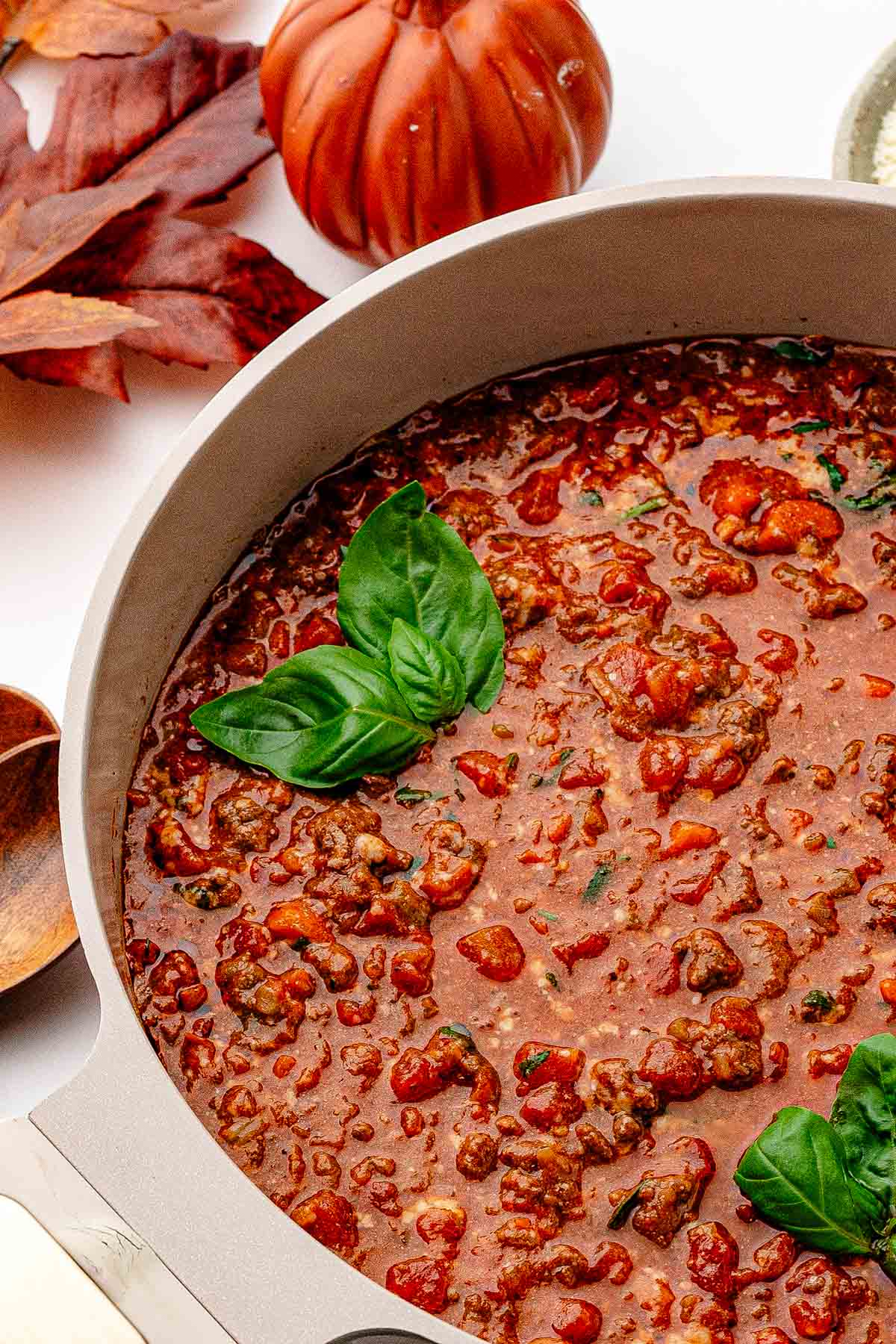
I simmer finely diced onion, carrot and celery with ground beef, tomato paste, red wine and a Parmesan rind for over an hour, until the sauce goes thick and deep enough to taste like it took all day. It doesn't. Most of that hour is just the pot doing its own thing on the stove while I do something else entirely.

Beef Bolognese Snapshot
✅ Prep Time: 20 minutes
⏲️ Cook Time: 1 hour 10 minutes
🍝 Serves: 6 to 8
💰 Cost: ~$18 total (about $2.50 per serving)
👨🍳 Skill Level: Easy, just takes patience
📦 Equipment: Dutch oven, wooden spoon, large pasta pot
This is the bolognese I make the second it gets cold out - a deep, slow-simmered meat sauce built specifically to cling onto every ridge of cavatelli, ladled over pasta shaped to catch every last bit of it.
💬 Why You'll Love This Bolognese
- It smells like a fancy restaurant even on a random Tuesday 🏠
- Makes a full pot, and freezes beautifully for later 🧊
- One Dutch oven, minimal hands-on time once it's simmering
Weeknight pasta has its place and I make plenty of it, but there's a specific kind of cold-weather craving that a 20-minute sauce can't touch 🌧️. This is the dinner I make when I want the kitchen smelling like something's been happening in there for hours, because something has.
I keep a bottle of cheap Chianti in the cabinet specifically for pots like this one 🍷 - the kind of wine that has no business going to waste when there's a sauce that needs deglazing.
I also keep a family pack of ground beef at all times! See what 5 dishes I cook with a family pack of ground beef.
Jump to:
The Decisions Behind This Recipe
- I dice the onion, carrot and celery small enough that they mostly disappear into the sauce instead of sitting there as separate bites. This isn't a garnish situation - the vegetables are there to build the base, not to be noticed later.
- I let the tomato paste sit in the pot alone for a couple of minutes before any liquid goes in. Tomato paste straight into a wet pot tastes flat. Tomato paste that's had a minute to darken against hot metal tastes like something else entirely.
- Red wine goes in specifically to deglaze, not just to season. It lifts the browned bits stuck to the bottom of the pot, and those bits are doing more flavor work than people give them credit for.
- The Parmesan rind isn't optional in my kitchen. I've got a bag of them living in my freezer at all times, saved from every wedge I finish, and this is exactly the kind of pot they're waiting for.
- I use whole milk instead of cream. Cream flattens the tomato flavor more than I want; milk just takes the edge off the acidity without muting anything.
- The partial simmer, uncovered, is not there to save you a step. That's how the liquid actually reduces down into something you'd call a sauce instead of soup with meat in it.
INGREDIENTS
- Onion, Carrots, and Celery: This classic trio is doing more work than you'd think. Dice them as finely as you can manage - the smaller the pieces, the more they disappear into the sauce instead of standing around as separate bites.
- Lean Ground Beef: Go with an 85/15 or 90/10 blend here. You want just enough fat for richness without ending up with a greasy sauce at the end.
- Tomato Paste: Don't rush past this one. Letting it darken in the pot for a couple of minutes before adding any liquid builds a genuinely deeper flavor - it's a small step that makes a real difference.
- Dry Red Wine: This is what deglazes the pot and lifts up all those flavorful browned bits stuck to the bottom. No wine on hand? Beef broth works as a stand-in. Curious why some bolognese recipes call for white instead? I get into that in my guide to cooking with wine for Italian food.
- Crushed Tomatoes: The backbone of the sauce, along with the milk and broth that round everything out.
- Whole Milk: Milk mellows the natural acidity of the tomatoes, so the final sauce tastes rounder instead of sharp.
- Parmesan Rind: If you've been saving one in your freezer for a moment like this, now's the time. It simmers right in the sauce and adds a savory depth that's hard to fake any other way.
- Freshly Grated Parmesan: Skip the pre-shredded stuff for this one. Fresh-grated melts in so much more smoothly.

The Steps
Step 1: Build the vegetable base
Start with the olive oil, warmed in a large Dutch oven over medium heat. Add the onion, carrots and celery, and cook until soft and lightly golden, about 8 to 10 minutes. Stir in the garlic and cook another minute, just until fragrant.
Tip: Cut the onion, carrots and celery as finely as you can manage. The smaller the dice, the more they melt into the finished sauce instead of standing out as separate bites. Some ingredients are only there to disappear correctly.


Step 2: Brown the beef and caramelize the paste
Add the ground beef, breaking it into small crumbles as it cooks, until browned and no longer pink. Drain off any excess grease. Stir in the tomato paste and let it cook for 2 to 3 minutes, until it darkens slightly.
My family has strong opinions about bolognese, and this caramelizing step is one thing nobody in my house will let me skip anymore. It only takes a couple of minutes, but it builds a much deeper flavor than adding the paste straight into the liquid.
Tip: Don't rush the tomato paste. Let it actually darken in the pot before you pour anything else in - that little bit of patience pays off in the final flavor.


Step 3: Deglaze and simmer
Pour in the red wine, scraping up all the browned bits stuck to the bottom of the pot - what's stuck to the bottom of the pan is usually worth more than what's floating on top - and let it simmer until almost all the liquid has reduced. Add the crushed tomatoes, beef broth, milk, Italian seasoning, thyme, salt, pepper, red pepper flakes, and the Parmesan rind. Bring everything to a gentle simmer.
I always keep a Parmesan rind in the freezer just for moments like this. It's such a small addition, but it quietly deepens the whole pot while it simmers.
Tip: Don't skip the Parmesan rind if you have one on hand. It adds a savory backbone to the sauce that's hard to replicate any other way.


Step 4: Let it simmer low and slow
Reduce the heat to low and let the sauce cook partially uncovered for 45 to 60 minutes, stirring occasionally, until it's thick and rich. This is the step where patience really matters - the sauce needs that time to come together properly.
My best tip for the richest bolognese: Resist the urge to rush this part. The longer it gently simmers, the more the vegetables melt in and the deeper the flavor gets. If you have the time, letting it go closer to 2 hours only improves things further.
Step 5: Finish and serve
Remove the Parmesan rind, then stir in the freshly grated Parmesan and adjust the seasoning to taste. Serve over freshly cooked pasta - tagliatelle, pappardelle, or rigatoni are all wonderful here - and finish with more Parmesan and a scatter of fresh basil and parsley.
Twirl it all together and serve right away. The smell in the hallway will announce the Bolognese before the fork does.


Beef Bolognese
Equipment
- Large Dutch oven or heavy-bottomed pot
- Wooden spoon
- Chef's knife
- cutting board
- measuring cups and spoons
- Large pasta pot
- Colander
Ingredients
For the Sauce Base
- 2 tablespoons olive oil
- 1 medium yellow onion finely diced
- 2 medium carrots finely diced
- 2 celery stalks finely diced
- 5 cloves garlic minced
For the Meat and Tomato Base
- 1 ½ pounds lean ground beef
- 2 tablespoons tomato paste
- 1 cup dry red wine or beef broth
- 1 can 28 oz crushed tomatoes
For the Braising Liquid and Seasoning
- 1 cup whole milk
- 1 cup beef broth
- 2 teaspoons Italian seasoning
- 1 teaspoon dried thyme
- 1 teaspoon kosher salt
- ½ teaspoon black pepper
- ¼ teaspoon crushed red pepper flakes
- 1 Parmesan rind
To Finish
- ¼ cup freshly grated Parmesan cheese
- Fresh basil and parsley for garnish
For Serving
- Pappardelle tagliatelle, fettuccine, or rigatoni
- Fresh Parmesan for serving
Instructions
- Warm the olive oil in a large Dutch oven over medium heat.
- Add the onion, carrots, and celery, and cook for 8 to 10 minutes until soft and lightly golden.
- Stir in the garlic and cook for 1 minute more, until fragrant.
- Add the ground beef, breaking it into small crumbles as it cooks, until browned and no longer pink.
- Drain excess grease if needed.
- Stir in the tomato paste and cook for 2 to 3 minutes until it darkens slightly, developing a deeper, richer flavor.
- Pour in the red wine, scraping up any browned bits from the bottom of the pot.
- Simmer until almost all of the liquid has reduced.
- Add the crushed tomatoes, beef broth, milk, Italian seasoning, thyme, salt, pepper, red pepper flakes, and Parmesan rind.
- Bring everything to a gentle simmer.
- Reduce the heat to low and cook partially uncovered for 45 to 60 minutes, stirring occasionally, until thick and rich.
- Remove the Parmesan rind, stir in the grated Parmesan cheese, and adjust the seasoning to taste.
- Serve over freshly cooked pasta and garnish with more Parmesan and chopped herbs.
Notes
Recipe Tips
Can I let the bolognese simmer longer than an hour? Yes! An hour gets you a delicious sauce, but letting it go up to 2 hours makes it even richer. If it thickens too much along the way, just stir in a splash of beef broth or reserved pasta water.
Should I use lean or higher-fat ground beef? An 85/15 or 90/10 blend is the sweet spot. Enough fat for flavor, not so much that the sauce turns greasy. If you do use a fattier blend, just drain the excess after browning.
Why does my sauce taste too acidic? Tomatoes vary in acidity from can to can, so this happens sometimes. A longer simmer helps a lot, and the milk and Parmesan both work to mellow that sharpness naturally. A tiny pinch of sugar can help too if needed.
How do I know when it's actually done simmering? The sauce should look noticeably thickened and the flavor should taste balanced, not sharp. Drag a spoon across the bottom of the pot - if it leaves a trail for a second before the sauce fills back in, you're there.
What if my bolognese turns out too thick? It naturally thickens the longer it simmers. A splash of reserved pasta water, beef broth, or milk brings it right back to where you want it.
Should I cover the pot while it simmers? Nope, leave it partially uncovered. That lets moisture evaporate while the flavor concentrates, which is exactly how you get that thick, rich texture.

How to Store Beef Bolognese
Refrigerator: Store in an airtight container for up to 4 days.
Freezer: Freeze for up to 3 months. Thaw overnight in the refrigerator before reheating.
Reheating: Warm gently on the stovetop over medium-low heat, adding a splash of broth or milk if the sauce has thickened more than you'd like.
Variations
- Substitute Italian sausage for half of the beef
- Add sautéed mushrooms for extra richness
- Stir in spinach during the last few minutes
- Use ground turkey or chicken for a lighter version
- Add fresh rosemary for a more earthy flavor
- Finish with a splash of heavy cream for extra indulgence
- Swap in Pecorino Romano for the Parmesan
Serve With
- Pappardelle, tagliatelle, fettuccine, or rigatoni
- Garlic Bread Rolls
- Caesar salad
- Burrata with toasted Dutch Oven Bread
- Roasted Brussels sprouts
- Arugula salad with balsamic glaze
- Roasted butternut squash
Comments
No Comments