
Whenever I tried a toffee apple as a kid they LOOKED so delicious , but they TASTED so sour and crumbly probably because they used either Granny Smith or Red Delicious (which are by the way are not delicious at all) in them. This is why I use Fuji Apples in my version of this red candy apple - the super sweet toffee and the crisp sharpness of the Fuji apple balances everything out.

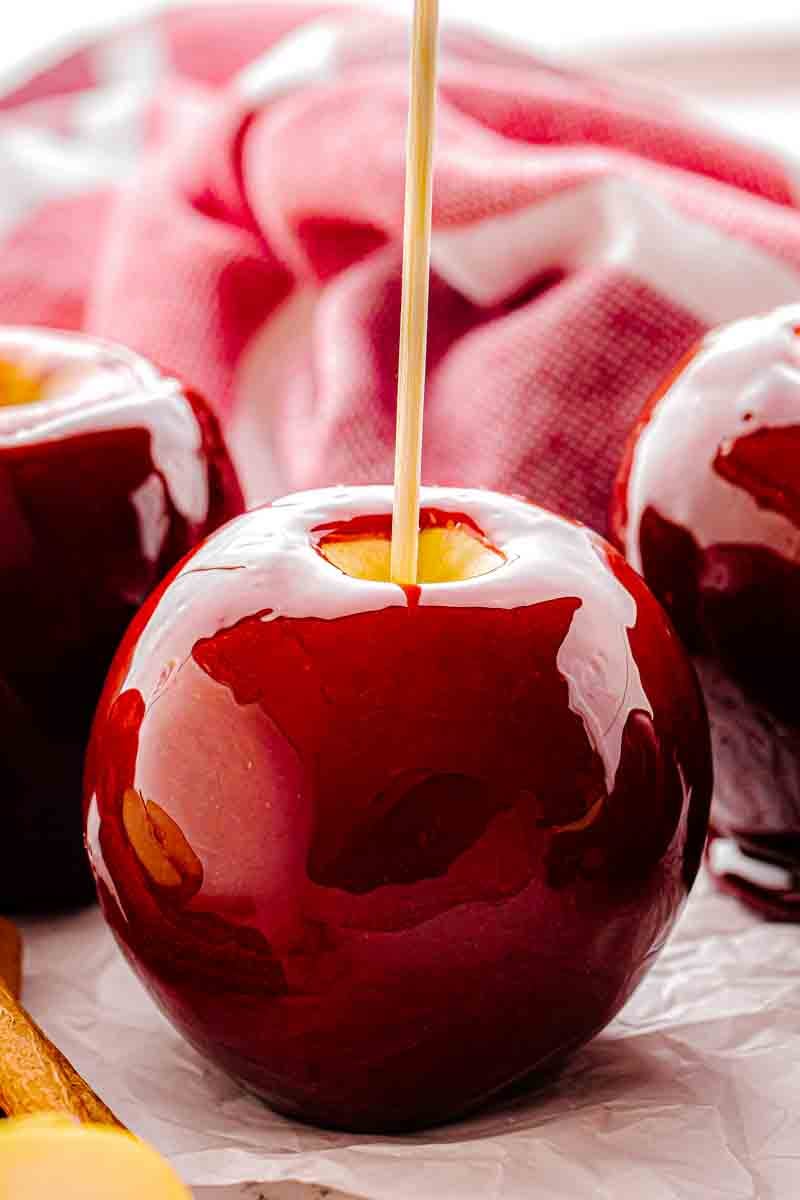
Toffee apples look like they require a culinary degree. They don't - they require patience and a thermometer clipped to the side of a pan.
Toffee apples - the deep amber, hard-crack cousin of the fluffier American candy apple - are one of those treats that look like they require a culinary degree and actually just require patience and a thermometer. The crunchy sugar shell shatters like glass when you bite into it, then gives way to a crisp, juicy (not crumbly) apple underneath. That contrast is the entire point of the recipe, and it only happens if the syrup hits exactly the right temperature.
📝 Toffee Apples - Recipe Summary
Scroll down to find the complete instructions and ingredient amounts in recipe card below.
🍎 Prep Time: 15 minutes
🔥 Cook Time: 12 minutes
🧊 Ingredients: 6 Fuji apples, sugar, water, corn syrup, white vinegar, red food coloring
💲 Cost: About $8 total, roughly $1.35 per apple
👨🍳 Skill Level: Easy, but pay attention to the thermometer
📦 Equipment: Candy thermometer, small deep heavy-bottomed saucepan, wooden skewers, parchment-lined baking sheet, pastry brush
💡 Why This Version Actually Works
- 🍬 Hard-crack shell: Cooked to 300°F-310°F, so it cracks clean instead of stretching like taffy
- 🍎 Fuji apples only: High sugar content and a snappy, crisp bite that balances the sweetness of the shell instead of turning the whole thing sour
- 🚫 No butter: This is a sugar-syrup candy, not English butter toffee - closer to a candy apple shell or brittle in category.
- 🌡️ Thermometer over guesswork: Humidity changes boiling time by several minutes, so the number on the thermometer matters more than the clock.
- 🧼 One overlooked step: Scrubbing off the produce wax is the difference between a shell that grips the apple and one that slides off into a puddle.
Why This Sugar Shell Actually Shatters
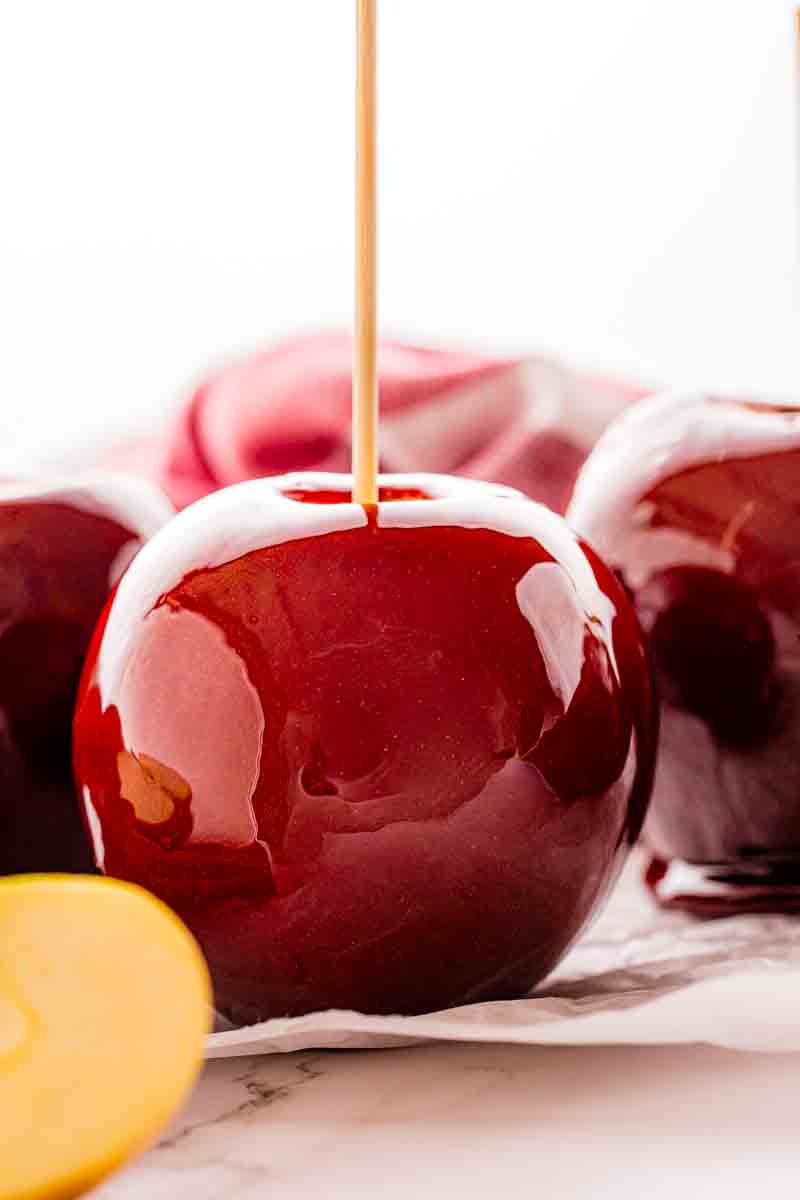
Hard-crack candy is a science experiment disguised as a treat. When sugar syrup reaches 300°F to 310°F, nearly all the water has cooked out, leaving a matrix of sugar molecules with almost no moisture left to make it flexible. That's why the shell cracks clean instead of stretching like taffy, which is cooked to a lower, softer stage.
Grocery-store apples come with a thin wax coating whose entire job is repelling moisture so the fruit stays shiny on the shelf. That coating does the exact same thing to your hot syrup that it does to water in the produce aisle - it repels it. A hard scrub under hot water breaks that barrier down so the sugar can actually grip the apple's skin instead of beading off it.

You'll Need These Ingredients:
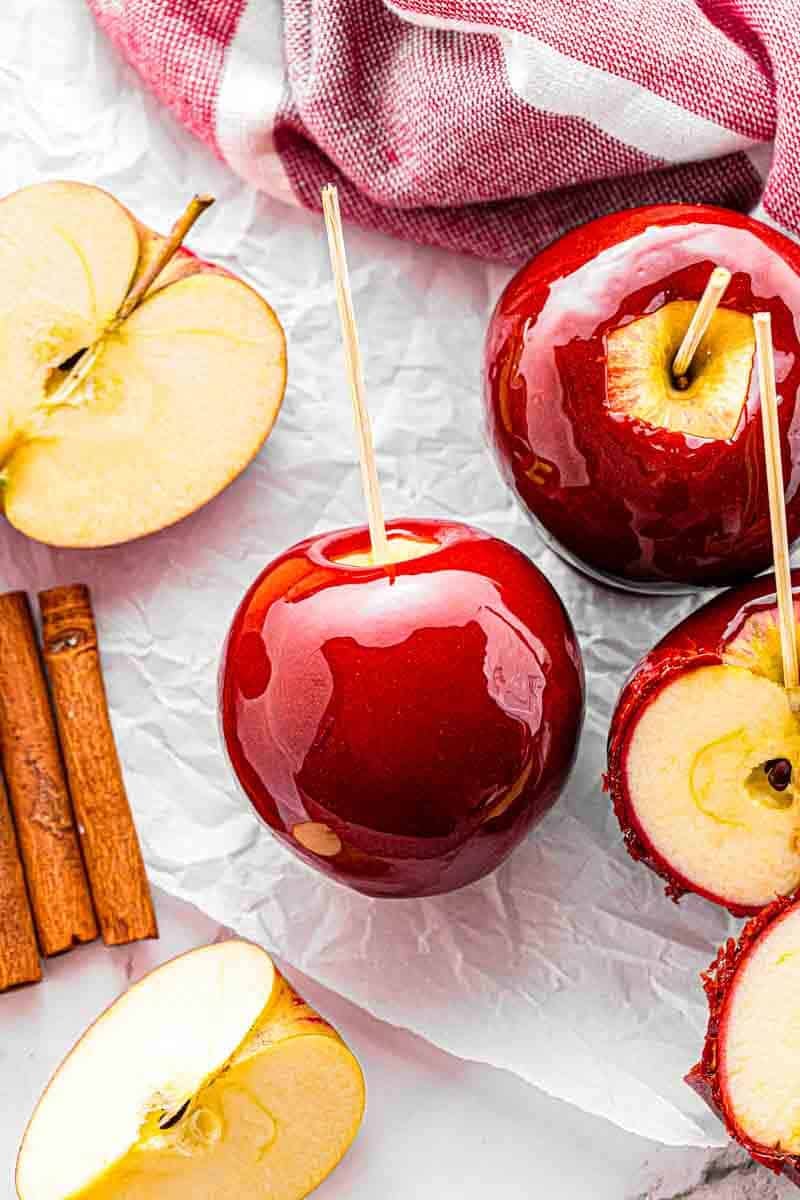
This photo shows everything you need for these classic toffee apples (Scroll down to find the ingredient amounts in recipe card)

How to Make Toffee Apples
This is a recipe overview. Scroll down to find the complete instructions in recipe card below.
1.Scrub the apples vigorously under hot running water to strip away the waxy coating completely, then dry each one thoroughly with a clean towel. Any leftover moisture or wax is exactly what causes the toffee to slip right off later, so don't rush this step.
2. Pull the stems out and press a sturdy wooden skewer or stick firmly down into the core of each apple to create a handle. Line a baking sheet with parchment paper or a silicone mat and set it nearby.

3. Combine the sugar, water, corn syrup, and vinegar in a small, deep, heavy-bottomed saucepan. Stir gently over medium-low heat just until the sugar dissolves - you want a clear syrup with no visible crystals left.

4. Clip a candy thermometer to the side of the pan with the bulb submerged in the syrup but not resting against the hot metal bottom, then raise the heat to medium-high and bring the mixture to a boil.
5. From this point on, keep your hands off the spoon. Boil the syrup for 10 to 12 minutes, brushing down any crystals that form on the pan's sides with a wet pastry brush, until it reaches 300°F to 310°F on the thermometer. If you're using red food coloring, add it at 295°F and swirl the pan gently to blend the color in.
6. Pull the pan off the heat immediately once it hits temperature and let it rest for 30 to 60 seconds until the surface bubbles fully die down. Dipping into an actively bubbling syrup traps air pockets under the shell, which weakens the finished coating.

7. Holding an apple by its stick, tilt the saucepan to pool the syrup deeper on one side, then roll the apple through it until fully coated. Lift it out, pause 3 seconds to let the excess drip back into the pan, and stand it upright on the parchment. Work through the rest of the apples quickly, since the syrup thickens and hardens by the minute. Let the finished apples cool at room temperature for about 15 minutes until the shells turn solid and glassy.

Traditional Toffee Apples (Old-Fashioned Red Candy Apples)
Equipment
- candy thermometer
- 4-6 wooden sticks or heavy skewers
- Baking sheet and parchment paper
- Pastry brush (optional, for crystal control)
Ingredients
Apples
- 4-6 apples
Toffee Coating
- 1 ½ cups granulated white sugar
- ½ cup water
- 1 tablespoon corn syrup
- ½ teaspoon distilled white vinegar
- Red food coloring optional
Instructions
- Wash each apple thoroughly under hot running water, scrubbing firmly to remove the waxy coating, then pat completely dry with a clean towel.
- Twist out the stems and push a wooden stick, popsicle stick, or trimmed skewer straight down into the core of each apple until it feels secure.
- Set out a large baking sheet lined with parchment paper or a silicone mat so it's ready the moment your apples are dipped.
- Add the sugar, water, corn syrup, and vinegar to a small, deep, heavy-bottomed saucepan and warm over medium-low heat, stirring just until every sugar crystal disappears.
- Attach a candy thermometer to the pan's edge with the tip resting in the syrup, away from direct contact with the pan's base, then increase the heat to medium-high and bring everything to a rolling boil.
- Stop stirring completely once the syrup boils, since agitating it now can send it crystallizing into a grainy mess; use a damp pastry brush to wipe down any sugar clinging to the pan's sides.
- Let the syrup boil undisturbed for 10 to 12 minutes until the thermometer reads between 300°F and 310°F, stirring in red food coloring at the 295°F mark if you're using it.
- Pull the pan off the burner the instant it hits temperature and let it stand for 30 to 60 seconds until the surface stops churning with bubbles.
- Grip an apple by its stick, angle the saucepan so the syrup pools deep on one side, and roll the apple through it until the shell is even all over.
- Lift the apple straight up, hover it for a 3-second count so the extra syrup drips away, then stand it upright on the parchment to set.
- Move quickly through the rest of the apples since the syrup firms up fast, and let every dipped apple rest at room temperature for 15 minutes until the shell turns hard and glassy.
Notes
Tips for a Shell That Shatters
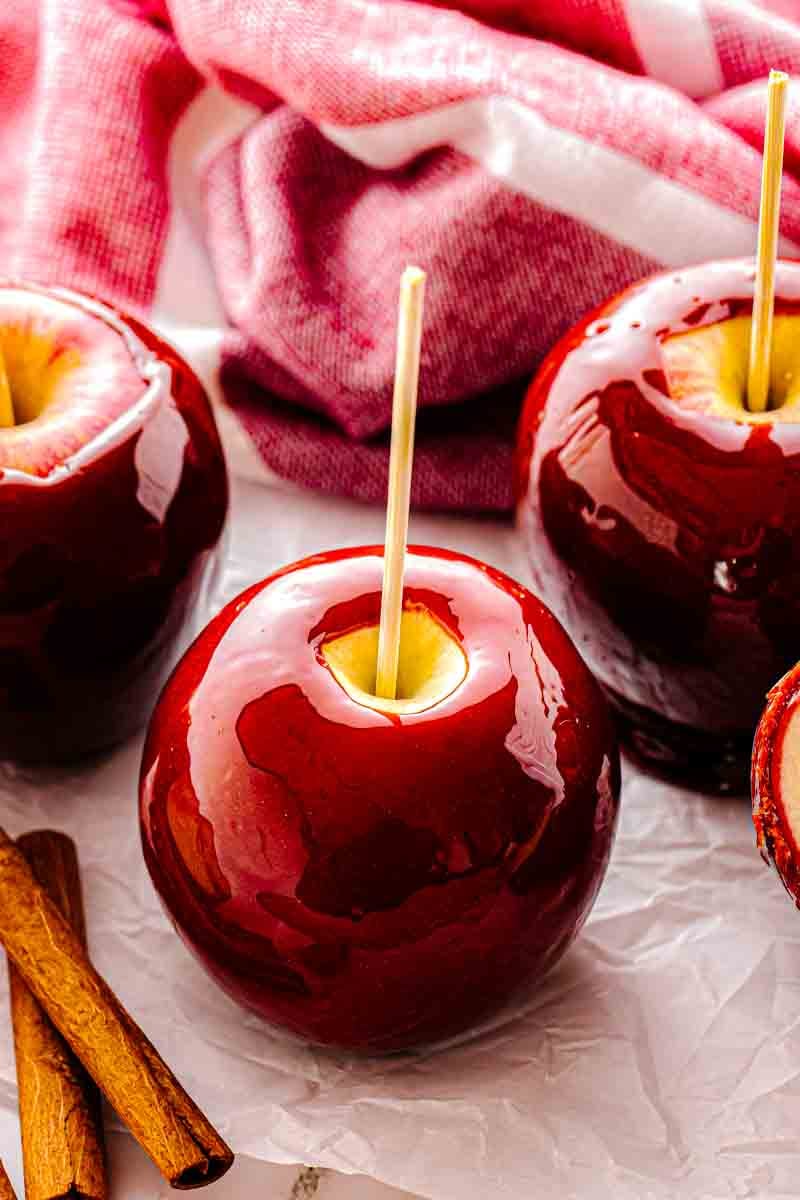
- Scrub the apples under hot water before you do anything else. That thin wax coating repels the hot syrup the same way it repels water in the produce aisle, and skipping this step is the single most common reason toffee apples end up with a bare top and a sugary puddle at the base.
- Keep the spoon out of the pan once the syrup starts boiling. Stray sugar crystals stuck to the sides can slide back into the mix and act as seeds, triggering the entire batch to crystallize into a grainy mess instead of a smooth glass shell.
- Trust the thermometer over the clock. Humidity in your kitchen can shift boiling time by several minutes in either direction, and pulling the syrup even a few degrees early leaves you with a soft, sticky coating that clings to your teeth instead of cracking cleanly.
- Choose a small, deep pan over a wide skillet. You need enough syrup pooled at depth to fully submerge an apple in one or two rolls, not scrape the bottom of a shallow puddle.
Storing Toffee Apples
These are a same-day treat. Leave them uncovered at room temperature in a cool, dry spot, and keep them out of the refrigerator entirely. Cold, humid air pulls moisture straight out of the fridge and into that sugar shell, turning a crisp, glassy coating tacky and sticky within a few hours.
Clean up is simple: fill the sticky saucepan with water, bring it to a boil on the stove, and let the boiling water dissolve the hardened toffee residue right off the sides and bottom.
Rosalia says
beautiful and delish!!! Thank you! MAking them now