

A cookie cake lives or dies by its frosting-to-cookie ratio, and generic buttercream recipes don't account for that. This version is scaled and textured specifically to pipe two full rows of swirls on my cookie cake - no guessing on consistency.
Chocolate buttercream frosting sounds simple until you're trying to pipe it onto a cookie cake instead of a layer cake, and the texture that works for one doesn't always work for the other. This chocolate buttercream recipe was developed specifically as the companion frosting for my Giant Chocolate Chip Cookie Cake - thick enough to hold a swirl from a star tip, soft enough to spread without tearing the cookie surface underneath.
Layer-cake buttercream is usually softer, because it needs to spread and settle between layers, but a cookie cake is flat, so the frosting needs to hold its shape sitting right on top without sliding off. So this version is thicker and calibrated specifically for piping: it goes on with a star tip (I use a Wilton 1M) and comes out in clean, defined swirls instead of a floppy blob. And because "will one batch be enough" is the question I always want answered before I start baking, I'll tell you upfront: this amount piped two full rows of swirls around my cake, with a little room to spare. Grab your butter, cocoa, and piping bag - this one's quick.

Why This Buttercream Works for a Cookie Cake (Not a Layer Cake)
Buttercream isn't one-size-fits-all - I cover the specifics in Ultimate Guide to Chocolate Frosting (Buttercream, Ganache, Fudge & More). When I'm frosting a layer cake I want something soft enough to spread and squish between layers without tearing the sponge, that's exactly the texture in 4-Ingredient Chocolate Buttercream Frosting. But a cookie cake just sits there - flat, firm, not going anywhere - so I only need the frosting to hold its shape on top, not spread or settle into anything. That's why I made this version a little sturdier than my layer-cake buttercream, so my swirls stay swirls instead of melting into a puddle by the time I cut into it.
Ingredients You'll Need
- Unsalted butter (softened, not melted) - Butter is the whole structure of this frosting, so its temperature matters a lot. Softened butter should give slightly when you press it, but still hold its shape - think "cool room temperature," not "sitting in the sun." If it's too soft or melted, your buttercream turns greasy and won't hold a swirl; too cold, and you'll get lumps no amount of beating will fix. I always pull mine out about an hour before I start, and if I forget (which happens more than I'd like to admit), a few seconds in the microwave at 50% power does the trick.
- Powdered sugar - This is your sweetness and your structure, both at once. Powdered sugar dissolves smoothly instead of leaving a gritty texture like granulated sugar would, and it's what gives buttercream its body so it can actually hold a piped shape instead of slumping. I always sift mine, even though it feels like an extra step - skip it, and you risk little sugar clumps sneaking into your frosting.
- Unsweetened cocoa powder - This is where the actual chocolate flavor comes from, since there's no melted chocolate in this recipe. Cocoa powder is more concentrated than you'd think, so a little goes a long way, and it also adds a bit of dryness to the mix - which is exactly why the liquid amount below matters so much. I use a natural unsweetened cocoa here, but if all you have is Dutch-process, it'll still work; the flavor will just be a touch milder.
- Milk or heavy cream - This is your consistency control. It loosens the butter-sugar-cocoa mixture from "stiff paste" into "smooth, pipeable frosting." Heavy cream gives a slightly richer, more stable result (it's got more fat to back it up), while milk works perfectly fine too - it's just a touch lighter. I always add this tablespoon by tablespoon, because it's one of those things where a little extra makes a big difference fast.
- Pure vanilla extract - Vanilla doesn't announce itself in this recipe, but take it out and you'll notice the difference immediately - the chocolate flavor tastes flatter and one-note without it. I always reach for pure vanilla extract over imitation here; it's a small ingredient doing a lot of quiet, background work.
- A pinch of salt - This is the ingredient people skip and then wonder why their buttercream tastes overly sweet and a bit flat. Salt doesn't make the frosting taste salty - it balances the sugar and actually makes the chocolate flavor taste more pronounced. Just a pinch is all you need; this isn't a salted caramel situation.
Butter, Powdered Sugar, and Cocoa: Getting the Ratio Right
This is the part to either overthink it or underthink. When I add too much powdered sugar, my buttercream turns gritty and sickly sweet; too little and it won't hold a shape at all. The ratio here - half a cup of butter to one and a half cups of powdered sugar and a quarter cup of cocoa - lands right in the sweet spot (pun intended): rich enough to taste like actual chocolate, structured enough to pipe cleanly. Sifting the sugar and cocoa together also matters more than people think - it knocks out lumps before they become a problem you're fighting with a spatula later.
It really is eye-opening once you see how much butter and sugar actually goes into a batch of piping-ready buttercream, even when the amount looks smaller than expected!
With only 1 ½ cups of powdered sugar in the mix, the ratio to butter is lighter than a lot of traditional buttercream recipes, which usually turn out much sweeter and sugar-heavy. It still works beautifully for piping swirls on a cookie cake, especially if the butter is well chilled and whipped enough to hold its shape, though you may notice the swirls are a touch softer and less rigid than frosting made with a heavier sugar ratio.
Milk or Heavy Cream: How Much for Pipeable Consistency
You want just enough liquid to loosen the mixture into something smooth and spreadable - but stops short of soft-serve territory. Heavy cream gives a slightly richer, more stable result, while milk works fine if that's what's in the fridge. Either way, I add it slowly, because it's much easier to add more liquid than to rescue a buttercream that's gone runny.
How to Make Chocolate Buttercream
Step 1: Beat the Butter Until Creamy
Start with the butter alone, no sugar yet. Beat it until it's pale, smooth, and creamy - this is what gives the finished buttercream its light, whippable texture instead of a dense, greasy one. Skip this step and rush straight to the sugar, and you'll be fighting lumps the whole way through.
Step 2: Sift in Sugar, Salt, Vanilla, and Cocoa
Sift the powdered sugar, salt, and vanilla into the bowl first, and mix on low - low is the operative word here, unless you enjoy a light dusting of powdered sugar across your kitchen. Once that's mostly combined, sift in the cocoa powder the same way. Sifting isn't just a "nice to have" step; cocoa powder especially loves to clump, and nobody wants a bitter, dry pocket of cocoa in an otherwise smooth swirl.
Step 3: Add Liquid Gradually for Pipeable Texture
Now add the milk or cream one tablespoon at a time, beating well between additions. Stop as soon as the buttercream looks smooth, glossy, and holds a soft peak when you lift the beater - that's your pipeable consistency. If it's still a bit stiff, add another splash; if it suddenly looks loose, a spoonful more powdered sugar will bring it back.
How to Pipe Buttercream on a Cookie Cake
Tools: Piping Bag and Star Tip (Wilton 1M)
You don't need fancy equipment for this, just a piping bag and a star tip - I use a Wilton 1M, which is the same tip you'll see on most piped cupcakes, and for good reason. It creates those big, ruffled swirls that look impressive but are honestly pretty forgiving if your piping hand isn't perfectly steady. Fit the tip into your bag, fill the bag about two-thirds full (any more and you'll be wrestling with it), and twist the top closed so the buttercream has nowhere to go but out the tip.
To pipe, hold the bag upright, right above the edge of your cooled cookie cake, and apply steady pressure while moving in a small circular motion, working from the outside in. Lift straight up to finish each swirl rather than dragging off to the side - that's what gives you a clean peak instead of a smudged one. And don't stress about perfection here; even a slightly wobbly swirl looks intentional once there's a whole ring of them around the cake.
How Many Swirl Rows One Batch Covers
This is the question I always want answered before I start a recipe, so here it is straight: one batch of this buttercream piped two full rows of swirls around the edge of my cookie cake, with a bit left over. If you want a fuller, more dramatic look - say, three rows, or swirls covering more of the surface - I'd make one and a half times the recipe just to be safe. Running short mid-pipe is never a fun moment.

Chocolate Buttercream Frosting for Cookie Cake
Ingredients
- ½ cup unsalted butter softened
- 1½ cups powdered sugar
- ¼ cup unsweetened cocoa powder
- 2 tablespoons milk or heavy cream plus more if needed
- 1 teaspoon pure vanilla extract
- A pinch of salt
Instructions
- Beat the softened butter until creamy and pale, about 1-2 minutes.
- Sift the powdered sugar, salt, and vanilla into the bowl, then sift in the cocoa powder. Mix on low speed at first to combine.
- Add the milk or cream one tablespoon at a time, beating well after each addition, until the buttercream is smooth and reaches a pipeable consistency.
- Transfer the buttercream to a piping bag fitted with a star nozzle (Wilton 1M works well) and pipe around the edge of the cooled cookie cake.
Notes
If the buttercream is too soft, add a tablespoon more powdered sugar. If too stiff, add liquid a teaspoon at a time. Store leftover buttercream in an airtight container in the fridge for up to 1 week, or freeze up to 3 months. Bring to room temperature and re-whip before piping. Works on cupcakes or layer cakes too — just loosen with a splash more milk or cream if spreading rather than piping.
Storage and Make-Ahead Tips
Buttercream is genuinely one of the more forgiving frostings to make ahead, which is always a relief when you're planning a cake around a busy day. Store any leftover buttercream in an airtight container in the fridge for up to a week, or in the freezer for up to three months if you want to plan further out. When you're ready to use it, let it come back to room temperature, then re-whip it for a minute or two to bring back that smooth, pipeable texture - it separates slightly as it sits, but a good beat fixes that right up.
FAQ
Can I Make This Buttercream Ahead of Time?
Yes, and honestly I do this often when I've got a busy baking day ahead. Make the buttercream up to a week in advance, store it in the fridge in an airtight container, and just let it soften at room temperature and re-whip before piping. Skipping the re-whip step is the one mistake I'd tell you to avoid - buttercream straight out of the fridge is too stiff to pipe cleanly.
Why Is My Buttercream Too Soft or Too Stiff to Pipe?
If it's too soft, it's usually one of two things: your butter was too warm when you started, or you added a touch too much milk or cream. The fix is easy - a tablespoon or two more powdered sugar will firm it right back up. If it's too stiff, on the other hand, you likely need a bit more liquid; add it a teaspoon at a time, because it doesn't take much to loosen buttercream from "stiff" to "spreadable."
Can I Use This on Other Cakes Besides a Cookie Cake?
Absolutely - this buttercream isn't locked to cookie cakes, it just happens to be built with one in mind. It'll work beautifully piped onto cupcakes, spread over a layer cake, or even sandwiched between cookies for a homemade whoopie pie situation. Just know that because it's on the thicker side (to hold those cookie cake swirls), you may want to loosen it slightly with an extra splash of milk or cream if you're spreading rather than piping.
More Chocolate Frosting Recipes You Might Like
If this one isn't quite what you're after, I've got a few other chocolate frosting recipes on the blog worth checking out, depending on what you need.
- Vegan Chocolate Frosting - If you're baking for someone dairy-free or just ran out of butter, this one skips the dairy entirely without losing that rich, chocolatey texture.
- Low on Sugar Chocolate Frosting - For days when you want the chocolate flavor without quite as much sweetness, this is the lighter version I turn to.
- 4 Ingredient Chocolate Buttercream Frosting - This is my go-to when I want something fast and foolproof - fewer ingredients, same great chocolate payoff.
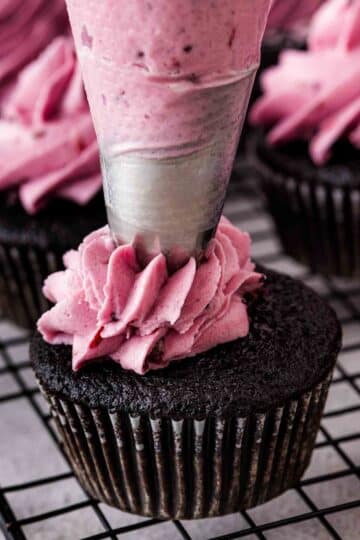
- Dark Chocolate Raspberry Cupcakes with 4-Ingredient Chocolate Buttercream Frosting - If you want to see that 4-ingredient buttercream in action, this cupcake recipe pairs it with dark chocolate and fresh raspberries, and it's one of my favorite flavor combos.
- Ultimate Guide to Chocolate Frosting (Buttercream, Ganache, Fudge & More) - Not sure which type of chocolate frosting fits your bake? This guide breaks down buttercream, ganache, and fudge frosting side by side so you can pick the right one.
- Dark Chocolate Cream Cheese Frosting (Rich, Not Too Sweet & Truly Pipeable) - If you love the tangy edge cream cheese frosting brings but still want something pipeable, this is the dark chocolate version of that idea.
Katie Gann says
Does the cake need to be refrigerated once it is decorated with this frosting?
Olya Shepard says
Yes - store the frosted cake covered in the refrigerator.
Maria says
I plan on doubling this recipe. Cooke cake recipe is great too. Thank you from Atlanta Ga!
Matt says
I never really knew how much butter and sugar went into buttercream frosting – good explanation but delicious! This recipe was terrific and easy to follow.
Olya Shepard says
Yes, the butter to sugar ration in this recipe is pretty good and tested many times.