
For years, I chased that exact bakery muffin look: sky-high domes, crackly tops, and a soft, almost cake-like interior that somehow still felt structured-not crumbly, not dense, not dry by the next morning.

I tested this across dozens of batches-from classic blueberry to richer options like my Pumpkin Pecan Muffins and Banana Pecan Muffins. Some batches looked right but went sticky overnight. Others tasted great but didn't dome.
There is a reason bakery muffins look different from the ones that come out of a home kitchen. They rise higher. Their tops spread just enough to look generous without collapsing. The crumb is soft but not wet, tender but not cakey, and the top usually has some kind of contrast: coarse sugar, streusel, glaze, or browned edges that make the first bite feel like the best part.
The good news is that bakery-style muffins are not about secret ingredients or oversized equipment. They are about batter structure, moisture control, pan filling, oven heat, and knowing which ingredients do what. Once you understand those pieces, you can make Blackberry Crumb Muffins, pumpkin pecan muffins with a crumble top, Greek Yogurt Blueberry Muffins, and just about every seasonal variation without guessing.

What Makes a Muffin Bakery-Style?
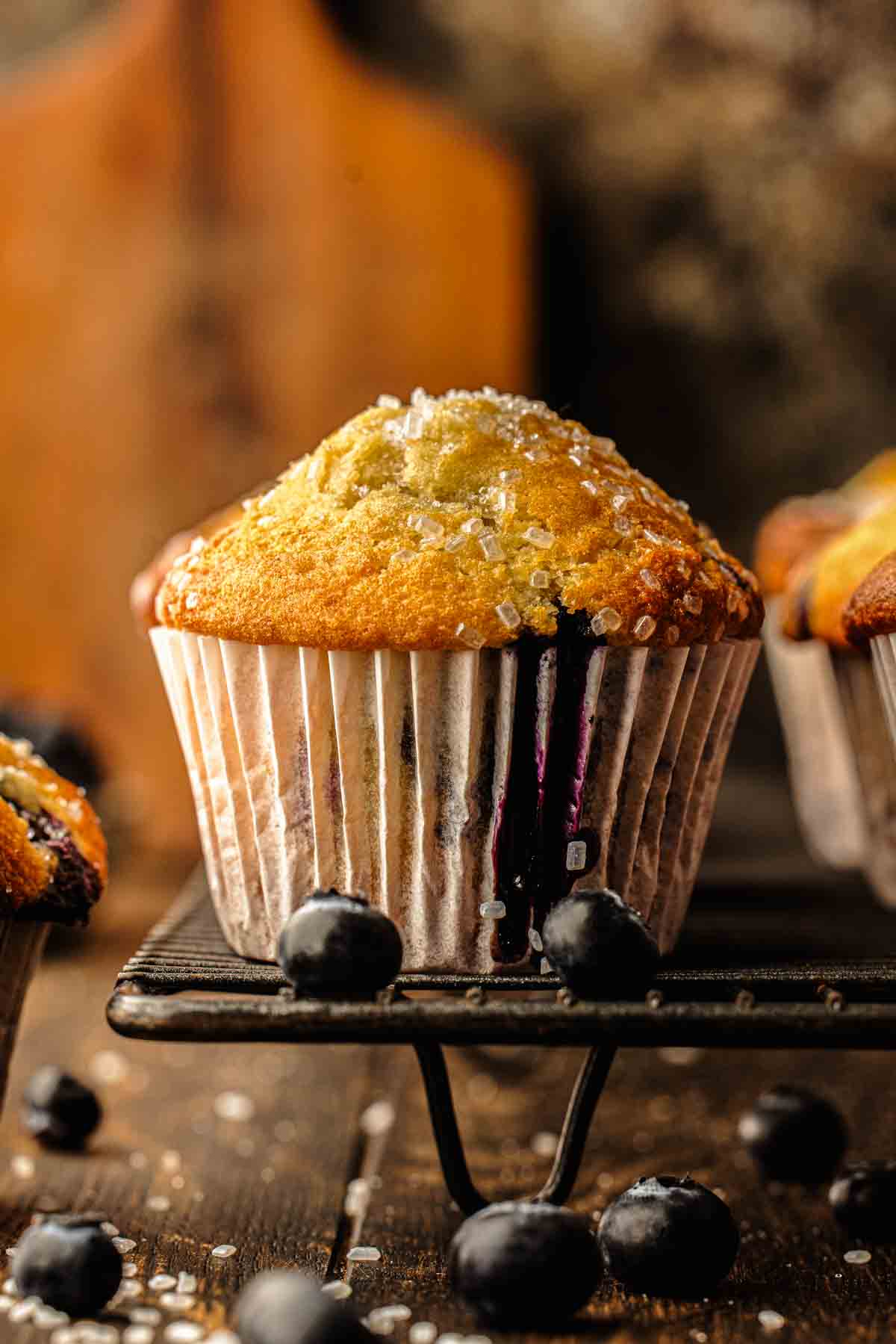
A bakery-style muffin is bigger, taller, and more textural than a standard homemade muffin. The top is not an afterthought. It should rise above the liner, form a dome or mushroom cap, and give you a little contrast against the softer interior. That contrast might come from coarse sugar, crumb topping, toasted nuts, a glaze, or even the browned edges of a high-rising batter.
The biggest difference is structure. A good bakery muffin batter is thick enough to climb upward before it spreads outward. Thin batter moves too easily, which is why it can bake into flat tops, soggy bottoms, or fruit that sinks to the base. A thicker batter gives the muffin enough support to trap steam and lift.
Moisture is the second difference. Bakery-style does not mean wet or underbaked. It means tender, hydrated, and soft after cooling. Oil, full-fat yogurt, sour cream, pumpkin puree, mashed banana, and fruit all affect moisture differently, so the recipe has to balance them with enough flour, eggs, and leavening to keep the crumb from turning gummy.
The third difference is heat. A hot start can help the batter rise quickly before the muffin top sets. That is why my bakery-style blueberry muffins and Blackberry Crumb Muffins both use a two-temperature bake: a short blast of high heat for lift, followed by a lower temperature to finish the center without overbrowning the outside.
Bakery-style muffins also feel intentional. The blueberries are suspended instead of pooled at the bottom. The streusel stays crumbly instead of melting into greasy patches. The top has a little crunch. The inside tastes like the flavor it promises, whether that is lemon-blueberry, pumpkin-pecan, apple-cinnamon, or maple-walnut.

The Real Problem: Why Most Homemade Muffins Do Not Dome
Most muffin recipes are designed to be safe, not exceptional. They prioritize consistency across kitchens, which usually means lower risk-and lower rise.
When I was refining my Bakery-Style Blueberry Muffins with Tall Domes, I kept running into the same issue: good flavor, decent texture, but not that dramatic bakery lift.
What I eventually realized is that tall muffins require pushing the limits slightly-then controlling the fallout.
- Moderate oven temperature
- Conservative leavening
- Lower fill levels
- Minimal structural risk
That combination produces safe muffins-but not bakery muffins.
What I found through testing dozens of batches (especially while developing my blueberry and banana variations) is that tall domes require controlled imbalance. You need more expansion than the structure comfortably supports-then you reinforce the structure just enough so it doesn't collapse.
That balance is where bakery-style muffins thrive.
My Key Method: The Dual-Phase Heat + Thick Batter System
This is the part I don't see explained clearly elsewhere.
I use what I call a dual-phase bake with a high-viscosity batter:
- Start at 425°F for rapid lift (first 5-7 minutes)
- Reduce to 350°F to finish baking evenly
- Use a thicker-than-standard batter that can hold vertical rise
The high initial heat activates baking powder aggressively, creating a fast upward push. But that only works if the batter is thick enough to trap and direct that expansion upward instead of outward.
When I tested thinner batters (especially with extra milk or juicy fruit), I got wide, flat muffins-even with high heat. Once I reduced liquid slightly and leaned on ingredients like sour cream or mashed banana for controlled moisture, the domes became consistent. If your muffins tend to turn out dense or overly soft, the issue often starts with moisture balance-I go deeper into that in How to Make Muffins Moist Every Time.
The Ingredient Ratios That Finally Worked
After a lot of failed batches-dense centers, overflowed tops, dry edges-this is the ratio I landed on for most bakery-style muffins:
- Flour: baseline structure
- Fat: oil + butter combo (oil for moisture, butter for flavor)
- Sugar: slightly higher than standard recipes for tenderness and browning
- Eggs: room temperature, for emulsification
- Thick dairy (sour cream or Greek yogurt): replaces part of the liquid
- Leavening: slightly elevated, but not excessive
The key shift was replacing part of the milk with thicker dairy. This keeps the batter dense enough to rise upward while still baking into a soft crumb.
The Pan Setup Most People Skip
This is one of those small changes that had an outsized impact. Instead of filling every cavity in the muffin tin, I leave every other well empty. That gives each muffin more ambient heat and space to expand outward and upward.
So instead of 12 muffins in a standard pan, I bake 6 at a time, filling each cavity nearly to the top.
When I tested side-by-side batches-one fully filled pan, one spaced-the spaced muffins consistently domed higher and baked more evenly.
It looks inefficient. It produces better muffins.
The Sugar Top (And Why Storage Can Ruin It)
That crackly, bakery-style top isn't just about sprinkling sugar-it's about when and how it interacts with moisture. Early on, I kept ruining perfectly baked muffins by sealing them too soon. The sugar would absorb moisture and turn sticky overnight.
I use coarse sugar (like turbinado) right before baking. But what I learned the hard way is that storage matters just as much as baking here. If you seal those muffins too soon, the sugar pulls in moisture and turns sticky. Now I deliberately let muffins rest uncovered for several hours before storing. That small change preserved the crisp top I was trying to create in the first place.
If you're planning ahead or baking in batches, storage becomes part of the system-not an afterthought.
A Specific Use Case: Weekend Batch, All Week Payoff
Most of my muffin testing happens in real-life conditions-not just for photos, but for weekday breakfasts.
Here's the workflow I actually use:
- Bake a half batch (6 large muffins) on Sunday
- Eat 2 fresh
- Store 2 at room temperature (paper towel method)
- Freeze 2 using a pre-freeze step. Freeze them using this approach: How to Freeze Muffins So They Taste Fresh
By midweek, I can compare texture across storage methods. That's how I refined not just the baking method, but the full lifecycle-from oven to day-three eating quality.
This is also where I learned that bakery-style muffins are more sensitive to storage mistakes than standard ones. The higher sugar and moisture that make them taste better also make them degrade faster if stored incorrectly.
If you're planning ahead, even the batter stage matters more than most people think-I break that down in Can You Make Muffin Batter Ahead of Time?
What Failed (And Why I Don't Do It Anymore)
A few things I tested that didn't hold up:
- Overloading baking powder: created tall muffins that collapsed into themselves
- Too much liquid: caused spreading instead of rising
- Skipping the high-heat start: resulted in gently domed, not bakery-style tops
- Filling liners halfway: guaranteed flat muffins every time
Each of these "almost worked," which is what makes them so common online. But none produced consistent bakery results.
The Takeaway: Bakery Muffins Are Engineered, Not Just Baked
The shift for me was understanding that bakery-style muffins aren't about one trick-they're about controlling multiple variables at once:
- Batter thickness controls direction of rise
- Heat controls speed of expansion
- Pan spacing controls airflow
- Sugar and moisture control the final texture
Choose Your Muffin Path
Want the classic bakery muffin? Start with Bakery-Style Blueberry Muffins with Tall Domes and a Crunchy Sugar Top.
- Want a fall muffin? Try Pumpkin Pecan Muffins.
- Craving a cozy bake? Go for Banana Pecan Muffins.
Running into issues-flat, dense, or dry? Deep-dive into my how-to articles:

Comments
No Comments