
These Greek yogurt blueberry muffins bake in 38 minutes using a two-temp oven trick that builds a tall dome and crunchy sugar crust home ovens rarely produce. No butter, no mixer - just one bowl and a thick batter that keeps berries suspended. The bakery muffin you've been chasing is easier than you think.

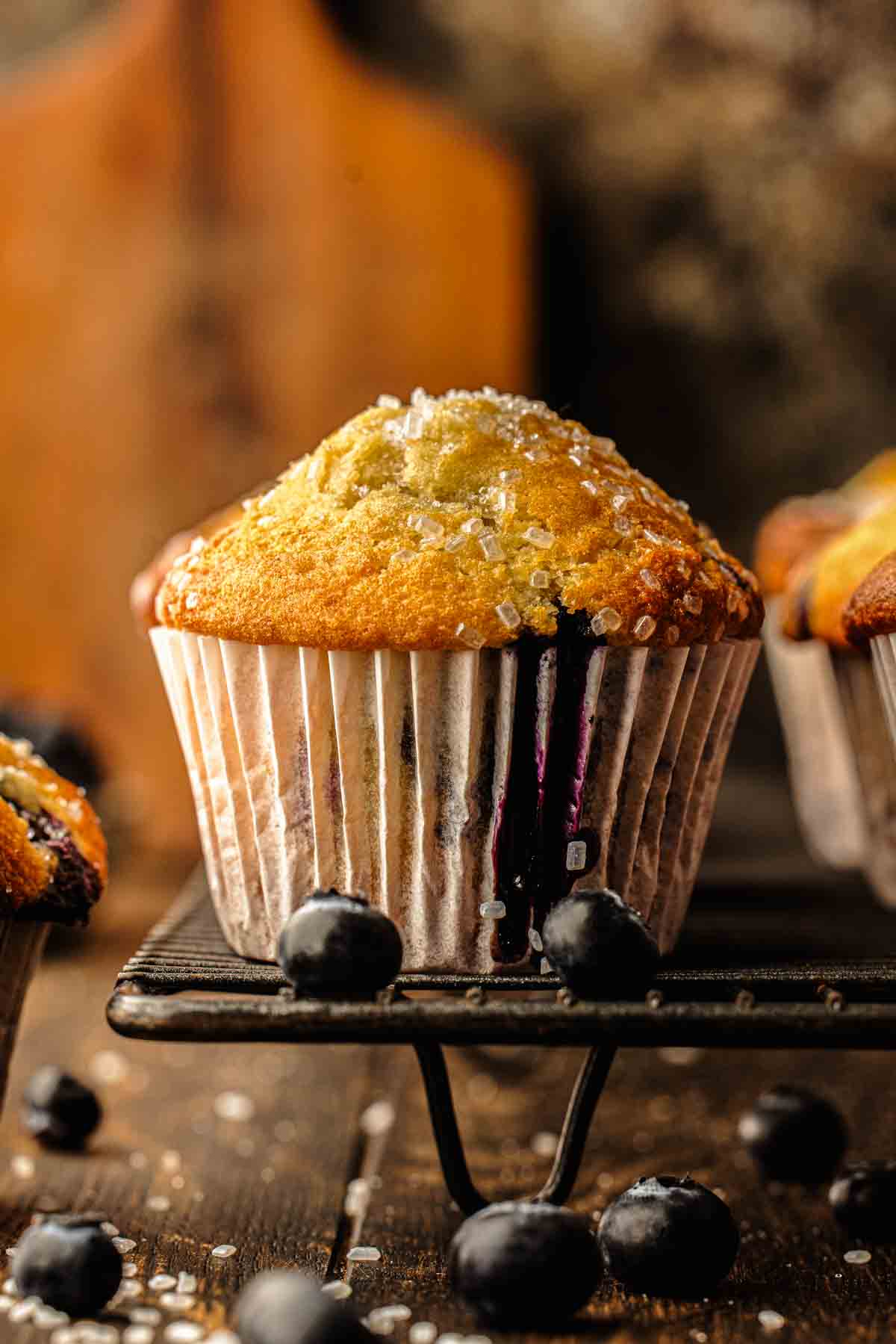
These bakery-style blueberry muffins are the ones people ask you about. Tall domed tops, a crunchy coarse sugar crust, and a moist crumb loaded with juicy berries - all from one bowl with no mixer required. The batter comes together in minutes and the whole recipe is done in 38 minutes, yet the result looks and tastes like something that came out of a professional bakery case. They stay just as soft and tender the next day, which almost never happens with a homemade muffin.
Over the years, I've turned this recipe into the blueprint for my entire bakery-style muffin system, which I've pulled together in a dedicated The Ultimate Guide to Bakery-Style Muffins at Home.

The secret comes down to two key elements: a thick Greek yogurt and oil batter that gives the crumb lasting moisture, and a two-temperature oven method that forces a dramatic rise before the structure sets. Starting at 425°F creates an immediate burst of heat that pushes the batter upward fast, and dropping to 350°F without opening the door lets the centers finish cooking through without overbaking the outside. This method applies to Jumbo Blueberry Muffins with Lemon Crumb Topping as well.
If using dark baking pans, reduce the oven temperatures to 400°F for the initial bake and 325°F for the remainder.
Tossing the blueberries in a teaspoon of flour before folding them into the batter keeps them evenly suspended throughout the crumb instead of sinking to the bottom. Once you bake them this way, it's hard to go back to any other muffin recipe.
If you're as obsessed with blueberries as I am, you'll love this collection of the best blueberry recipes to bake your way through peak season.

Why These Muffins Rise So Tall (The Two-Temp Oven Trick)
Most blueberry muffin recipes bake at a single temperature - usually 350°F from start to finish - and that's exactly why most homemade muffins come out with flat, rounded tops instead of the tall, domed crowns you see at a good bakery. The structure of a muffin dome isn't random. It's a direct result of how fast the batter heats in the first few minutes of baking, and you can control that completely with one simple adjustment: start high, then drop the temperature mid-bake. No special equipment, no professional oven required.
What Happens at 425°F
When the batter hits a 425°F oven, the leavening agents - baking powder and baking soda - activate immediately and aggressively. Carbon dioxide bubbles form faster than they would at a lower temperature, and the batter expands upward before the outer crust has a chance to set and harden. That rapid early rise is what pushes the center of the muffin up and outward, creating the characteristic dome shape. The crust on the sides of the liner firms up just enough to hold the structure in place as it climbs. Those first five minutes at high heat are doing the majority of the physical work that determines the final shape of your muffin - the rest of the bake is just finishing what already started.

Why You Drop to 350°F Without Opening the Door
Once the dome has formed and the outer structure has set, 350°F takes over to cook the center through gently and evenly without overbaking the outside. At 425°F the whole way through, the tops and edges would darken too fast while the centers stayed underdone - a common problem that leads to muffins that look done but are gummy in the middle. Dropping the temperature gives the interior enough time to fully bake without any further aggressive browning on the crust.
The critical detail is not opening the oven door during the transition. Cold air rushing into the oven at the exact moment the batter is mid-rise can cause the structure to deflate before it sets - the same reason a soufflé collapses when disturbed. Simply reduce the temperature on the dial and leave the door closed. The oven adjusts on its own, and your muffins keep climbing.

Greek Yogurt vs. Sour Cream vs. Buttermilk - Why Yogurt Wins Here
All three ingredients are acidic, all three tenderize gluten, and all three react with baking soda to create lift - so the difference comes down to thickness.
Buttermilk is too thin for this recipe; it produces a pourable batter that spreads outward in the pan instead of rising upward, and it can't suspend blueberries long enough to keep them from sinking. If you love what buttermilk does in baked goods, this Mixed Berry Coffee Cake (With Streusel) uses it beautifully in a looser batter where the texture works in its favor.
Sour cream is a reasonable substitute and works well in muffins, but full-fat Greek yogurt has been strained of excess liquid, making it noticeably thicker and denser, which is why it worked so well in Blueberry Cheesecake with Greek Yogurt Filling.
That thickness matters more than it sounds. A thicker batter holds its shape in the liner, forces the rise to go up rather than out, and keeps blueberries evenly distributed throughout the crumb. Greek yogurt also brings slightly more protein than sour cream, which helps the structure set early in the oven and hold that dome in place. The result is a taller muffin with a more even crumb - and one that stays moist longer because the extra fat and protein retain moisture as the muffin cools.

How to Keep Blueberries from Sinking
Fresh blueberries are dense and wet, and most muffin batters - even thick ones - aren't quite viscous enough to hold them in place through the full bake. Without any intervention, gravity wins and you end up with a layer of berries compressed at the bottom of every muffin. The fix is simple and takes about ten seconds.
Not sure when blueberries are at their sweetest where you live? Check out this blueberry season guide so you can time these muffins for the juiciest berries.
The Flour Toss Method Explained
Before folding the blueberries into the batter, toss them with one teaspoon of all-purpose flour until lightly coated. The flour creates a thin, dry coating around each berry that does two things: it slightly increases friction between the berry and the surrounding batter, and it absorbs some of the surface moisture on the berry that would otherwise make it slippery and harder for the batter to grip.
The coating also acts as a mild adhesive once the batter starts to set in the oven. As the heat firms up the structure around each berry, the flour on the surface bonds with the surrounding crumb and locks the berry in place before it has a chance to migrate downward. It isn't a dramatic chemical reaction - it's purely mechanical, and it works consistently.
One teaspoon is enough. More flour than that and you'll notice a slightly pasty coating around each berry in the finished muffin. Shake off any obvious excess before folding them in, and add them at the very end with a gentle hand - overmixing at this stage breaks the berries open and turns the batter purple. This same technique applies any time you're baking with fresh berries - it works just as well in this Mixed Berry Coffee Cake (With Streusel) and these Blueberry Scones.

Ingredients You Need (And Why Each One Matters)
- Eggs - Bind everything together and give the muffins structure so they hold their shape. Use them at room temperature so they blend in smoothly.
- Granulated sugar - Sweetens the muffins and helps the tops brown. It also keeps the crumb soft and tender as it bakes.
- Fine salt - I bought Diamond Crystal kosher fine salt. A small amount balances the sweetness and makes the blueberry flavor taste brighter.
- Full-fat Greek yogurt - The ingredient that keeps these moist for days and makes the batter thick enough to hold blueberries in place. Don't swap it for low-fat.
- Vegetable oil - I bought a standard bottle from Aldi. Unlike butter, oil stays liquid at room temperature, which is why these muffins stay soft long after baking.
- Vanilla extract - Rounds out the sweetness and makes the muffins smell incredible out of the oven. Pure extract only - imitation tastes flat in a simple recipe like this.
- All-purpose flour - I bought King Arthur all-purpose. This is the structure of the muffin - spoon it into the measuring cup and level it off, never scoop directly from the bag.
- Baking powder - The main leavening agent that creates the rise and builds the dome. Make sure yours isn't expired or the muffins will bake flat.
- Baking soda - I bought Arm & Hammer. It reacts specifically with the yogurt's acidity to boost lift and speed up browning on top.
- Fresh blueberries - Rinse and dry them thoroughly before using - excess water loosens the batter and causes berries to sink faster.
- Coarse sugar - Sprinkled on top right before baking, it melts into a thin crackly crust as the muffin rises. Turbinado or Sugar in the Raw work perfectly.

Step-by-Step Instructions
Before You Start
Pull your eggs and Greek yogurt out of the refrigerator at least 30 minutes before you begin. Cold ingredients tighten the batter and affect how evenly everything comes together. While you wait, line your muffin pan with paper liners and set the oven to 425°F so it's fully preheated before the batter is ready.
1. Mix the Wet Ingredients First
Crack the eggs into a large bowl, add the sugar and salt, and whisk for about a full minute until the mixture looks slightly thicker and paler. This isn't just combining - you're partially dissolving the sugar, which makes a smoother, more cohesive batter. Add the Greek yogurt, oil, and vanilla and whisk until everything is completely smooth with no streaks of yogurt remaining.


2. Add the Dry Ingredients
Whisk the flour, baking powder, and baking soda together in a separate bowl first - this distributes the leavening evenly so you don't end up with pockets of baking soda in the finished muffin. Add the dry ingredients to the wet bowl and switch from a whisk to a spatula. Fold gently until just combined. The batter will be thick and that's exactly right - stop mixing the moment you no longer see dry flour streaks.


3. Fold in the Blueberries
Toss the blueberries with one teaspoon of flour in a small bowl until lightly coated, then add them to the batter. Use slow, deliberate folds rather than stirring - you want the berries distributed evenly without breaking them open and turning the batter purple. Six to eight folds is usually enough.


4. Fill and Top
Divide the batter between the liners, filling each one nearly to the top. A thick batter won't overflow - filling high is intentional and is what gives you the tall dome shape. Sprinkle coarse sugar generously over each one before they go in.

5. The Two-Temperature Bake Method (425°F → 350°F)
Slide the pan into the fully preheated 425°F oven and set a timer for 5 minutes. When it goes off, turn the oven down to 350°F - do not open the door. Set another timer for 18 minutes. The muffins are done when the tops are golden, spring back lightly when pressed, and a toothpick inserted into the center comes out clean or with a few moist crumbs.

6. Cool Before Eating
Leave the muffins in the pan for 5 minutes after baking - pulling them out immediately on a wire rack causes the bottoms to steam and go soggy. After 5 minutes, transfer them to the rack and give them at least another 10 minutes before eating. The crumb continues to set as they cool, and the sugar crust firms up into that crackly finish during this time.
Love these blueberry muffins and want to level up all your muffin baking? Try my guides on making muffin batter ahead of time, how to keep muffins moist, and how to freeze muffins so they still taste fresh.

Blueberry Muffins
Ingredients
- 2 large eggs room temperature
- ¾ cup granulated sugar
- ½ teaspoon fine salt
- 1 cup full-fat greek yogurt room temperature
- ½ cup vegetable oil
- 1 teaspoon vanilla extract
- 2 cups all-purpose flour plus 1 teaspoon for tossing berries
- 2 teaspoon baking powder
- ½ teaspoon baking soda
- 1½ cups fresh blueberries rinsed and dried
- coarse sugar for topping
Instructions
- Preheat the oven to 425°F. Line a 12-cup muffin pan with paper liners.
- In a large bowl, whisk together the eggs, sugar, and salt until smooth and slightly thickened. This step helps dissolve the sugar and creates a more cohesive batter.
- Add the Greek yogurt, vegetable oil, and vanilla extract, whisking until fully combined and smooth.
- In a separate bowl, whisk together the flour, baking powder, and baking soda.
- Add the dry ingredients to the wet ingredients and gently fold together until just combined. The batter will be thick. Avoid over mixing, as this can lead to dense muffins. Toss the blueberries with the remaining teaspoon of flour, then gently fold them into the batter until evenly distributed.
- Divide the batter evenly between the muffin liners, filling each one almost to the top. Sprinkle the tops generously with coarse sugar. Bake at 425°F for 5 minutes.
- Without opening the oven door, reduce the temperature to 350°F and continue baking for 18 minutes, or until the muffins are golden and a toothpick inserted into the center comes out clean or with a few moist crumbs, but not wet batter.
- Allow the muffins to cool in the pan for 5 minutes before transferring them to a wire rack to cool slightly.
- Serve and enjoy!
Baker's Tips for Perfect Muffins Every Time
The single most important thing you can do is not overmix. Once the flour goes in, the gluten in the batter starts developing with every stir, and too much of it makes the crumb tight and chewy instead of soft and tender. Fold until the dry streaks disappear and stop - lumpy batter is completely fine and actually preferable to a smooth one. The second thing that trips people up is oven temperature. Every oven runs slightly differently, so if your muffins are browning too fast on top before the centers are set, your oven is running hot and 425°F is effectively higher than the recipe intends. An inexpensive oven thermometer solves this immediately and is worth having for any baking you do.
The rest is small details that add up. Make sure your baking powder isn't older than six months or it won't give you the lift you need, use full-fat Greek yogurt and not the low-fat version which has too much water, and dry your blueberries thoroughly after rinsing because surface moisture on the berries loosens the batter around them. If you're using frozen blueberries, don't thaw them first - fold them in straight from the freezer so they don't bleed into the batter and add 2 to 3 minutes to the bake time. These same tips apply to the Blueberry Scones recipe on the site - same berry, same principles, completely different texture result worth trying.
How to Store Blueberry Muffins
Room Temperature
Place the cooled muffins in an airtight container and store them at room temperature for up to 2 days. Line the bottom of the container with a paper towel to absorb any excess moisture that accumulates - without it, the bottoms can turn soft and slightly gummy by the next morning. Keep the lid on loosely if the sugar topping starts to soften; a little airflow helps it stay crisp longer.
Refrigerator
An airtight container in the refrigerator keeps them fresh for up to 4 days. The cold does make the crumb firm up and taste a little denser straight from the fridge, so give them 20 to 30 minutes at room temperature before eating or warm them for 15 to 20 seconds in the microwave. Either way brings them back to something very close to fresh-baked texture.
Freezer
These freeze exceptionally well for up to 2 months. Let them cool completely before freezing - sealing in any residual warmth creates ice crystals that make the crumb watery when thawed. Wrap each muffin individually in plastic wrap, then place them together in a zip-lock freezer bag. This double layer prevents freezer burn and lets you pull out one at a time without thawing the whole batch. To serve, thaw at room temperature for about an hour or warm in a 300°F oven for 8 to 10 minutes until heated through. The microwave works in a pinch but softens the sugar crust - the oven brings it back.

Variations and Add-Ins
Lemon Blueberry Muffins
Blueberries love bright, zesty flavors like lemon and warm baking spices. For more ideas, see this guide to the best blueberry flavor pairings.
I love to add the zest of one large lemon directly to the wet ingredients before mixing. Zest carries the majority of lemon flavor - it's concentrated in the oils of the skin in a way that juice alone isn't.
If you want a more pronounced lemon presence, swap one tablespoon of the oil for fresh lemon juice, but don't go beyond that or you'll throw off the moisture balance. The lemon doesn't compete with the blueberries so much as it sharpens them - the tartness makes the berries taste more intensely like themselves.
Wild Blueberry Version
Wild blueberries are smaller, more intensely flavored, and more tart than the standard cultivated berries most grocery stores carry - I made Blueberry Cinnamon Rolls and Blueberry Crumb Cake with Lemon Vanilla Glaze using wild blueberries if you want to see what they look like in baking. If you can find them fresh at a farmers market, use them as a straight swap by volume. More on these amazing berry's similarities and differences in Wild vs. Regular Blueberries: Which Bake Better?
Streusel Topping Option
If you want to skip the coarse sugar and go with a streusel instead, combine 3 tablespoons cold unsalted butter cut into small cubes, ¼ cup all-purpose flour, 3 tablespoons granulated sugar, and a pinch of cinnamon. Same streusel that I used on Pumpkin Pecan Muffins.
Work the butter into the dry ingredients with your fingers until the mixture resembles coarse, clumpy sand - you want visible butter pieces, not a fine powder. Spoon it over the filled muffin liners just before baking. The streusel bakes into a crumbly, buttery crust that adds a different kind of texture contrast than the sugar topping - less crackle, more crunch.
Frequently Asked Questions
Can I use frozen blueberries?
You can use either fresh or frozen blueberries in these muffins. If you're torn between the two, this post on fresh vs frozen blueberries breaks down which one works best in different recipes.
If using frozen blueberries, the key is to not thaw them first - fold them into the batter straight from the freezer. Thawed blueberries release a significant amount of liquid that loosens the batter, causes the berries to break apart, and turns everything an unappetizing shade of purple. Frozen berries go in cold and firm, which keeps the batter thick and the berries intact. Add 2 to 3 minutes to the bake time and check for doneness with a toothpick since the cold berries lower the internal temperature of the batter slightly.
Can I make these ahead of time?
Two approaches work here. You can bake the muffins completely, cool them, and store them as directed - they hold up well for 2 days at room temperature and reheat nicely. Alternatively, you can mix the dry ingredients and wet ingredients separately the night before, store them covered in the refrigerator, and combine them in the morning. Don't mix the full batter ahead of time and let it sit overnight - the leavening starts working the moment it contacts liquid, and a batter that sits too long will bake flat.
Why is my muffin batter so thick?
That's intentional and exactly what you want. A thick batter is what keeps the blueberries suspended throughout the crumb instead of sinking, and it's what forces the muffin to rise upward rather than spread outward in the pan. If the batter seems unusually thick compared to other muffin recipes you've made, that's the Greek yogurt doing its job. Resist the urge to thin it out with extra liquid - doing so undermines both the texture and the dome shape you're going for.
Can I substitute the Greek yogurt?
Full-fat sour cream is the closest substitute and works well - use it in the same amount. The texture will be slightly less thick but the muffins will still be moist and tender. Regular yogurt is too thin and will make the batter loose, so avoid it. Buttermilk can work in a pinch but produces a noticeably flatter muffin because of how much it thins the batter. If none of those are available, full-fat plain yogurt strained through a cheesecloth for 30 minutes to remove excess liquid gets you close to the consistency you need.

More Muffins You'll Love
- Pumpkin Pecan Muffins - Tender, buttery fall muffins loaded with fresh pumpkin puree and finished with a cinnamon streusel topping that makes them just as good for dessert as it is for breakfast.
- Blackberry Crumb Muffins- Moist muffins that pair fresh blackberries with lemon glaze for a flavor combination that works any time of day.
- Banana Pecan Muffins - Soft, deeply flavored muffins that use ripe bananas to build natural sweetness and a moist crumb without any extra effort.
Yianni says
These are the best blueberry muffins I have made: soft and delicious. The only suggestion I make is to advise that if one bakes with dark pans the temperatures for baking respectively should be 400 and 325.
Olya Shepard says
I love this suggestion!
Diane says
Ok
Janice says
This recipe turned out beautifully. The muffins were tall and had a great crumb. I followed the recipe exactly as stated and it all turned out just like your pictures. My family has really enjoyed these muffins. They are almost gone!
Olya Shepard says
So glad the muffins are almost gone!:) They are sooo good fresh!
Wayne says
Loved the muffins! Great tips on making them rise fast.