
This honey mustard vinaigrette is thick, creamy, and ready in 5 minutes - no mayo, no blender, no shortcuts. The secret is whisking Dijon mustard into apple cider vinegar first. This way the salad dressing comes together thick, creamy, and stable - without a single drop of mayo. Seven pantry staples, one bowl, and a technique that works every single time.

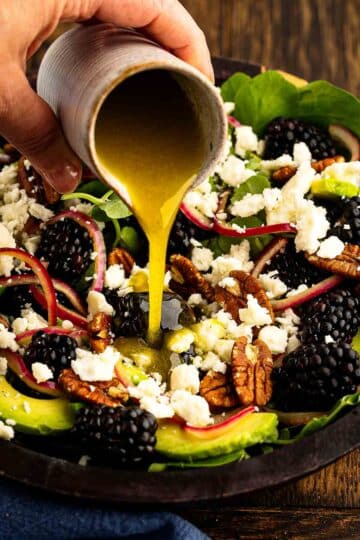
Perfect for Brussels sprouts salad, Blackberry and Avocado Salad, grain bowls, and roasted vegetables.
This 5-minute honey mustard vinaigrette is thick, creamy, and made without a drop of mayo with a slow 60-second oil drizzle which is what keeps a creamy emulsified honey mustard dressing cohesive for up to 10 days in the fridge.
Why This Recipe Works
- Order of adding ingredients is everything - Dijon goes into the apple cider vinegar first, creating an emulsion base that absorbs the oil smoothly instead of letting it float on top
- Apple cider vinegar was tested against red wine vinegar - red wine vinegar was too assertive and drowned out the honey; ACV's mild, fruity acidity keeps every flavor balanced
- Garlic powder and onion powder make the dressing savory - these two ingredients are what make this dressing taste layered and rich instead of flat
- Budget-friendly: Salad dressings have gone a little wild at the grocery store lately-those tiny bottles can be shockingly expensive for something that's basically honey and vinegar. This is my favorite cheap & healthy salad dressing to have in the pantry.
This is the best homemade honey mustard vinaigrette with apple cider vinegar you'll find - because it explains not just what to make, but exactly why it works.
Ingredient Notes and Substitutions
- Dijon mustard: I made this dressing with Whole-grain Dijon as well, but it creates a slightly chunkier dressing with a spicier finish. Yellow mustard is too plain for this reicpe nd will turn the dressing a muddy yellow color.
- Apple cider vinegar: I used raw, unfiltered ACV (the kind with the "mother") adds a subtle complexity that filtered ACV doesn't. If you only have red wine vinegar on hand, use it - just expect a slightly sharper, more assertive dressing.
- Honey: The amount here (1 tablespoon) is intentionally restrained compared to most honey mustard dressings, which lean heavily sweet. This recipe is a vinaigrette first, sweet sauce second. If you prefer sweeter, add up to 1½ tablespoons and taste as you go.
- Olive oil: I used extra virgin olive oil here, but you can also use a 50/50 blend of EVOO and light olive oil. Avocado oil is neutral and creates a clean-tasting dressing - a great option if you want the other flavors to dominate.
Plus sea salt, black pepper, onion and garlic powders.

Honey Mustard Vinaigrette (Creamy, Emulsified, No Mayo)
Ingredients
- 2 tablespoon apple cider vinegar
- 2 tablespoon Dijon mustard
- ¼ teaspoon sea salt
- ⅛ teaspoon black pepper
- ½ teaspoon garlic powder
- ¼ teaspoon onion powder
- 1 tablespoon honey
- ⅓ cup olive oil (5-6 tbsp)
Instructions
- Build the emulsion base: In a small bowl, combine the Dijon mustard and apple cider vinegar. Add the sea salt, garlic powder, and onion powder. Whisk vigorously for about 30 seconds until completely combined and uniform.
- Add the honey: Whisk in the honey until fully incorporated, about 15-20 seconds. Taste the base here and adjust the acid-to-sweet balance if needed before adding the oil.
- Drizzle in the olive oil: Slowly drizzle in the olive oil in a thin, steady stream while whisking constantly. This step should take about 60 seconds. Continue whisking for 1 full minute after all the oil is added until the dressing is thick, creamy, and opaque.
- Taste and adjust: Add more honey for sweetness, more vinegar for tang, or more salt if the flavor tastes flat.
- Use immediately or store: Serve right away or transfer to a sealed jar and refrigerate for up to 10 days. Shake vigorously before each use.
Notes
What the Finished Dressing Should Look Like
A properly emulsified honey mustard vinaigrette is noticeably different from a basic oil-and-vinegar dressing. It should be:
- Thick and creamy - not watery or translucent
- Opaque or semi-opaque - the emulsified oil creates a cloudy, creamy appearance
- Smooth and cohesive - no visible oil droplets or separation
- Clings to the whisk - when you lift the whisk, the dressing should coat it rather than run off immediately
If your dressing looks oily and separated, the emulsion broke - most likely because the oil was added too quickly. See the FAQ section below for how to fix it.

Variations Worth Trying
- Creamier Version (Still No Mayo): Add 1 tablespoon of full-fat Greek yogurt to the emulsion base alongside the honey - before the oil goes in.
- Spicier Version: Swap half the Dijon for whole-grain mustard and add a small pinch of cayenne pepper to the base. The whole-grain mustard adds textural interest and a spicier finish; the cayenne adds subtle warmth that builds slowly. This variation is exceptional on roasted Brussels sprouts or as a dipping sauce for grilled sausage.
- Maple Dijon Variation: Replace the honey with maple syrup, reducing the amount to ¾ tablespoon as maple syrup is sweeter and more assertive than honey.
Why Is My Honey Mustard Dressing Oily and Separated?
The emulsion broke - which almost always happens because the oil was added too quickly before the mustard had fully incorporated with the vinegar. To fix a broken dressing, start with a fresh tablespoon of Dijon mustard in a clean bowl and whisk in the broken dressing very slowly, treating it like the oil in the original recipe. The fresh mustard will re-emulsify the broken mixture. Going forward, slow the oil drizzle to a thin, steady stream over at least 45-60 seconds while whisking constantly.
Can I Use Yellow Mustard Instead of Dijon?
Technically yes, but the result is significantly different. Yellow mustard is sharper, more vinegary in flavor, and contains turmeric - which turns the dressing an unappetizing yellow color. It also lacks the depth and complexity of Dijon. For a proper vinaigrette, Dijon is the right choice. Whole-grain mustard is an acceptable substitute if you prefer more texture and a slightly spicier finish.

How Is This Different from Honey Mustard Dipping Sauce?
Traditional honey mustard dipping sauce uses mayonnaise as the base, creating a thick, rich condiment designed for chicken tenders. This vinaigrette uses Dijon's natural emulsification to create a lighter, more complex dressing that coats greens and vegetables without the heaviness of mayo. The apple cider vinegar also adds a brightness that mayo-based sauces don't have. The result is something that works as both a salad dressing and a dipping sauce, but tastes more nuanced and less like a condiment.
Can I Make This Vegan?
Yes - substitute the honey with agave nectar using the same 1-tablespoon measurement, or use ¾ tablespoon maple syrup (slightly sweeter, so reduce to taste). Every other ingredient in this recipe is already plant-based.
Why Apple Cider Vinegar and Not Red Wine Vinegar?
Both work beautifully, and I've used both in different applications of this dressing. Apple cider vinegar's mild, slightly fruity acidity lets the honey and Dijon flavors lead, making it ideal for a standalone vinaigrette. Red wine vinegar is sharper and more assertive - excellent in the Brussels Sprouts Cranberry Salad where robust ingredients can handle it, but slightly overpowering as an everyday dressing base. Use what you have; just know the flavor character will be slightly different.
How Long Does This Dressing Keep in the Refrigerator?
Up to 7-10 days in a sealed jar in the refrigerator. The emulsion will separate and the olive oil will firm up when cold - both completely normal. Let it come to room temperature for 10 minutes and shake vigorously before each use.



Comments
No Comments