
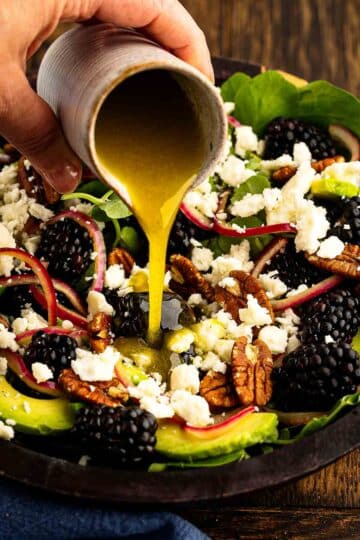
This Mediterranean honey-balanced red wine vinaigrette transforms ordinary salads into restaurant-quality dishes by creating a perfect sweet-tart balance designed specifically for bitter greens and grilled meats and vegetables. The triple honey ratio isn't about making a sweet dressing-it's about creating harmony between acidity, bitterness, and natural sweetness that lets every ingredient shine. Ready in 5 minutes with pantry staples you already have.

Red wine vinaigrette is a classic salad dressing, but most recipes follow a conservative approach with just 1-2 teaspoons of honey or maple syrup. This Mediterranean-inspired version breaks that mold by using 3 tablespoons of honey to create a distinctly sweeter, more balanced dressing that's specifically designed for bitter and peppery greens like arugula, radicchio, and frisée.
The higher honey content doesn't overpower-instead, it mellows the sharp, wine-forward acidity and creates a versatile dressing that works beautifully on grilled eggplant, roasted beets, and Mediterranean grain bowls. If you've ever felt that traditional vinaigrettes are too harsh for certain salads, this honey-balanced approach will change how you think about homemade dressings.
After testing ratios from 1 to 3 tablespoons, I discovered that more honey doesn't make it cloying-it creates the perfect counterpoint to wine vinegar's sharp bite.
Why This Red Wine Vinaigrette Works
The secret to this salad dressing lies in understanding how sweetness balances acidity and bitterness. While developing recipes that align with Mediterranean diet principles, I tested this dressing with different honey ratios to find the perfect balance for the peppery greens and vegetables common in Mediterranean cuisine.

The Honey-to-Vinegar Balance Explained
Most recipes stick to 1-2 teaspoons of honey, which barely cuts the acidity of ¼ cup red wine vinegar. Through testing, I found that:
- 1 tablespoon honey: Still quite sharp and acidic; works for mild greens but overwhelms bitter ones
- 2 tablespoons honey: Getting closer, but the wine vinegar still dominates when paired with arugula or radicchio
- 3 tablespoons honey: The sweet spot-creates a harmonious balance where neither sweetness nor acidity overpowers, allowing the peppery notes of arugula and the bitterness of radicchio to shine through without being harsh
The key insight: more honey doesn't equal "sweet salad dressing." Instead, it creates a rounded, complex flavor profile where you taste the wine character of the vinegar, the fruity notes of the olive oil, and the natural sweetness of honey in harmony rather than competition.

Best Greens for This Sweeter Vinaigrette
This honey-balanced vinaigrette excels with:
- Arugula: The peppery, slightly bitter leaves need the extra sweetness to prevent the salad from tasting harsh
- Radicchio: Its pronounced bitterness is mellowed beautifully by the honey without masking the vegetable's character
- Frisée: The delicate but slightly bitter curls benefit from the gentle sweetness
- Mixed baby greens with bitter components: Especially mixes containing mustard greens or baby kale
- Watercress: The peppery bite is complemented by honey's roundness
What to avoid: This dressing is too sweet for mild greens like butter lettuce, iceberg, or romaine. For those, reduce honey to 1-2 tablespoons for a more traditional ratio.

Mediterranean Honey-Balanced Red Wine Vinaigrette
Ingredients
- ½ cup olive oil
- ¼ cup red wine vinegar
- 3 tablespoon honey
- ½ lemon juiced
- ½ teaspoon garlic powder
- teaspoon kosher salt
- ⅛ teaspoon coarse ground pepper
Instructions
- Combine all ingredients in a jar with a tight-fitting lid or in a medium bowl.
- Shake or whisk vigorously for 30-45 seconds until the ingredients are well combined and the dressing appears unified.
- The honey will help create a cohesive mixture without traditional emulsification.Taste and adjust seasoning.
- Add more honey if you prefer sweeter, more vinegar if you want tangier, or more salt if the flavors taste flat.
- Use immediately or store in the refrigerator for up to 10 days. Shake vigorously before each use as natural separation will occur.
Notes
- For tangier dressing: Reduce honey to 2 tablespoons for use with mild greens
- For creamier texture: Add 1 teaspoon Dijon mustard and whisk until emulsified
- Storage tip: Let cold dressing sit at room temperature for 10 minutes before using
- Serving size: 2 tablespoons per salad serving provides balanced flavor without overwhelming greens
Ingredients You'll Need
- Olive oil: Extra virgin olive oil is essential here-it's one of the core foods the Mediterranean diet is built around and provides fruity, grassy notes that complement the honey
- Red wine vinegar: Look for quality red wine vinegar; aged varieties add depth
- Honey: Raw honey adds floral complexity, but any honey works; use agave for a vegan version
- Lemon, juiced: Fresh lemon juice only-bottled lacks the brightness needed
- Garlic powder: Easier and milder than fresh garlic; no harsh bite
- Kosher salt: Don't skimp-salt brings all the flavors together
- Coarse ground black pepper: Adds subtle heat without overpowering
Ingredient Notes & Substitutions
- Olive oil: Use extra virgin for the best flavor profile. If you find EVOO too strong, light olive oil works but sacrifices some Mediterranean character. For guidance on selecting quality olive oil, check out this comprehensive Mediterranean diet olive oil guide.
- Red wine vinegar: Quality matters here. Avoid overly harsh, cheap vinegars that taste one-dimensional. A good red wine vinegar should have complexity and slight wine notes.
- Honey: Raw, unfiltered honey adds the most complexity with floral and mineral notes. Clover honey is mild and reliable. For a vegan version, agave nectar works but is slightly thinner in texture.
- Lemon juice: Always use fresh lemon juice. The ½ lemon should yield about 1½-2 tablespoons of juice. Bottled lemon juice tastes flat and chemical.
- Garlic powder: This is intentionally used instead of fresh garlic for two reasons: it distributes evenly without clumping, and it doesn't get harsh or develop off-flavors during storage. If you prefer fresh garlic, use ½ teaspoon minced very finely, but use the dressing within 3 days.

How to Make Red Wine Vinaigrette
This is genuinely a 5-minute recipe with no special equipment needed.
Step 1: Combine Ingredients
Add all ingredients to a jar with a tight-fitting lid or a small bowl. I prefer using a 16-ounce mason jar because:
- It's easy to shake
- You can store leftover dressing right in the jar
- The measurements are visible on the side
No need to slowly drizzle oil or use a blender-the honey content in this recipe helps the ingredients stay relatively combined without traditional emulsification.
Step 2: Shake or Whisk Vigorously
If using a jar: Secure the lid tightly and shake vigorously for 30-45 seconds. You'll see the dressing transform from separated liquids to a cohesive, slightly thickened mixture.
If using a bowl: Whisk continuously for about 1 minute until the ingredients are well combined and the dressing looks unified.
The honey acts as a partial emulsifier, so while this won't create the thick, creamy emulsion you'd get with mustard, it will stay reasonably combined for several minutes-long enough to dress your salad.

Step 3: Taste and Adjust
This is critical. Taste the dressing before using it:
- Too acidic? Add another ½-1 tablespoon honey
- Too sweet? Add another tablespoon of red wine vinegar
- Flat or one-dimensional? Add a pinch more salt-this is usually the culprit
- Needs more depth? A few more grinds of black pepper or a tiny squeeze of lemon
Remember, the dressing should taste slightly more assertive on its own than you want on the salad, since it will be diluted by greens and other ingredients.
What to Serve with Honey-Balanced Vinaigrette
Understanding what Mediterranean cuisine encompasses helps you understand why this dressing works so beautifully with certain foods.
Arugula and Spinach Salad: The classic combination of peppery arugula and spinach is elevated when the honey in the vinaigrette bridges earthy arugula flavors. Add Parmesan, toasted pine nuts or walnuts.
Grilled Steak Salad with Corn, Avocado: Build a protein salad bowl with perfectly grilled steak. The honey balances the briny olives and tangy feta perfectly.
Grilled Vegetable Marinade: Before grilling eggplant, zucchini, or bell peppers, marinate them in this vinaigrette for 15-30 minutes. The honey helps with caramelization while the acidity tenderizes.
Roasted Brussels Sprouts Drizzle: Toss roasted Brussels sprouts (cooked until crispy and caramelized) with this dressing right before serving. The sweet-tart profile complements the nutty, caramelized flavors.
Mediterranean Pasta Salad: Use as the dressing for orzo pasta salad with sun-dried tomatoes, feta, olives, cucumber, and fresh herbs. For another Mediterranean-inspired bread side, try this olive pesto, feta, and sun-dried tomato bread.
Marinade for Chicken or Pork: The honey and acid combination works as a quick marinade for grilled chicken breasts or pork chops (30 minutes to 2 hours). Pat the protein dry before grilling to ensure good browning.
Storage & Make-Ahead Tips
Store the vinaigrette in an airtight jar or container in the refrigerator for 7-10 days. The olive oil may solidify slightly when cold, and the honey can cause minor crystallization. This is completely normal.
- Before using cold dressing: Let it sit at room temperature for 10-15 minutes, then shake vigorously. The dressing will return to its pourable consistency.
- Natural separation: Unlike commercial dressings with stabilizers and emulsifiers, homemade vinaigrette separates as it sits. Always shake or whisk before each use.
- Why garlic powder extends shelf life: Fresh garlic in oil creates a risk for botulism if not handled properly and shortens the safe storage time. Garlic powder provides garlic flavor without the food safety concerns, making this dressing safe to store for a full week-plus.
Recipe Variations
- Italian Herb Version: Add ½ teaspoon dried oregano and ¼ teaspoon dried basil to the base recipe. This creates a more distinctly Italian flavor profile that works beautifully with caprese-style salads (tomato, mozzarella, and basil).
- Provençal Variation: Add ½ teaspoon herbes de Provence to the base recipe. This French herb blend (typically lavender, thyme, rosemary, and marjoram) creates an aromatic dressing perfect for grilled lamb or ratatouille. Really good on Chicken Provençal with Anchovy Paste (The French Bistro Trick).
- Fresh Herb Addition: Add 1 tablespoon fresh minced basil, thyme, or tarragon. Fresh herbs add brightness but reduce storage time to 3 days maximum. Add fresh herbs only to the portion you'll use immediately rather than the full batch.
Can I Use Balsamic Vinegar Instead?
No-balsamic vinegar is already sweet and syrupy with a completely different flavor profile. Red wine vinegar's sharp, wine-forward acidity is what balances the honey in this recipe. If you substitute balsamic vinegar, reduce honey to just 1 tablespoon and expect a much sweeter, less bright dressing.
Why Doesn't This Recipe Use Mustard?
Traditional vinaigrettes use Dijon mustard as an emulsifier to create a stable, creamy dressing that doesn't separate. In this recipe, the higher honey content acts as a partial emulsifier, keeping the ingredients reasonably combined without mustard. The result is a lighter, less creamy texture that lets the wine and honey flavors shine. If you prefer a creamier, more stable emulsion, add 1 teaspoon Dijon mustard.
Is This Dressing Too Sweet for Regular Salads?
Yes, it's sweeter than traditional vinaigrettes, which is why it's specifically designed for bitter greens (arugula, radicchio, frisée) and grilled vegetables. The bitterness of these ingredients balances the honey. For mild lettuce like romaine, iceberg, or butter lettuce, this dressing will taste overly sweet. Reduce honey to 1-2 tablespoons for those applications.
Can I Make This Ahead for Meal Prep?
Absolutely. This dressing is perfect for meal prep because it stores well and the flavors actually meld and improve after 24 hours. Make a batch on Sunday and use it throughout the week. Just remember to shake vigorously before each use as natural separation will occur.
What If I Don't Have Red Wine Vinegar?
White wine vinegar is the closest substitute-use the same amount. Apple cider vinegar works but adds a fruity sweetness that changes the character (reduce honey to 2-2½ tablespoons). Avoid distilled white vinegar, which is too harsh and one-dimensional for a dressing this simple.
Why Is the Salt Measurement So High?
One teaspoon of kosher salt might seem like a lot, but it's critical for balancing the sweet and acidic elements. Salt doesn't just make things taste salty-it enhances and rounds out all the other flavors. Without adequate salt, the dressing tastes flat and overly sweet. Remember, this dressing coats the entire salad, so the salt disperses across all the greens and vegetables. Start with the full teaspoon, taste, and adjust if needed.
Is This Recipe Mediterranean Diet Compliant?
Yes, this vinaigrette aligns perfectly with Mediterranean diet principles. It features extra virgin olive oil as the primary fat source, uses honey as a natural sweetener, and contains no processed ingredients. While the Mediterranean diet traditionally emphasizes moderation with added sugars, honey is a natural sweetener used throughout Mediterranean cuisine. The key is using this dressing in appropriate portions-about 2 tablespoons per salad serving, which provides healthy fats from olive oil alongside the honey's sweetness.



Comments
No Comments