
This Lemon Blueberry Cheesecake is made with a homemade fresh blueberry swirl baked right into the filling, a double-lemon cream cheese base loaded with both zest and juice, and a sour cream filling that sets into the richest, most velvety texture you've ever cut into. It's a crack-free, make-ahead showstopper - and it tastes exactly as stunning as it looks.
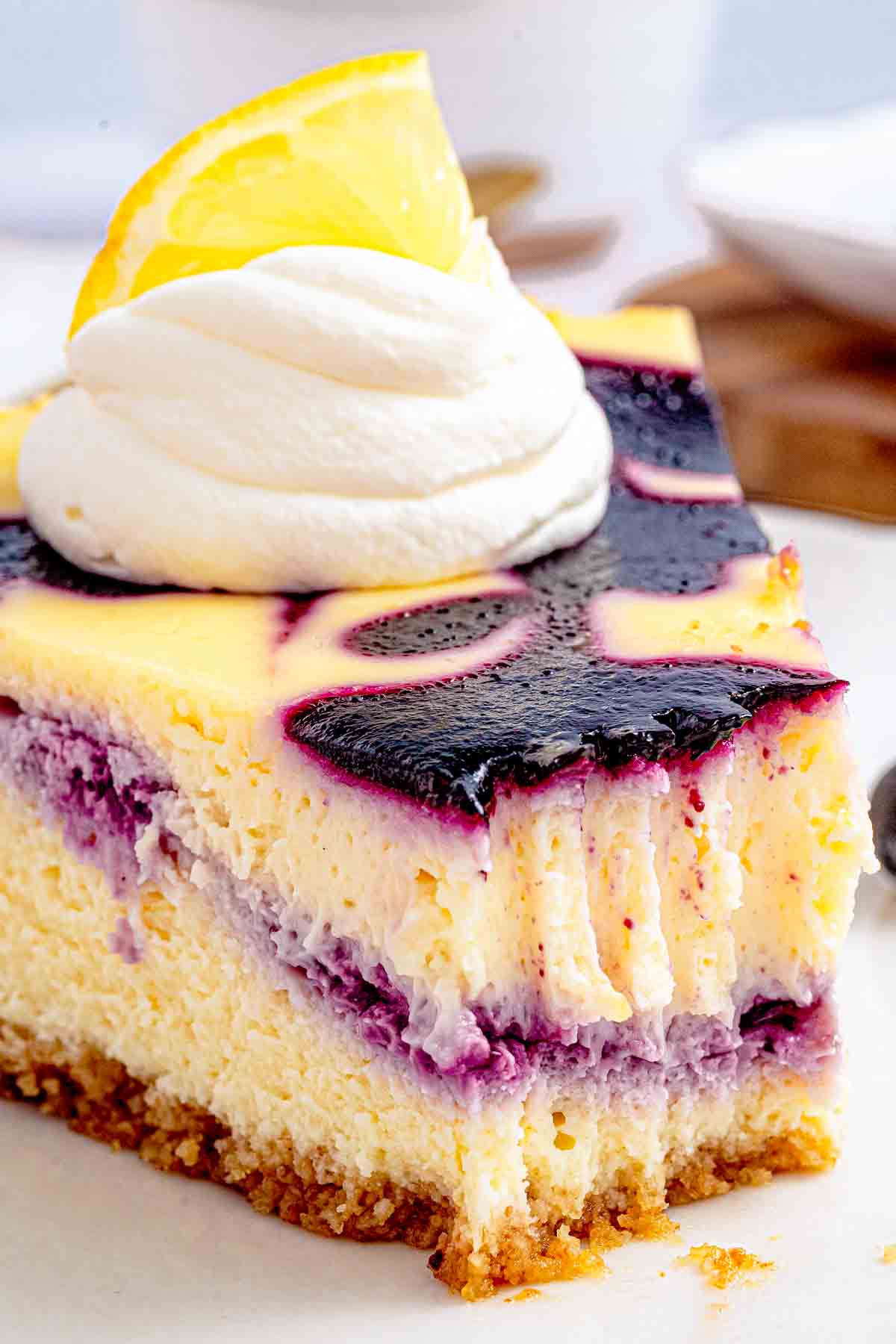
My lemon blueberry cheesecake is made completely from scratch and is everything the classic should be - dense, ultra-creamy, and intensely lemony, with a fresh blueberry swirl baked right into the filling rather than spooned on top from a can.
The lemon cheesecake filling is built with both lemon zest and lemon juice for a magnificent citrus explosion, and sour cream gives it that signature rich, velvety texture you expect from a proper New York-style cheesecake.
The blueberry swirl is made from scratch with just fresh blueberries, sugar, and lemon juice - no canned filling, no shortcuts. It sits on a buttery graham cracker crust and bakes low and slow for a smooth, crack-free top. Whether you're making this for Easter, Mother's Day, or a summer dinner party, this is the cheesecake recipe that rocks every single time.
If you prefer a classic version with the blueberry topping poured on after baking, try my Creamy Blueberry Cheesecake with Blueberry Sauce.
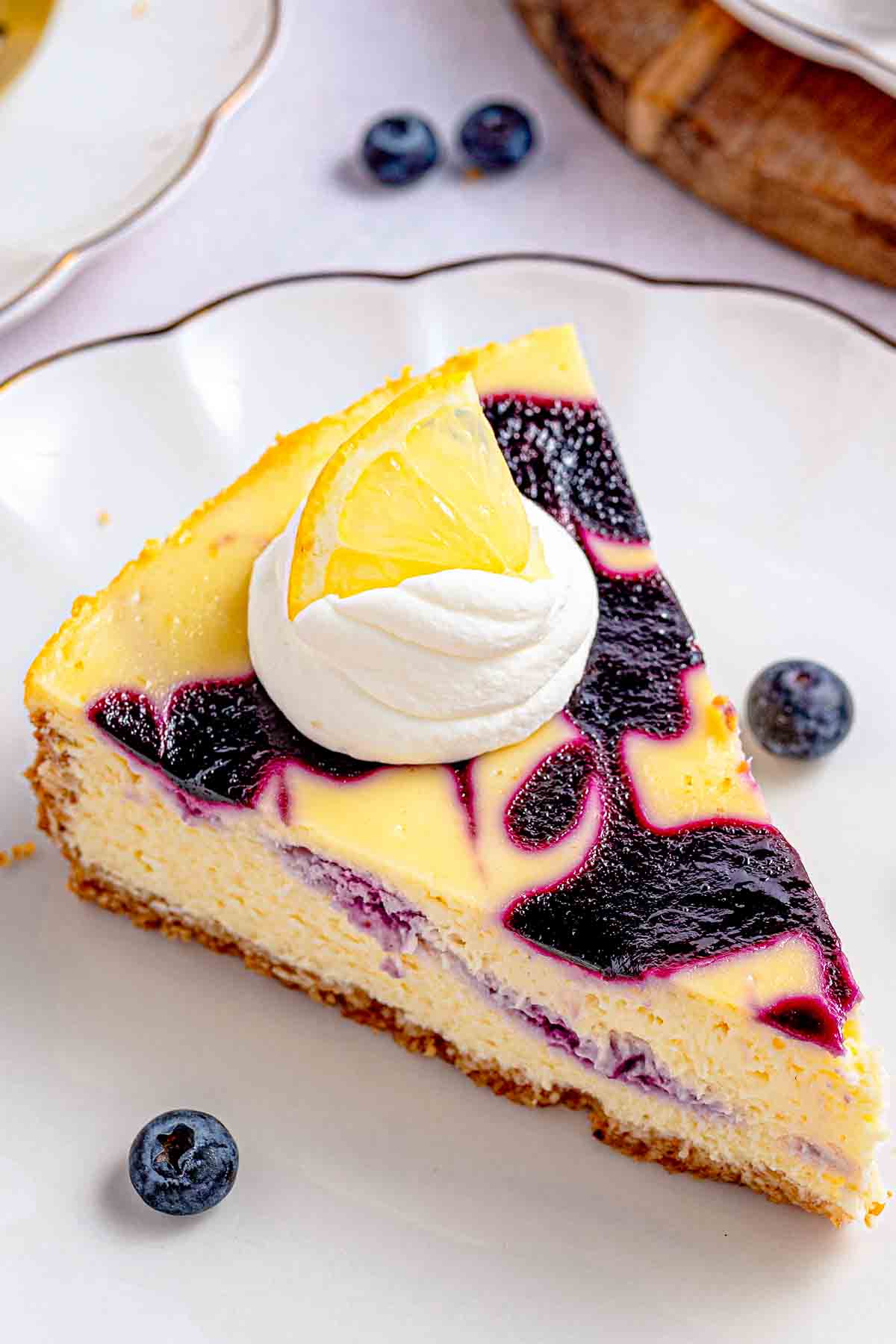
Why You'll Love This Lemon Blueberry Cheesecake
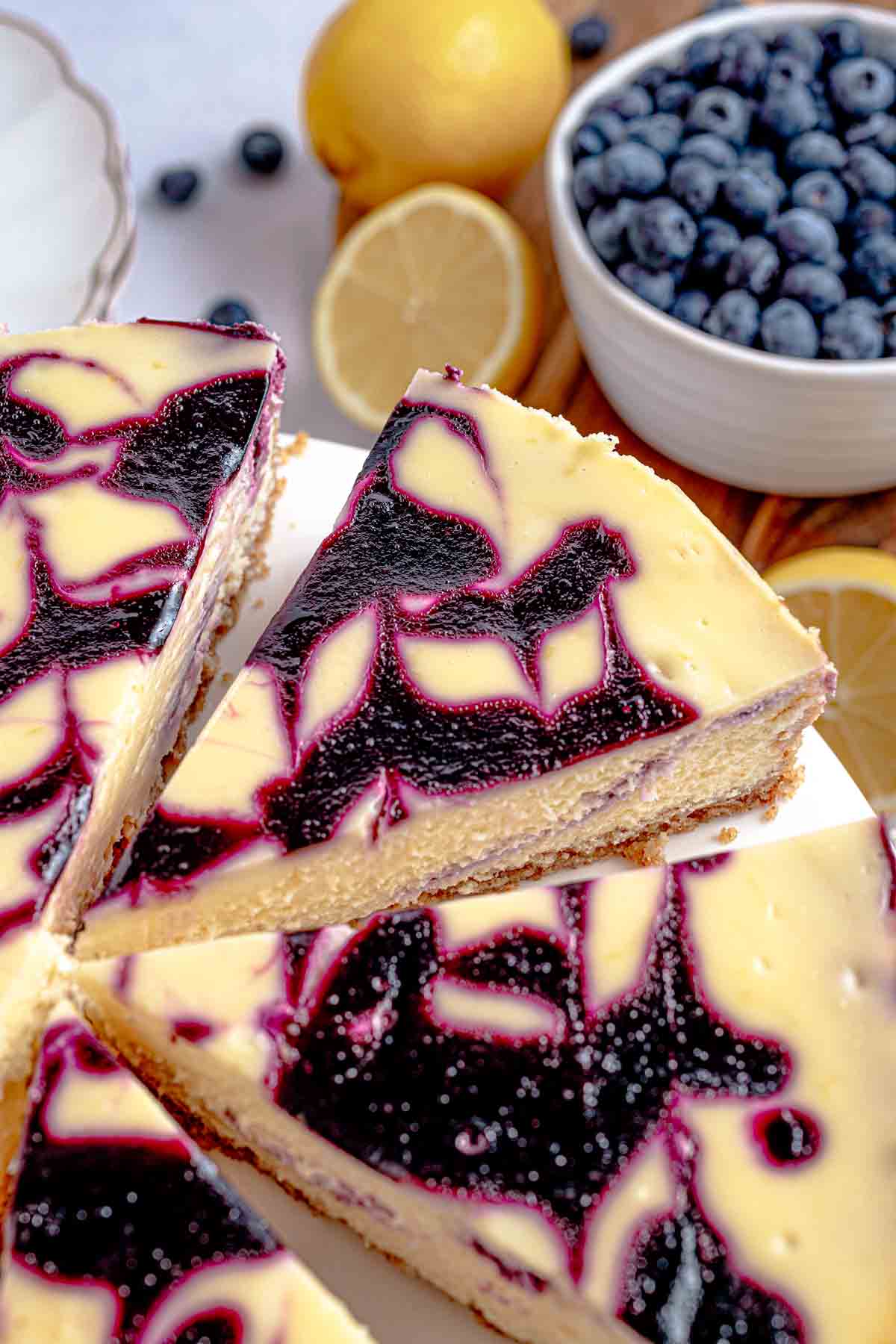
- Fresh blueberry swirl - not canned. The swirl is made from scratch with real blueberries, sugar, and lemon juice, cooked down into a jammy sauce and swirled directly into the filling before baking. The flavor is bright, fruity, and nothing like the gluey canned topping you find on most cheesecakes.
- Double the lemon, double the flavor. Both fresh lemon zest and lemon juice go into the filling - the zest delivers floral citrus intensity that juice alone can't replicate, and the combination gives every bite a genuine, bright lemon flavor. If lemon and blueberry is your forever flavor combo, you'll also love my Moist Lemon Blueberry Layer Cake with Lemon Buttercream.
- Sour cream for a silky, dense texture. Sour cream is the secret to a New York-style cheesecake that slices cleanly and melts on the tongue. It adds richness and a subtle tang that balances the sweetness perfectly without making the filling heavy.
- Crack-free every time. This recipe is built around a low-and-slow baking method that eliminates the guesswork. No temperamental water bath required - just the right technique and a patient cool-down that delivers a smooth, flawless top.
- Made ahead, stress-free. Lemon cheesecake with blueberry topping is one of the rare desserts that is genuinely better the next day - the filling firms, the flavors deepen, and the swirl sets beautifully. Make it the day before and it's one less thing to think about on the day you're serving it.
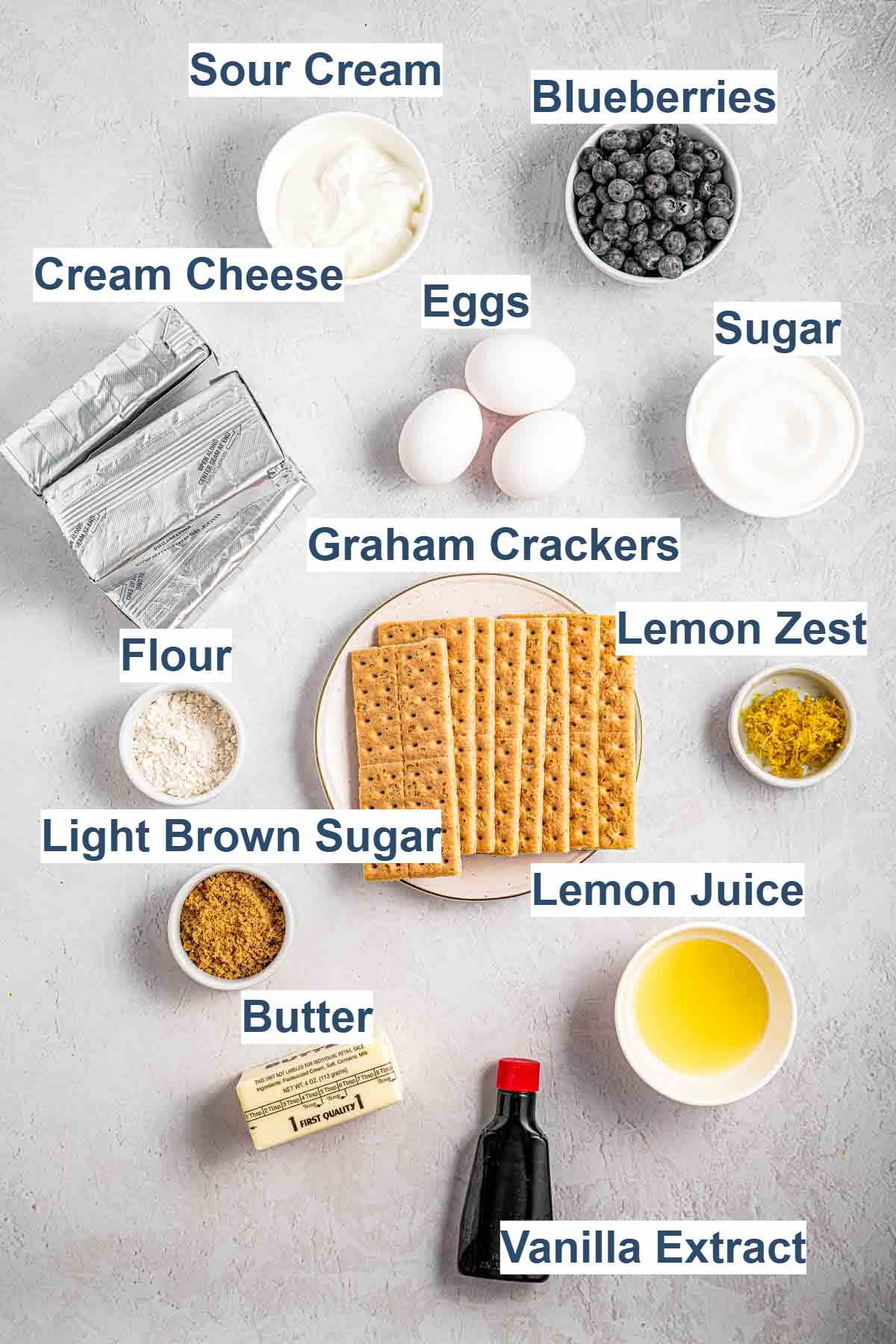
Ingredients for Lemon Blueberry Cheesecake
For the Graham Cracker Crust
- Graham crackers - The foundation of the crust. Nine full sheets crushed into fine crumbs give you the right quantity for a thick, sturdy base that holds a clean slice without crumbling. Crush them in a food processor for even crumbs, or seal them in a zip-lock bag and roll with a rolling pin.
- Light brown sugar - Adds a subtle molasses warmth that plain granulated sugar can't replicate. It deepens the flavor of the crust and helps it press together more cohesively.
- Unsalted butter, melted - Unsalted gives you full control over the salt level in the crust. Make sure it's fully melted so every crumb gets evenly coated.
For the Fresh Blueberry Swirl
- Fresh blueberries - Fresh blueberries cook down into a vibrant, jammy sauce with a bright natural flavor that canned blueberry filling simply can't match. Frozen blueberries work as a substitute. Got extra blueberries? Turn them into Blueberry Cream Cheese Pastries for an easy brunch treat.
- Granulated sugar - Sweetens the blueberry sauce and helps it reduce into a thick, spoonable consistency that swirls cleanly into the filling without bleeding.
- Lemon juice - Brightens the blueberry sauce and keeps the color vivid. The acidity balances the sugar and ties the swirl flavor directly to the lemon notes in the filling.
For the Lemon Cheesecake Filling
- Lemon zest - This is where the real lemon flavor lives - I zested two large lemons for about 2 tablespoons worth of zest. Always zest before you juice - it's nearly impossible to zest an already-squeezed lemon.
- Lemon juice - Works fresh or bottled. I used bottled lemon juice.
- Granulated sugar - Sweetens the filling and helps create the smooth, dense texture characteristic of a New York-style cheesecake. Measure by weight when possible for consistency.
- Cream cheese, softened - I used Philadelphia cream cheese, and I let it soften to room temperature for easier mixing. Cold cream cheese won't blend smoothly and will leave lumps no amount of mixing can fix.
- All-purpose flour - Just one tablespoon, but it matters. A small amount of flour stabilizes the filling during baking, giving it a slightly firmer set and acting as insurance against cracking. It won't make the texture cakey - you won't taste it at all.
- Sour cream, room temperature - The secret to a silky, dense, New York-style texture. Room temperature is essential - cold sour cream can cause the batter to seize. You can use plain Greek yogurt instead of sour cream for the cheesecake filling.
- Vanilla or lemon extract - I used vanilla extract. For a stronger lemon flavor, I recommend lemon extract, but I didn't think it was necessary with the amount of zest and lemon juice in the filling.
- Large eggs, room temperature - The structural element that sets the filling during baking. Room temperature eggs incorporate smoothly and evenly. Add them one at a time and mix only until just combined - overbeating after the eggs go in is the single most common cause of a cracked cheesecake.
How to Make Lemon Blueberry Cheesecake
1. Make the Fresh Blueberry Swirl
Cook the blueberries just until they look glossy and some have burst; you want a thick, spoonable sauce, not blueberry soup. If you drag a spoon through the pan and can see the bottom for a second before it closes, it's thick enough to swirl without sinking to the bottom of the batter.
Straining is optional: leaving the skins in gives the swirl more texture and color, straining gives you a smoother, more "bakery" look.
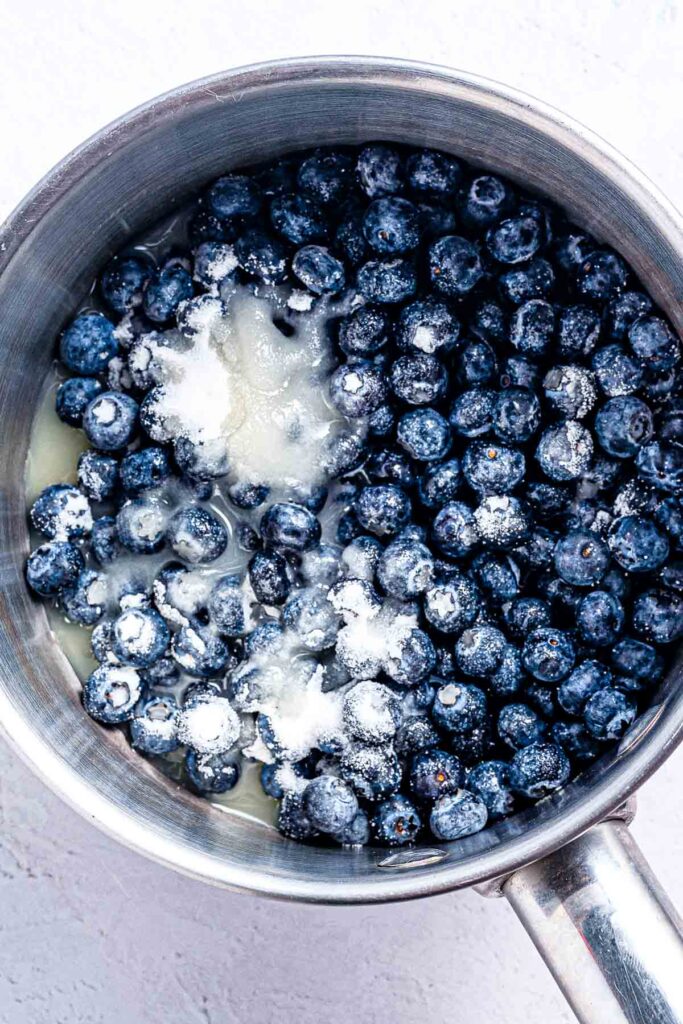
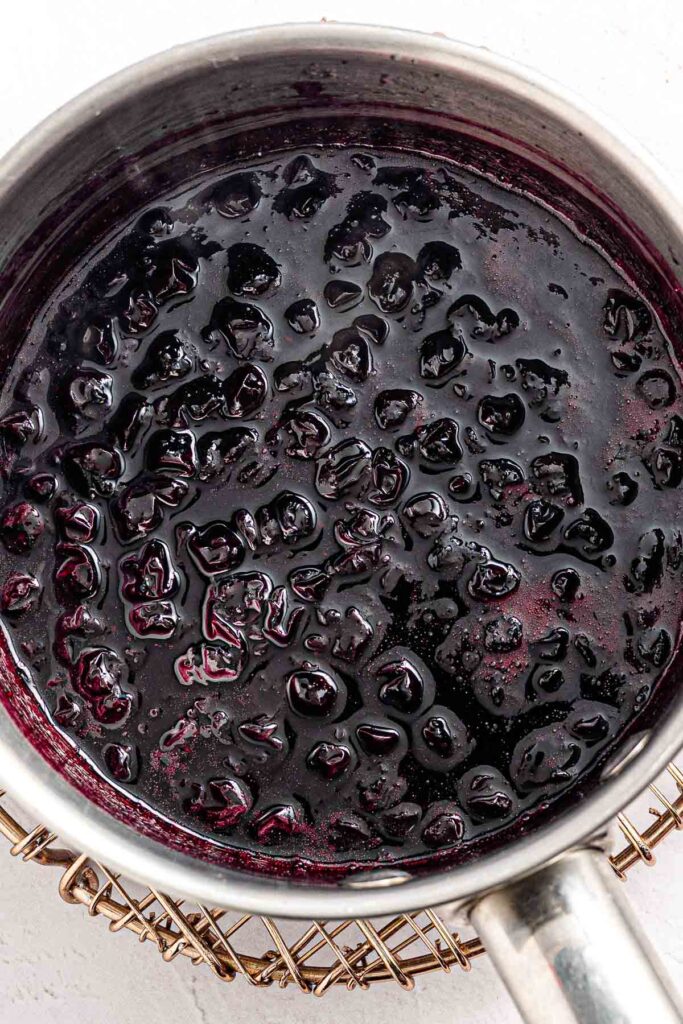
Let the swirl cool to room temperature before it goes anywhere near the cheesecake batter. Warm sauce will thin the filling and can lead to uneven baking and pockets where the swirl sinks.
2. Make the Graham Cracker Crust
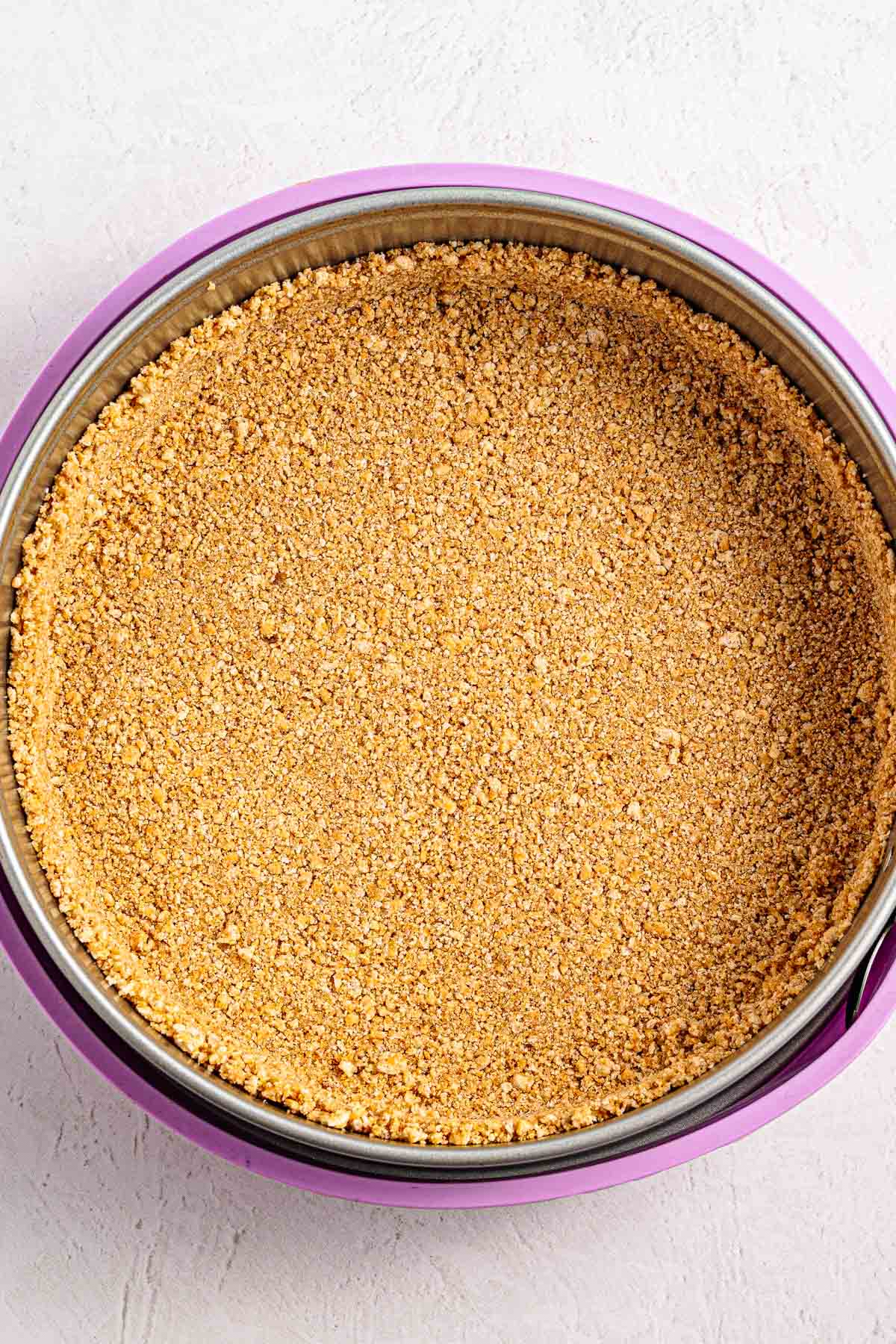
Crush the graham crackers as finely as you can; big crumbs make a crust that crumbles instead of slicing cleanly. You're looking for the texture of slightly damp sand once the brown sugar and melted butter are mixed in - if you squeeze some in your hand, it should hold together, not fall apart.
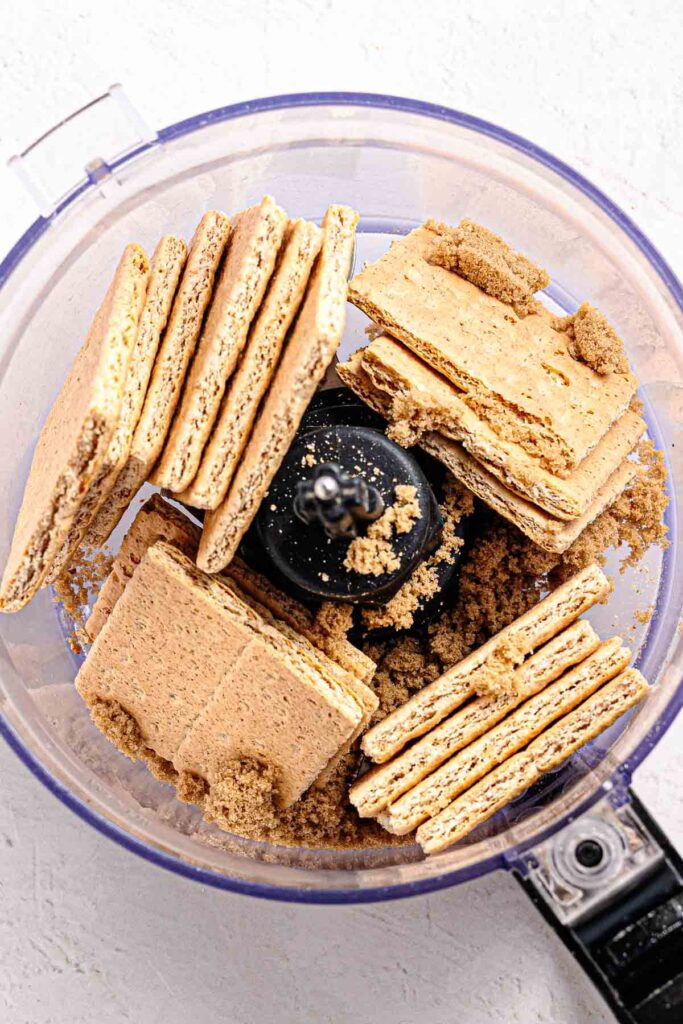
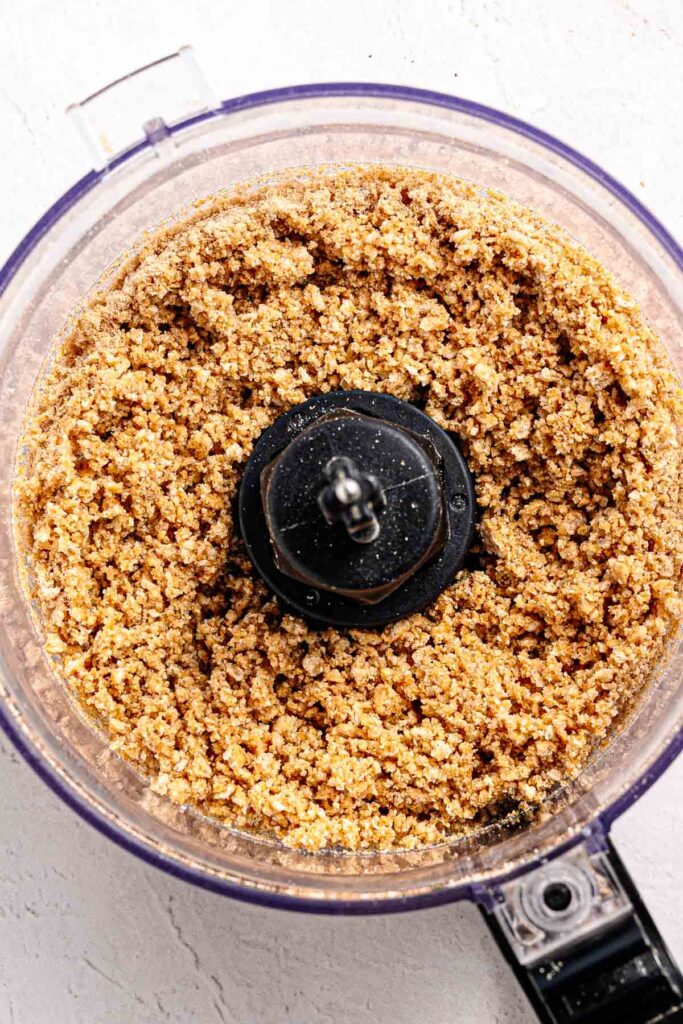
Press the crumbs firmly into the pan, especially around the edges where cheesecake slices tend to crumble. A flat-bottomed measuring cup is your best friend here for getting an even, compact layer.
Prebaking the crust gives you a head start on flavor and prevents it from going soggy under the filling.
3. Make the Lemon Cheesecake Filling
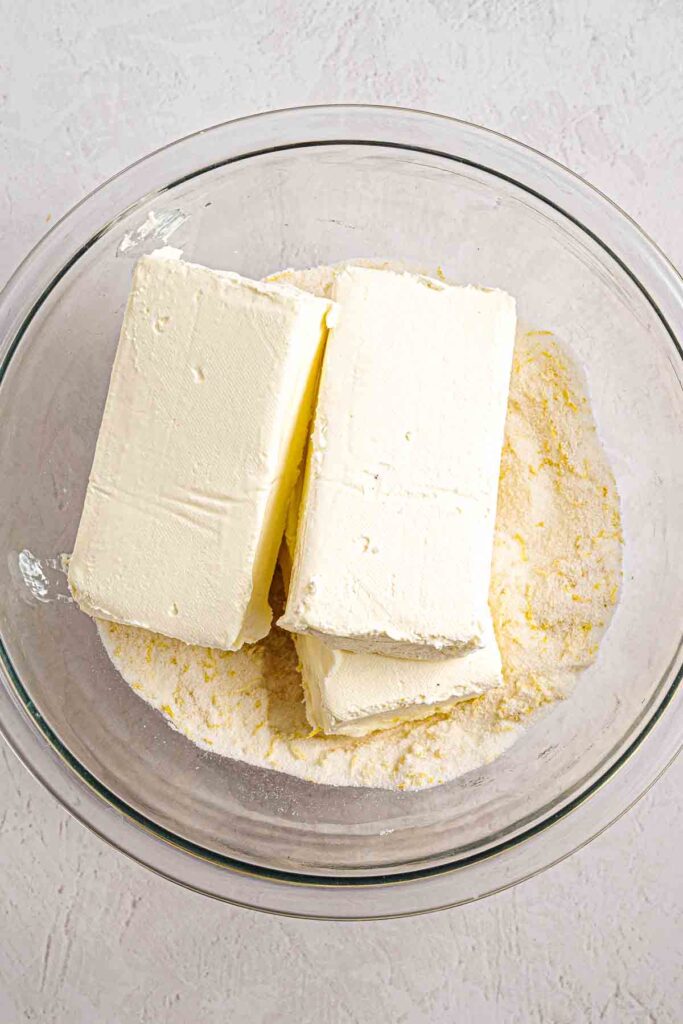
Rubbing the lemon zest into the sugar is a small step that makes a noticeable difference. Make sure the cream cheese and sour cream are truly at room temperature - cool dairy is the fastest way to lumpy batter.
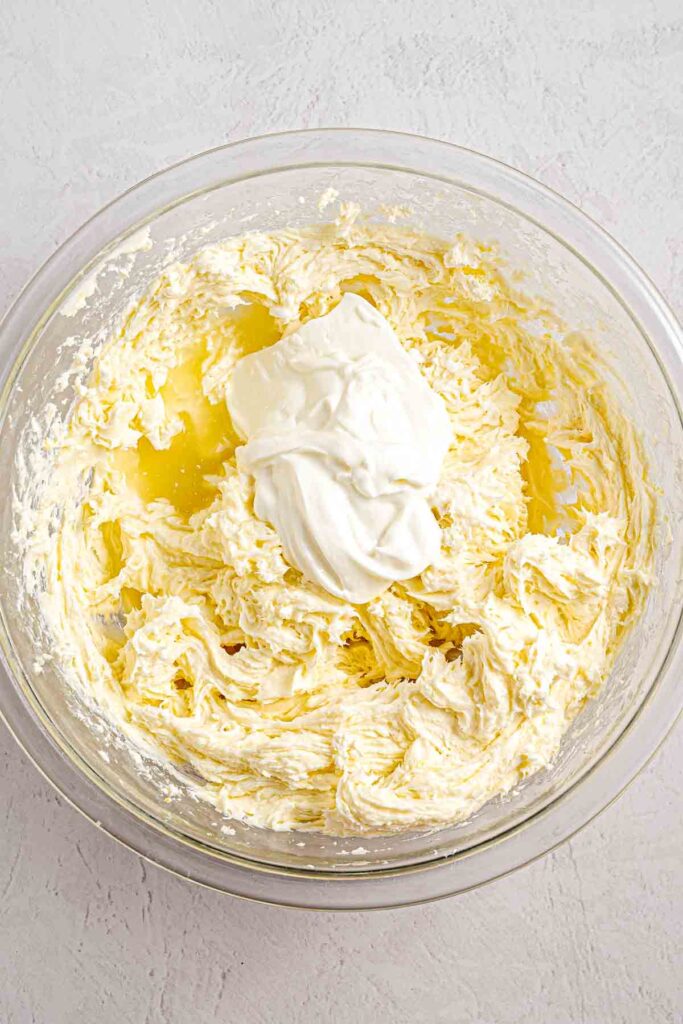
Once the eggs go in, treat the batter gently. Overmixing at this stage beats in extra air, which expands in the oven and then collapses as it cools, leading to cracks. Mix each egg in just until you no longer see streaks, then finish by folding with a spatula so everything is evenly combined.
4. Assemble and Swirl
Pour about half of the batter over the baked crust and tap the pan on the counter to release any large air bubbles. Spoon the blueberry mixture in small pools rather than one thick stripe; this keeps the swirl from sinking. A toothpick, skewer, or thin knife is ideal for creating loose figure-8 patterns - stop before you're tempted to do "one more pass," or you'll muddy the swirl.
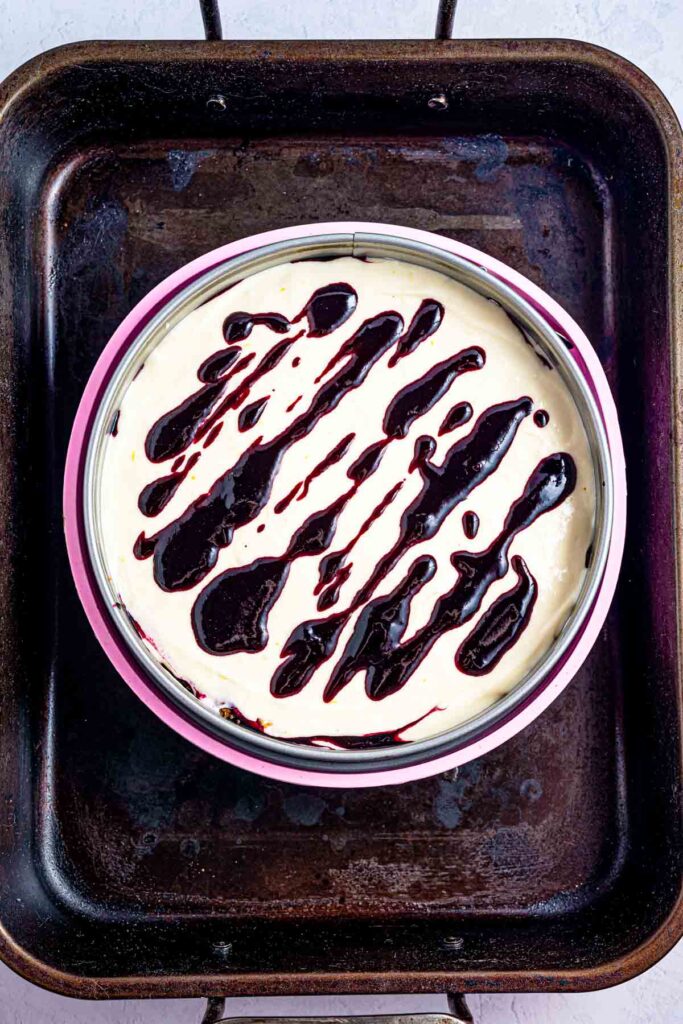
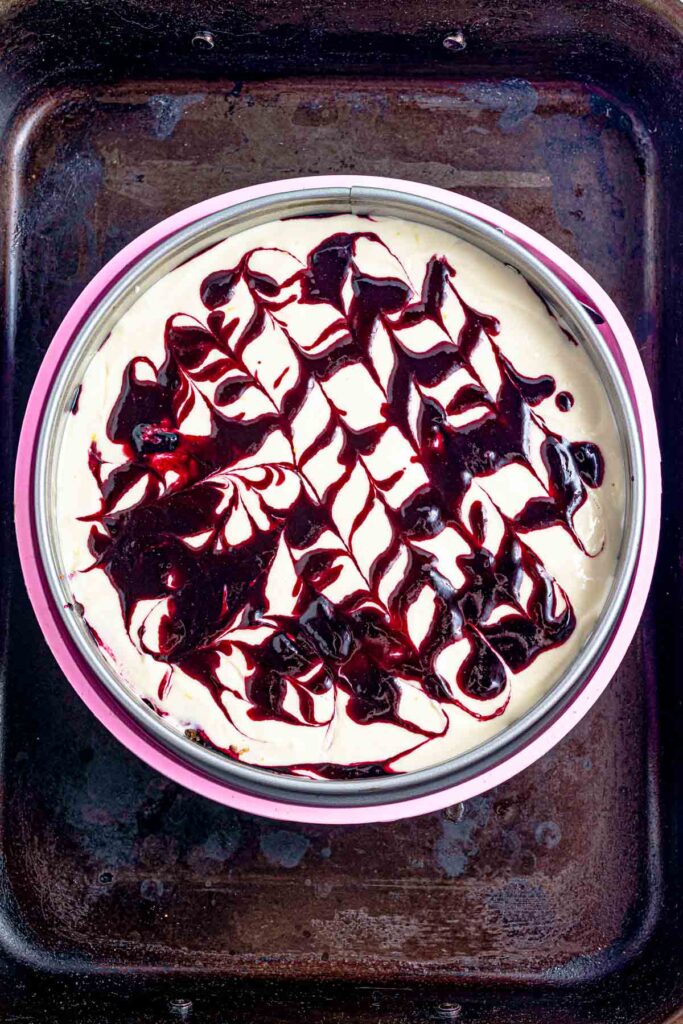
Repeat with the remaining batter and swirl on top. Think of it as marbling, not mixing; you always want clear ribbons of blueberry running through, not purple cheesecake.
5. Bake and Cool Gently
The water bath helps buffer the cheesecake from sudden temperature changes and keeps the edges from setting long before the center. Use hot, just-boiled water and pour it into the roasting pan after it's already on the oven rack so you're not juggling a sloshing pan across the kitchen.
I used a full kettle of boiled water, about 7-8 cups.
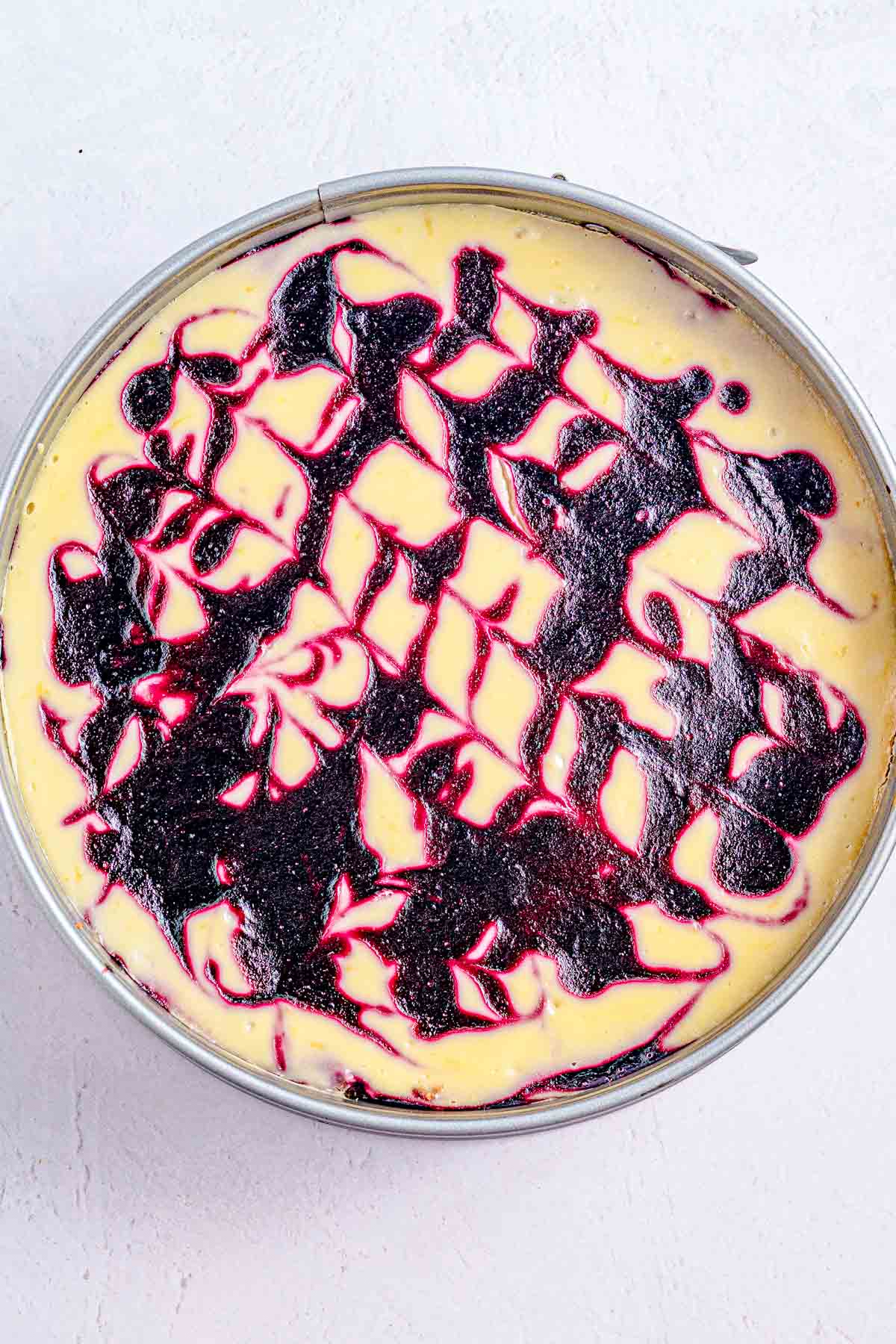
You'll know the blueberry swirl cheesecake is done when the edges are set but the center still has a soft wobble - think set Jell-O, not liquid. Leaving it in the turned-off oven for an hour lets the residual heat finish the bake slowly. A fast temperature drop is one of the biggest causes of cracking, so be patient with the cooling and resist the urge to open the oven door early. Let it chill completely in the fridge so the texture can firm up and the flavors fully develop before you slice.
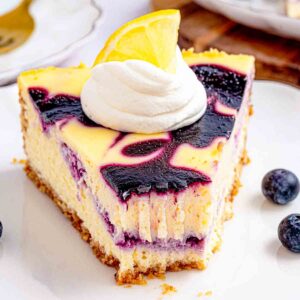
Lemon Blueberry Cheesecake with Fresh Blueberry Swirl
CLICK on STARS to REVIEW the RECIPE, then CLICK OK
Equipment
- Small saucepan At least 2 quarts
- Spring Form pan 9-inch
- Heavy Duty Aluminum Foil or a Silicone cover for the springform pan to keep the water from leaking into the pan while the cheesecake bakes in water bath.
- Food processor
- large mixing bowl
- Electric mixer or stand mixer with paddle attachment
Ingredients
Crust
- 9 graham crackers
- 2 tablespoon light brown sugar
- 6 tablespoon unsalted butter melted
Blueberry Swirl
- 9 oz fresh blueberries
- ⅓ cup granulated sugar
- ¼ cup lemon juice
Lemon Cheesecake Filling
- 2 tablespoon lemon zest
- 1 cup sugar
- 3 boxes cream cheese softened
- 1 tablespoon all-purpose flour
- 2 tablespoon lemon juice
- ½ cup sour cream room temperature
- 1 teaspoon vanilla extract
- 3 large eggs room temperature
Instructions
Blueberry Swirl
- Stir the blueberries, sugar, and lemon juice together in a small saucepan over medium heat. Bring to a simmer and cook for 7 minutes, stirring occasionally.
- Remove from heat and pour the blueberry mixture into a small, heat-proof bowl. You may strain it through a fine mesh sieve to remove the skins, if desired. Let the mixture cool on the counter while you prepare the crust and cheesecake filling.
Crust
- Preheat the oven to 350°F. Grease a 9-inch springform pan with butter or shortening. Set aside.
- Crush the graham crackers and brown sugar in a food processor, then slowly pour in the melted butter while the food processor runs at low speed. Pour the crumbs into the springform pan, and press them firmly into the bottom and sides. At this point, you'll also want to wrap 2 layers of heavy-duty foil tightly around the outside of the pan or put the pan in a silicone cover.
- Bake the crust for 15 minutes, then lower the oven temperature to 325°F. Set the crust aside while you make the filling.
Lemon Cheesecake Filling
- In a large bowl, combine the sugar and lemon zest, and rub them together with your fingers until fragrant. Add the cream cheese and flour, and mix with an electric mixer until smooth.
- Pour in the lemon juice, sour cream, and extract, and mix until combined. Mix in the eggs one at a time until just mixed, then give the mixture a thorough stir with a wooden spoon or silicone spatula to make sure everything is thoroughly combined.
- Pour half of the cheesecake filling into the baked pie crust, then spoon about half of the blueberry mixture in a swirl pattern. Run a toothpick through the mixture to create more swirls. Carefully spoon the rest of the cheesecake filling on top of the blueberry layer, and then drizzle the rest of the blueberry mixture on top. Use a toothpick to create a more defined swirl pattern on top.
- Place the cheesecake in the middle of a large roasting pan, and fill the pan with hot, freshly boiled water, about 1-2 inches up the sides of the cheesecake.
- Bake the cheesecake for 1 hour or until it is still jiggly in the middle, but the sides are set. Then, turn off the oven, but leave the cheesecake inside for 1 more hour.
- Remove the cheesecake from the roasting pan, and let it cool completely on a wire rack. Cover the cheesecake with plastic wrap and refrigerate for at least 3 hours or until it is completely set.
- Serve chilled with whipped cream, if desired.
Tips for a Perfect Crack-Free Cheesecake
- Bring every cold ingredient to room temperature. Cream cheese, sour cream, and eggs should lose their chill before you start mixing. Room temperature dairy blends smoothly without overbeating, which means less air in the batter and far fewer chances for dramatic cracks later.
- Mix thoroughly before the eggs, gently after. Beat the cream cheese, sugar, and flavorings until completely smooth before you add a single egg. Once the eggs go in, switch to low speed and mix just until each one disappears. Overmixing at this point whips in air, and that trapped air expands in the oven, then collapses as it cools - classic crack behavior.
- Use a water bath and low, steady heat. My fresh blueberry cheesecake prefers a spa day, not a blast furnace. A water bath insulates the pan so the edges don't overcook while the center is still raw, and it keeps the oven environment humid, which helps prevent the surface from drying out and splitting. A slightly lower oven temperature and a few extra minutes of baking are always better than rushing it.
- Bake until just set - embrace the wobble. Pull the cheesecake when the edges are set but the center still has a soft, uniform jiggle. If it's firm all the way across in the oven, it's already overbaked. Residual heat will finish the set as it cools, giving you a smooth, custardy texture instead of a dry, crumbly interior.
- Cool it slowly and completely. Sudden temperature changes are crack fuel. Let the cheesecake sit in the turned-off oven with the door cracked for about an hour, then move it to a wire rack to reach room temperature before refrigerating. Chilling it fully - ideally overnight - lets the structure relax and the texture even out, so it slices cleanly without fissures.

Lemon Blueberry Cheesecake FAQs
Can I use frozen blueberries for the swirl?
Yes, and they work extremely well. Frozen blueberries actually break down faster than fresh when cooked, which means your swirl sauce comes together in less time and with a deeper, more concentrated color. No need to thaw them first - add them straight from the freezer to the saucepan. The one tradeoff is slightly more liquid, so cook the sauce a touch longer until it coats the back of a spoon before using it.
Do I need a water bath for this cheesecake?
Yes. A water bath is the most reliable way to get a smooth, evenly baked cheesecake with minimal cracking. It tempers the heat of the oven so the edges don't race ahead of the center, and it keeps the surface from drying out and tightening as it bakes.
If water baths have always felt fussy or intimidating, they're really just about creating a gentler oven environment. For a step-by-step visual, see my guide on how to make a cheesecake water bath - it walks you through wrapping the pan, setting up the roasting pan, and adding hot water without leaks
Why did my cheesecake crack?
Almost always one of three reasons: the filling was overmixed after the eggs went in (which incorporates too much air), the oven temperature was too high, or the cheesecake cooled too quickly.
Cool the finished cheesecake in the turned-off oven with the door cracked for an hour before bringing it to room temperature. Rushing the cool-down is the most common culprit.
Prefer to skip the oven? My No Bake Berry Cheesecake gives you similar flavors with zero baking.
Can I use a store-bought graham cracker crust?
You can, but the result won't be the same. Store-bought crusts are thinner, more uniform, and noticeably less buttery than homemade. They also can't be pressed up the sides of a springform pan, which limits the filling capacity and the final presentation.
The homemade crust in this recipe takes under 10 minutes to make and is one of the easiest parts of the entire process - it's worth doing from scratch.
What's the difference between lemon extract and lemon juice in cheesecake?
My recipe uses lemon zest and lemon juice together, which gives you both acidity and intensity. If you substitute extract for juice, reduce the quantity significantly - extract is potent and can turn bitter if overused. They are not interchangeable in equal amounts.
Can I make lemon blueberry cheesecake ahead of time?
Yes - and you should. Cheesecake genuinely improves after an overnight rest in the refrigerator. The filling firms up, the flavors meld, and the blueberry swirl sets into the filling cleanly. Make it one day ahead, cover it loosely once fully cooled, and refrigerate overnight. It keeps well for up to 4 days covered in the fridge.
Can I freeze lemon blueberry cheesecake?
Cheesecake freezes better than almost any other dessert. Cool it completely, then freeze it uncovered until solid - about 2 hours - before wrapping tightly in plastic wrap followed by a layer of foil. This prevents condensation from forming directly on the surface.
If you're in a full-on blueberry mood, don't miss my Best Blueberry Desserts collection.

How to Store Lemon Blueberry Cheesecake
Let the cheesecake cool completely to room temperature, then cover it tightly. Keep it in the springform pan or transfer slices to an airtight container.
Refrigerator: Keep the cheesecake covered with plastic wrap or store it in an airtight container in the refrigerator for up to 4 days.
Freezer: Tightly wrap the cheesecake with plastic wrap and foil, and store it in the freezer for up to 2 months. Thaw it out overnight in the refrigerator before serving.
More Cheesecake Recipes You'll Love
For a bakery-style twist with crunch, there's my Blueberry Crumble Cheesecake.
For something more casual but just as addictive, my Blueberry Butter Swim Biscuits with Lemon Glaze are always a hit.


Dana says
Delicious flavors! Can't wait to try it this weekend.
Olya Shepard says
Let me know how it comes out.