
Learn how to cook sirloin steak perfectly every time. To pan-sear a top sirloin steak, pat it completely dry, season generously with salt and pepper, and sear in a smoking-hot cast-iron skillet with oil for 3-4 minutes per side to build a crust. Baste with butter, garlic, and herbs during the last 2 minutes, then rest 5-10 minutes before slicing. And Bam, this juicy steak is ready in under 15 minutes.
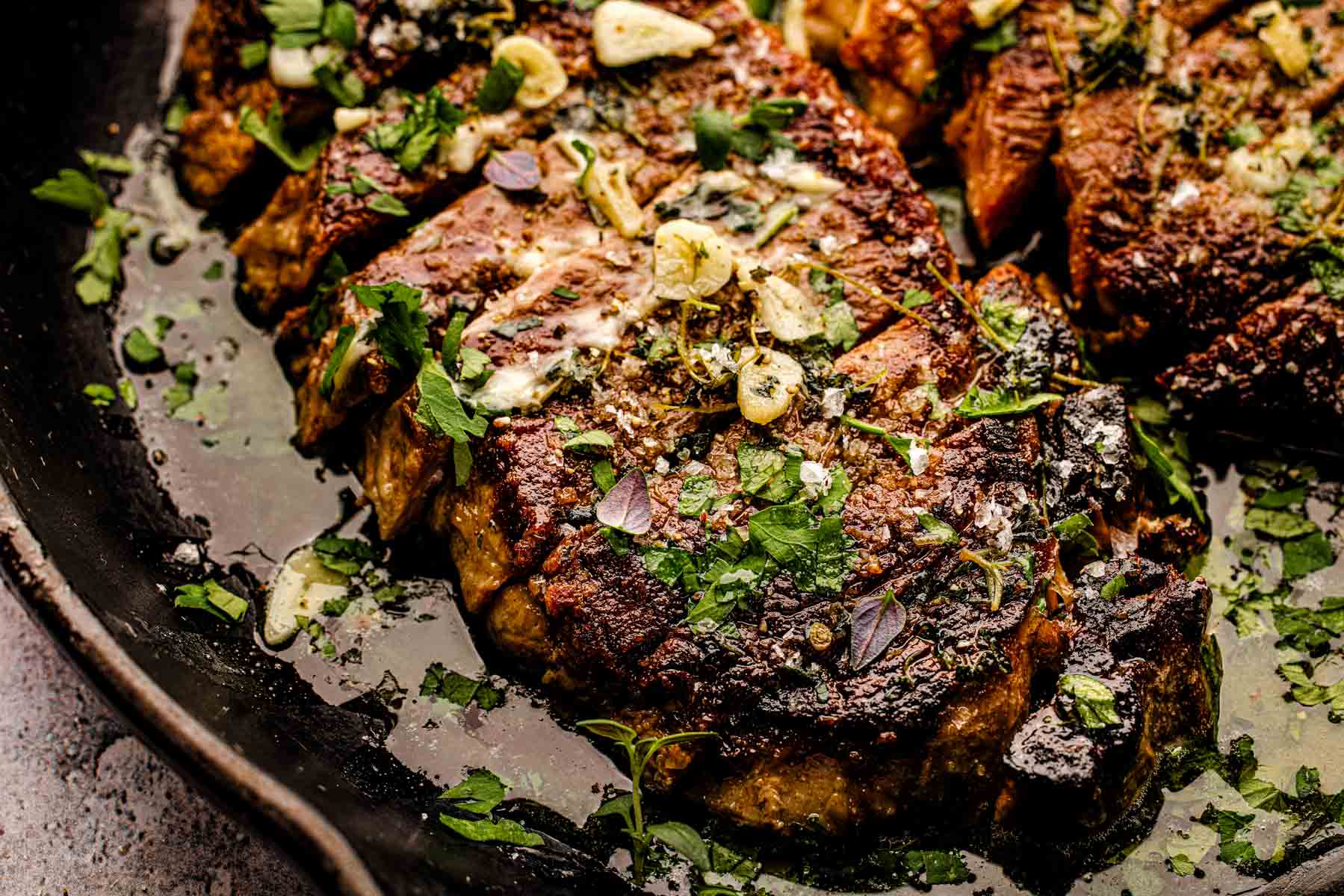
Pan-Seared Sirloin Steak Summary
Fully written recipe card and measurements follow below.
- 🥩 Pat the steak completely dry, then season generously with salt and pepper
- 🔥 Sear in a smoking-hot cast-iron skillet with oil, 3-4 minutes per side
- 🧈 Baste with butter, crushed garlic, sliced garlic and fresh herbs in the last 2 minutes
- 🌡️ Pull at 128-130°F for a perfect medium-rare after resting
- 🛌 Rest 5-10 minutes before slicing so the juices redistribute
- 🔪 Slice against the grain for maximum tenderness
- 🍳 Ready in under 15 minutes, one skillet, restaurant results
Want to zoom out and see how this fits into the bigger steak picture? I walk through the full rundown on cuts, methods, and doneness in A Complete Guide to Steak. And if you are planning on grilling your sirloin, then How to Grill Steak (Juicy, Perfect Every Time) and How To Get Perfect Grill Marks are perfect resources for you.
Jump to:
- Pan-Seared Sirloin Steak Summary
- What is Sirloin Steak?
- Why Sirloin Steak Is Worth Cooking at Home
- My Secret to Perfectly Seared Sirloin Steak
- Ingredients You'll Need
- How to Cook Sirloin Steak (Pan-Seared, Juicy Every Time)
- Cooking Times (for 1-inch thick sirloin)
- Juicy Pan-Seared Sirloin Steak
- Sirloin Steak Doneness and Temperature Chart
- Key Tips for Success
- Why Use Both Crushed and Sliced Garlic
- Why Do We Need to Baste the Steak
- Why Cut Against the Grain?
- Frequently Asked Questions About Sirloin Steak
- Storage, Leftovers and Reheating
- More Steak Recipes To Enjoy
- Reviews

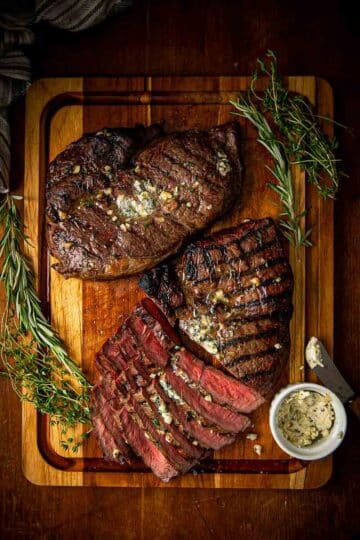
In this simple sirloin recipe, the steaks are seared until deeply caramelized, then basted with generous garlic-thyme butter for a glossy, aromatic finish. Using both crushed and sliced garlic creates layered flavor throughout the sauce.
A perfectly seared sirloin steak is one of the simplest ways to create a restaurant-quality meal at home. With its rich beef flavor and lean yet tender texture, Pan‑Seared Sirloin Steak in Garlicky Herb Butter recipe delivers all the satisfaction of a steakhouse dinner without the heaviness of fattier cuts.
I've always been more of a ribeye or filet person (those buttery, tender cuts you can't mess up), and to be honest, I used to skip sirloin altogether because it can come out tough no matter how well you cook it. But after testing and refining this recipe, I realized sirloin just needs a little extra care-and now, I'd happily cook this one at home over ordering it out.
And if you love Beef as much as I do, you might also explore Tri-Tip Santa Maria Style, Italian Style Beef Liver and Slow Cooker Brisket.
What is Sirloin Steak?
Have you ever made a steak and thought: nice color, but tough cut? That's Sirloin Steak. It's the cut. Just kind of tough. It finally makes sense why I can get five sirloin steaks for $32 at Costco - this cut can be tricky to get right.
Sirloin steak comes from the back of the cow, between the loin and round, and is known for its balance of flavor, tenderness, and affordability. It's leaner than ribeye but more forgiving than filet mignon, which makes it a great everyday steak that still feels special. You'll often see it labeled as top sirloin, sirloin steak, or center‑cut sirloin in grocery stores and butcher shops.
Because it's so lean, I use two different approaches depending on what I'm cooking that day. For fast weeknights, I pan‑sear sirloin hot and quick in a skillet so it gets a deep crust without spending too long over the heat. When I want more smoke flavor, I take the same cut to the smoker and use a reverse‑sear method-low and slow first, then a short, hot sear at the end-to keep the center pink and tender instead of chewy. You can see the full smoked version here: How to Smoke Top Sirloin Without Overcooking the Center.
Is Sirloin a Lean Cut and How Does it Affect Cooking?
Top sirloin is one of the best cuts of steak for searing in a hot cast iron skillet-thick enough to build a deep brown crust, but still lean and budget‑friendly. If you're curious how it compares to cuts like strip, ribeye, or flank, I break everything down in Best Cuts of Steak for Pan Searing guide.
Sirloin is definitely leaner than ribeye. This makes it flavorful but slightly less forgiving if overcooked. Using high heat for searing, precise temperature control, and proper resting are key to maintaining tenderness. Aim for medium-rare to medium for best results.
For best results, use an Instant Read Thermometer instead of guessing-medium‑rare sirloin is usually around 130-135°F when you pull it from the pan. You can always peek at my Steak Doneness Temperatures Cheat Sheet if you're not sure when to take the steak off the heat.
Top Sirloin vs. Bottom Sirloin - What's the Difference?
Both cuts come from the same primal section of the cow - the sirloin, located between the short loin and the round (mid-back area) - but they are meaningfully different in tenderness, flavor, price, and best cooking methods.
Top sirloin is the cut most people mean when they order "sirloin" at a steakhouse. It's reasonably priced yet delivers a hearty, satisfying steak experience close to pricier cuts like ribeye or NY strip. Here's the comparison chart:
| Top Sirloin | Bottom Sirloin | |
| How Tender Is It? | Moderately tender | Tougher, chewier |
| Best Cooking Method | High-heat grilling, pan-searing | Roasting, slow cooking, braising |
| Price | Higher | More Budget Friendly |
Why Sirloin Steak Is Worth Cooking at Home
The Price to Quality Ratio is Hard to Beat: Top sirloin is notably leaner and more affordable than premium cuts like ribeye or NY strip, yet it consistently delivers a tender, juicy result when cooked correctly (like in my recipe).
It Pairs with Everything: Sirloin is a blank canvas. It slices beautifully against the grain for steak salads, grain bowls, tacos, or a classic steakhouse plate with roasted potatoes and vegetables. Few cuts offer this kind of weeknight flexibility at sirloin's price point.
Another reason sirloin is worth cooking at home is how well it plays with pan sauces. Because it sears quickly and leaves plenty of browned bits in the skillet, you're only a splash of wine or broth away from a simple sauce that feels restaurant‑level but takes just a few extra minutes. If you want to experiment, my Pan Sauces 101 guide walks you through turning those drippings into easy mushroom, peppercorn, mustard, or white wine sauces.
My Secret to Perfectly Seared Sirloin Steak
Because sirloin is moderately marbled, it stays juicy when cooked quickly over high heat and finished with butter and garlic. That's exactly what we're doing here: a hot sear in a skillet, then basting with garlicky herb butter for a rich, steakhouse‑style finish.
And once you're comfortable pan‑searing sirloin like this, you can use the same skills on other cuts, too. Browse my Steak Dinner Recipes (Fast, Saucy & Minimal Cleanup) collection to find more cast iron steak ideas, from peppercorn steak and Steak Diane to garlic butter steak bites and chimichurri flank steak.
Ingredients You'll Need
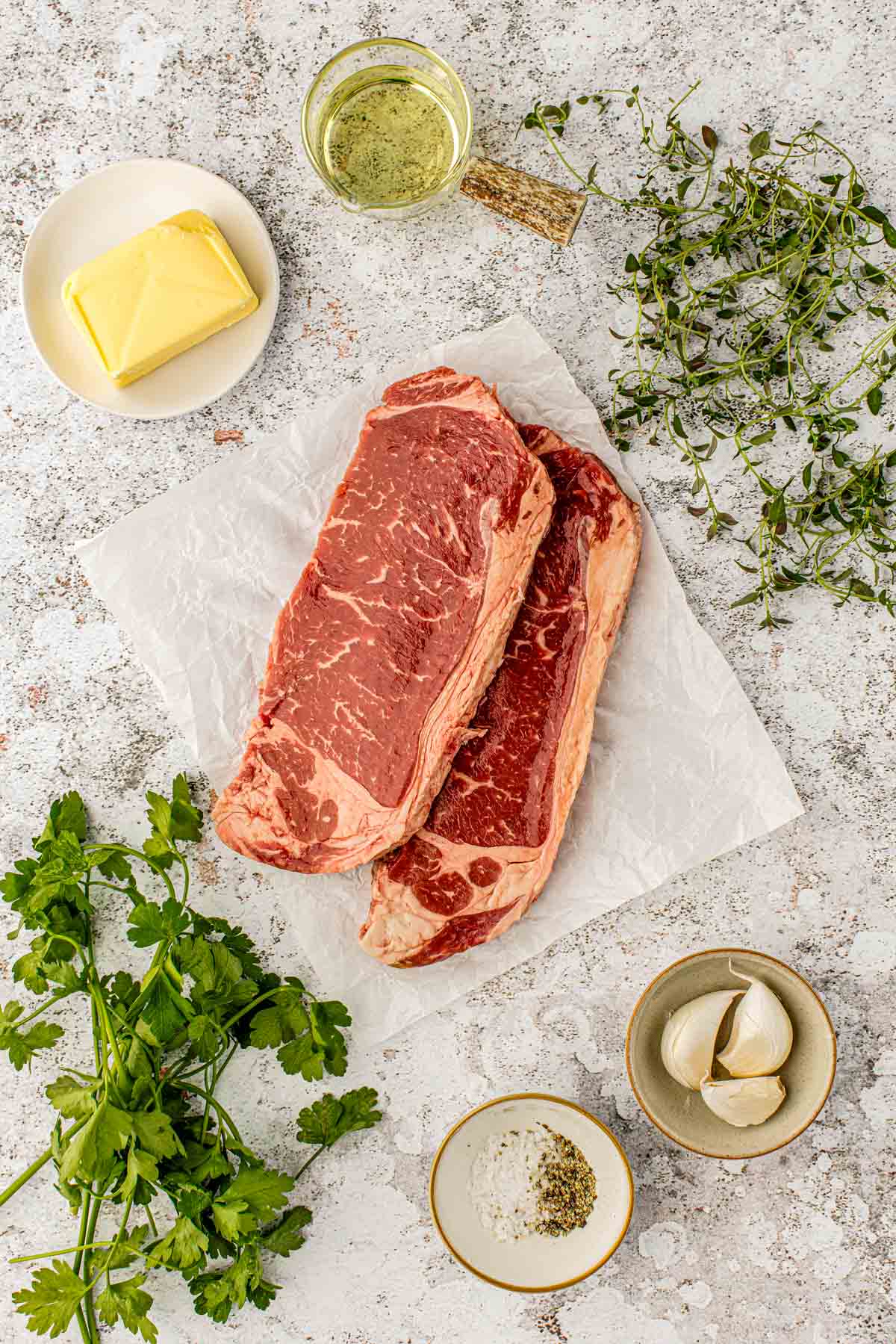
This recipe keeps the ingredient list simple so the beef flavor really comes through. You don't need complicated marinades-just a few strategic basics used well. Measurements are in the printable recipe card.
- Sirloin steak: Choose thick, well‑marbled sirloin steaks with a bright red color and minimal surface moisture for the juiciest result. Thicker steaks are easier to cook to your preferred doneness without drying out.
- Salt: Deeply seasons the meat and helps draw a little moisture to the surface, which encourages a better sear and crust.
- Black pepper: Adds a subtle heat and complements the natural beef flavor without overpowering it.
- Neutral high‑heat oil: Creates contact between the steak and the pan, prevents sticking, and tolerates the high temperature needed for a good crust. Don't be afraid to use light olive oil for pan searing the sirloin steak.
- Butter: Adds a rich, glossy finish and carries the flavor of the herbs and garlic as you baste the steak.
- Garlic: Fresh garlic only! It infuses the butter with that classic steakhouse flavor-keep the pieces larger if you want a milder flavor.
- Fresh herbs (like thyme and parsley): Bring freshness and a hint of earthiness that balances the richness of the beef and butter.
How to Cook Sirloin Steak (Pan-Seared, Juicy Every Time)
This is an overview with step-by-step photos. Full ingredients, measurements & instructions are in the recipe card below.
This recipe walks you through my exact method for cooking sirloin in a skillet, but if you want a more general step‑by‑step that works for strip, ribeye, and other cuts too, check out How to Cook Steak Perfectly Every Time (Pan-Sear Method).
1. Bring steak to room temperature
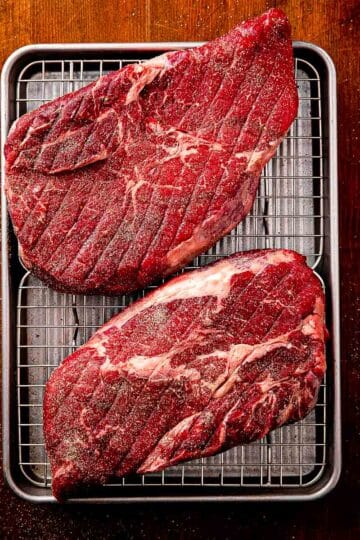
Remove the sirloin steak from the fridge and let it sit at room temperature before cooking so it cooks more evenly from edge to center.
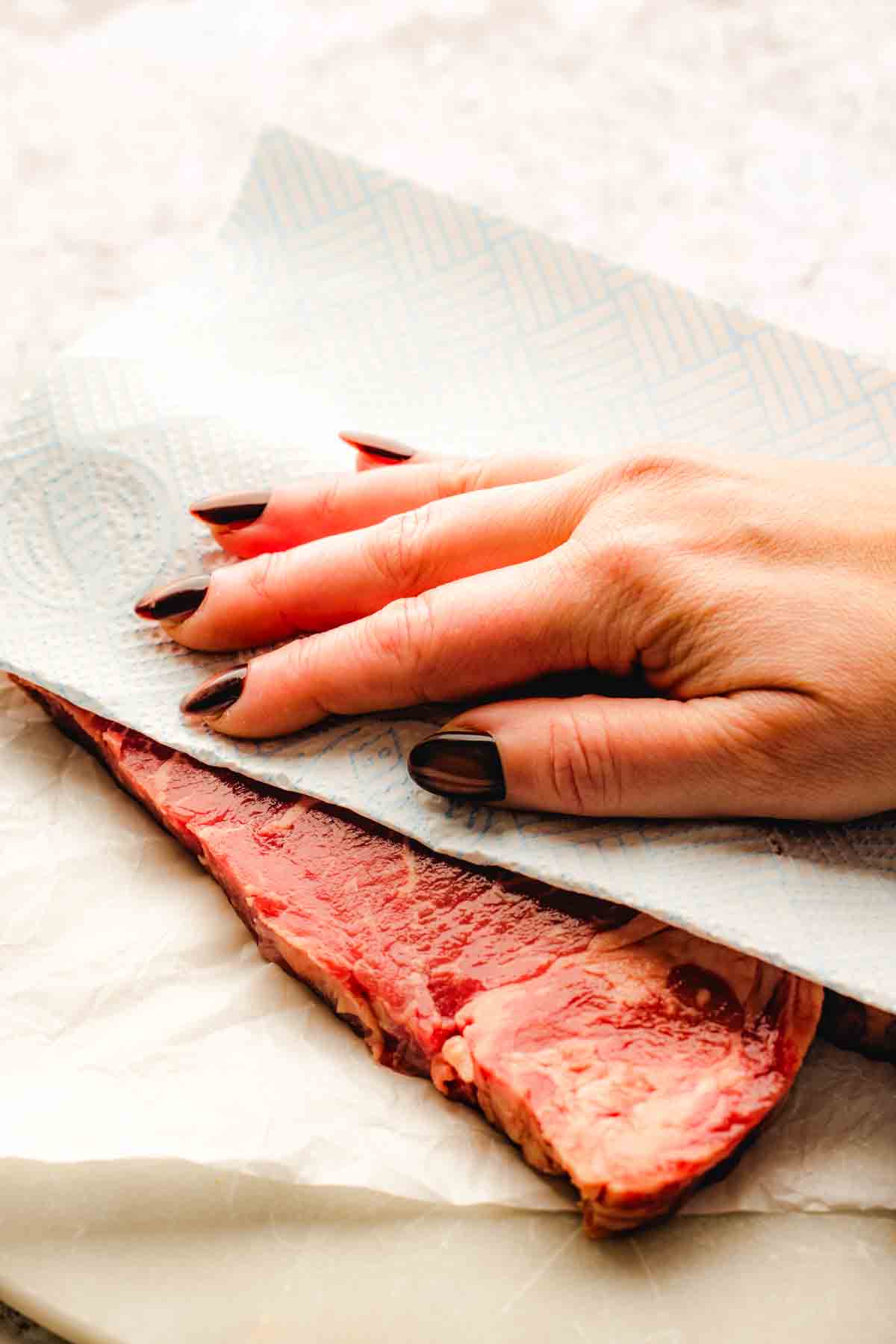
2. Dry the Surface of Sirloin Steak
Surface moisture is the enemy of a proper sear. When steak hits a hot pan, any moisture on the exterior will steam first before browning can begin. By thoroughly drying the surface, you allow immediate contact between the meat and the hot skillet, which means deep caramelization and rich flavor.
A dry surface is the difference between a golden crust and a gray exterior.
3. Season the Steaks Generously
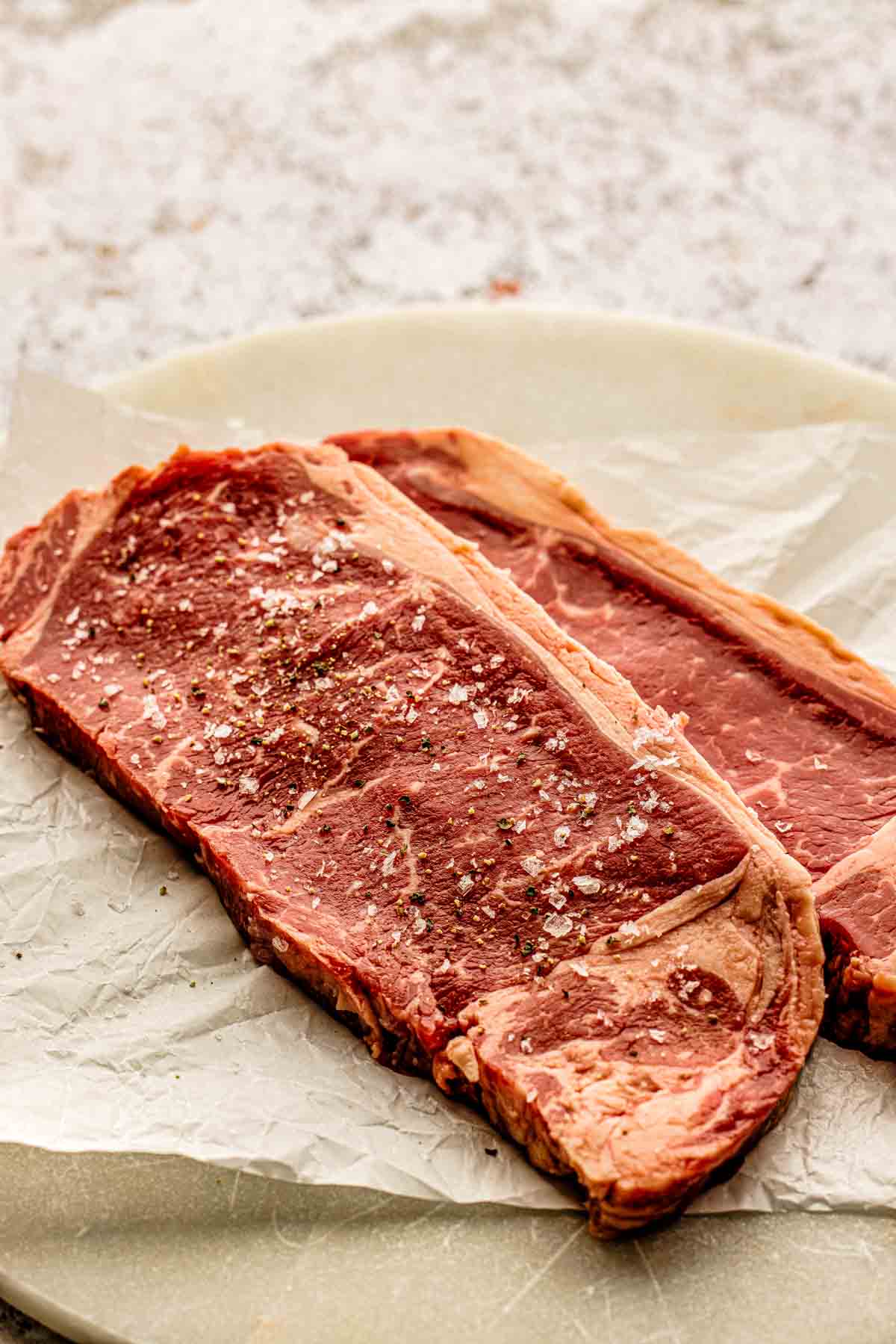
Season both sides of the steak well with salt and black pepper, pressing it in so it adheres to the surface.
You can add a light coating of neutral oil directly to the steak if you prefer, which helps the seasoning stick and promotes browning.
4. Preheat Your Pan
- Place a heavy skillet (cast iron or any heavy pan) over medium‑high heat and let it get very hot before you add the steak.
- Add a thin layer of high‑heat oil and swirl to coat once the pan is hot; you should see a faint shimmer or a wisp of smoke when it's ready.
5. Sear the sirloin steak
We Will Be Using Both Butter and Oil When Searing!
Butter delivers exceptional flavor but has a relatively low smoke point due to its milk solids. If used alone at high heat, it can burn before the steak develops a crust.
Adding a neutral oil first raises the overall smoke point, allowing you to sear aggressively without scorching the butter. The butter is then added later for flavor and basting, giving you both proper browning and rich finish.
6. Add Garlic
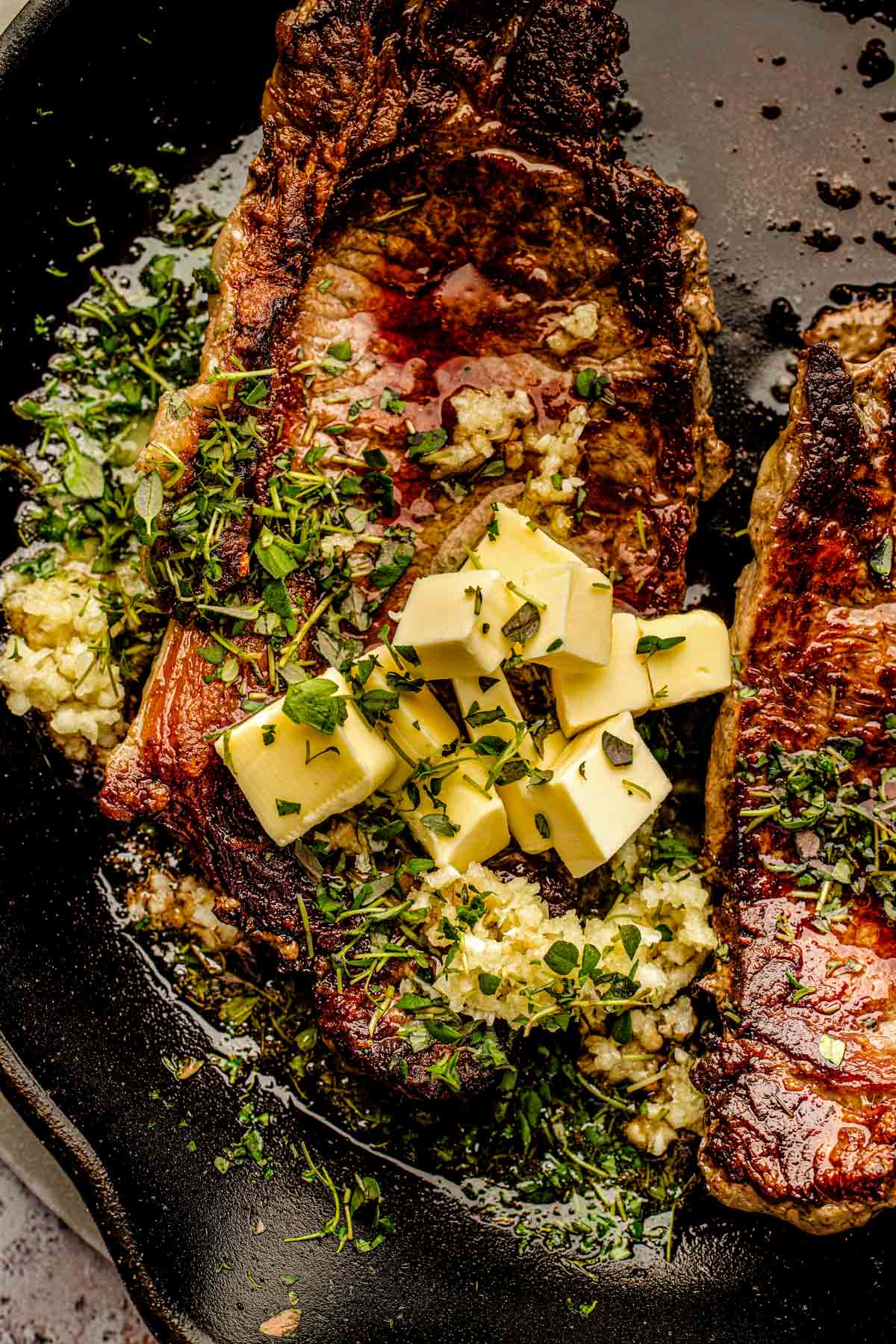
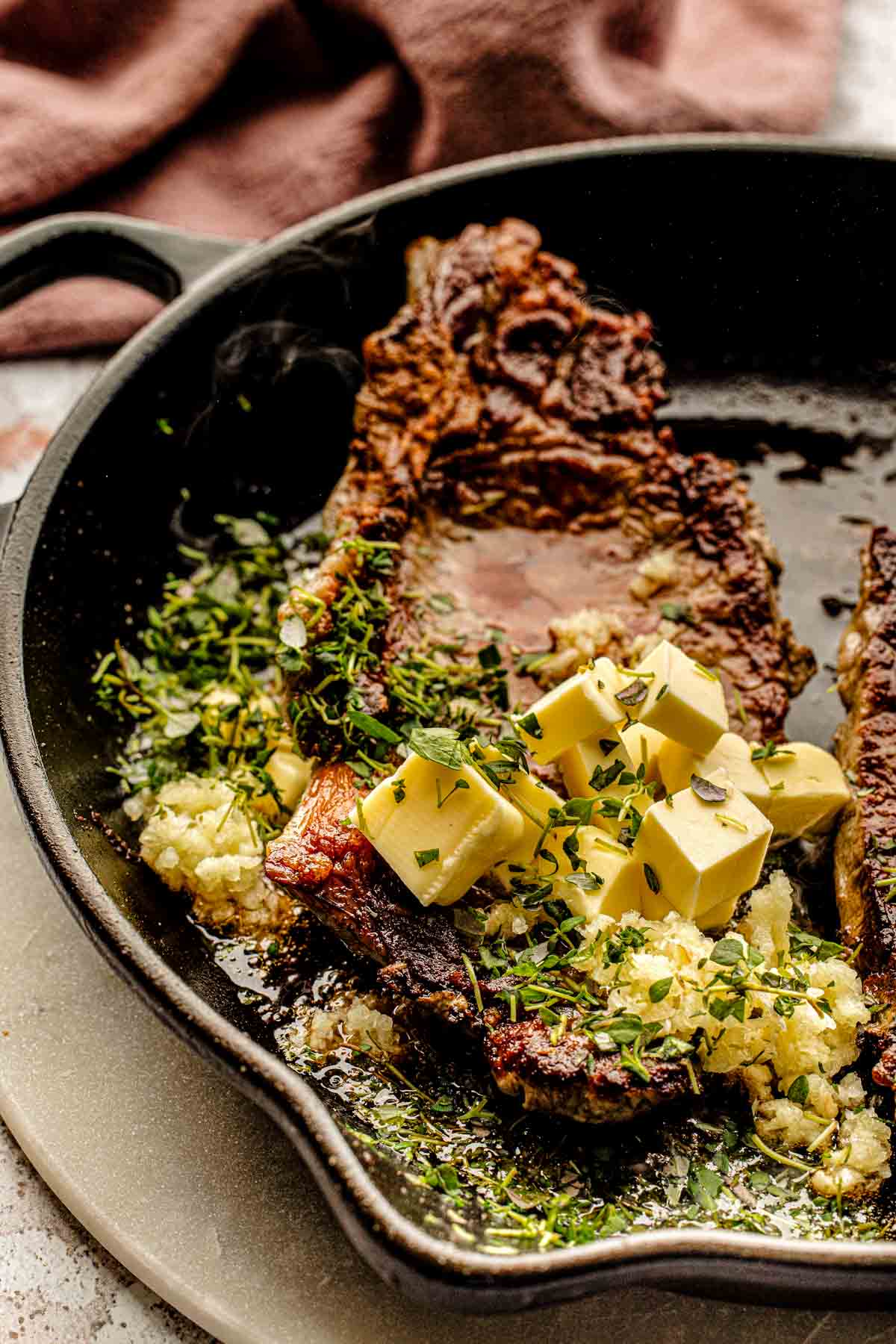
Once both sides are browned, lower the heat slightly and add butter to the pan along with crushed garlic cloves and fresh herbs.
Keep in mind that garlic burns quickly at high heat, which can cause bitterness. Adding it once the heat has been reduced ensures it softens and flavors the butter without scorching. The goal is fragrant and lightly golden, not dark brown.
Before you even think about washing that pan - don't. Those browned bits left behind are called fond, and they're the foundation of an incredible pan sauce. I walk through exactly how to use them in my complete guide to deglazing a pan
7. Baste with Butter
Tilt the pan toward you so the melted butter pools at the bottom, then use a spoon to baste the hot, fragrant butter over the steak repeatedly.
Continue basting until the steak nears your desired doneness; the butter should foam, not burn, so adjust the heat as needed.
8. Check Steak Doneness
- Cook to your preference: Use touch or an Instant Read Thermometer to reach your preferred doneness (medium‑rare is classic for sirloin steak).
- For classic sirloin steak that is juicy but not bloody, aim for medium‑rare to medium.
For more detail on internal temps, see my Steak Doneness Temperatures Cheat Sheet.
9. Rest and Slice
Transfer the steak to a plate or cutting board and let it rest before slicing so the juices redistribute instead of running out. If you want to see exactly what resting does (and what it doesn't), I break down the tests in Resting Steak: Myths vs Reality.
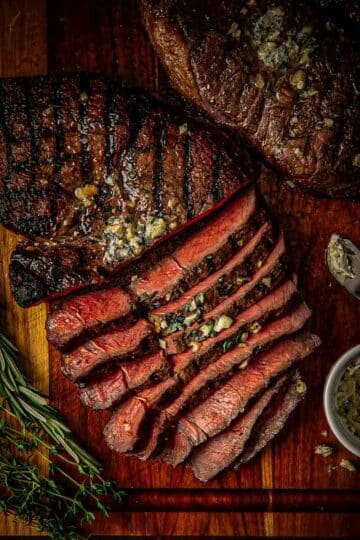
Slice against the grain into thin strips to maximize tenderness, especially if you are serving the sirloin steak over salads, bowls, or alongside sides.
10. Spoon Garlicky Herb Butter over the Steak
Stir the chopped parsley into the warm butter. Return the sliced steak to the pan, spoon the garlic herb butter over the sliced steak. Finish with extra parsley and a light sprinkle of flaky sea salt before serving.
Cooking Times (for 1-inch thick sirloin)
- Rare: 120-130°F (49-54°C) - about 2-3 minutes per side.
- Medium-rare: 130-135°F (54-57°C) - 3-4 minutes per side is a common rule of thumb.
- Medium: 135-145°F (57-63°C) - 4-5 minutes per side can work, but many home stoves/pans will hit medium a bit faster, especially with a strong preheat.
Juicy Pan-Seared Sirloin Steak
Ingredients
- 21 oz sirloin steak cut into 2 large steaks
- 2 teaspoon kosher salt
- 1 teaspoon freshly cracked black pepper
- 1 tablespoon neutral oil (avocado oil or light olive oil)
- 4 tablespoon unsalted butter
- 4 cloves garlic half lightly crushed and half thinly sliced
- 2 tablespoon fresh thyme leaves
- 2 tablespoon fresh parsley finely chopped
Instructions
- Remove the steaks from the refrigerator 45 minutes before cooking. Pat completely dry with paper towels. This step is essential for achieving a proper crust. Season generously on all sides with salt and pepper, pressing it into the surface.
- Place a heavy skillet (cast iron is ideal) over medium-high heat. Allow it to heat for several minutes until very hot.
- Add the oil and let it shimmer. The pan must be hot before the steak goes in as this ensures caramelization rather than steaming.
- Add the steaks to the pan and do not move them. Sear for 3 minutes, until a deep golden-brown crust forms. If the steak sticks when you try to lift it, it's not ready to flip. Flip and sear the second side for a further 3 minutes.
- Reduce heat to medium. Add the butter, crushed garlic, and thyme to the pan. As the butter melts and begins to foam, tilt the pan slightly and spoon the butter continuously over the steaks for 1-2 minutes.
- Cook to your preferred doneness: 130-135°F for medium-rare or 138-140°F for medium.
- Transfer the steaks to a cutting board and let rest for 10 minutes. Resting allows juices to redistribute, keeping the steak moist and preventing excess pooling when sliced. Once rested, slice the steak against the grain.
- Stir the chopped parsley into the warm butter. Return the sliced steak to the pan, spoon the garlic herb butter over the sliced steak. Finish with extra parsley and a light sprinkle of flaky sea salt before serving.
- Enjoy!
Sirloin Steak Doneness and Temperature Chart
It's important (!) to remove the steak a few degrees before these numbers because it will continue cooking as it rests.
- Rare: Very soft to the touch, deep red inside when sliced, juices are bright. 120-129°F
- Medium‑rare: Soft but slightly springy, red center that fades to pink, very juicy. 130-135°F
- Medium: Springy and bouncy, warm pink center, juices are light pink. 138-140°F
- Medium‑well: Firm with a slight give, faint blush of pink in the center. 150-159°F
- Well done: Firm throughout, little to no pink, juices are clear or light brown. 160-170°F
Pro Tip: Press the center of the steak gently with your finger or tongs: as it cooks through, it will feel firmer and less squishy.
Medium rare is the chef-recommended sweet spot for sirloin
At 130-135°F, sirloin's lean muscle fibers remain tender and the fat has just begun to render, delivering maximum juiciness without the chewy, dry texture that higher temps produce. Sirloin has less intramuscular fat than ribeye, so it dries out faster at higher temperatures - avoid well done if possible.
Always pull your sirloin 5-7°F before your target temperature
Carryover cooking occurs as residual heat continues raising the internal temp even off the grill or pan. If you want a perfect medium rare at 135°F, pull the steak off the heat at around 128°F.
USDA Food Safety Guidance
The USDA recommends a minimum internal temperature of 145°F (medium) for whole-muscle beef steaks (such as sirloin), followed by a rest of at least 3 minutes. This places the safe threshold at the low end of Medium Well.
That said, many chefs and restaurants serve steaks at lower temperatures - this is a personal risk decision, and healthy adults frequently consume medium rare (130-135°F) without issue.

Key Tips for Success
- Dry the Surface: Pat the steak thoroughly dry with paper towels; moisture on the surface creates steam instead of a crust.
- Room Temperature: Let the steak sit out for 30-60 minutes before cooking to ensure even cooking.
- Let the pan preheat fully: A properly heated pan is essential for caramelization and those coveted browned bits.
- Don't overcrowd the pan: Cook one or two steaks at a time so the pan stays hot and the steak sears instead of stewing.
- High Heat & Fat: Use a heavy-duty pan (I used cast iron) and high-smoke-point oil (avocado or grapeseed).
- Don't Move It: Let the steak sear for 3-4 minutes without moving it to ensure a deep brown, caramelized crust (Maillard reaction).
- Use tongs, not a fork: Piercing the steak can let juices escape; tongs allow you to flip and sear edges gently.
- Basting: After flipping, add 2-4 tablespoons of butter, smashed garlic, and fresh herbs (like thyme or rosemary), then tilt the pan and spoon the butter over the steak continuously.
- Rest before slicing: This simple step is the difference between a juicy sirloin steak and a dry one.
- Slice: Cut the steak against the grain to ensure tenderness. This is a very important final step!

Why Use Both Crushed and Sliced Garlic
I used a combination of BOTH crushed and sliced garlic.
- Crushed garlic releases its oils more quickly and infuses the butter deeply as it cooks.
- Sliced garlic, on the other hand, cooks more gently and retains its structure, delivering slightly sweeter, milder bites of garlic throughout the finished dish.
This combination provides both background depth and distinct garlic presence, rather than a single-note flavor. It also prevents the butter from tasting overly sharp while still delivering visible, tender pieces of garlic in each spoonful of sauce.
Why Do We Need to Baste the Steak
Basting does more than add flavor. As you spoon hot butter over the steak, you create even surface cooking while enriching the crust. This technique helps gently bring the steak to temperature without overexposing one side to direct heat. It also builds a glossy, restaurant-quality finish.
When steak cooks, its muscle fibers tighten and push juices toward the center. If sliced immediately, those juices spill out onto the cutting board. Resting allows the fibers to relax and the juices to redistribute throughout the meat. This results in a more tender texture and noticeably juicier slices.
Why Cut Against the Grain?
Sirloin contains visible muscle fibers that run in one direction. Slicing against the grain shortens those fibers, making each bite easier to chew and more tender. Cutting with the grain leaves long fibers intact, which can make the steak feel tougher even when properly cooked.
If the steak sticks to the pan, it is not ready. Once a proper crust forms, it will naturally release from the skillet. Forcing it early can tear the surface and reduce browning.
Frequently Asked Questions About Sirloin Steak
- Is sirloin steak good for pan searing?
Yes-sirloin steak is excellent for pan searing because it has enough marbling to stay juicy and takes well to high heat in a hot skillet. - Do I need to marinate sirloin steak?
You don't have to; a simple seasoning of salt and pepper plus butter basting is enough to keep sirloin tender and flavorful when cooked properly. Marinades are optional for adding extra flavor or acidity but not required. - How long should I rest sirloin steak?
Let your sirloin steak rest after cooking so the juices redistribute and the texture relaxes. Larger or thicker steaks generally benefit from a longer rest. - Can I cook sirloin steak in the oven?
Yes; you can sear the steak in a hot skillet on the stove, then transfer the pan to a hot oven to finish cooking to your desired doneness. This method is especially useful for very thick steaks. - What's the best pan for sirloin steak?
A heavy pan like cast iron or stainless steel holds heat well and gives you the best sear. Nonstick pans are less ideal for high‑heat searing.
Storage, Leftovers and Reheating
- Allow any leftover steak to cool completely before transferring to an airtight container. Store in the refrigerator for up to 3 days.
- Leftover steak is excellent served cold or at room temperature, thinly sliced over salads, tucked into sandwiches, or added to grain bowls.
- To reheat, warm gently in a skillet over low heat with a small amount of butter to prevent drying. Cover loosely and heat just until warmed through.
- Avoid high heat or prolonged reheating, as sirloin is leaner and can become firm if overcooked.
- If freezing, wrap tightly in plastic wrap and then foil before placing in a freezer-safe bag. Freeze for up to 2 months. Thaw overnight in the refrigerator before reheating gently.
More Steak Recipes To Enjoy
If this sirloin has reawakened your inner steak monster, here are a few more options that have been thoroughly "quality tested" (by me… and whoever happened to be lurking in the kitchen when they were done).
- Chimichurri Marinated Flank Steak - Bright, herby, and perfect when you want something fresh to slice over salads or serve with grilled veggies.
- Steak Diane for Two - Silky Cognac Cream Sauce, Ready in 25 Minutes - Fancy-restaurant vibes without leaving your kitchen (or putting on real pants). Tender steak in a glossy cognac cream sauce that looks wildly impressive but comes together fast. I tested this one until the sauce hit that perfect "I want to drink this with a straw" level of silky.
- Grilled Steak Salad with Corn, Avocado, and Red Wine Vinaigrette - Grill and steak: need I say more?
- Peppercorn Steak (Steak Au Poivre Without Cognac) - All the bistro-style peppery drama, none of the alcohol required. Cracked pepper crust, creamy pan sauce, minimal dishes. Great for nights when you want to feel like you're in Paris but also very much in pajamas.
- How to Grill Juicy, Perfect Steak Every Time - My step-by-step method for getting a great sear and a juicy center on the grill, with doneness cues I use every single time.
All of these have been repeatedly tested in my kitchen for doneness, timing, and general "wow, that's good" factor-purely in the interest of science, of course.
Gail M. says
I want to give you 5 stars for this without even tasting it, because it sounds delicious.
Lila Petersen says
Delicious Sirloin Steak for my son’s birthday dinner. Renewed my love of sirloin. Directions clear and easy to follow for a perfectly cooked sirloin.
Olya Shepard says
Thank you Lila. So glad you made it for your son! My son loves steaks as well.
Rich Piper says
Great recipe
Olya Shepard says
Thank you
Leila says
Made this steak for my brothers birthday yesterday and it was AMAZING! Big hit with everyone!!
Olya Shepard says
Thank you Leila! Glad you celebrated the birthday with the steak!
Dana says
Delicious with mashed potatoes (I don't peel them). The steaks are tender when cooked this way which is what I want.
Olya Shepard says
Sounds lovely! Steak is always good with mashed potatoes.