

When I'm craving Thai satay in the middle of a New York heat wave, I make this oven-baked version instead of firing up the grill in 90-degree heat. Lemongrass-lime marinated chicken thighs roast on a wire rack so they caramelize instead of simmering in their own juices, then a quick broil gets you those charred edges anyway. I pile the skewers over jasmine rice and drown everything in a warm coconut peanut sauce that's sweet, savory, and just spicy enough to feel like takeout.

I love this oven-baked Thai chicken satay because it feels like cheat-code satay: all the flavor, none of the grill drama. The chicken thighs go in a bold marinade - lemongrass, lime, fish sauce, soy, garlic, curry-adjacent spices - and come out of the oven juicy with real color and caramelization, not that sad "boiled in sauce" look. The broiler does the last bit of work, giving those edges just enough char to make it feel like you actually fired up a grill.
This one lives in regular rotation alongside my spicy Baked Jerk Chicken Thighs Skewers, and the yogurt-marinated Oven‑Grilled Tandoori Chicken Skewers - all using the same wire-rack, high-heat method.
The sauce is the part I always want extra of. It's a coconut peanut situation with red curry paste, so you get creaminess, heat, and that slightly sweet finish that makes you keep going back with your spoon. I pile the skewers over jasmine rice, though they're honestly great on their own too. Pour the sauce over everything, finish with chopped peanuts, cilantro, and a big squeeze of lime. It's messy, satisfying, and exactly the kind of weeknight dinner that tastes like it came from a Thai spot - without leaving your kitchen or firing up a grill. On nights when I want something Thai noodle-like instead of saucy and skewered, I'll make Easy Thai Noodles With Peanut Sauce.

How I Get Grill-Level Satay Flavor Straight From the Oven?
High-Heat Oven + Wire Rack (How I Avoid Soggy Chicken)
The whole method is built around treating the oven more like a grill than a slow roaster. At 425°F on a wire rack, the chicken roasts and caramelizes instead of stewing in its own juices on a flat pan - the rack keeps the surface dry enough to brown, which is what gives you those sticky, slightly charred edges once the marinade sugars start to cook. The quick broil at the end just finishes the job: by that point the chicken is already cooked through, and one to two minutes of direct heat builds the char and color that makes this feel like it came off a grill.
Why I Use Chicken Thighs Instead of Breast
When I'm making this on a weeknight, thighs are the only cut I really want enough to multitask with the sauce. You see, thighs have enough fat to handle a hot oven and any timing miscalculation (oh, I forgot I had chicken in the oven) without going dry - which matters when you're also watching the sauce on the stove. Breast works, but it cooks faster, goes from done to dry in a short window, and doesn't carry the marinade the same way. I start checking breast at 10-12 minutes; with thighs I'm just watching for color.
Coconut Peanut Sauce with Red Curry Paste
This is the sauce I make when I want something that behaves like restaurant satay sauce but doesn't break or seize on the stove. I skip the old "peanut butter + soy and hope for the best" combo and go straight for coconut milk and red curry paste instead. That swap completely changes the game - the texture turns silky and spoonable, and the flavor goes from "peanutty" to "did I secretly order takeout?"
The coconut milk keeps the sauce pourable and smooth once it's warmed, so you can reheat it without fear of it seizing. The red curry paste is my lazy secret weapon: it brings heat, aromatics, and depth in one spoonful, no chopping required.
Then brown sugar and lime step in to keep everything in balance. The sugar rounds out the spice, the lime brightens the whole thing, and you end up with a sauce that goes with the sweet-savory chicken instead of fighting it - thick enough to cling to the skewers, but just runny enough to drip down into the rice and make everyone "accidentally" go back for seconds.

Ingredients You'll Need
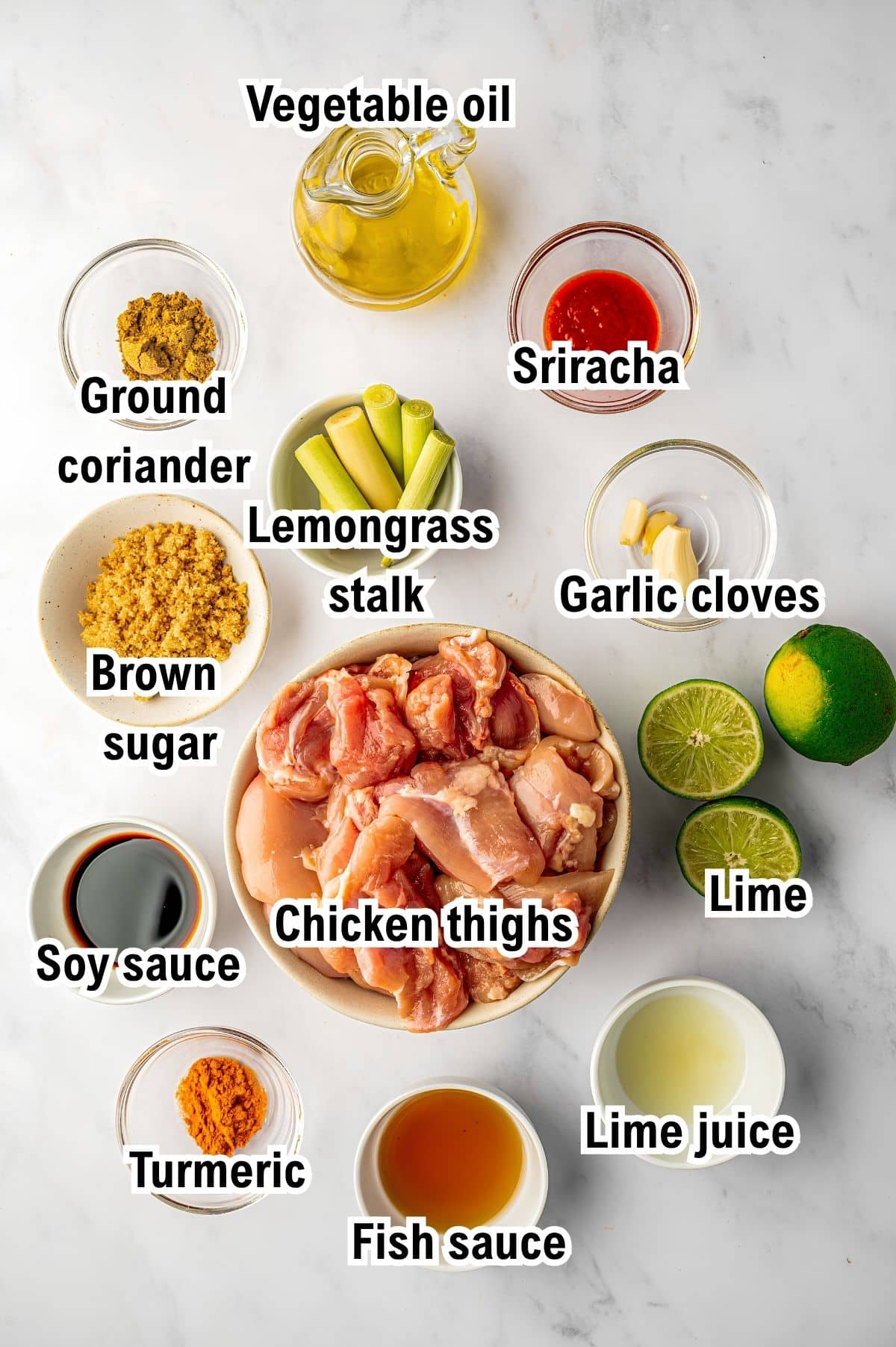
For the Chicken Satay Marinade
- Chicken thighs - My default for this recipe - they stay juicy in a hot oven and forgive you if dinner runs a few minutes late.
- Lemongrass - I toss the pale inner stalk into the blender; it gives that bright, citrusy "Thai BBQ" aroma you never get from lime alone.
- Brown sugar - Just enough to help the marinade caramelize on the edges so the chicken picks up those sticky, satay-style bits under the broiler.
- Vegetable oil - A neutral oil that helps the marinade cling to every piece and keeps the chicken from drying out while it bakes.
- Soy sauce - This is my salty backbone; it seasons the meat all the way through and adds a little umami without taking over.
- Fish sauce - The "you can't quite put your finger on it" depth - I use it sparingly, but it's what makes the chicken taste like it came from a Thai grill.
- Lime juice - Fresh only. It brightens the whole marinade and keeps the flavors from feeling heavy once the chicken hits the rice.
- Garlic - I add whole cloves to the blender because I want that punchy, cooked-garlic flavor all through the marinade.
- Ground coriander - Soft, citrusy warmth that plays really well with lemongrass - it rounds everything out without shouting.
- Turmeric - A pinch for color and that earthy note; it's a big part of why the chicken comes out such a deep golden shade.
- Sriracha - My built-in heat. I adjust this depending on who's eating - just a squeeze for mild, a good swirl when I want it to bite back.
- Salt - Even with soy and fish sauce, I still add a little; it tightens all the flavors and keeps the thighs from tasting flat.
For the Coconut Peanut Sauce
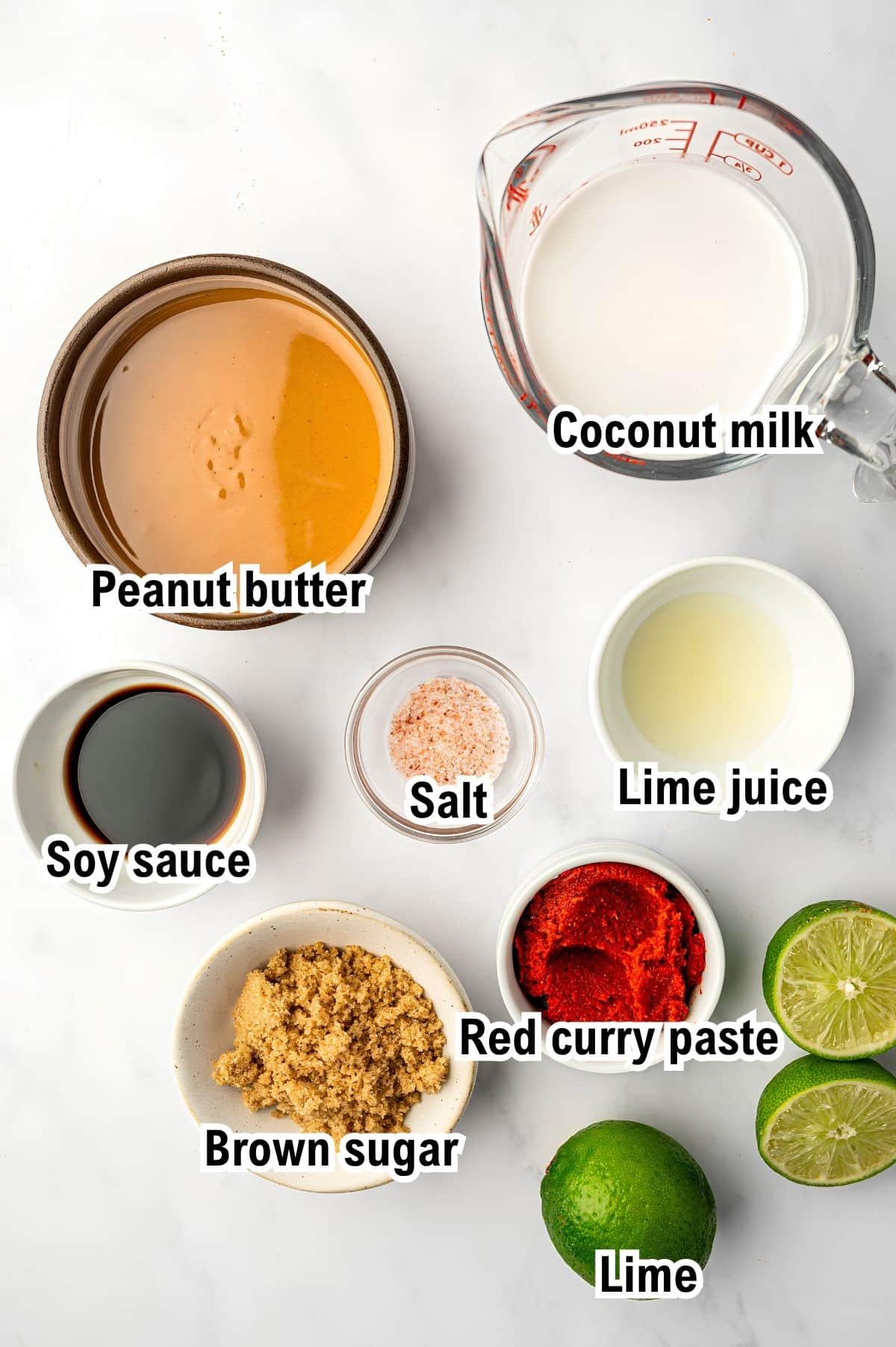
- Peanut butter - I use creamy peanut butter because it melts into a silky sauce that actually coats the chicken instead of clumping.
- Coconut milk - This is what makes the sauce feel restaurant-level - it loosens the peanut butter into something pourable and adds a gentle richness.
- Brown sugar - Just enough sweetness to balance the curry paste and lime; it keeps the sauce from tipping too far into spicy or sour.
- Red curry paste - My shortcut to big flavor - it brings chili heat, aromatics, and a little funk in one spoonful, so the sauce tastes layered with very little effort.
- Lime juice - I stir it in off the heat so it tastes bright and fresh, not cooked down; it's what keeps the sauce from feeling heavy.
- Soy sauce - A small splash to pull in salt and umami so the sauce doesn't disappear once it hits the rice and chicken.
- Salt - I taste at the end and add just enough to sharpen everything; the goal is balanced, not salty.
Toppings
- Chopped peanuts - I like a big handful on top so every bite has some crunch - it's the easiest way to make the bowl feel extra satisfying.
- Cilantro - Torn over the top right before serving; it cuts through the richness and makes the whole plate smell fresher.
- Lime wedges - I always bring extra to the table - a squeeze over the finished skewers wakes everything up instantly.
- Jasmine rice - Soft, fragrant, and perfect for catching all the coconut peanut sauce that slides off the chicken. This is the base I build the whole meal around.
How to Make Oven-Baked Thai Chicken Satay
1. Marinate the Chicken
The marinade here isn't just about flavor, it's about texture. The mix of soy, fish sauce, lime, and brown sugar seasons the chicken all the way through and starts loosening the muscle fibers so the thighs stay juicy in a hot oven. Lemongrass, garlic, coriander, and turmeric do most of their work on the surface, so make sure every piece is fully coated and actually spends time in contact with the marinade, not just sitting in a pool at the bottom of the bowl. Even 30 minutes makes a difference; a few hours in the fridge is better.


2. Set Up the Sheet Pan and Wire Rack
The wire rack is what keeps this from turning into "baked chicken in a puddle." Lifting the skewers off the foil-lined pan lets hot air circulate around them, so the edges can dry slightly and brown instead of steaming in their own juices. Lining the pan underneath with foil isn't just about easy cleanup - it also reflects some heat back up, which helps with color. Lightly oiling the rack keeps the first flip from tearing off any browned bits you worked to build.
3. Bake, Then Broil for Char
Think of the bake as the cooking phase and the broil as the finishing phase. The time in the 425°F oven brings the chicken up to a safe internal temperature and starts caramelizing the sugars in the marinade, but you don't want to rely on that alone for color. Switching to broil at the end adds direct, top-down heat that deepens the browning in a minute or two. The key is to broil only once the chicken is already cooked through; that way you're chasing color, not trying to finish raw meat under a burner that can burn the surface before the center is ready.


4. Make the Coconut Peanut Sauce
The sauce benefits from gentle heat and patience more than anything else. Warming the peanut butter and coconut milk slowly lets them blend into a smooth, glossy base instead of turning grainy or splitting. The red curry paste needs a minute in that warm fat to wake up its aromatics; stirring it in off the heat won't give the same depth. Taste at the end before you adjust anything: lime for brightness, a bit more brown sugar if the curry paste is very spicy, or a splash of water/coconut milk if it tightens up more than you like.


5. Serve with Rice, Peanuts, and Herbs
How you plate this has a real effect on how it eats. Putting the skewers over a bed of jasmine rice gives the sauce somewhere to go - it soaks in instead of pooling on the plate. Scattering chopped peanuts and cilantro over the top, rather than mixing them in, keeps the crunch intact and the herbs fresh and fragrant. A squeeze of lime at the table is the last adjustment: it cuts through the richness of both the chicken and the sauce and sharpens everything you've built.


Oven-Baked Thai Chicken Satay with Coconut Peanut Sauce
Equipment
- Blender or food processor
- Wooden or metal skewers
- large sheet pan
- Aluminum foil
- Wire rack
- Small saucepan
- Whisk
- Instant-read thermometer
- Tongs
Ingredients
For the Chicken Satay
- 1½ lb boneless skinless chicken thighs, cut into bite-size pieces
- 1 stalk lemongrass cut into pieces
- 2 tablespoons brown sugar
- 2 tablespoons vegetable oil
- 2 tablespoons soy sauce
- 1 tablespoon fish sauce
- 1 tablespoon lime juice
- 2 garlic cloves
- 1 teaspoon ground coriander
- ½ teaspoon turmeric
- 1 teaspoon sriracha
- ½ teaspoon salt
For the Coconut Peanut Sauce
- ½ cup creamy peanut butter
- ½ cup coconut milk
- 2 tablespoons brown sugar
- 2 tablespoons red curry paste
- 1 tablespoon fresh lime juice
- ½ tablespoon soy sauce
- ½ teaspoon salt
For Serving
- Chopped peanuts
- Chopped fresh cilantro
- Lime wedges
- Jasmine rice cooked
Instructions
- Make the marinade. In a blender or food processor, combine the lemongrass, brown sugar, vegetable oil, soy sauce, fish sauce, lime juice, garlic, ground coriander, turmeric, sriracha, and salt. Blend until mostly smooth.
- Marinate the chicken. Add the chicken thigh pieces to a medium bowl and pour the marinade over the top. Toss until every piece is well coated. Cover and marinate for at least 30 minutes or up to 8 hours in the refrigerator.
- Thread onto skewers. Thread the marinated chicken onto skewers, leaving a little space between pieces so they cook evenly. If using wooden skewers, soak them in water for at least 30 minutes first.
- Prep the pan and oven. Preheat the oven to 425°F (220°C). Line a sheet pan with foil for easy cleanup, then place a wire rack on top and lightly oil the rack.
- Bake the chicken. Arrange the skewers on the wire rack in a single layer. Bake for 14-18 minutes, flipping halfway through, until the chicken reaches an internal temperature of 165°F.
- Broil for char. Turn the oven to broil and broil the skewers for 1-2 minutes, just until the edges are lightly charred and caramelized. Watch closely to avoid burning.
- Make the peanut sauce. While the chicken bakes, add the peanut butter, coconut milk, brown sugar, red curry paste, lime juice, soy sauce, and salt to a small saucepan. Warm over low heat, whisking until smooth and creamy. If the sauce is too thick, add a splash of water or more coconut milk until it reaches your desired consistency.
- Serve. Serve the chicken satay over jasmine rice with the warm coconut peanut sauce on the side or drizzled over the top. Garnish with chopped peanuts, fresh cilantro, and extra lime wedges for squeezing.
When I Make This Ahead, Here's What I Do
Make-Ahead Peanut Sauce
The peanut sauce is the easiest part of this recipe to get ahead on. It keeps well in the fridge for 3-4 days, and the flavor actually deepens a bit as the curry paste, lime, and coconut have time to mingle. Store it in a jar or container with a tight lid; when you're ready to use it, warm it gently over low heat and thin with a splash of water or coconut milk if it's thicker than you like. Avoid boiling - high heat can make the sauce seize or split. Leftover peanut sauce never goes to waste here - I drizzle it over plain rice bowls or even over a simple pan-seared chicken like my Juicy Chicken Breast.
Using Chicken Breast Instead of Thighs
Chicken breast works here, but you have to treat it differently than thighs. It cooks faster and dries out more easily, especially at 425°F, so plan on shorter oven time and start checking around the 10-12 minute mark with an instant-read thermometer. Pull the skewers as soon as they hit 165°F in the thickest pieces. If you know you'll use breast often, cut the pieces slightly larger than you would for thighs; that extra bit of size gives you a little buffer against overcooking.
Grill Instructions (If You Do Want to Grill)
If you decide to go classic and use a grill, the marinade and sauce stay exactly the same - only the heat source changes. Preheat a gas or charcoal grill to medium-high and oil the grates well so the skewers don't stick. Grill the chicken over direct heat, turning every few minutes, until the outside is nicely charred and the centers reach 165°F. Because an open flame runs hotter than your oven, the skewers will cook a bit faster, so rely on color and temperature more than the oven timing.
Serve with the warm coconut peanut sauce, peanuts, herbs, and lime just as you would with the baked version.

Frequently Asked Questions
Can I use chicken breast instead of thighs?
You can, but you'll need to be more careful with timing. Breast cooks faster and dries out more easily at 425°F, so start checking it around the 10-12 minute mark with an instant-read thermometer and pull it as soon as it hits 165°F in the thickest pieces. Cutting the breast pieces slightly larger than the thigh pieces also gives you a bit more buffer before they overcook.
Can I make the marinade ahead of time?
Yes. You can blend the marinade a day in advance and keep it in the fridge in a sealed container. When you're ready, give it a quick stir and pour it over the chicken. I don't marinate the chicken itself longer than about 8 hours - beyond that, the acid from the lime and the salt can start to change the texture.
How spicy is this chicken satay?
With the amounts written, it has gentle heat, not a full-on burn. The sriracha in the marinade and the red curry paste in the sauce give a warm kick but shouldn't overwhelm most people. If you like it hotter, bump up the sriracha or curry paste a bit; if you're cooking for kids or spice-sensitive guests, you can cut both back and let people add extra at the table.
Can I freeze the cooked chicken satay?
Yes. Let the cooked chicken cool completely, remove it from the skewers, and freeze in an airtight container or freezer bag for up to 2-3 months. Reheat gently in a 350°F oven until warmed through. I prefer to make the peanut sauce fresh or from refrigerated leftovers rather than freezing it, since the texture can change a bit after thawing.
What should I serve with oven-baked Thai chicken satay?
Jasmine rice is the obvious base - it soaks up the coconut peanut sauce perfectly. A simple cucumber salad, steamed or stir-fried vegetables, or a crisp slaw all work well on the side. Extra lime wedges, chopped peanuts, and fresh cilantro on the table let everyone adjust each bowl to their own taste. For a fun, mixed-chicken spread, I like to pair this satay with a platter of BBQ Chicken Kebabs straight off the grill.
More Bold Chicken Skewer Recipes
Baked Jerk Chicken Thigh Skewers - Oven-baked Jamaican jerk chicken thighs with a hot, aromatic jerk marinade and juicy meat in about 40 minutes.
Oven‑Grilled Tandoori Chicken Skewers - Yogurt-marinated chicken skewers with tandoori spices, cooked on a wire rack in the oven for that grilled, slightly charred flavor without needing an outdoor grill.
If You Love Thai Cuisine, These Guides Are For You
Why Your Thai Dinners Don't Taste Like Takeout
Thai Dinners at Home: Easy, Big‑Flavor Recipes and Techniques You'll Wish You Tried Sooner


Amanda says
Delicious sauce and the chicken is perfectly marinated!