
Pork is the most versatile meat on the grill - and also the most misunderstood. Most people have eaten dried-out pork chops they never asked for again, skipped ribs because they seemed too complicated, or bought a tenderloin and promptly overcooked it into sawdust. I created a complete breakdown of the four most popular pork cuts for the grill and smoker: what they are, where they come from, how they behave over heat, when to use them, and exactly what to cook. Always. Good. Juicy. Pork.

Why Cut Selection Changes Everything
Pork's four most grillable cuts come from completely different parts of the animal - and that geography determines everything: fat content, muscle density, connective tissue, ideal cooking method, and cook time. A pork tenderloin and a pork butt are practically opposite animals. Treating them the same way is the source of most grilling failures.
Here's the big-picture view before we go deep:
| Cut | Fat Level | Connective Tissue | Best Method | Time on Grill/Smoker |
|---|---|---|---|---|
| Pork Tenderloin | Very lean | None | Two-zone grill | 20–30 min |
| Pork Chops | Lean to moderate | Low | Direct high heat or two-zone | 7–25 min |
| Pork Ribs | Moderate | High | Low-and-slow smoke + grill finish | 3–6 hrs |
| Pork Butt (Boston Butt) | High | Very high | Low-and-slow smoke | 10–14 hrs |
Pork Tenderloin: The Fastest Cook, the Least Forgiving
What it is
The tenderloin is a long, narrow muscle that runs underneath the loin and does essentially zero work. Because it never carries weight or effort, it's the most tender cut on the entire pig - but also the leanest. That leanness is its greatest strength and its biggest liability on the gril - it's usually done in under 25 minutes - but it's also the most unforgiving if you overcook it. We've put together a complete technique breakdown in this dedicated guide: How to Grill Pork Tenderloin, covering two-zone setup, exact temperatures, and the silver skin removal step most people skip.
Why it's different from pork loin
This causes endless confusion at the butcher counter. Pork tenderloin is a slender, 1-pound muscle. Pork loin (such as this Brown Sugar Roasted Pork Loin) is a large, wide roast that can weigh 4-10 pounds. They're different cuts with different cooking requirements - don't swap them.
How to grill it
Because the tenderloin is so lean, it goes from perfectly juicy to dry and chalky within just a few degrees. Two-zone cooking is non-negotiable:
- Sear over direct high heat for 2-3 minutes per side to get color on all four sides
- Move to indirect heat and close the lid to bring the internal temp to 140°F
- Rest for 5 minutes - carryover cooking brings it to 145°F
Want to get those perfect grill marks on your pork? Here's everything you need to know on How To Get Perfect Grill Marks every time.
Total time: 20-30 minutes. A meat thermometer is not optional here - it's required.

The best flavor moves
Tenderloin takes marinade aggressively because its lean, open muscle fibers soak up everything you give them. Acid-forward marinades (citrus, vinegar, buttermilk), dry rubs with smoked paprika and brown sugar, and chimichurri or fruit salsas as finishing sauces all work beautifully.
Recipes to make:
The verdict: Best for weeknight speed, parties where you need everything on the table in under 30 minutes, or when you want an elegant centerpiece without a long cook. High reward, high risk - use the thermometer.

Pork Chops: The Most Misunderstood Cut at the Cookout
What they are
Pork chops come from the loin - the pig's back - and can be bone-in or boneless, thick or thin, from the rib end or the sirloin end. That variation is why "pork chop" is almost a meaningless term without more context. A ½-inch boneless loin chop and a 2-inch bone-in rib chop are cooked completely differently.
The four pork chop cuts you'll encounter
- Rib chop - from the rib end of the loin; the most flavor, well-marbled, more forgiving
- Loin chop (center-cut) - the T-bone of pork; both tenderloin and loin meat, two different textures
- Sirloin chop - from the hip end; more flavor, tougher
- Blade chop - from near the shoulder; the most marbling, most forgiving, least tender
For grilling, bone-in rib chops cut at least 1 inch thick are the best choice. The bone slows cooking and insulates the meat, the fat keeps everything moist, and the extra mass gives you the window you need to develop a crust before the center overcooks.reddit+1
For a full breakdown of which cut to buy and why - including how rib chops compare for pan-searing versus grilling - see Pork Chop Cuts: Which One to Buy and Why.

The thickness rule
Thin chops (½ inch or less) are grilled hot and fast over direct heat. Thick chops (1 inch and above) need two-zone cooking - indirect heat to bring them up gently, then a sear over direct heat to finish. The complete timing table by thickness, from ½ inch to 2-inch tomahawk chops, is in the full guide: How to Grill Pork Chops - Best Cuts, Marinating, and Grill Times.
The most important rule: Pull at 140°F, not 145°F
The USDA updated its safe temperature for whole pork cuts to 145°F in 2011. The key word is "final" temperature. Pull your chops at 140°F - carryover cooking during the 3-minute rest brings them to 145°F. Pull at 145°F and you land at 150-152°F, which is the temperature of dry, chewy pork.whatsinthepan+1
The brine is not optional
Lean pork + high heat = moisture loss. A wet brine - even 30 minutes in 4 cups of water, 4 tablespoons of kosher salt, and 2 tablespoons of sugar - makes pork chops measurably more juicy and dramatically more forgiving over a hot grill. The full science and method is in Pork Chop 101: How to Get Juicy Pork Chops Every Time.
The best pork chop recipes
Whether you want bold marinades, fruity salsas, or a classic spice rub, the full collection is in 10 Best Pork Chop Recipes. For Memorial Day specifically:
- Apple Cider Pork Chops - the sweet-savory contrast that's ideal for summer
- Honey Balsamic Pork Chops
- Pan-Seared Bone-In Pork Chops in Brown Sugar Wine Sauce - herb-forward, bright, and fast
- Grilled Pork Chops with Dijon Honey marinade
The verdict: Best for easy weeknight cookouts, feeding a crowd without a long cook window, or when you want steak-level satisfaction at a fraction of the price. The most rewarding cut once you master the thermometer and the brine.
Pork Ribs: The Art Project of the Grill
Baby back vs. spare ribs - this matters
There are two rib cuts you'll find at the grocery store, and they behave differently on the smoker:
| Baby Back Ribs | Spare Ribs / St. Louis Cut | |
|---|---|---|
| Location | Upper loin, near backbone | Lower belly/sternum |
| Meat | Leaner, more tender | More meat, more fat, more flavor |
| Size | Smaller, more curved | Larger, flatter |
| Cook time | 3–4 hours at 225°F | 5–6 hours at 225°F |
| Forgiving? | Less | More |
| Best for | Competition-style, tenderness | Backyard BBQ, maximum flavor |
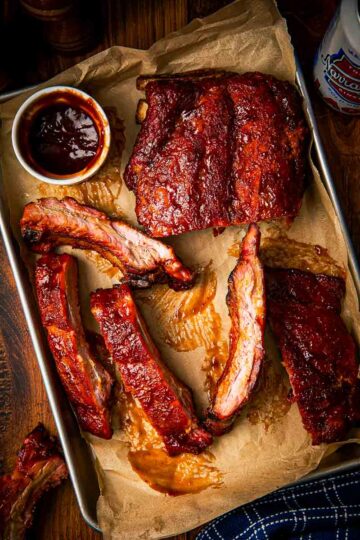
Baby backs are from the same primal as pork chops - the loin - and are the most tender rib. Spare ribs come from the belly, are fattier, and develop more flavor over the longer cook they need. St. Louis-style spare ribs are just spare ribs with the sternum bone and cartilage trimmed off for a uniform rectangular rack.
The 3-2-1 method (and when to use it)
The standard rib method - 3 hours unwrapped at 225°F, 2 hours wrapped in foil with butter and honey, 1 hour unwrapped with sauce - works well for spare ribs and St. Louis cuts. For baby backs, a 2-2-1 method is better: they're leaner and over-tenderize quickly.
The full method with timing, wrapping technique, and sauce timing is in the upcoming Grilled Ribs Guide - publishing tomorrow.
The membrane is the enemy
Before any rib hits the smoker, peel the silverskin membrane off the bone side. It doesn't render, it doesn't soften, and it blocks smoke and seasoning from penetrating the meat. Slip a butter knife under the membrane at one end, grab it with a paper towel for grip, and pull it off in one piece. For the complete step-by-step with photos, see How to Make Ribs.

The bend test
Skip the pop-up timers and visual guesses. When your rack of ribs is done, pick it up in the middle with tongs. A properly cooked rack bends deeply and the surface just begins to crack - that's the visual cue that collagen has converted to gelatin and the meat will pull cleanly from the bone. Internal temp target: 190-203°F for fall-off-the-bone tenderness.
The verdict: Highest ceiling of any pork cut - low-and-slow ribs are the signature of a great cookout. But they require a 3-6 hour commitment. Plan ahead, nail the membrane removal, and don't rush the cook.
Pork Butt (Boston Butt): The Long Game
What it actually is
Despite the name, Boston Butt has nothing to do with the rear of the pig. It's cut from the upper shoulder - the dense, heavily worked muscle above the foreleg and behind the head. The name comes from Colonial New England, where the shoulder cut was packed and shipped in wooden barrels called "butts."

Why it's the best cut for smoking
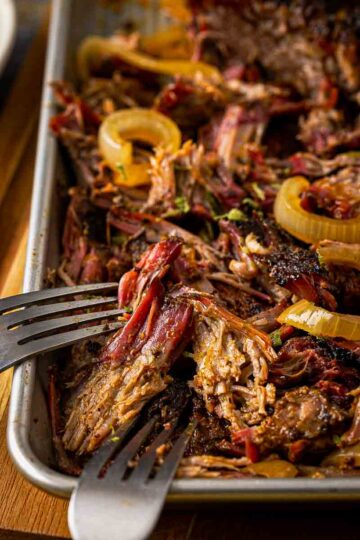
Pork butt has the highest fat content and most connective tissue of any cut on this list. That's a feature, not a bug. At low temperatures (225-250°F), that collagen slowly converts to gelatin over 10-14 hours, basting the meat from the inside. The fat renders and keeps everything moist. The result - pulled pork that falls apart in thick, juicy strands - is impossible to achieve with a lean cut like tenderloin or loin chops.
Bone-in pork butt is the pitmaster's preference over boneless because the bone helps regulate temperature distribution and acts as an internal brace that keeps the cook even.
The stall - what it is and what to do
Around 150-165°F internal temperature, your pork butt will stop rising in temperature for 2-4 hours. This is the stall, caused by evaporative cooling as moisture leaves the meat's surface. Do not raise the temperature. Two options:
- Wait it out - patience produces better bark
- Texas crutch - wrap tightly in butcher paper (not foil) at 165°F to power through while preserving bark texture
Pull pork butt at 200-205°F, when a thermometer probe slides into the thickest part with zero resistance - like warm butter.
The complete beginner's guide to the full cook, including rub, smoke wood selection, wrapping, resting, and pulling, is in Smoked Boston Butt - Fall-Apart Pulled Pork for Beginners.
The verdict: The highest-effort, highest-reward cook on this list. You're committing the night before or an early morning start. But pulled pork feeds a crowd of 15+ from one cut, and nothing else at the cookout will get more compliments.

One More: The Bonus Cut Worth Knowing
Pig Shots - The Cookout Appetizer Built from Pork
Made from smoked sausage and bacon with a creamy, cheesy stuffed center, pig shots are built from pork scraps and cook low-and-slow alongside your big cuts. Put them on when you light the grill and they're ready by the time guests arrive. Every single person will ask what they are - and then ask for the recipe.

The Decision Guide: Which Cut Is Right for You?
| Your Situation | Best Cut |
|---|---|
| Guests arriving in 30 minutes | Pork Tenderloin |
| Want steak-style simplicity + budget | Pork Chops |
| Weekend cookout, want the showpiece | Ribs |
| Feeding 12+ people, want maximum flavor | Pork Butt |
| Need an appetizer while the big cut cooks | Pig Shots |
| First time grilling pork | Bone-in rib chops, 1-inch thick — see How to Grill Pork Chops |
The Universal Pork Rules That Apply to All Four Cuts
No matter which cut you're cooking, four rules hold across the board:
- Use a thermometer - color is meaningless for pork. Every cut has a different target, and every oven, grill, and smoker runs differently
- Rest before cutting - minimum 5 minutes for chops and tenderloin, 10-15 for larger cuts, 30-60 minutes for pork butt. Cutting too early loses all the juice you spent hours building
- Don't skip the prep - brine your chops, peel the membrane off your ribs, trim excess fat cap on your butt to ¼ inch. The work before the grill determines the result
- Match the cut to the method - lean cuts need high heat and speed; fatty cuts with connective tissue need low heat and time. Going the wrong way on either is the single most common mistake


Michael says
Will be making the pork one this weekend!