
Smoked low and slow at 225°F over hickory wood - this Boston butt transforms into fall-apart pulled pork in 10-14 hours with minimal hands-on effort. One simple dry rub, a pellet or charcoal smoker, and a thermometer are all you need.
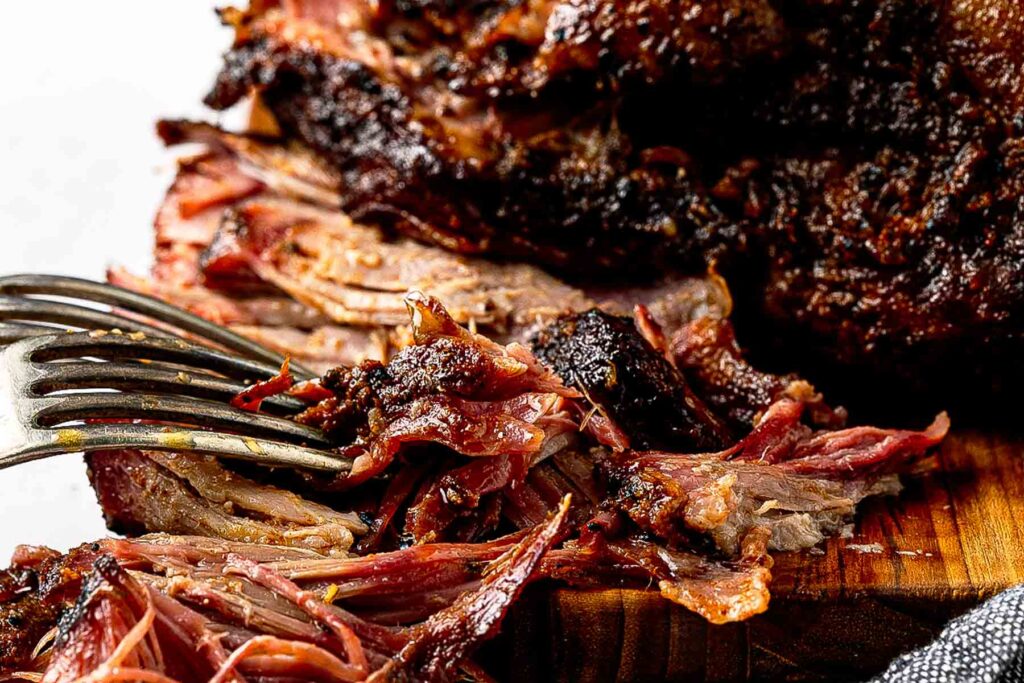
📝 Smoked Boston Butt (Pulled Pork)
✅ Prep Time: 10 minutes active (plus overnight dry brine)
🔥 Cook Time: 10-14 hours at 225°F
🧈 Wrap Point: 160-165°F internal
🎯 Finished Temp: 200-203°F, probe-tender
🍖 Serves: 8-10
👨🍳 Skill Level: Beginner-friendly (no injection required)
📦 Equipment: Pellet or charcoal smoker, leave-in digital thermometer, heavy-duty foil
This is the only smoked pork butt guide that explains the stall, includes an overnight schedule with exact clock times, and gets beginner smokers to fall-apart pulled pork on the first try. One simple dry rub, a pellet or charcoal smoker, and a thermometer are all you need.
Smoked Boston Butt Summary
- ☕ A pinch of finely ground coffee in the rub deepens the bark without tasting like coffee once it's cooked
- 🧂 Salt goes on alone the night before - a true overnight dry brine, not mixed into the rub
- 🟡 Yellow mustard binder disappears completely after 12+ hours, its only job is holding the rub in place
- 🌡️ The stall (150-165°F) is normal - it's evaporative cooling, not a broken smoker
- 🧈 Wrap in foil with butter, brown sugar, and apple juice at 160-165°F to push through the stall
- ✅ Done means 200-203°F and a probe that slides in with zero resistance - temperature alone isn't enough
- 🧊 Rest in a faux cambro (cooler + towels) for 1-4 hours before shredding - this is where the juices stay put
Why This Method Works for Beginners
If you've never smoked a Boston butt before, this is the right place to start. There's no injection, no hard-to-find ingredients, and no technique that requires experience - just a simple dry rub, a mustard binder, and low heat for a long time. The hardest part of smoking a cut this size isn't the cooking itself; it's the timing, which is why exact clock times for both a daytime and an overnight schedule matter more here than in most recipes.

Ingredients for Smoked Boston Butt
The Dry Rub - What Each Ingredient Does
- Brown sugar - this is what gives the outside of the pork that deep, almost caramelized crust called bark; it also balances out the heat from the spices.
- Smoked paprika - I bought the McCormick smoked paprika from the spice aisle; it adds a rich red color and a subtle smokiness that layers on top of the smoke from the grill.
- Garlic powder - this is just dried, ground garlic; it gives the rub a savory depth without any of the burning or bitterness that fresh garlic would cause at high heat.
- Onion powder - I grabbed a basic store-brand bottle; it works the same way as garlic powder, adding a quiet savory note that you'd notice if it were missing.
- Coarse black pepper - the larger grind means it holds up during a long cook without disappearing into the bark; it also adds a mild bite that keeps the rub from tasting too sweet.
- Chili powder - this is a mild spice blend, not pure heat; it adds warmth and earthy flavor and is part of what makes the finished bark taste like classic BBQ.
- Cayenne pepper - I used just a small amount; it brings a low, slow heat to the back of your bite rather than making the pork spicy upfront.
Why Coffee Goes in the Rub
- Finely ground plain coffee - I picked up a small bag of espresso grind at Aldi; a tiny amount deepens the bark color and adds a subtle savory richness that you won't identify as coffee once the pork is done - it works the same way a square of dark chocolate works in a pot of chili, enhancing everything around it without standing out on its own.
What the Mustard Binder Actually Does
- Yellow mustard - I used plain French's yellow mustard, nothing fancy; you spread a thin layer over the entire pork butt before applying the rub, and it acts like glue so the rub sticks to the meat instead of falling off on the grates.
- It will not taste like mustard - once the pork cooks for 12+ hours, the mustard flavor completely disappears; its only job is to hold the rub in place, and it does that job better than anything else.
- Yellow mustard as a binder isn't unique to smoked pork - it also does a great job on the Baked Pork Tenderloin with Mustard Crust, where it forms the same kind of seasoned crust in the oven.
For Wrapping
- Unsalted butter - I grabbed the store brand; the butter melts into the meat during the final hours of the cook and adds richness and moisture to the finished pulled pork.
- Brown sugar - same one from the rub; in the wrap it creates a slightly sweet, sticky glaze on the bottom of the pork as it braises in its own juices.
- Apple juice - I bought a small bottle of regular Mott's apple juice; it adds just enough liquid to create steam inside the foil wrap, which keeps the pork from drying out as it finishes cooking.

How to Smoke a Boston Butt Step by Step
1. Day Before - Trimming and Dry Brining
⏱️ Active Time: 10 minutes
🔪 Fat Cap: Trim to about ¼ inch
🧂 Salt: Applied alone, not mixed into the rub
❄️ Rest: Wrapped tightly, refrigerated at least 8 hours (overnight ideal)
The day before your cook is where the flavor actually starts, and it only takes about ten minutes of active work. Pat the pork butt completely dry on all sides - dry surfaces are what allow a good bark to form, since moisture sitting on the outside steams rather than crusts.
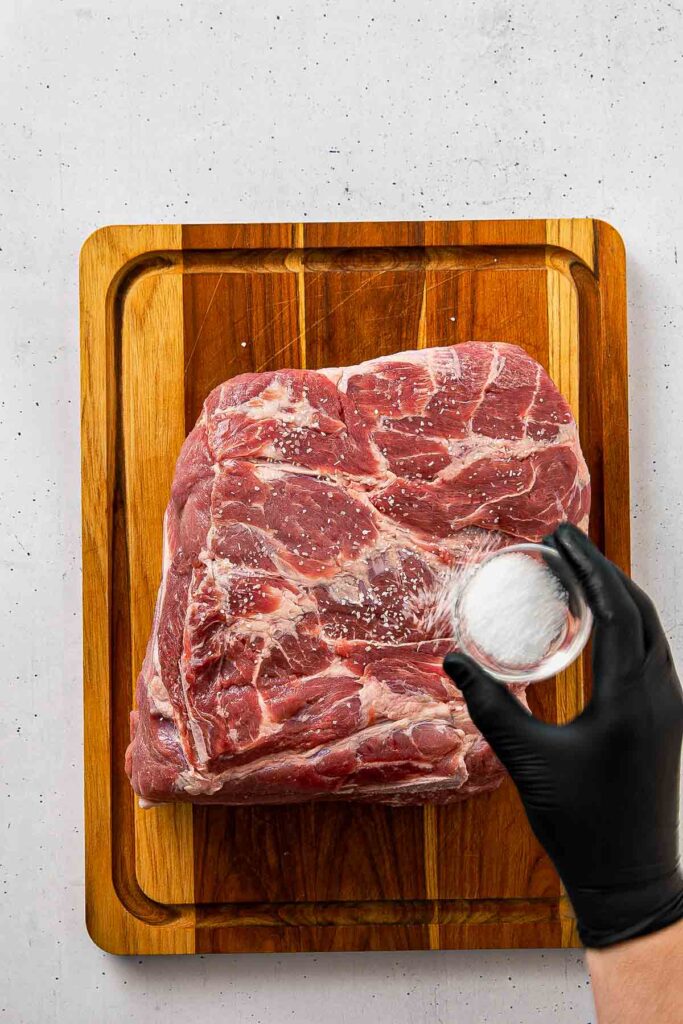
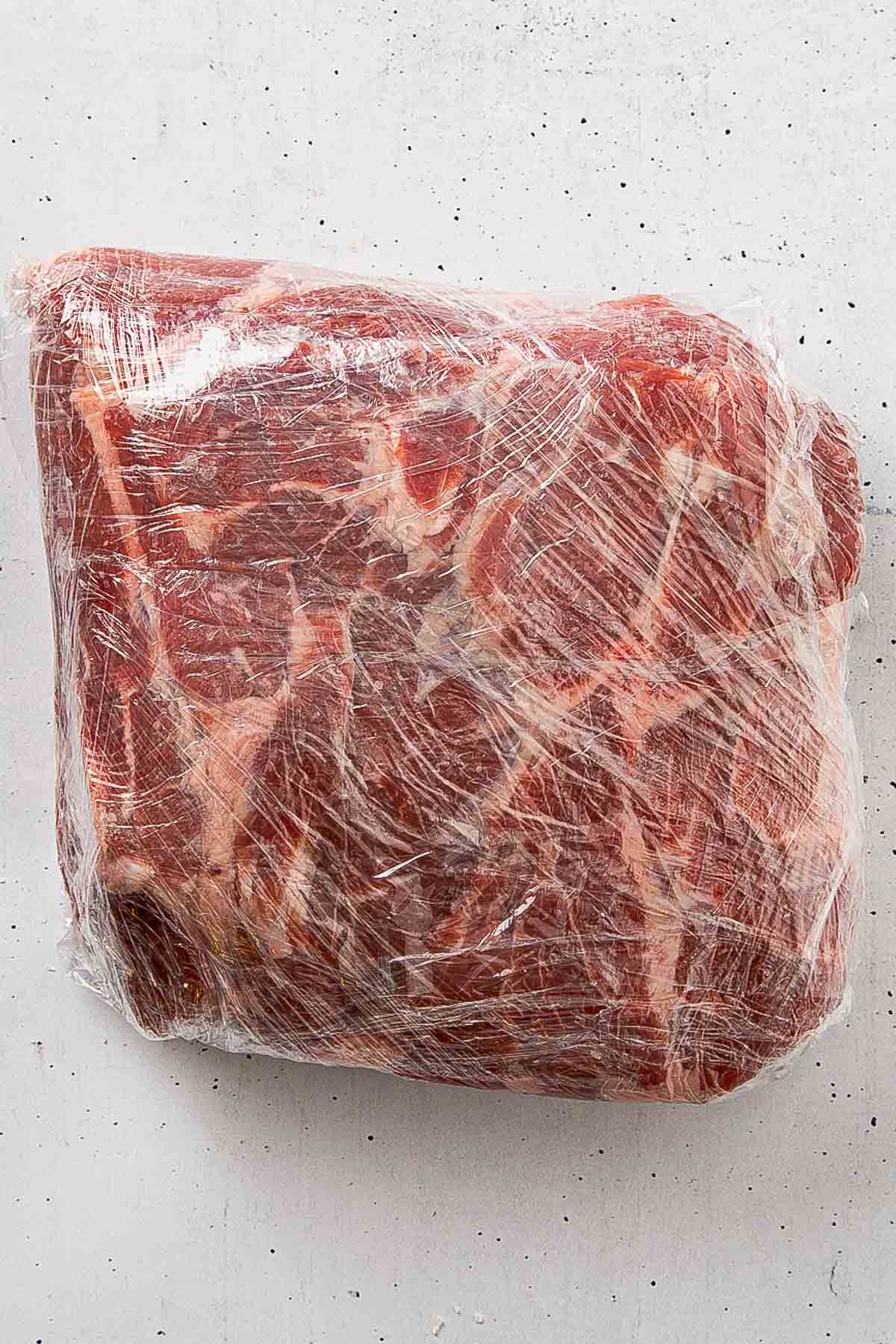
Trim the fat cap down to roughly ¼ inch; any thicker and a chunk of your rub ends up sitting on fat that renders off or gets discarded, flavoring nothing. Sprinkle kosher salt evenly over every surface. Salt goes on alone at this stage because it's doing a different job than the rest of the spices - it draws moisture out, dissolves into it, and gets pulled back in over the full overnight window, seasoning the meat from the inside out. Wrap tightly in plastic and refrigerate. Dig deeper: How to Brine Pork Chops

2. Day Of - Mustard, Rub, and Onto the Smoker
🌡️ Rest Before Smoking: 45-60 minutes at room temperature
🟡 Binder: Thin, even layer of yellow mustard
🌶️ Rub: Generous, pressed into the mustard on all sides
🌡️ Thermometer Placement: Thickest part of the meat, away from the bone
🚫 Lid Policy: Stays closed for the first 3 hours
Pull the pork from the fridge and unwrap it - the surface may look slightly wet or tacky, which means the brine did its job. Don't pat it dry. Let it rest at room temperature for 45-60 minutes while the smoker preheats, since cold meat straight onto a hot smoker cooks the outside faster than the inside can catch up.
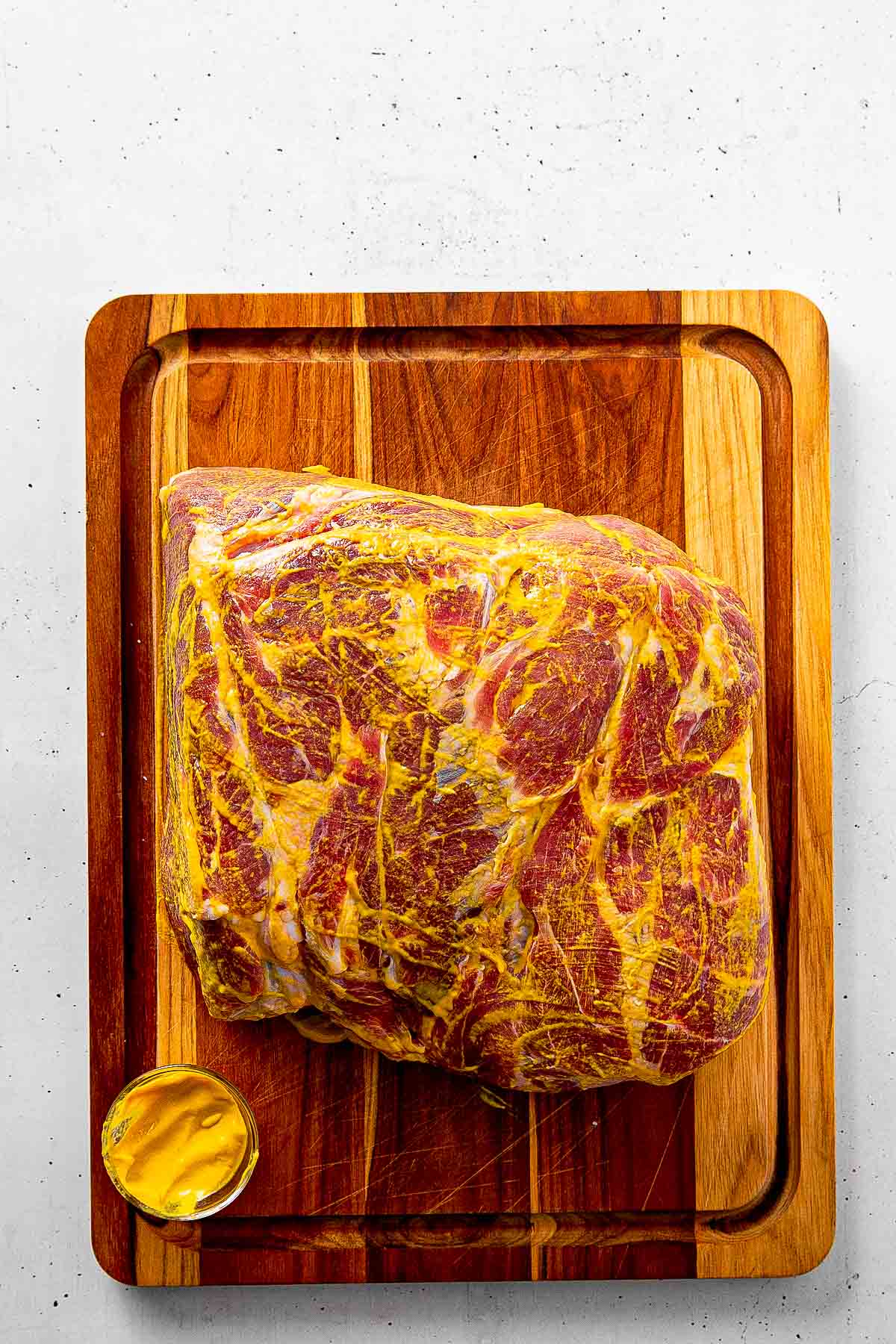
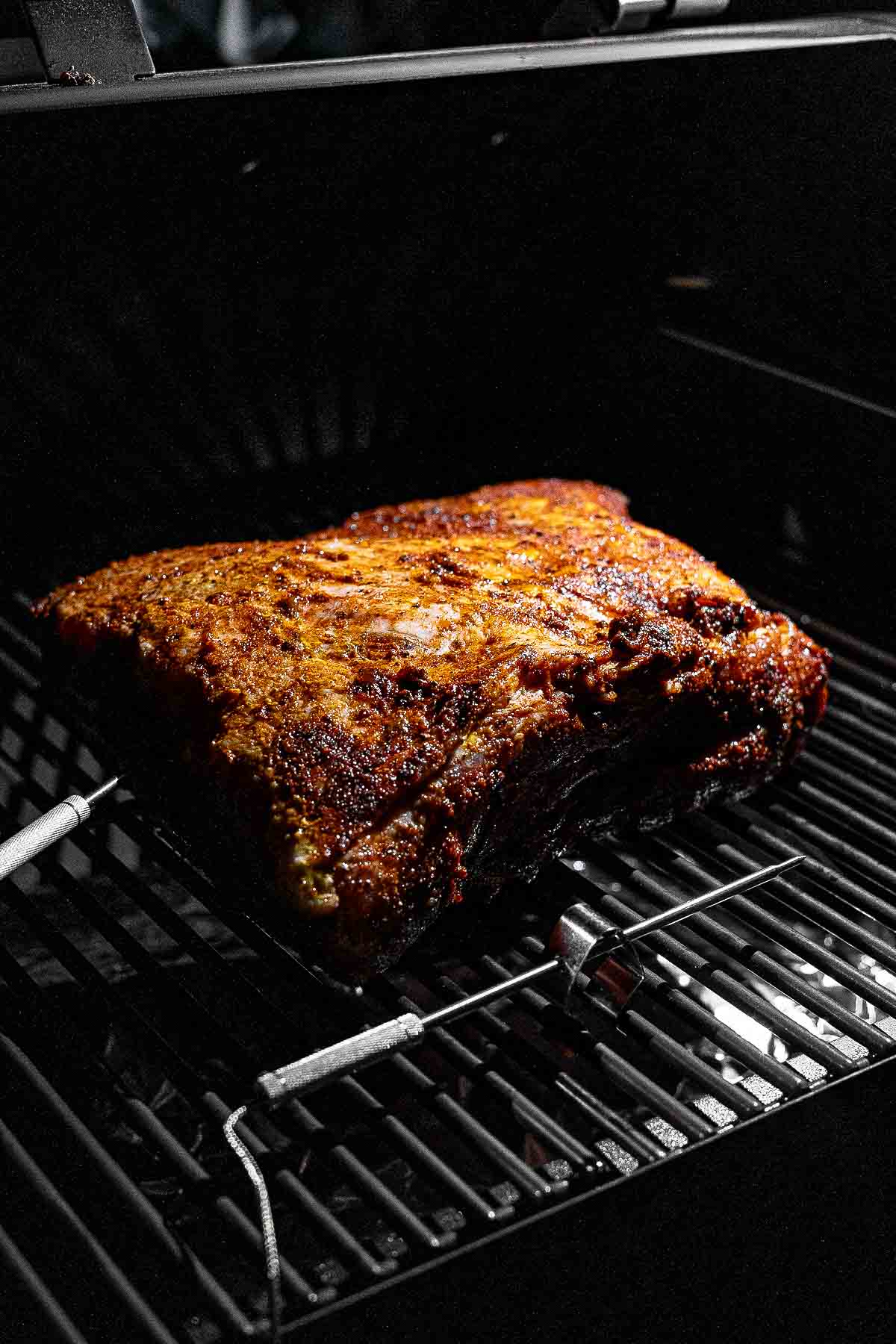
Coat the entire surface in a thin layer of yellow mustard by hand. It won't taste like mustard once the pork's done - its only job is giving the rub something to grip so it doesn't fall through the grates. Apply the dry rub generously on all sides, pressing it into the mustard. Place the pork fat-cap-side up, insert the thermometer probe into the thickest part away from the bone, close the lid, and leave it alone for the first 3 hours.


3. Choose Your Smoking Temperature
🌡️ 250°F: Daytime cook, ~12-14 hours total
🌡️ 225°F: Overnight cook, adds 1.5-2 hours but far more forgiving
🎯 Either way: Same collagen breakdown, same fall-apart result
The standard range is 225-250°F, and which one you pick depends on your schedule. 250°F moves fast enough to finish an 8-10 lb butt in a reasonable window while still giving the fat and collagen time to break down properly - go higher and you rush a process that can't be rushed. 225°F slows things down by 1.5-2 hours, which matters if you're sleeping through part of the cook and don't want it hitting the wrap point while you're unconscious. The finished result is nearly identical either way.
4. The Stall - What It Is and What to Do
⏸️ Stall Range: 150-165°F internal
⏱️ Duration: 2-4 hours, sometimes longer
🚫 Don't: Crank up the heat
✅ Do: Wait it out, then wrap in foil at 160-165°F
Somewhere between 150-165°F, the thermometer is going to stop moving - sometimes for two hours, sometimes for four. This is the stall, and it happens on every large low-and-slow cut. The pork is sweating: evaporating moisture cools the surface at almost the same rate the smoker heats it, the same physics behind sweating cooling your body.
The worst move is panicking and raising the smoker temperature - that dries out the exterior before the interior finishes breaking down. Let it ride until 160-165°F, then wrap in foil. Wrapping traps moisture, kills the evaporation, and lets the internal temp climb again almost immediately.
5. Wrapping in Foil
📍 Wrap Point: 160-165°F internal
🧈 Add: Butter, brown sugar, apple juice
🔧 Method: Two sheets in a plus-sign shape, crimped tight
🔍 If it tears: Re-wrap immediately, save the liquid
Wrap once the internal temp hits 160-165°F - by then the bark has set and the meat has absorbed most of the smoke it's going to get. Scatter butter, brown sugar, and apple juice in the center of two overlapping foil sheets; these aren't decoration, they melt and steam the pork from the inside as it finishes. Place the pork fat-cap-side up, fold and crimp the foil tightly, and poke the thermometer probe back through so you can monitor without unwrapping.
If the foil tears, don't try to patch it - move the pork to a fresh sheet, pour any escaped liquid back around it, and re-wrap. Losing the liquid is the real risk, not one small tear.


✅ Confirming Doneness
🌡️ Target Temp: 200-203°F internal
🔪 Probe Test: Should slide in with almost no resistance
⏱️ If it resists: Give it another 20-30 minutes, recheck
A pork butt is done at 200-203°F, the point where collagen has fully converted to gelatin and the fat has rendered. But temperature alone doesn't tell the whole story - insert the probe into 2-3 spots in the thickest section. It should glide in and out like a skewer through warm butter. Any resistance means it needs more time, regardless of what the thermometer says. The probe test is the real finish line; the temperature reading is just your cue to start checking.

Smoked Pork Butt (Boston Butt) Recipe
Ingredients
Pork
- 8 lbs bone-in pork butt (Boston butt)
- 1 tablespoon kosher salt (for overnight dry brine)
- 2 tablespoon yellow mustard (binder, applied day of)
Dry Rub
- 3 tablespoon brown sugar packed
- 1 tablespoon smoked paprika
- 2 teaspoon garlic powder
- 2 teaspoon onion powder
- 1 teaspoon coarse black pepper
- 1 teaspoon chili powder
- ½ teaspoon cayenne pepper
- 1 teaspoon finely ground coffee (plain, unflavored)
Spritz
- 1 cup apple juice (or ½ cup apple juice + ½ cup apple cider vinegar)
Wrapping
- 2 tablespoon unsalted butter cut into small pieces
- 2 tablespoon brown sugar
- 2 tablespoon apple juice
Instructions
Trim the Fat Cap
- The morning before your overnight smoke, or at least 8 hours before you plan to put the pork on the smoker, remove the pork butt from its packaging and pat it completely dry on all sides with paper towels. Trim the fat cap down to about ¼ inch thickness. A thinner fat cap means your rub and bark develop on actual meat rather than on a layer of fat that will render off or get discarded.
Season the Pork Butt
- Sprinkle the kosher salt evenly over every surface of the pork butt, covering all sides as thoroughly as possible. Applying the salt on its own at this stage ensures it distributes evenly and has the full overnight window to penetrate the meat. Wrap the salted pork butt tightly in plastic wrap and refrigerate for 8 hours or overnight.
- When you are ready to smoke, remove the pork butt from the refrigerator and unwrap it. The surface may look slightly wet or tacky. That's normal and exactly what you want. Do not pat it dry. That moisture is the result of the overnight brine doing its job and the mustard will adhere to it just fine.
Get Pork Butt to Room Temperature
- Set the pork butt on a foil-lined sheet pan and let it rest at room temperature for 45-60 minutes. While it rests, set up your smoker and preheat it to 250°F (121°C). For an overnight cook, preheat to 225°F (107°C) instead. (see Notes.)
- For wood, use apple or cherry for a mild, sweet smoke, hickory for a classic BBQ character, or a blend of apple and hickory for the best of both. If you are using a charcoal grill with a smoker box or a gas grill with a smoker attachment, follow your equipment's instructions for maintaining steady indirect heat and a consistent stream of wood smoke.
Coat in Mustard and Rub
- Coat the entire pork butt with yellow mustard, using your hands to spread it in a thin, even layer. The mustard acts as a binder and will not give the pork a mustard flavor once it cooks. Sprinkle the dry rub generously over all sides, pressing it gently into the mustard with your hands so it adheres. Do not be shy with the rub. You want solid coverage on every surface.
Smoke the Pork Butt
- Place the pork butt fat-cap-side up directly on the smoker grates. If your smoker tends to run hotter on one side, position the thicker end toward the heat source. Insert a leave-in digital meat thermometer probe into the thickest part of the pork butt, making sure the tip is not touching the bone. Contact with bone gives a falsely high reading. Close the smoker and resist opening it for at least the first 3 hours. Every time you open the lid, you lose heat and smoke.
- If you are doing a daytime cook: beginning at the 3-hour mark, open the smoker and spritz the pork lightly on all exposed surfaces using a spray bottle set to a fine mist. You want to dampen the surface, not wash the rub off. Spritz once every 60-90 minutes after that. If you are doing an overnight cook, skip the spritz entirely. (see Notes.)
- When the internal temperature reaches 160-165°F (71-74°C), it is time to wrap. At this point the bark has set and the meat has taken on most of the smoke it will absorb. Use a wide, flat tool to slide the pork butt off the grates and onto the pan, being careful not to wipe away seasoning.
- Tear off two pieces of heavy-duty aluminum foil, each about 3 feet long, and lay them out in a plus sign (+) shape. Scatter the butter pieces, brown sugar, and apple juice in the center. Place the pork butt fat-cap-side up in the center of the foil. Fold the foil up and around the pork, crimping the edges firmly to seal it as well as you can. You want the moisture trapped inside. The shiny or dull side of the foil facing in or out makes no difference.
- Poke the thermometer probe through the foil back into the thickest part of the meat, away from the bone, so you can keep monitoring the temperature without unwrapping. If a tear happens during wrapping or transfer, set the pork on a fresh sheet of foil immediately, pour any escaped juice back in around the meat, and re-wrap tightly.
- Return the wrapped pork to the smoker and continue cooking until the internal temperature reaches 200-203°F (93-95°C). This usually takes another 2-4 hours after wrapping. But temperature is your guide, not the clock. When the thermometer reads 200°F, insert the probe tip into 2-3 different spots in the thickest section. In a properly finished pork butt the probe will slide in and out with almost no resistance, the way a skewer goes through warm butter. If you feel any resistance at all, give it another 20-30 minutes and check again.
- Before you open the smoker, stage a foil-lined sheet pan right next to it so you have somewhere to set the pork immediately if the foil tears. Using oven mitts, move the wrapped pork butt off the grates and onto your foil-lined sheet pan. Do not lift it by the foil edges. If a tear happens and juice begins leaking out, immediately wrap the foil from the sheet pan up, containing any juices within the wrap.
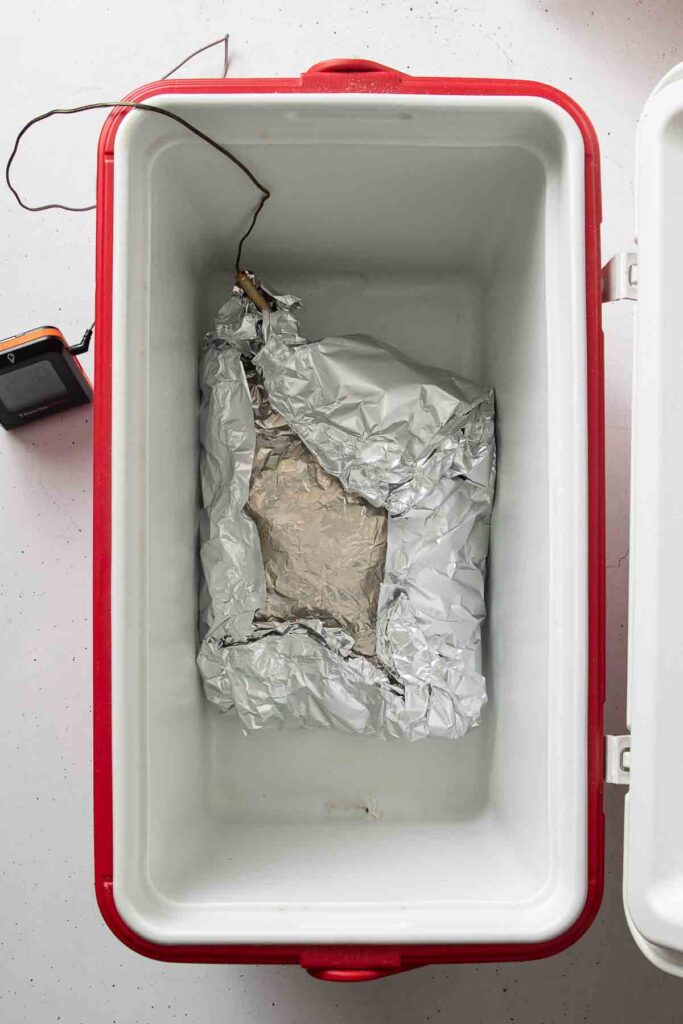
- Carry the sheet pan to your cooler, place the wrapped pork inside, lay a clean kitchen towel or two on top, and close the lid. This is called a faux cambro and it will keep your pork butt safely above 140°F for up to 4 hours. Let it rest for a minimum of 1 to 2 hours, but 4 hours is better. Resting allows the muscle fibers to relax and reabsorb the juices that pooled during the cook.
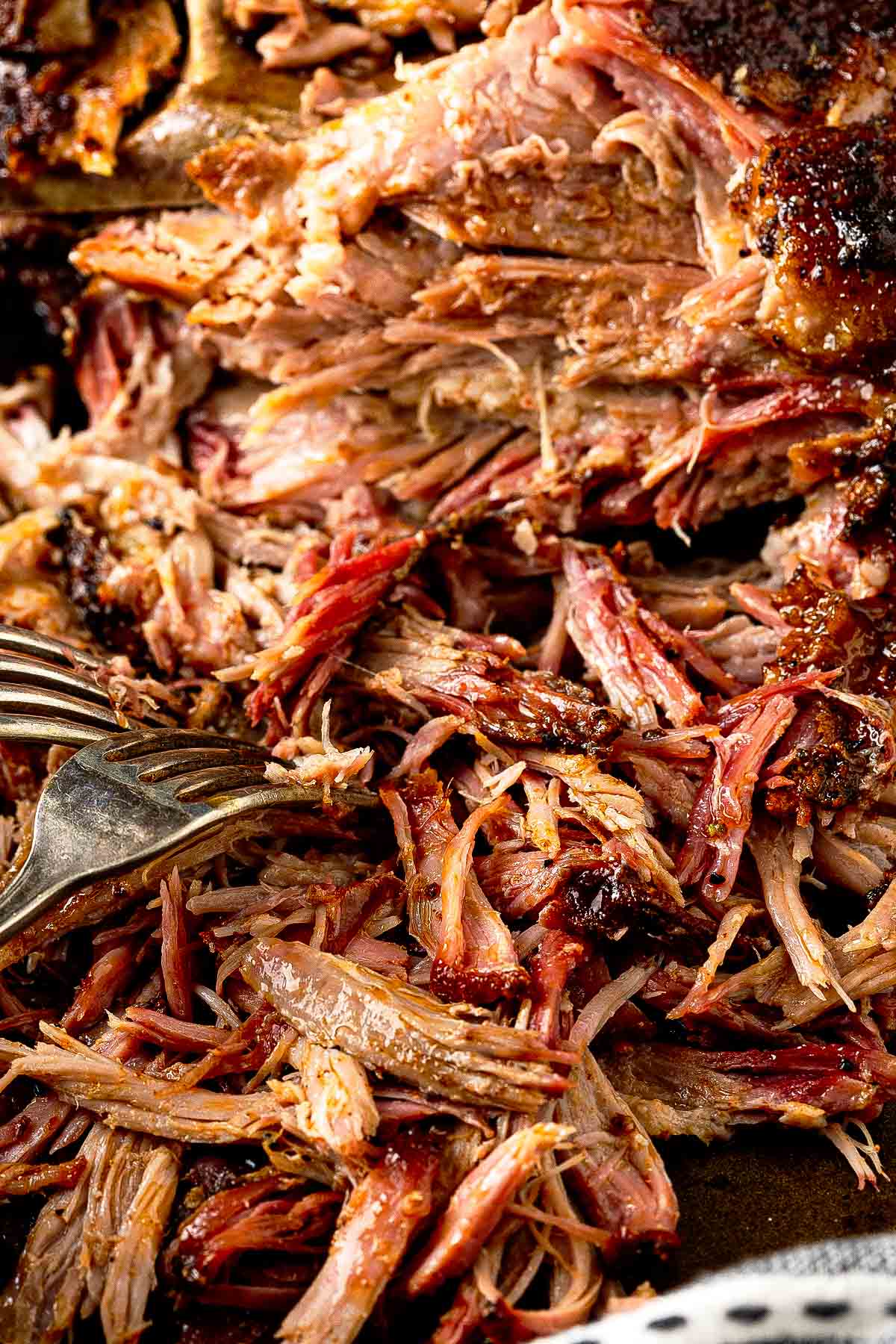
- After resting, open the foil carefully over your sheet pan. There will be hot liquid inside. Pour that liquid into a bowl or fat separator and set it aside. Wearing heat-resistant gloves or using two forks, pull the pork apart. The bone should slide out cleanly with little effort.
- Discard any large clumps of fat that did not render down during the cook. Drizzle some of the reserved cooking juices back over the pulled pork and toss gently to moisten.
- Serve with your favorite barbecue sauce on the side, or mix a small amount directly into the pork before serving.
What Smoker Should I Use
In my opinion, a pellet smoker is hands-down the easiest way to nail this cook. The digital temperature controller holds your 225°F window for the full 12-hour cook without you ever touching the fire - no babysitting, no wood splits, no 3 a.m. wake-up calls. If you're weighing your options before committing to a smoker, read our full breakdown of why a pellet smoker gives you the most hands-off BBQ experience - pork butt is exactly the kind of long, low-and-slow cook where that difference matters most.
How to Rest and Shred a Smoked Pork Butt
The cook is finished, but you're not done yet. How you handle the pork in the next two hours determines whether all that fat and collagen you spent 12+ hours breaking down actually stays in the meat or runs out onto your cutting board.
The Faux Cambro Method Explained
A cambro is an insulated holding container used in professional kitchens to keep cooked meat at safe serving temperature for hours. A faux cambro is the home version, and it works almost as well - all you need is a clean cooler and a couple of kitchen towels.
Before you open the smoker, stage a foil-lined sheet pan directly next to it so you have somewhere to set the pork immediately. Using oven mitts, slide the wrapped pork butt off the grates and onto the pan. Do not lift it by the foil edges - a heavy, juice-filled foil packet will tear under its own weight. Carry the sheet pan to your cooler, set the wrapped pork inside, lay one or two clean kitchen towels on top to fill the air space, and close the lid.
The towels matter. Air is a poor insulator; filling the dead space in the cooler with towels slows heat loss significantly. A properly set up faux cambro will hold your pork safely above 140°F for up to 4 hours - well above the food safety threshold and plenty of time to let the meat relax completely before you shred it.

Rest for a minimum of 1 hour. Two hours is better. Four hours is ideal. The resting period isn't just about temperature - it's about giving the muscle fibers time to relax and reabsorb the juices that pooled during the cook. Cut into the pork too soon and those juices run straight out onto your board instead of staying in the meat where they belong.
How to Shred Pulled Pork and What to Do with the Juices
When you're ready to shred, open the foil carefully over your sheet pan - there will be a significant amount of hot liquid inside, and it will splash if you're not paying attention. Pour that liquid into a bowl or fat separator and set it aside. Do not throw it away. That liquid is concentrated pork drippings, rendered fat, melted butter, brown sugar, and apple juice that cooked with the meat for hours. It is the single best thing you can add back to the finished pulled pork.
As you can see I am wearing heat-resistant gloves and let me tell you - it is the most efficient way to shred a large pork butt - you can work quickly, feel exactly what you're pulling, and break up any remaining chunks easily with your fingers. Two forks work fine if that's what you have, but gloves are worth buying if you plan to make this more than once. Your quick fingers is all you need!

The bone should slide out cleanly with almost no effort - give it a twist and pull. If it's resisting, the pork needed more time; this almost never happens if you waited for the probe test to pass. Once the bone is out, begin pulling the meat apart, working with the grain where you can. As you go, discard any large clumps of fat that didn't render down during the cook - you'll feel them easily, they're soft and slick rather than fibrous.
Once everything is pulled, drizzle some of the reserved cooking juices back over the meat and toss gently to distribute. How much to add is a judgment call - you want the pork moist and glossy, not soupy. Start with a few tablespoons, toss, and assess. If you used a fat separator, the defatted drippings at the bottom of the separator are pure flavor with less grease; use those first. The remaining juices can be stored separately in the refrigerator and stirred back in during reheating to restore any moisture lost overnight.
Serve immediately with barbecue sauce on the side, or rest the pulled pork covered at room temperature for up to an hour before serving - it holds beautifully.
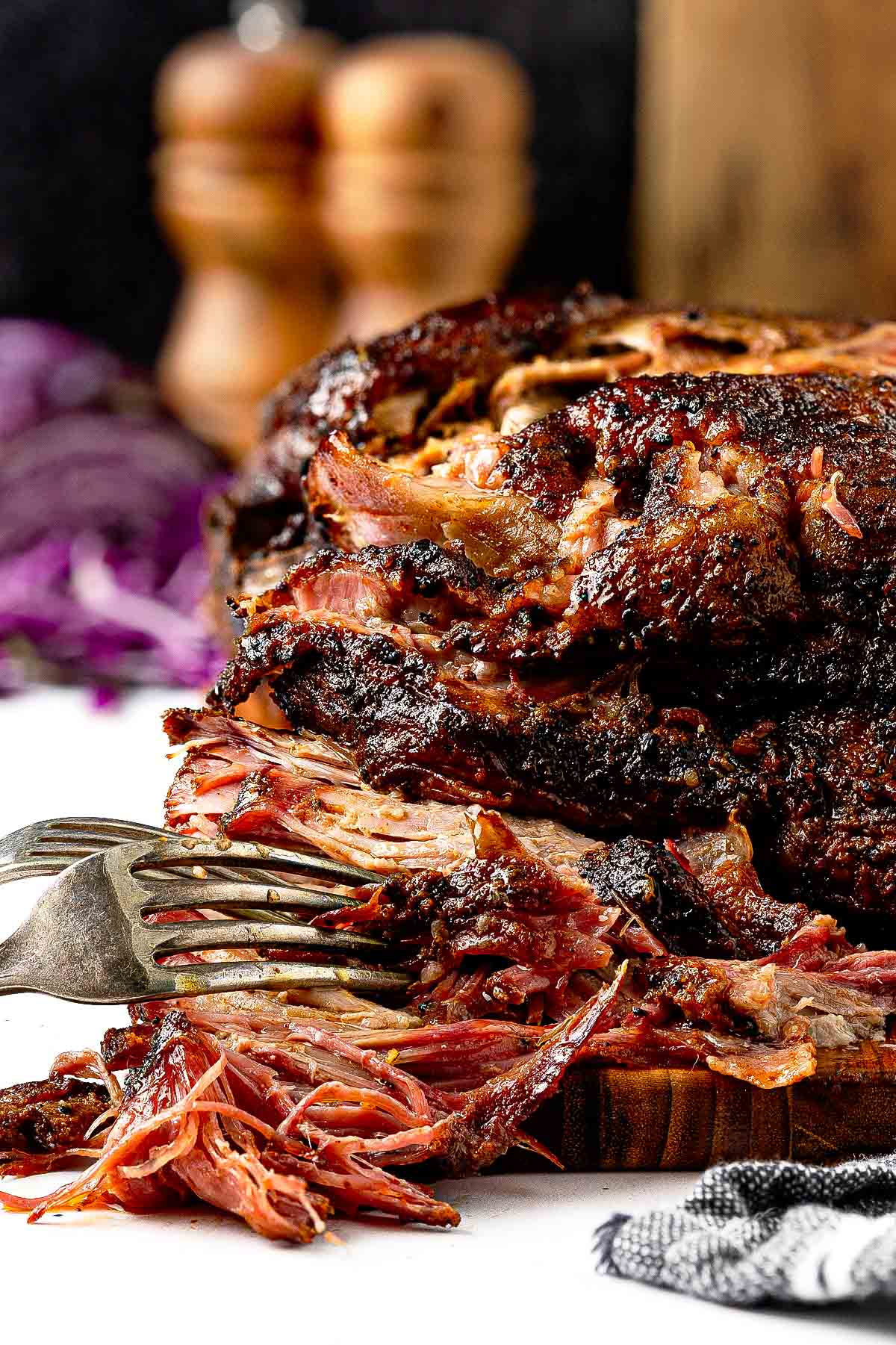
My favorite ways to serve this pulled pork: piled onto a soft brioche bun with vinegar-based slaw, tucked into warm corn tortillas with pickled onion and lime, or spooned straight over mac and cheese.
Two Ways to Time Your Cook
Same low-and-slow method, just choose your smoker temperature based on when you're awake to babysit it.
☀️ Daytime Method (250°F)
Best for: finishing in a single day, actively monitoring the cook
Timeline: Roughly 12-14 hours total for an 8-10 lb butt, moving fast enough to finish in a reasonable window while still breaking down collagen properly.
Trade-off: Requires being awake and available for the full cook, including the stall.
🌙 Overnight Method (225°F)
Best for: sleeping through most of the cook, waking up to a wrapped, nearly-finished pork butt
Timeline: Adds roughly 1.5-2 hours versus the daytime method, but makes it far less likely the pork hits its wrapping point while you're asleep.
Trade-off: None really - the finished result is nearly identical to the 250°F version, just more forgiving on timing.
✅ Quick chooser
Cooking for a same-day dinner? Go daytime method. Prepping for a party the next day? Go overnight method.
Storage Tips
- Refrigerate pulled pork in an airtight container for up to 4 days; store reserved cooking juices separately and stir back in when reheating.
- Reheat covered in a 300°F oven for 20-25 minutes with a splash of apple juice or broth, until it hits 165°F internal.
- Freeze in meal-sized portions with a little reserved cooking liquid in each bag for up to 3 months - pork frozen within 24 hours of cooking is nearly indistinguishable from fresh.
- Avoid microwaving large portions; the edges dry out before the center warms through.
Frequently Asked Questions
Why Did My Pork Butt Stall for So Long?
Because that's exactly what pork butts do. The stall happens when moisture evaporating from the surface of the meat cools it at almost the same rate the smoker is heating it. A large bone-in pork butt can sit at 150-165°F for anywhere from 2 to 5 hours and come out perfectly fine on the other side. My fix is simple: wrap the pork in foil at 160-165°F, which eliminates the evaporation and lets the temperature climb again almost immediately.
Can I Smoke a Boston Butt Without Wrapping It?
Yes, and some pitmasters prefer it. Skipping the wrap produces a thicker, harder bark because the surface never gets steamed. The tradeoffs are a longer stall, a slightly drier finished product, and 2 to 4 additional hours of cook time. For a first cook, wrapping is the more forgiving path. Once you've done it a couple of times and understand how the cook behaves, going unwrapped is a reasonable experiment.
Can I Use a Gas Grill to Smoke a Boston Butt?
Yes, with one caveat: maintaining consistent wood smoke takes more active management on a gas grill than on a pellet smoker. Use a smoker box with soaked wood chips placed over one lit burner, with the pork on the opposite side on indirect heat. Plan to replenish the chips every 45-60 minutes for the first few hours. Once the pork is wrapped, the smoke source matters much less - at that point it's essentially braising inside the foil.
Do I Need to Inject a Boston Butt?
No, and this recipe was specifically developed without it. A bone-in pork butt already has enough intramuscular fat to keep the interior moist through a long cook. The overnight dry brine seasons the meat from the outside in, and the foil wrap with butter and apple juice handles moisture during the final hours. Injection is a competition technique - for a home cook, the process as written is enough.
Can I Make Smoked Pulled Pork the Day Before?
Not only can you - you probably should. The flavor is noticeably deeper the day after it's cooked, and reheating is completely hands-off. Shred the pork, drizzle the reserved juices over it, refrigerate overnight in an airtight container, then reheat covered in a 300°F oven for 20-25 minutes with a splash of apple juice or broth. Most people genuinely cannot tell it wasn't made that day - and your party day becomes completely stress-free.
More Smoker Recipes You'll Love
Take a look at my full collection of big project meats here: The Best Smoker Recipes: Pork Butt, Brisket, Chuck Roast & More.
- How to Smoke a Brisket Flat That Eats Like a Whole Packer
- The Only Smoked Beer Can Chicken Method That Gets the Skin Right
- Smoked Chuck Roast (Poor Man's Brisket Done Right)
- Santa Maria-Style Tri-Tip, Smoked or Roasted, with Reverse-Sear Instructions
- Poor Man's Burnt Ends (Better Than Brisket - And I'll Prove It)


Heidi says
This was amazing! It worked just as you described. My family loved it.
Henry Hendrickson says
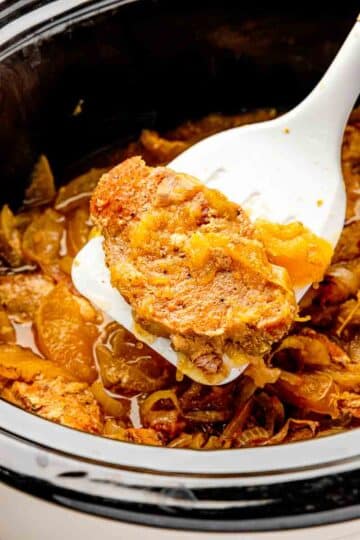
Very informative. Like step by step and what spices to use. Read about mustard before but forgot about it. If you dont want to cook for 12-14 hrs do a heavy smoke for 2-3 hrs at the 250 degree and put in slow cooker overnight, same results, meat fall parts and still has great smoke flavor. Purist wont like this approach but it works
Olya Shepard says
Your shortcut is brilliant for busy folks: getting that deep smoke flavor in 2-3 hours at 250°F and then letting the slow cooker do the low-and-slow work overnight definitely works!!! The purists may raise an eyebrows all they want
Don says
A few things that this article gets wrong. 1st score the fat cap horizontally and vertically. This will get more seasoning into the meat. Second fat cap down not up the fat cap helps protect the meat from drying out. 3rd do not wrap in foil. That bark you spent the first half of your cook building will be softened a d turned to mush.You don't have to wrap, but if you do wrap in butcher paper. This still helps hold in some of the heat to get past the stall and keep the meat from drying out, but keeps your bark intact.