
Beef Ramen Stir Fry with Homemade Sriracha Sauce is what happens when you throw out the seasoning packet and rebuild the whole dish around a five-minute sauce and one noodle trick that stops the mush.


Ramen from a packet is fast, but it's also salty, flat, and forgettable. This version keeps the speed and drops everything else: soy sauce, brown sugar, apple cider vinegar and fresh garlic whisked into a sauce that actually clings to the noodles instead of just seasoning the water they cooked in.
📝 Beef Ramen Stir Fry Overview
✅ Prep Time: 10 minutes
⏲️ Cook Time: 15 minutes
🍜 Serves: 4
💰 Cost: Under $10 for the whole pan, about $2.50 a serving
👨🍳 Skill Level: Easy, the noodle timing is the only thing to watch
📦 Equipment: One large skillet or wok, a pot for boiling noodles
🥢 Recipe Summary
- 🍜 Boil ramen one minute under the package time, then rinse cold immediately to stop the cooking and strip excess starch
- 🥩 Brown 90-93% lean ground beef, drain the pan, then bring the vegetables back in
- 🥦 Sear broccoli, bell pepper and onion hot and fast so they keep their bite instead of going limp
- 🌶️ Whisk soy sauce, brown sugar, apple cider vinegar, Sriracha and garlic into a sauce while the beef cooks
- 🔥 Drop the heat to low before the noodles go back in, then toss 60-90 seconds until coated
- ⏱️ Whole dish, start to finish, in under 25 minutes on a single pan
Love ground beef? See what 5 dishes I cook with a family pack of ground beef.
💬 Why This Ramen Stir Fry Works
- Ditching the seasoning packet for a real sauce means every noodle strand gets coated instead of just salted
- Undercooking the noodles by a minute and shocking them in cold water is the single move that keeps them springy instead of gummy
- Lean ground beef browns cleaner and soaks up the Sriracha sauce better than fattier beef or chicken, which I tested side by side (see Ground Beef Ramen Stir Fry vs. Chicken: Which Is Better?)
- Everything happens in one pan, so cleanup is as fast as the cooking
- The sauce takes five minutes and tastes like something a restaurant would charge extra for

I make this beef ramen stir fry several times a month, and with grocery prices doing what they're doing, I don't feel bad about it once. A couple packs of ramen, a pound of ground beef, whatever vegetables are already in the crisper drawer, and dinner's on the table before I've even finished setting it out.
And what about that little foil pouch of seasoning? It is mostly salt with nowhere near enough flavor to justify how much sodium it's carrying. A homemade Sriracha sauce takes five minutes and clings to the noodles in a way the packet, dissolved into cooking water, never manages.
What You'll Need
Ramen noodles - Two standard packs, seasoning packets discarded (we're making our own sauce, and it's so much better). Any brand works; just watch the cook time because they go from perfect to mush fast.
Ground beef - I specifically use 90-93% lean, and it's not just a health thing. Leaner beef browns cleaner, doesn't pool grease in the pan, and - this is the part most recipes skip - it actually absorbs the Sriracha sauce better than fattier beef does. I've tested this with chicken too. Beef wins.
Broccoli - Fresh is my pick because it holds its bite through the stir fry without going limp. Frozen works in a pinch - just pat it dry before it hits the pan or you'll steam everything instead of sear it.
Homemade Sriracha sauce - This is the whole point. Five minutes, one bowl, a whisk: soy sauce, brown sugar, apple cider vinegar, Sriracha, and fresh garlic. It clings, it balances, and it doesn't hit you with that flat one-note saltiness a packet leaves behind. Once you make it yourself, the packet feels like a downgrade.
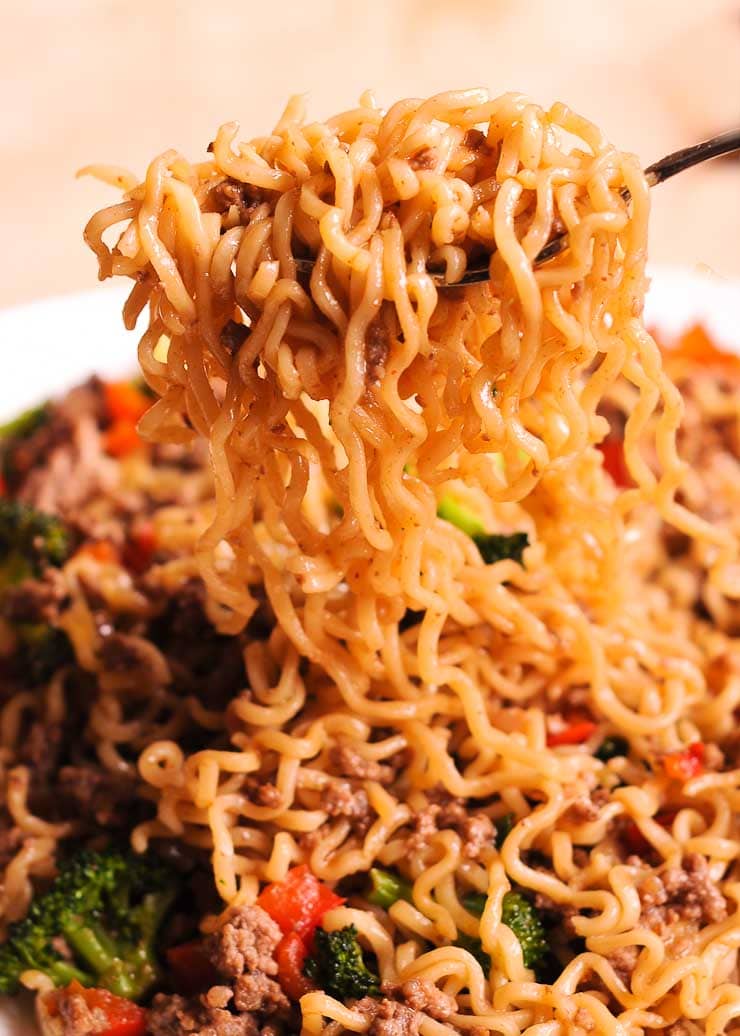
The Noodle Technique (Don't Skip This)
Pull the noodles one minute before the package says they're done. Rinse them immediately under cold water until they're cool to the touch. The noodles finish cooking in the skillet, off the heat curve they'd hit if they went in fully done..
Why beef beats chicken here
I ran this side by side with chicken before settling on beef for good. Ground beef, especially the leaner 90-93% blend, browns cleaner in the pan without pooling grease, and it holds onto the Sriracha sauce in a way chicken just doesn't match bite for bite.
How to Make Beef Ramen Stir Fry
Step 1: Cook and rinse the noodles
Boil your ramen for one minute less than the package says - yes, they'll look underdone, and that's exactly right. Drain immediately and rinse under cold water until they're cool to the touch. This stops the cooking and washes off excess starch. Set them aside. They'll finish in the pan.
Step 2: Sauté the vegetables
Heat a drizzle of vegetable oil in a large skillet or wok over medium-high heat until it shimmers. Add the onion first and cook for about two minutes until it starts to soften, then add the garlic, bell pepper, and broccoli. You want them just tender - not soft, not raw. About 3-4 minutes. Pull them out and set aside.
Step 3: Brown the beef
Same pan, same heat. Add the ground beef and break it up as it cooks - about 5 minutes until it's fully browned with no pink left. Here's the step most people skip: drain the liquid. Lean beef releases less, but drain whatever's there. A dry pan means the sauce coats instead of pools. Add the vegetables back in and give everything a quick toss.
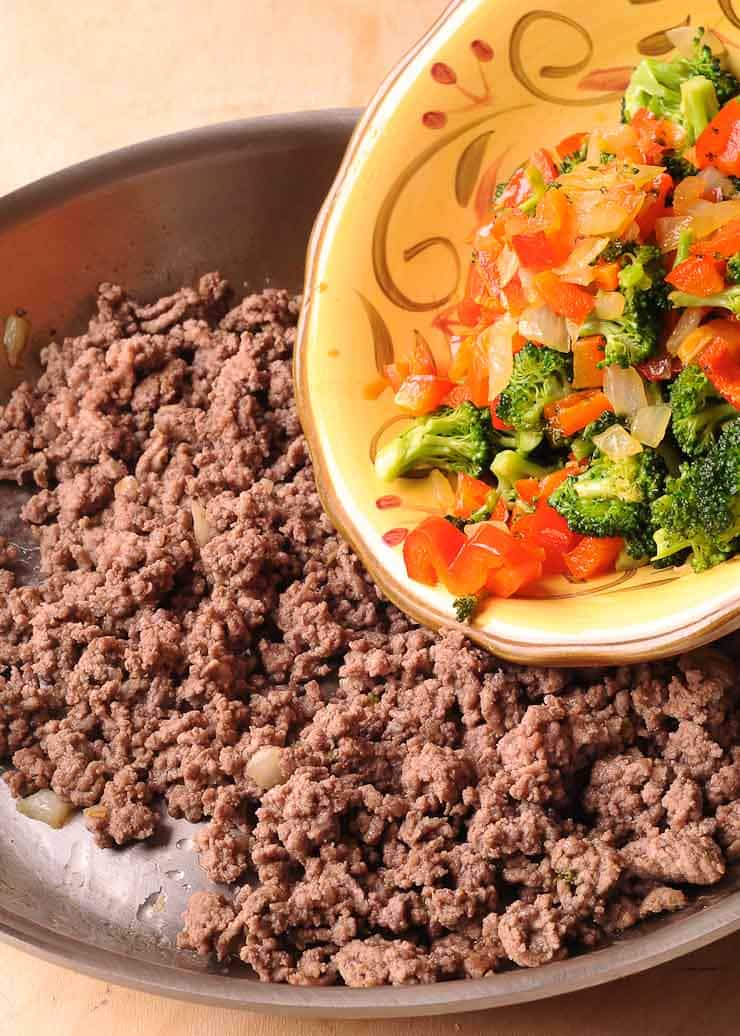
Step 4: Make the sauce
While the beef cooks, whisk together the Sriracha sauce in a small bowl - soy sauce, brown sugar, apple cider vinegar, Sriracha, and fresh minced garlic. It takes five minutes and smells incredible. Taste it before it goes in. Too spicy? Add a touch more brown sugar. Too sweet? A splash more vinegar.
Step 5: Toss and finish
Drop the heat to low. Add the ramen noodles back to the pan, pour the sauce over everything, and toss gently for about 60-90 seconds until every noodle is coated and heated through. Don't rush this on high heat - low and slow here is what keeps the noodles from breaking apart and the sauce from burning. Serve immediately.
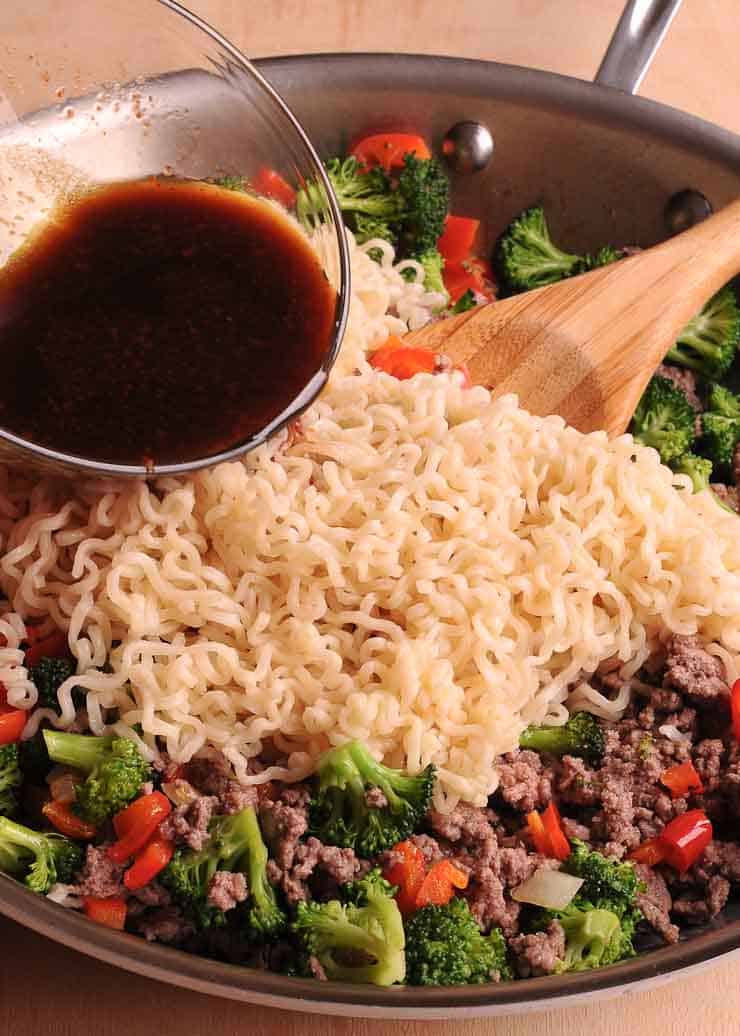
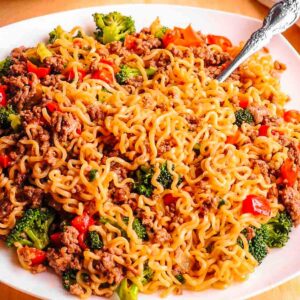
Beef Ramen Stir Fry
Ingredients
- 1 tbsp. vegetable oil such as canola oil
- 1 large onion chopped
- 1 red bell pepper chopped
- ½ head broccoli cut into florets
- 1 lb. ground beef
- 6 oz ramen noodles (2 packets with seasoning packets discarded)
- Salt and pepper to taste
Sriracha sauce
- ¼ cup soy sauce
- 1 tbsp. brown sugar
- 1 tbsp. apple cider vinegar
- 2 tsp. sriracha
- 1 clove garlic minced
- 1 scallion chopped (optional)
Instructions
Make sriracha sauce
- In a medium bowl whisk together soy sauce, brown sugar, apple cider vinegar, Sriracha, and garlic. Set aside.
Cook ramen noodles
- In a medium saucepan, bring water to a boil. Add ramen noodles and cook until tender, 2 minutes. Drain and set aside.
Saute veggies
- In a large skillet over medium heat, heat oil.
- Add onions, peppers, and broccoli and cook until tender, 5 minutes. Remove from the pan.
Cook beef
- Add ground beef, season with salt and pepper, and cook until no longer pink, 5 minutes more.
- Drain beef fat and return vegetables back to the skillet.
Final assembly
- Add cooked ramen noodles to the skillet with beef and veggies and pour over prepared sauce. Stir fry until completely combined.
- Taste and season with more salt and pepper, if necessary. Then garnish with scallions and serve.
Video
Notes
- Use grass fed beef: To make instant ramen taste less bland and more exciting, I added grass fed beef (much brighter in color than conventional ground beef) and fresh vegetables to enhance flavor and texture.
- Use low sodium soy sauce: You can't go wrong with either version.
- Use other veggies: I added broccoli, but ou can also try adding spinach and green onions, or use traditional sauces, such as Mirin and fish sauce in place of soy sauce, or in addition to it.
- Sriracha and more: I also love to experiment with Sriracha, sesame oil and crushed chili peppers to come up with even more variations to the recipe.
- Add more heat: You can add more spice to make the noodles have that extra kick. If so, add a bit more sriracha until desired heat is reached.
FAQs & Troubleshooting
My ramen stir fry turned out too salty. What can I do?
When I overshoot the salt, I treat it two ways: dilution and balance. I either reduce the soy sauce and replace part of it with low-sodium broth or water, or I swap in low-sodium soy sauce or coconut aminos for some of the regular soy. A squeeze of lime or a splash of extra vinegar also helps cut perceived saltiness without washing out the flavor.
The noodles came out mushy or chewy. What went wrong?
If the noodles are mushy, they were cooked too long before they hit the pan. I always pull them at least one minute before the package says they're done and rinse them under cold water to stop the cooking. If they're oddly chewy or rubbery, they either sat in hot water too long after cooking or didn't get rinsed, so the excess starch turned them sticky as they cooled.
My stir fry tastes bland. How do I fix the flavor?
If it tastes flat, it usually means one of three things is missing: salt, acid, or heat. I'll add a touch more soy sauce for salt, a small splash of vinegar or lime juice for brightness, and a bit more Sriracha or chili paste for heat. A drizzle of toasted sesame oil at the end adds a lot of perceived depth, so I keep that as my last-resort "finisher" when the dish tastes like it's missing something.
The dish feels greasy. How do I avoid that?
Grease almost always comes from skipping the drain step. Even with lean ground beef, I drain off any rendered fat before the sauce goes in. I also use just enough oil to cook the vegetables instead of coating the entire pan. If it still feels heavy, I'll add a small splash of broth and cook for another minute to let some of the fat emulsify into the sauce instead of sitting on top.
The noodles keep sticking to the pan. What am I doing wrong?
Sticking usually means either the pan is too dry or the noodles went in before the sauce. I make sure there's a thin layer of sauce or a bit of oil in the pan when the noodles go back in, and I don't overcrowd the pan so I can toss everything properly. If things start to catch, I loosen the noodles with a splash of water or broth and keep the heat at medium-low while tossing.
I don't like soy sauce. What can I use instead?
When I want a similar salty, savory backbone without standard soy sauce, I go for coconut aminos or tamari. Coconut aminos are less salty and slightly sweet, which works well with the Sriracha and brown sugar. Tamari has a deeper, more concentrated flavor and is naturally gluten-free. In both cases, I start with a little less than the called-for soy and adjust to taste.
How do I make this vegetarian or vegan?
I swap the beef for firm tofu, tempeh, or a plant-based ground, and I use vegetable broth wherever the recipe calls for stock. For tofu, I press out excess moisture, sear it in a hot pan until golden on at least two sides, then treat it the same way I would the beef: cook first, then add back with the vegetables before the sauce and noodles go in.
What's the best way to reheat leftovers?
Leftover noodles always tighten up as they sit, so I add a few tablespoons of broth or water before reheating. On the stovetop, I warm them over low heat, tossing gently until the sauce loosens and the noodles are heated through. In the microwave, I sprinkle on a bit of liquid, cover loosely, and reheat in short bursts, stirring in between so the noodles heat evenly without drying out.
Leftovers & Storage
Refrigerate:Leftover beef ramen keeps well in an airtight container in the fridge for 3 to 4 days. The noodles will firm up a bit as they sit, which is normal.
Reheat: Dryness is the main issue with reheating, so I always add a splash (2-4 tablespoons) of beef or chicken stock before warming. On the stovetop, I heat it gently over low, tossing until the noodles loosen and the sauce turns glossy again. In the microwave, I cover loosely and reheat in short bursts, stirring in between.
Freeze: I don't recommend freezing this dish. The noodles tend to turn soft and mealy after thawing, and you lose the springy texture that makes this stir fry worth making. If you want to plan ahead, it's better to freeze the sauce and keep the noodles and beef fresh.
Becky Rundhaug says
This was absolutely fabulous! I am not one for spicy food so I took mine out before adding the sriracha sauce. My husband likes spicy so he added more. We both loved it!
Dale says
Delicious recipe. Used veal/beef combo here.