
Yogurt and sour cream aren't the same product with different names. I use both in baking both cakes and cupcakes - both make baked goods moist, tender, and rich. They're fermented with completely different bacteria.
Yogurt is made with Lactobacillus (usually teamed up with Streptococcus thermophilus), and it needs warmth to ferment - around 110°F. Sour cream is made with Lactococcus, and it ferments happily at room temperature. Different bacteria, different process, different outcome. That's also, as far as I can tell, where most of the flavor gap comes from - more than the fat content does. Yogurt's tang hits sharper. Sour cream is rounder and milder. You can swap one for the other, but they're not twins.
One more to pay attention to: always check the fat percentage on the label. Full-fat, reduced-fat, and fat-free versions of both products vary wildly by brand, and honestly, that variation trips people up more than the bacteria ever will. A "fat-free sour cream" exists, apparently, and I have concerns.
Why Full-Fat Sour Cream Matters
Better rise: The acidity reacts with baking soda to help your baked goods rise light and fluffy.
Tender crumb: The natural acid breaks down gluten strands so cakes and muffins stay soft.
Rich moisture: High fat content adds a velvety texture without thinning your batter.
Top Sour Cream Choices for Baking
- Daisy Brand: Pure and simple. It has no thickeners. It gives a clean, rich flavor and a thick texture.
- Breakstone's: Very common in stores. It whips smoothly into batters and adds a rich, creamy moisture.
- Organic Valley: Made with organic milk. It is thick and rich, which helps cakes and muffins rise well.
What to Look For
- Fat content: Choose regular full-fat sour cream. Fat adds a soft texture and rich taste. Low-fat types have too much water.
- Simple ingredients: Check the label. The best ones only list cultured cream or milk. Avoid extra gums and starches.
Why Full-Fat Greek Yogurt is Best
- Moisture: Fat holds water well. It keeps cakes and quick breads soft.
- Richness: Full-fat yogurt mimics butter or oil in a recipe.
- Structure: The thickness prevents your batter from getting too runny.
Tips for Baking
- Use Plain: Flavored or sweetened yogurts add unwanted sugar and weird tastes like vanilla or fruit.
- Check the Acidity: Greek yogurt is sour. It reacts with baking soda to help your treats rise.
- Drain Excess Liquid: Stir the yogurt before measuring so you do not add extra water.
Greek Yogurt vs. Sour Cream
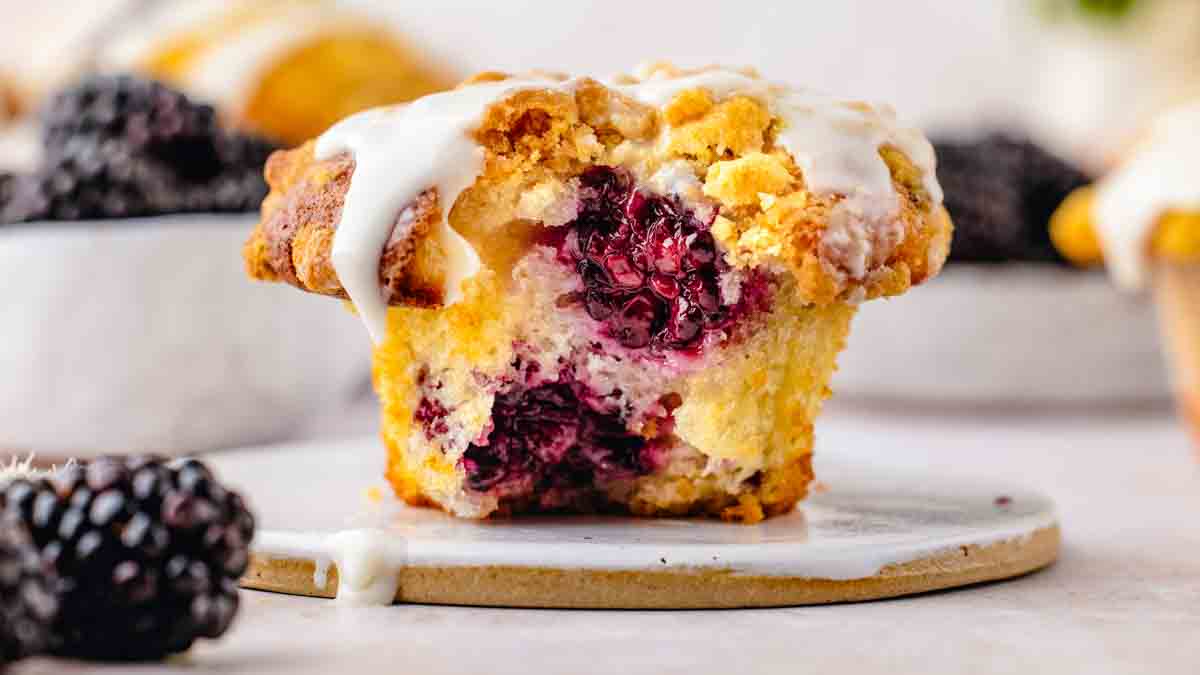
I baked Blackberry Muffins with Crumb Topping and Lemon Glaze with both just for the sake of experiment and here's what I found out.
Muffins made with Full-fat Greek yogurt were still moist on day three. No surprise, but also not guaranteed - it has less fat than sour cream, so I'd expect it to dry out faster. It didn't, because of the higher protein content. Protein holds onto water in the batter better than fat does by itself (just like muscle holds on to more water thanks to protein).
Muffins made with Reduced-fat Greek yogurt were not bad, just noticeably drier and less rich than the full-fat batch sitting right next to it. If you didn't have both in front of you, you might not notice. But you'd notice the difference in your own kitchen after a bite of each. My verdict - use full fat yogurt only.
Sour cream held its own too, and for reasons that have nothing to do with protein. It's higher in fat, so it adds richness and tenderness that yogurt can't quite match. It's also acidic, and that acid reacts with your baking soda for a little extra lift. Out of everything I tested, sour cream is the one substitution that works.
Why the Fat and Protein Trade-Off Actually Works
Sour cream starts as cream, so it's naturally high in fat and low in protein. Greek yogurt starts as milk and gets strained, which flips that ratio - lower fat, a lot more protein. In baking, fat coats the flour and keeps things tender, which is a big part of why sour cream bakes up so soft. Protein does something else entirely: it forms a structure that traps water as the batter bakes. That's the whole reason full-fat Greek yogurt keeps its moisture on day three, even with less fat working in its favor.
Quick Reference
| Dairy Option | Day 3 Moisture | Richness | Best Use Case |
|---|---|---|---|
| Full-fat Greek yogurt | Still moist | Slightly less dense | Muffins stored more than a day |
| Reduced-fat Greek yogurt | Drier, less rich | Noticeably less tender | Skip if you can |
| Sour cream | Moist, some lift | Richest, most tender | Solid 1:1 substitute |
What to Buy
If you're baking ahead, get full-fat Greek yogurt - plain, unsweetened, not nonfat. It's the one ingredient here worth a specific trip to the store for. Skip reduced-fat; the texture loss isn't worth the small savings. And if sour cream is what's already in your fridge, use it without a second thought - it's not a fallback, it's doing its own job through fat and acidity, and it does that job well.
Recipes made with Greek Yogurt
Greek Yogurt Blueberry Muffins
Cinnamon Peach Yogurt Cake (Moist, Greek Yogurt Recipe)
Comments
No Comments