
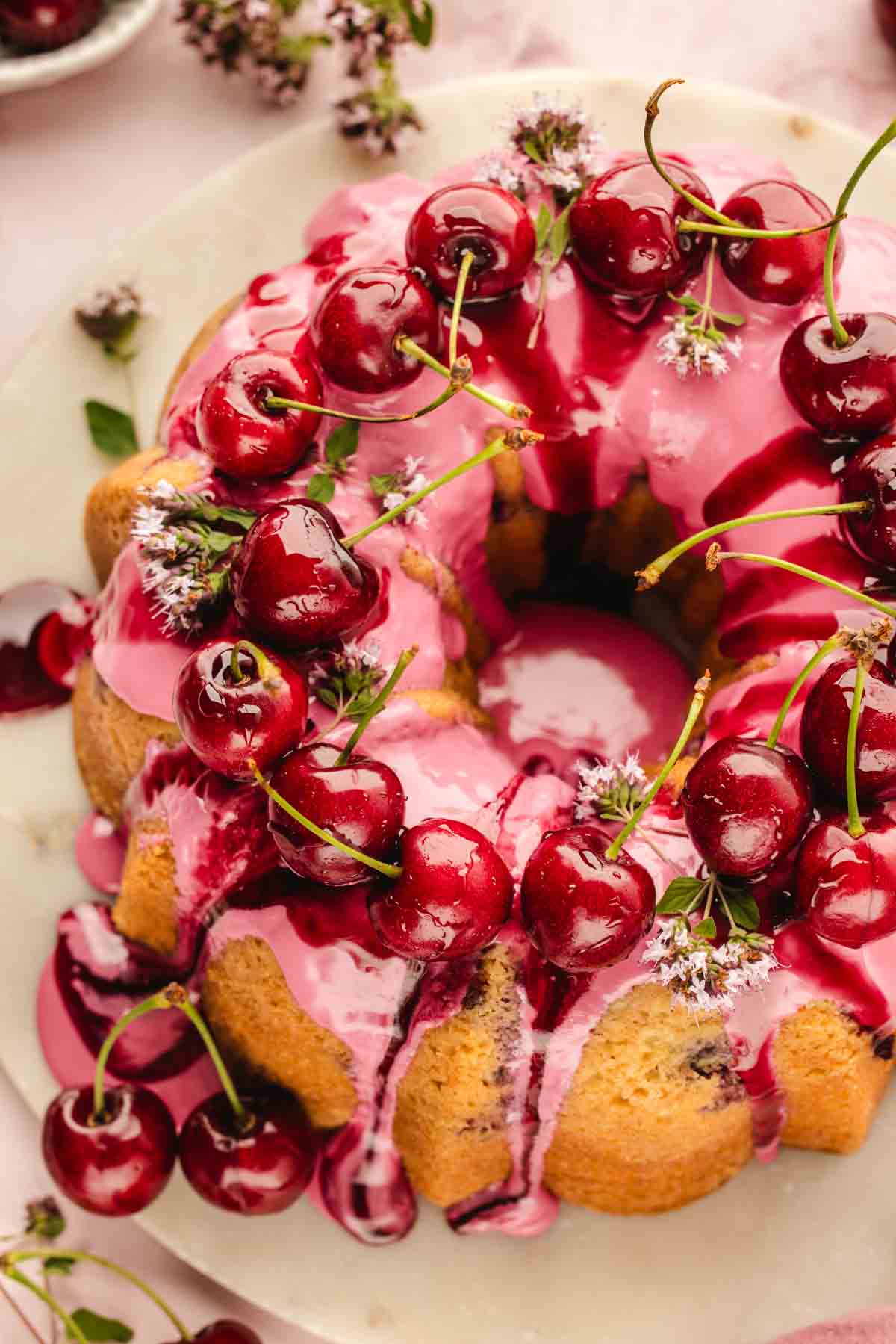
Here's the thing about cherries in cake batter: they're heavier than you think. In this fresh cherry bundt cake, I don't just toss them in and hope - I layer the fruit with the batter instead, three rounds of batter, two of fruit, so nothing sinks to the bottom. The cherry icing on top is just the syrup thickened up, so it tastes like actual cherries, not pink sugar.

This is a sour cream bundt with a light almond note running through it, baked low and slow at 325°F so the crumb stays tender even with two cups of fresh cherries folded through it. I layer the batter and fruit in stages rather than dumping the cherries in all at once - more on why that actually matters further down - but the cake itself is built to be a proper cherry cake, not a plain bundt with fruit added as an afterthought. The icing and the drizzle on top both come from the same pot of cherry syrup, made by simmering down frozen cherries - they release more juice than fresh ones, which is exactly what you want here - and thickening it slightly with cornstarch. This is why the whole cake tastes like cherry inside and out, all the way through.
Recipe Overview
- 🍒 Toss fresh cherries in flour so the batter has something to grip onto
- 🥣 Cream butter and sugar for a full 3-5 minutes, until pale and fluffy, not just "mixed"
- 🥚 Add eggs one at a time, then mix in vanilla and almond extract
- 🌀 Alternate dry ingredients and sour cream into the batter in stages, mixing just until the flour disappears
- 🎂 Layer batter and cherries in three rounds - batter, fruit, batter, fruit, batter - so nothing sinks to the bottom
- 🌡️ Bake low and slow at 325°F, checking internal temp (200-205°F) instead of relying on a toothpick
- ⏳ Cool in the bundt pan 15-20 minutes before inverting, then let gravity do the work
- 🍬 Simmer frozen cherries into a syrup, then split it between the icing and the drizzle
- 💧 Test icing consistency with the spoon-drip method before pouring over a fully cooled cake
- 🌸 Finish with fresh cherries and a spoonful of extra syrup running down the sides
🍒 One Cherry syrup, doing double duty
- One batch of cherry syrup feeds both the icing and the finishing drizzle
- Made by simmering down frozen cherries, then straining and thickening with a cornstarch slurry
- Leftover strained cherries aren't wasted - they're excellent spooned over yogurt the next day
Ingredients for the Cherry Bundt Cake, Syrup, and Icing
Choosing fresh cherries for the cake vs. frozen for the syrup
I use fresh cherries in the cake and frozen ones for the syrup, and that's not interchangeable. Frozen cherries break down at the cell level as they thaw, releasing far more juice, far faster - great for a syrup you're straining anyway, bad for cake batter, where that extra liquid just makes the crumb wet and the fruit sink faster. I tried making the syrup with fresh cherries once to skip a store run, and it took nearly twice as long to get the same amount of juice out of them. Frozen for syrup, fresh for the cake.
Ingredient temperature and why room-temperature eggs and sour cream matter
Skip this step and you'll know it immediately: I've added cold eggs straight from the fridge before, and the batter curdled on contact, going grainy instead of smooth. Cold eggs or sour cream hitting warm creamed butter makes the fat seize in small pockets instead of blending in - it usually smooths back out once the flour goes in, but you lose some of the air you just creamed into the butter, and the cake bakes up slightly denser for it. If you forget to pull things out ahead of time, sit the eggs in a bowl of warm water for about ten minutes - it gets you there fast, and I use this trick more than I'd like to admit.

How to Make Fresh Cherry Bundt Cake
1. Get set up before you start mixing
Preheat to 325°F. Grease a 10 to 12-cup bundt pan with melted butter and a pastry brush, getting into every ridge and crevice (there's a lot more on this if you want it: Why Your Bundt Cake Keeps Sticking (It's the Fat)) - softened butter is easy to spread but easy to miss the fine detail with, and melted butter reaches where softened butter skates over. Dust with flour, tap out the excess, or use a flour-based baking spray if you'd rather skip a step.

2. Whisk your dry ingredients, coat your cherries
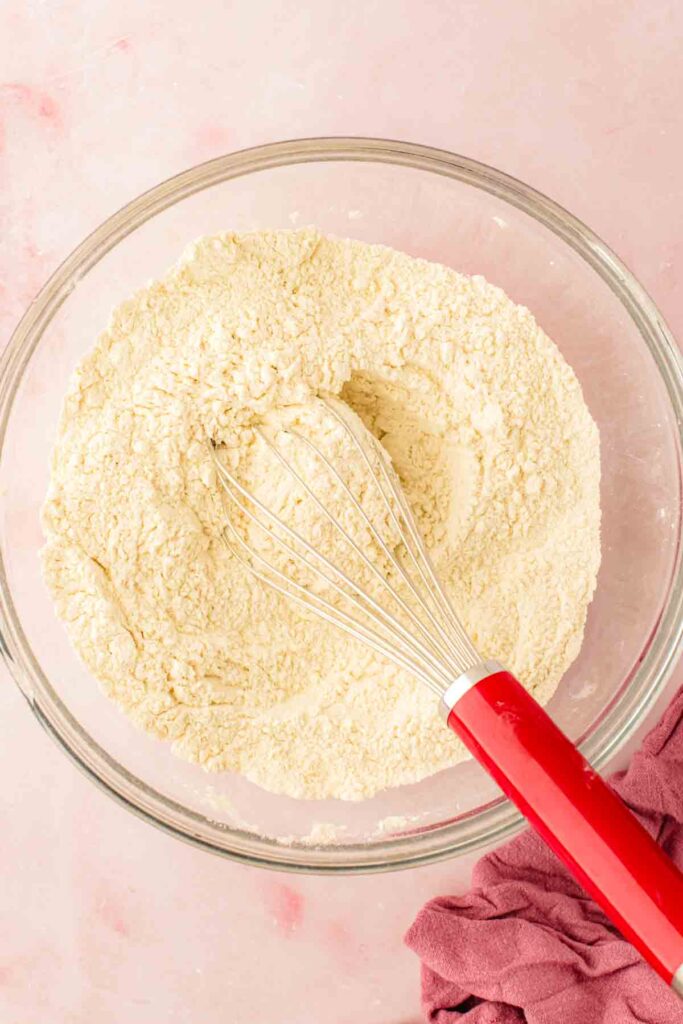
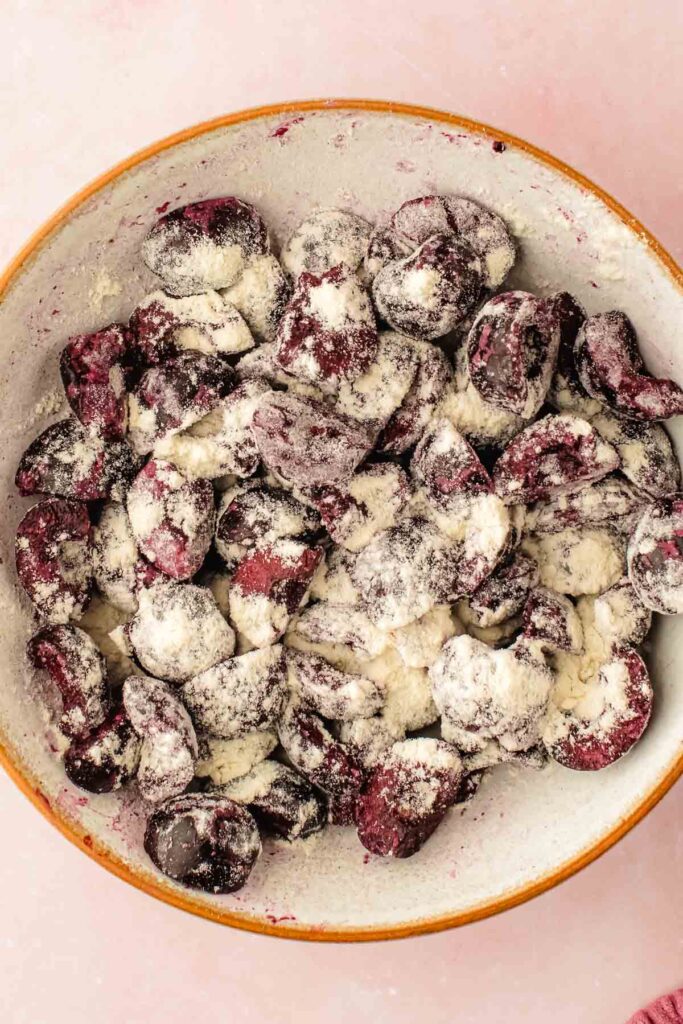
Whisk the flour, baking powder, baking soda, and salt together in one bowl and set aside. In a separate bowl, toss your prepared cherries in the extra flour until they're evenly coated, then set those aside too - you'll want both ready to go before the batter comes together.
2. Cream butter and sugar correctly
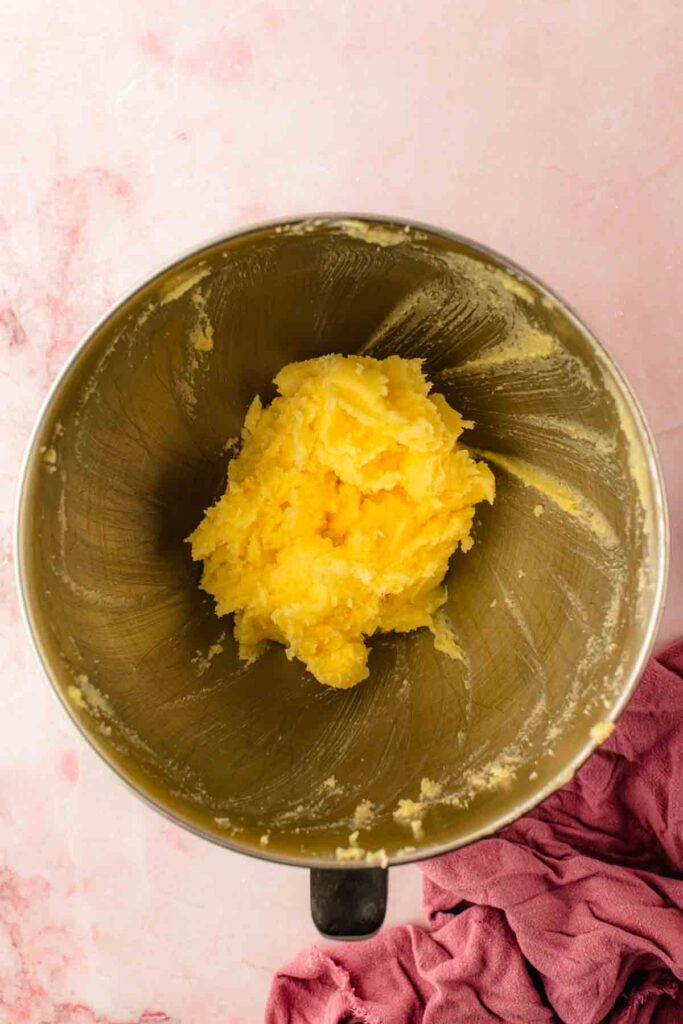
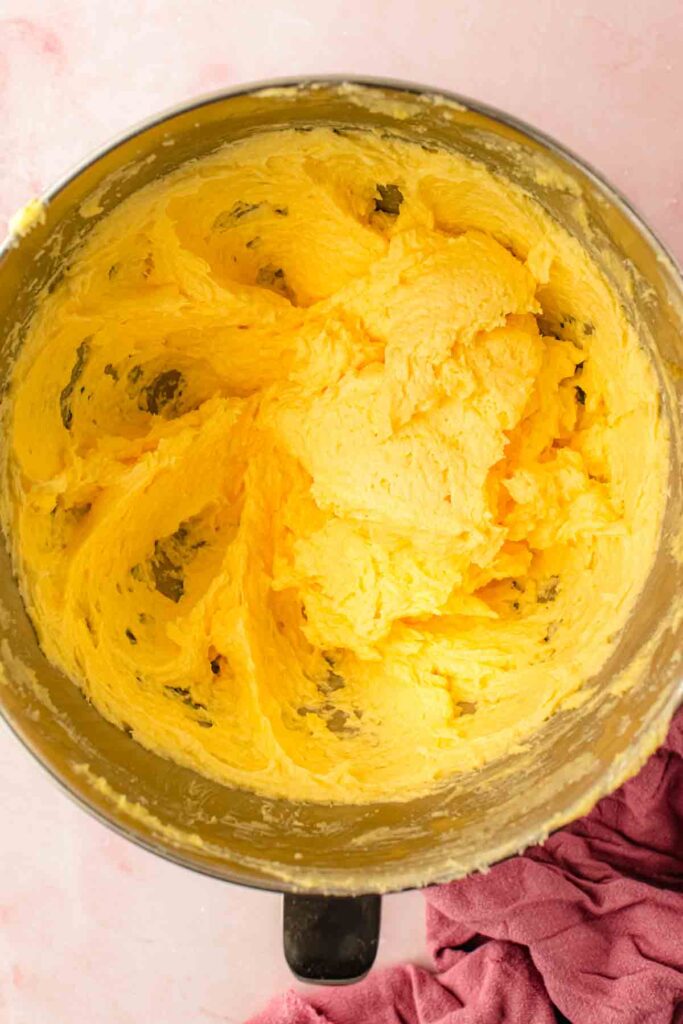
Here's the thing about this step: most people rush it. Give your butter and sugar a proper 3 to 5 minutes on the mixer, until it's pale and fluffy, not just "mixed." Stop and scrape the bowl down a couple of times.
4. Add the eggs, then the extracts
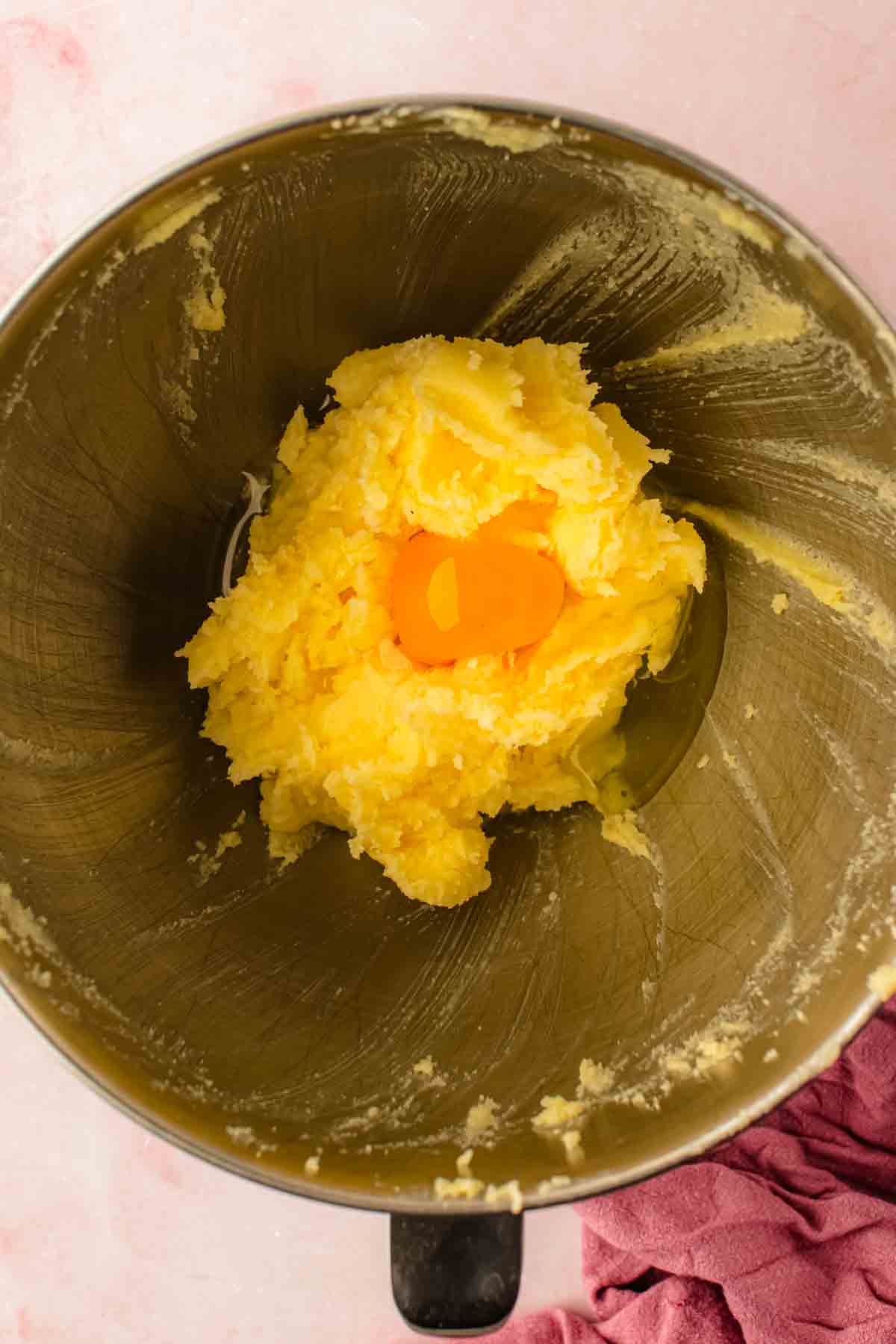
Add the eggs one at a time, beating well after each one and scraping the bowl as needed. Mix in the vanilla and almond extract once all the eggs are in.
5. Alternate dry ingredients and sour cream
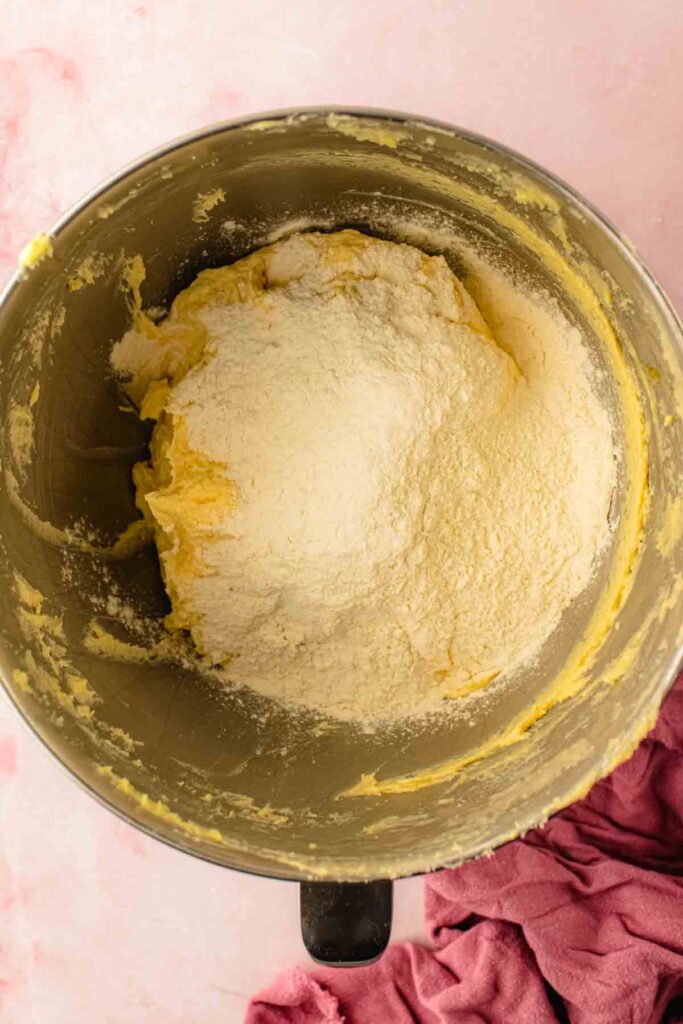
Add the dry mix in three additions, alternating with the sour cream in two, starting and ending with the dry ingredients. Mix on low after each addition, just until the flour disappears - don't keep going past that point.
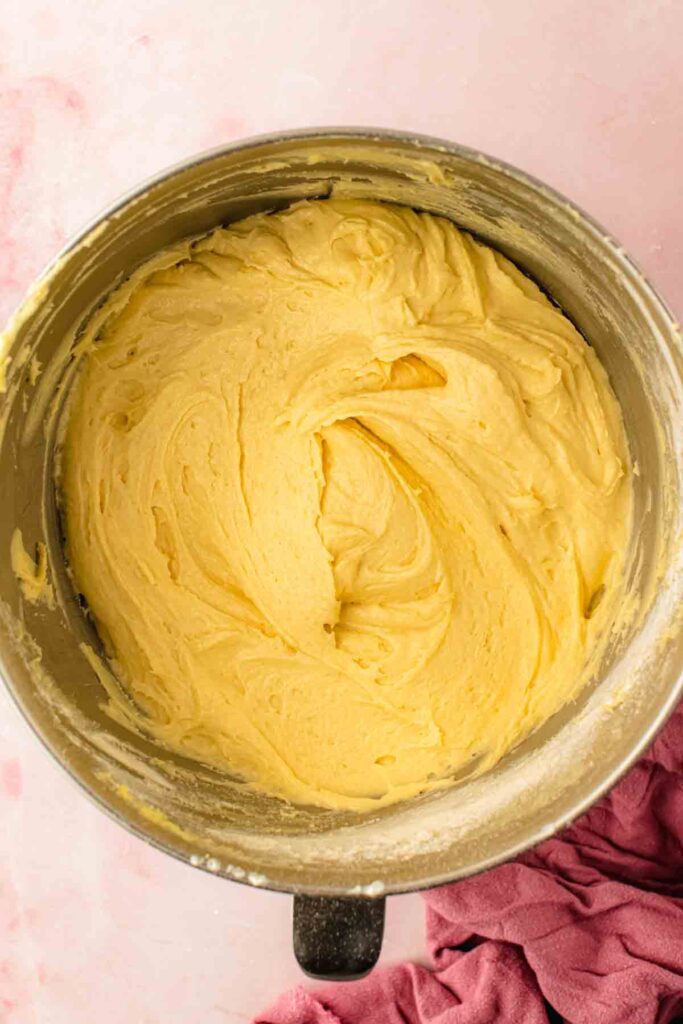
6. Fold in half the cherries
Gently fold half of your flour-coated cherries into the batter with a flexible spatula.
7. Layer the batter and remaining fruit into the pan
Spoon about a third of the batter into the pan and spread it level. Scatter half of the remaining cherries over it, keeping them a little away from the sides. Add another third of the batter, then the rest of the cherries, then finish with the last of the batter and smooth the top.
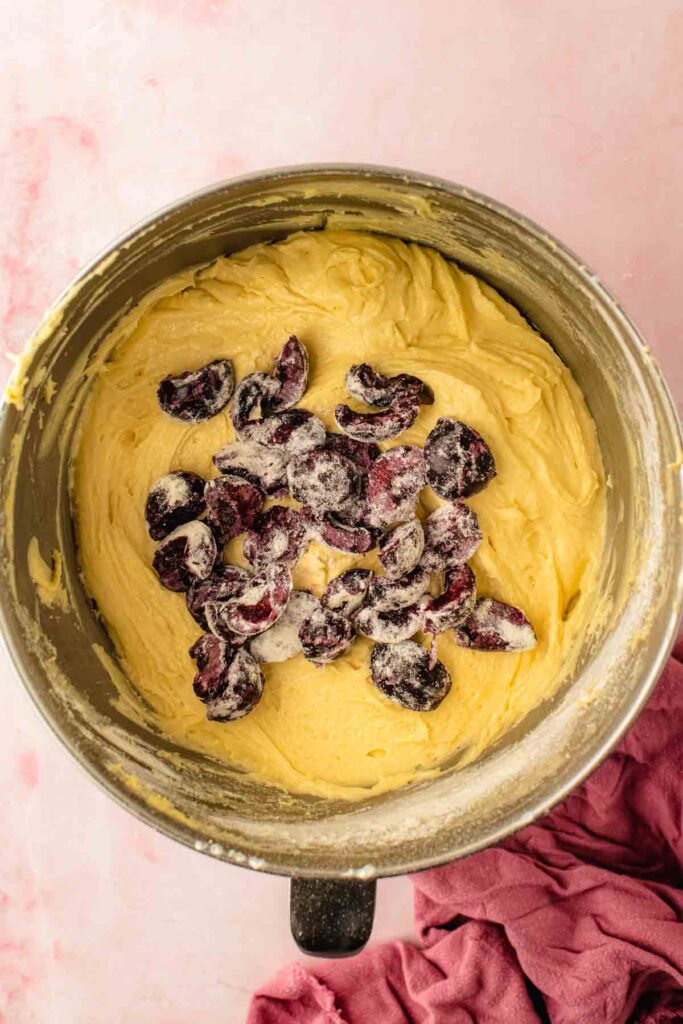
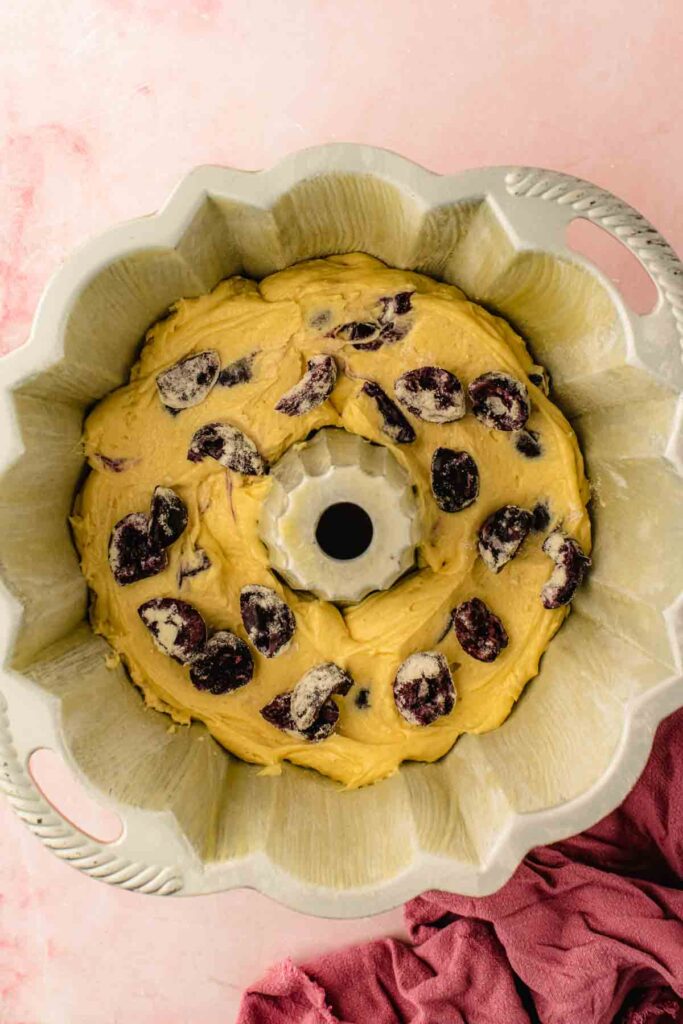
8. Bake to internal temperature instead of relying on a toothpick
Grab a thermometer, start checking at the 55-minute mark, and you want 200 to 205°F in the thickest part, checked in a few different spots. I check doneness with a thermometer, not a toothpick, because a cherry on the toothpick will lie to you.
If the top's gone dark brown but the center's not there yet, tent it loosely with foil and keep checking underneath. I cover this in more detail over here: How to Tell When Cake Is Done Baking.
3. Cool it right, then release it
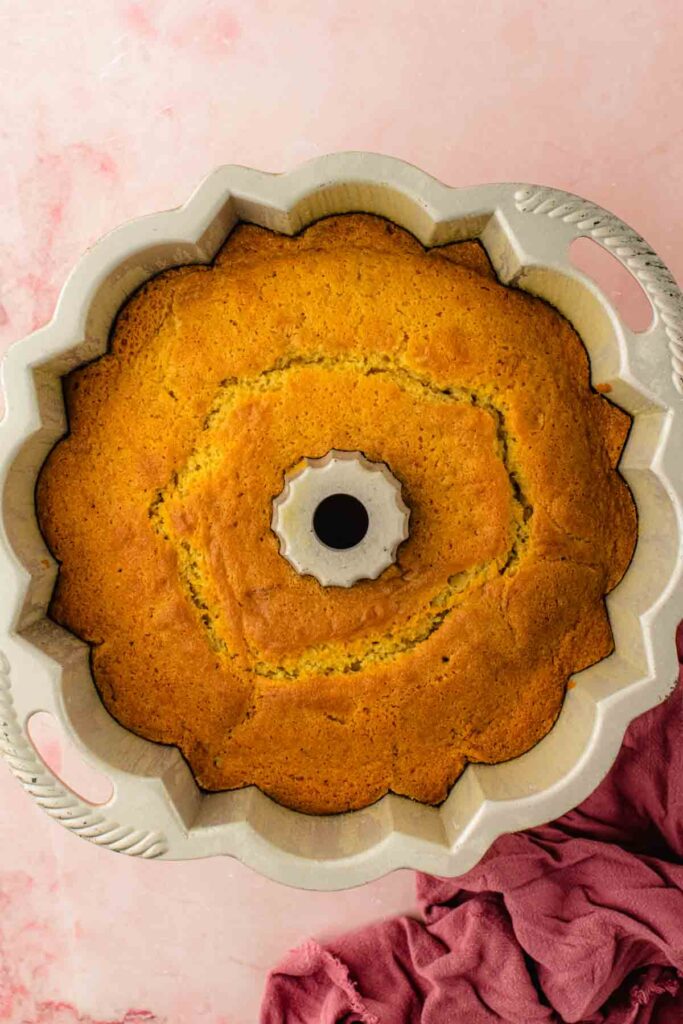
Let the cake sit in the pan for 15 to 20 minutes before you even think about turning it out - do it too soon and it can break apart, since the crumb hasn't fully set yet. When you're ready, invert the pan onto a rack in one confident motion. If it doesn't drop out right away, don't panic and don't shake it. Leave it inverted for a minute or two and let gravity do the work; a gentle tap on the pan usually gets it moving. Shaking it is how you end up with a cracked cake instead of a stuck one.
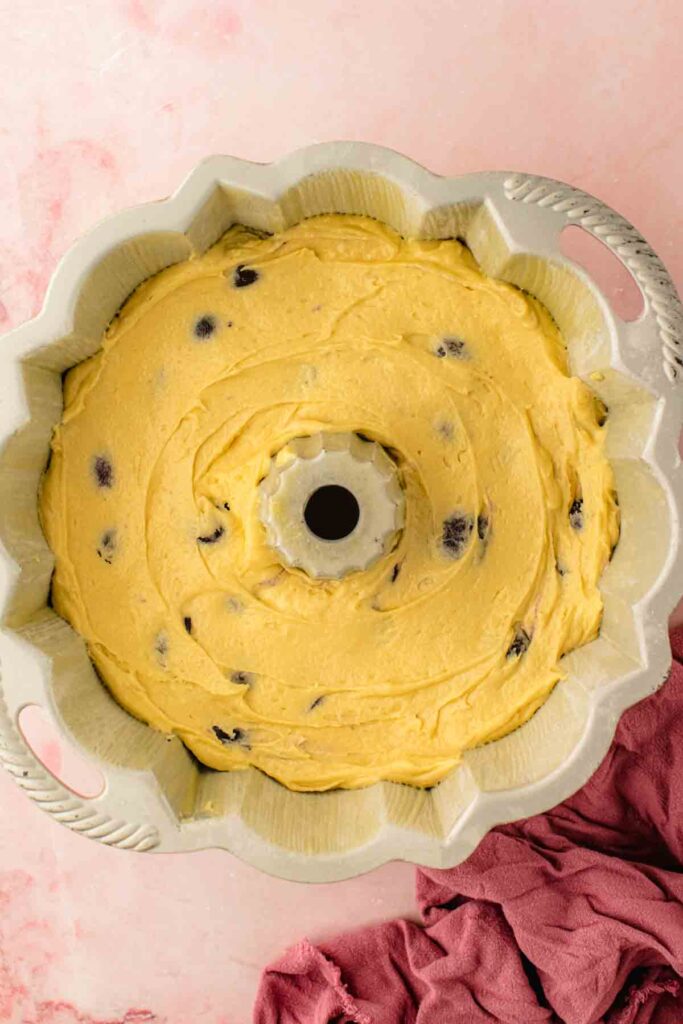
Making the Cherry Syrup (Used in Both Icing and Drizzle)
1. Simmering and straining frozen cherries
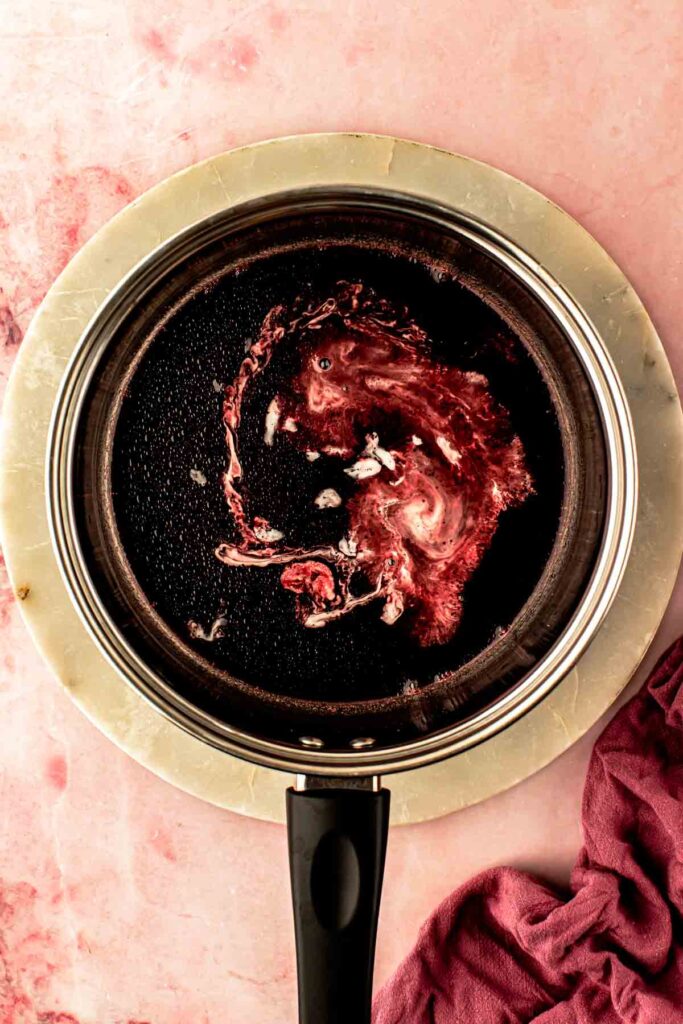
Toss the frozen cherries, sugar, and water into a saucepan and let them simmer away for 8 to 10 minutes until they're falling apart. Mash them up a bit, then strain out the fruit - you only want the juice for this part. Don't chuck the leftover cherries, though; they're honestly great over yogurt the next day.
2. Thickening with a cornstarch slurry to the right pourable consistency
Mix your cornstarch and water together first, away from the heat, or you'll end up with little lumps floating in your syrup that won't stir out no matter how hard you try. Once it's in the pan, a minute or two at a simmer is all it needs. You're after a syrup that coats a spoon, not something as thick as jam - it keeps thickening as it cools, so take it off the heat sooner than you think you should.
Cherry Icing: Getting the Drip Right
Icing consistency test before pouring
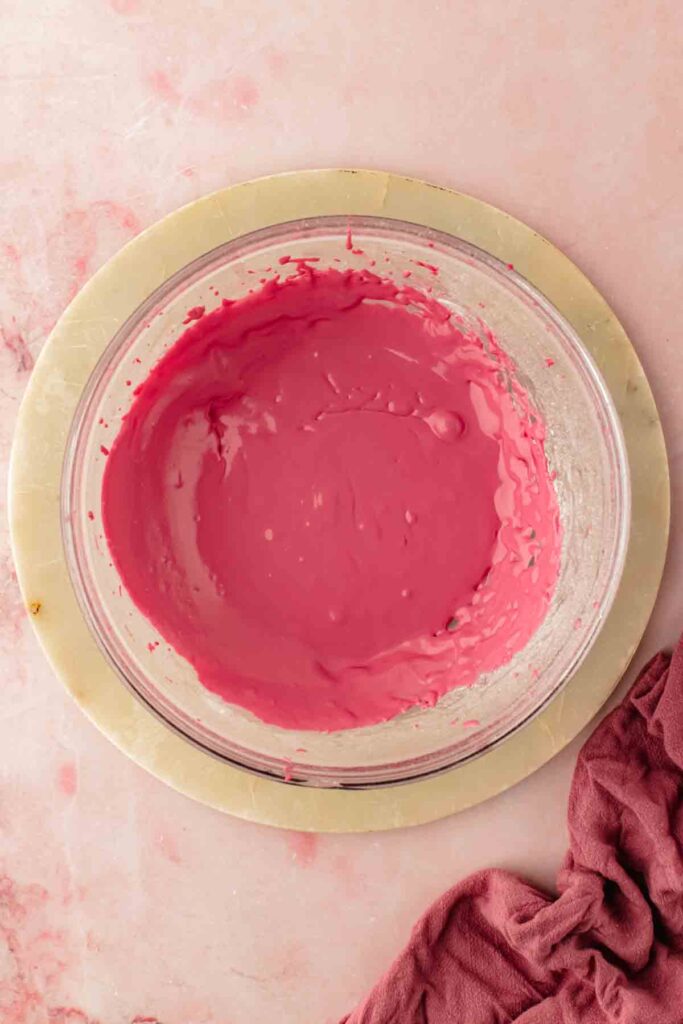
Quick test: dip a spoon in, pull it out, and watch what happens. It should hang there a second before it starts to run. Runs off straight away? Too thin. Doesn't move at all? Too thick.
Fixing icing that's too thick or too thin
If it's too thick, splash in more syrup a spoonful at a time. Too thin, whisk in more powdered sugar the same way. I always aim thin first, because thickening is easy and thinning out icing that's already set up is a pain.
Decorating and Serving
Wait until the cake's completely cool before you touch it with icing - and I mean fully cool, not just "not warm to the touch anymore." Even a little residual heat in the crumb and the icing melts straight into the cake instead of sitting on top, and you lose the drip effect entirely. There's no fixing it once it's happened, so give it the full two hours if that's what it needs.
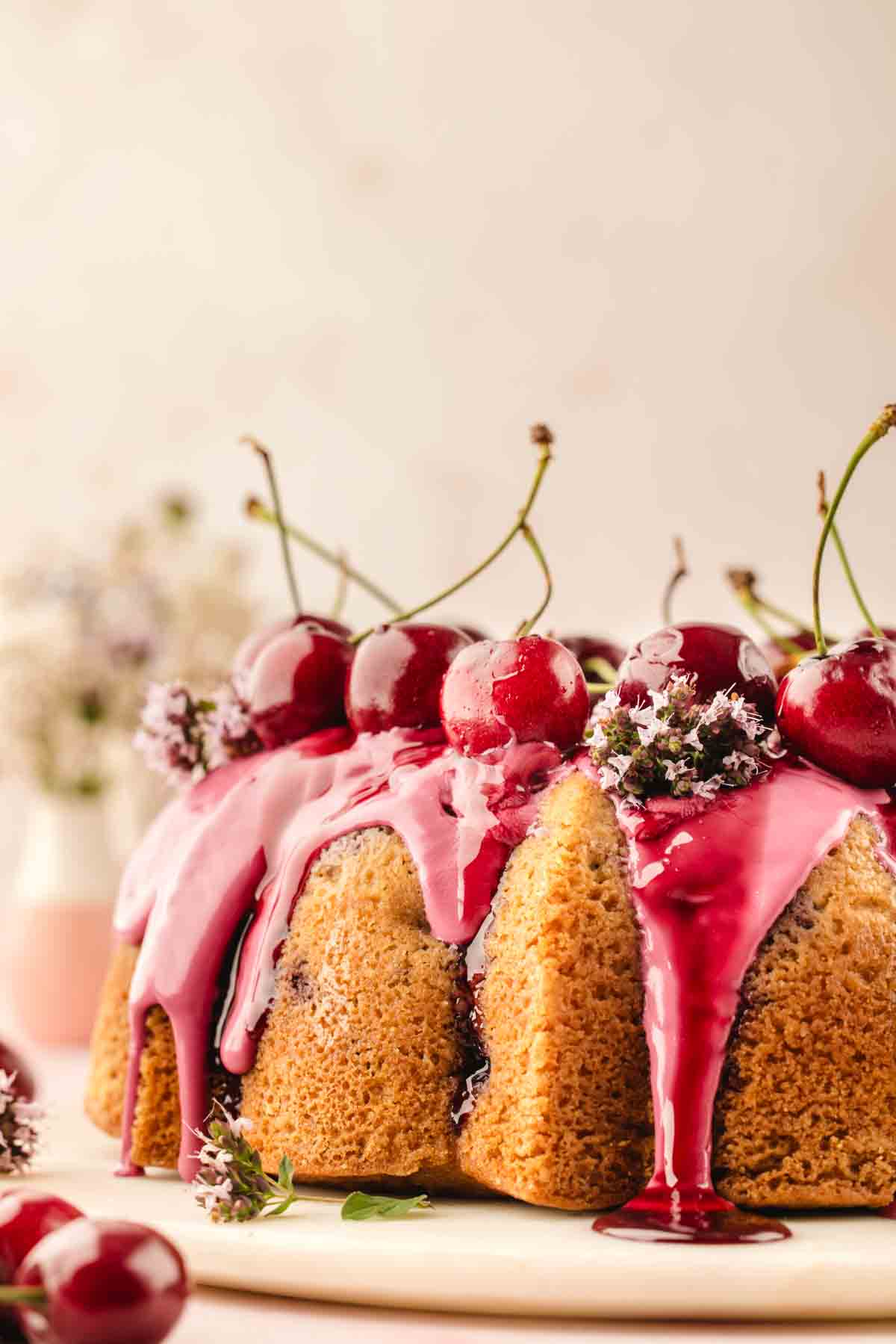
Once it's properly cool, spoon the icing over the top and let it find its own way down the ridges rather than trying to guide or smooth it - the uneven drips are the good part. Give it 20 to 30 minutes to set before you do anything else.
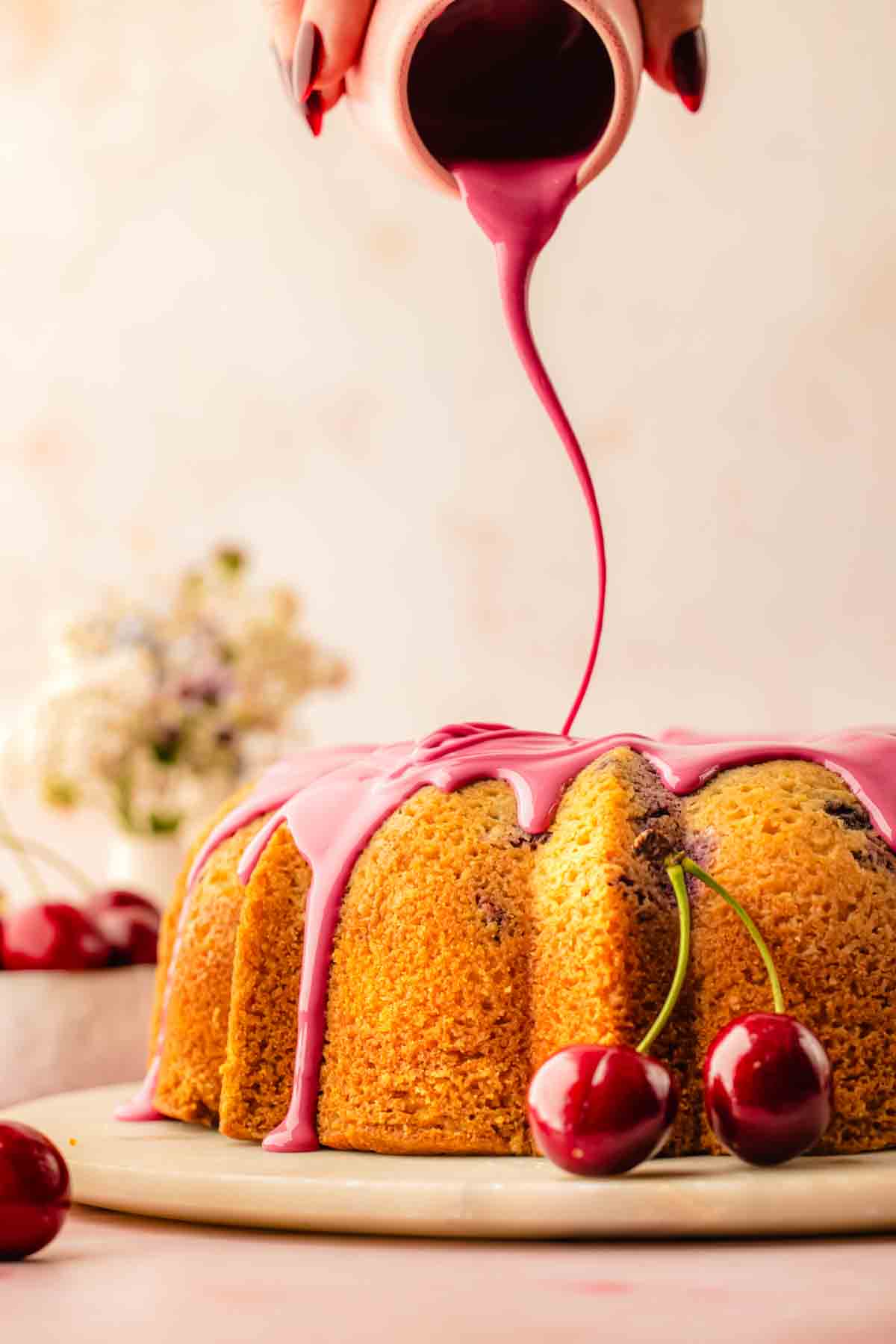
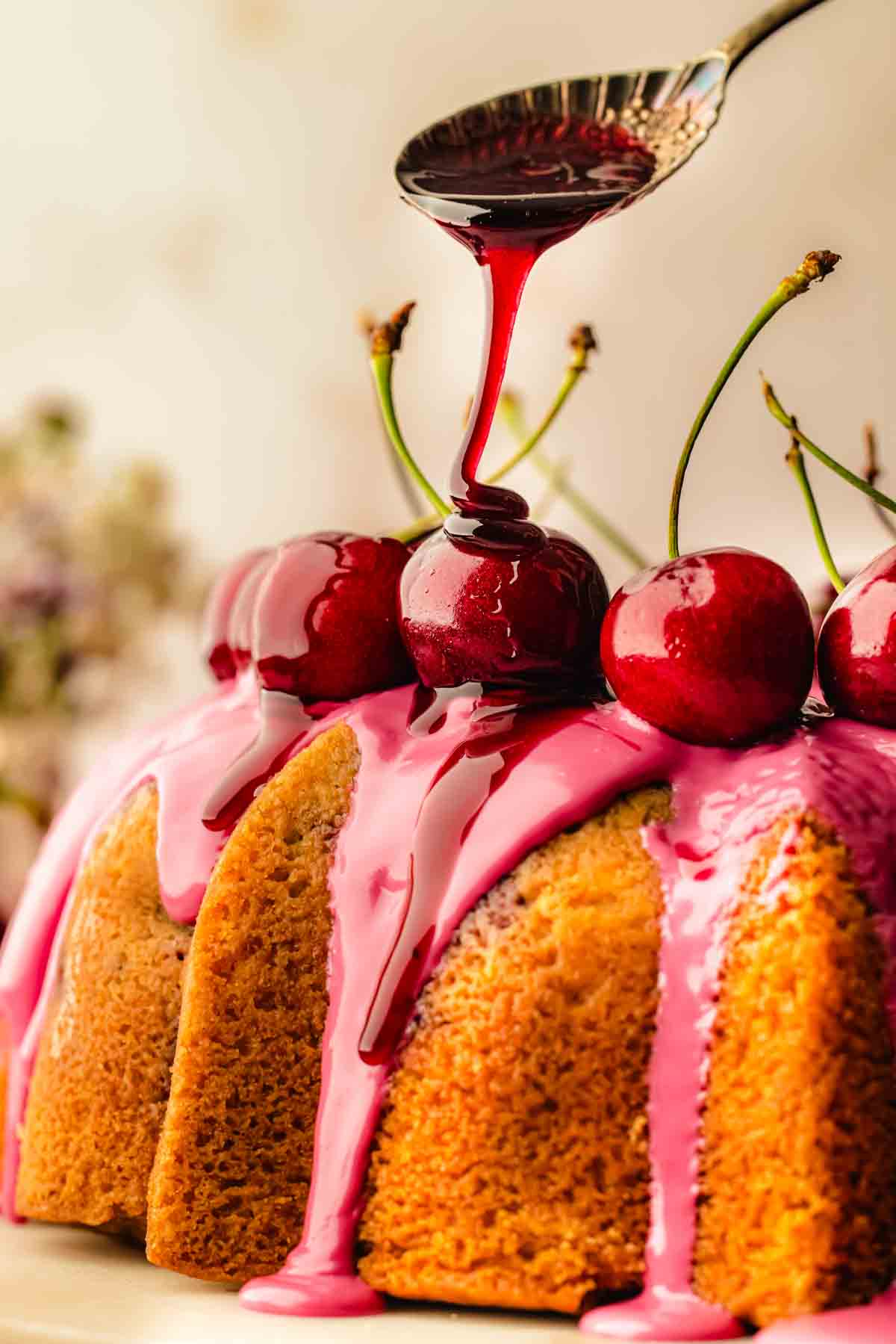
Pile fresh cherries around the top once the icing's held its shape, then right before serving, spoon a little of the leftover syrup over those cherries and let some run down the sides. A few fresh flowers on top if you're feeling it - optional, but it photographs well.
Fresh Cherry Bundt Cake with Cherry Icing and Syrup
Equipment
- 10 to 12-cup Bundt pan
- Electric mixer (stand or hand)
- medium saucepan
- Fine mesh sieve
- Digital instant-read thermometer
- Wire cooling rack
- Pastry brush (for greasing pan with melted butter)
Ingredients
For the Cherry Bundt Cake
- 3 cups all-purpose flour plus 2 tablespoons for coating the cherries
- 2 ½ teaspoons baking powder
- ½ teaspoon baking soda
- ¾ teaspoon fine salt
- 1 ¼ cups unsalted butter softened to room temperature
- 1 ½ cups granulated sugar
- 4 large eggs at room temperature
- 2 ½ teaspoons vanilla extract
- ½ teaspoon almond extract
- 1 cup full-fat sour cream at room temperature
- 2 cups fresh cherries pitted and halved or quartered if large
For the Cherry Syrup
- 2 cups frozen dark sweet cherries
- ⅓ cup granulated sugar
- 2 tablespoons water
- ¼ teaspoon almond extract optional
- 1 teaspoon cornstarch
- 1 teaspoon water
For the Cherry Icing
- 2 cups powdered sugar
- 4 to 5 tablespoons cherry syrup
- ¼ teaspoon almond extract
- Ingredient Group: For Decorating
- Fresh cherries
- Fresh flowers optional
Instructions
Make the Cherry Bundt Cake
- Preheat the oven to 325°F. Thoroughly grease a 10 to 12-cup Bundt pan with melted butter, taking care to coat every ridge, curve, and crevice, then lightly dust with flour and tap out any excess.
- In a medium bowl, whisk together the flour, baking powder, baking soda, and salt. Set aside.
- Place the prepared cherries in a separate bowl and toss with the additional 2 tablespoons of flour until lightly and evenly coated. Set aside.
- In a large mixing bowl, beat the softened butter and granulated sugar with an electric mixer for 3 to 5 minutes, until very pale, light, and fluffy, scraping down the sides and bottom of the bowl occasionally.
- Add the eggs one at a time, beating well after each addition, then mix in the vanilla and almond extracts.
- Add the dry ingredients in three additions, alternating with the sour cream in two additions, beginning and ending with the dry ingredients. Mix on low speed just until the flour disappears after each addition.
- Gently fold half of the coated cherries into the batter using a flexible spatula.
- Spoon about one-third of the batter into the prepared Bundt pan and spread into an even layer. Scatter half of the remaining cherries over the batter, keeping them slightly away from the sides of the pan.
- Add another third of the batter, followed by the remaining cherries, then cover with the rest of the batter and smooth the surface.
- Bake for 55 to 70 minutes, checking with a digital thermometer from the 55-minute mark. The cake is done when the internal temperature in the thickest part reaches 200 to 205°F, avoiding the fruit and the center tube when testing.
- If the top is browning too quickly before the center is fully baked, loosely tent the pan with foil for the remaining bake time.
- Place the pan on a wire rack and let the cake cool in the pan for 15 to 20 minutes.
- Loosen the exposed edges if needed, place a wire rack over the pan, and invert the pan and rack together in one confident motion. If the cake does not release immediately, leave it inverted for a minute or two and try a gentle tap rather than shaking the pan.
- Lift the pan away and let the cake cool completely before icing.
Make the Cherry Syrup
- Place the frozen cherries, sugar, and water in a small saucepan over medium heat.
- Bring to a gentle simmer and cook, stirring occasionally, for 8 to 10 minutes, until the cherries are very soft and have released their juice.
- Use the back of a spoon to lightly crush the softened cherries, then pour the cherries and all the liquid through a fine mesh sieve, reserving the strained liquid and discarding or saving the fruit for another use.
- Return the strained liquid to the saucepan and bring to a simmer.
- In a small bowl, mix the cornstarch with 1 teaspoon of water until smooth, then stir the slurry into the simmering syrup along with the almond extract, if using.
- Cook for 1 to 2 minutes, until the syrup thickens slightly and coats the back of a spoon while remaining pourable.
- Remove from heat and let cool completely; the syrup will continue to thicken as it cools.
Make the Cherry Icing
- Place the powdered sugar in a medium bowl. Add the cherry syrup and almond extract, then whisk until completely smooth.
- Check the consistency: the icing should hold its shape briefly on a spoon before slowly running off. Add a little more syrup if too thick, or a spoonful of powdered sugar if too thin.
- Instruction Group: Decorate and Serve
- Make sure the Bundt cake is completely cool before icing.
- Spoon the cherry icing over the top of the cake, letting it run naturally down the ridges. Let the icing set for 20 to 30 minutes.
- Arrange fresh cherries around the top of the cake.
- Just before serving, spoon or drizzle some of the remaining cherry syrup over the fresh cherries, letting a little run down the sides. Add fresh flowers, if desired.
- Slice and serve.
Notes
Why Fresh Cherries Sink (The Actual Mechanism)
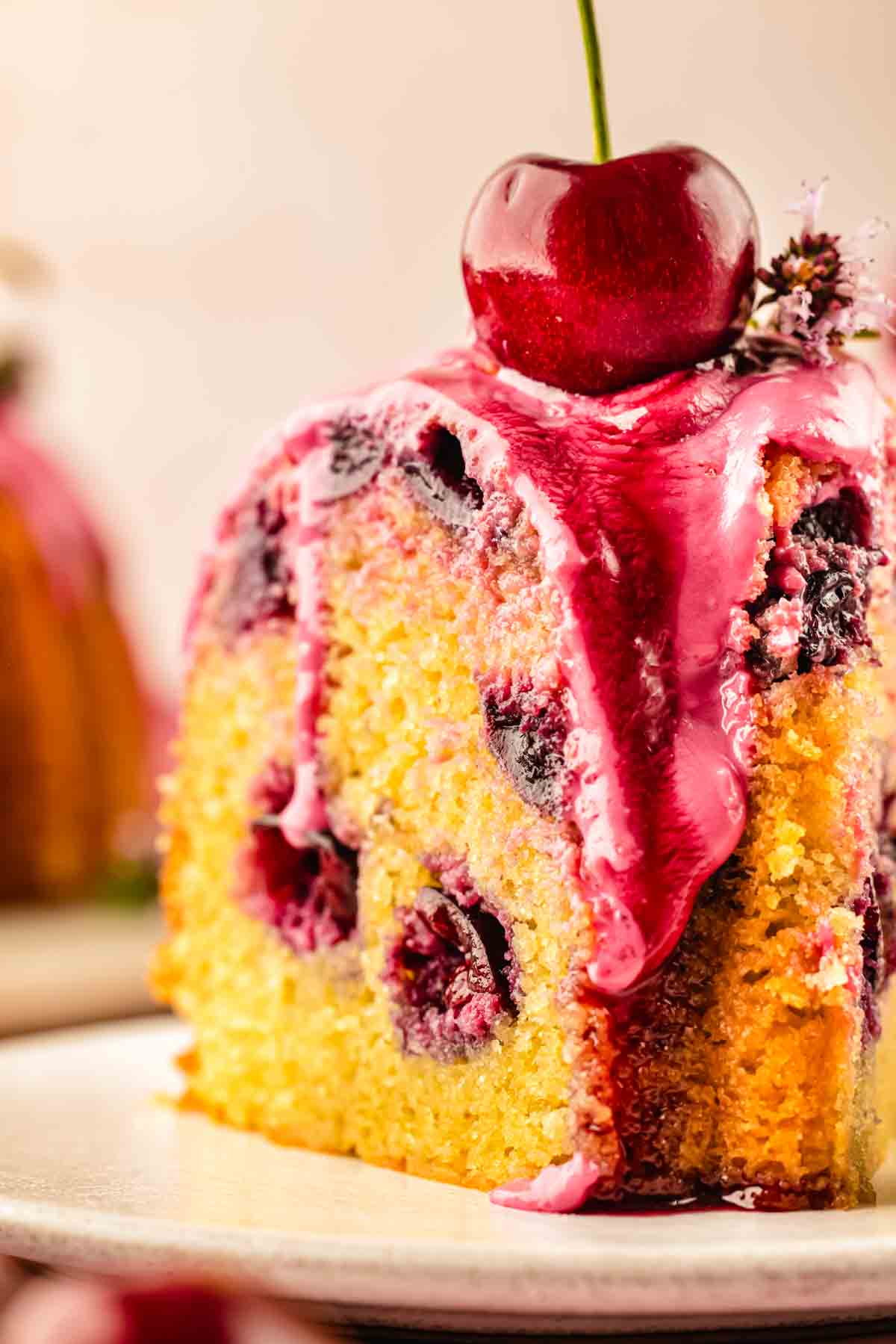
Cherries sink for the same reason anything sinks in a liquid - they're denser than the batter around them. A fresh cherry is mostly water and holds its shape under its own weight, while cake batter, even a thick one, is still soft enough to let something heavy push through it before the structure sets in the oven. Flour on the surface of the fruit doesn't change that weight difference at all. What it actually does is soak up a bit of the surface moisture on the cherry and give the batter something slightly rough to cling to for the first few minutes, which slows the sink a little. But flour alone is not going to stop it.
The batter is at its thinnest and most vulnerable in the first 15 to 20 minutes of baking, before heat firms up the structure enough to hold fruit in place. Anything heavy has that whole window to sink before the cake sets around it.
Here's What Happens When Cherries Are Folded In All at Once (the common mistake)
- What happens: all the fruit sinks into a dense band before the structure sets
- Why: the batter is thinnest and most vulnerable in the first 15-20 minutes of baking
- Result: a mostly plain cake sitting on top of a wet, fruit-heavy bottom layer
By pouring the batter in three separate stages instead of one, you're never asking a single layer of batter to hold up the full two cups of cherries through that whole vulnerable window. Each layer of fruit only has to stay suspended in the batter poured immediately above it, for a shorter stretch of baking time, before the next layer of batter goes on top and traps it in place. You're not overpowering gravity - you're just not giving it as much time or as much weight to work with in any one spot. Dig deeper: Why Your Fruit Keeps Sinking to the Bottom of the Cake.
Recipe Troubleshooting
Cake won't release from the pan
Don't force it. Leave the pan inverted over the rack for another minute or two before you do anything else - most of the time it just needs a bit longer for gravity to take over. A gentle tap helps; shaking it doesn't.
If this keeps happening in the same spot on a pan you've used before, softened butter is probably the culprit - it's easy to miss the narrow ridges in a heavily detailed bundt pan when you're spreading it on. Next time, switch to melted butter applied with a pastry brush instead; it actually reaches into the fine detail that softened butter skates over.
Icing melts into the cake instead of setting
Means the cake wasn't fully cool when iced - see the note above. No fix once it's happened; let it cool fully and re-ice with fresh syrup if you have extra
Full storage windows
- Room temperature: Store the undecorated cake tightly wrapped at room temperature for up to 3 days.
- Refrigerator: Once the cake has been iced and decorated with fresh cherries, cover it loosely and store it in the refrigerator for up to 4 days. Allow individual slices to sit at room temperature for about 20 to 30 minutes before serving.
- Make ahead before icing: The unglazed cake can be made 1 to 2 days ahead. Once completely cool, wrap tightly in plastic wrap and store at room temperature - the flavor is often better the next day.
- Syrup storage: Store the cherry syrup separately in an airtight container in the refrigerator for up to 5 days. It will thicken as it chills. Warm it gently or stir in a small amount of warm water before serving if needed.
- Freezer: The undecorated Bundt cake can also be frozen. Wrap the completely cooled cake in plastic wrap, followed by aluminum foil, and freeze for up to 2 months. Thaw it overnight at room temperature while still wrapped, then ice and decorate once fully thawed.
More Bundt Cakes Worth Baking
If the layering trick in this one won this over for you, it's worth trying elsewhere too.
My Pumpkin Bundt Cake with Maple Glaze uses the same low-and-slow bake, but the glaze there is maple instead of fruit-based, so it's a good side-by-side if you want to compare two very different finishing techniques on the same base cake.
For a fall version with actual fruit folded through the batter the same way the cherries are here, my Apple Pecan Bundt Cake with Salted Bourbon Caramel handles diced apple with a similar layering approach, finished with a caramel instead of a fruit syrup.
If you'd rather skip the icing altogether, the Italian Apple Bundt Cake with Olive Oil (Torta di Mele) is a plainer, olive-oil-based bundt where the fruit is the whole point and there's no glaze competing with it - good for a less sweet, more rustic finish.
And if you want to put the bundt pan to work outside of dessert entirely, my Savory Breakfast Bundt Cake uses the same pan and the same structural logic, just built around eggs and vegetables instead of fruit and sugar.

Comments
No Comments