
"Perhaps it's a stupid question, but I've made a fruit cake (at least tried) and it turned out the fruit all went down when I took it out of the oven. "Is it just me, or does fruit always sink to the bottom of the cake?"


Not a stupid question at all - this is one of the most common fruit cake problems out there, and it's rarely bad luck. It's physics. Your fruit is heavier than your batter, so gravity does exactly what gravity does. And that weird, underdone taste usually goes hand in hand with the sinking, since a heavy pocket of fruit at the bottom bakes differently than the rest of the cake around it. Once you understand why sinking happens, fixing it is honestly pretty simple.
Why Does Fruit Sink in Cake Batter?
Here's the basic mechanism: fruit is denser than cake batter, plain and simple. As the cake bakes and rises, gravity pulls the heavier fruit downward while the lighter batter rises up around it, and you end up with a fruit layer at the bottom instead of fruit distributed evenly throughout.
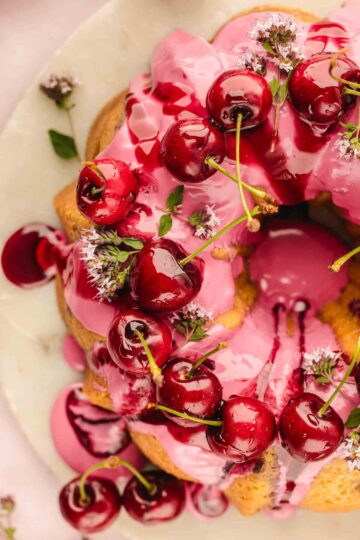
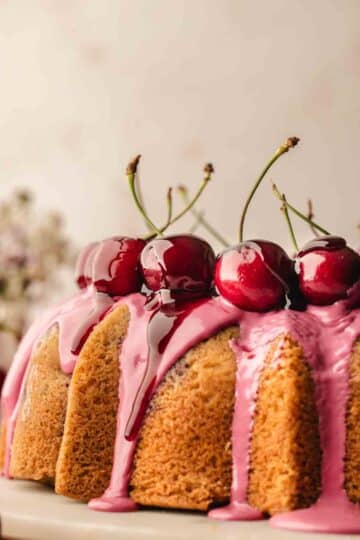
This isn't limited to cherries (see my "case study" Fresh Cherry Bundt Cake). Blueberries, cranberries, diced apples, strawberries, raisins, and chocolate chips all fall into the same category. Anything denser than the batter surrounding it is a sinking risk, and the effect gets worse the bigger and heavier the individual piece is.
A few things make it worse:
- Fruit cut too large. All the fruit may have simply been cut too big, and the extra weight from those larger pieces makes them sink faster than smaller ones would. This is one of the easiest fixes there is - just cut your pieces smaller. See Lemon Blueberry Layer Cake.
- Thin, runny batter. If the batter is thin, the fruit will sink. Full stop. A loose batter doesn't have the structural support to hold anything suspended. It's the baking equivalent of trying to suspend a rock in water instead of in something thicker, like honey.
- Syrupy or wet fruit. Fruit packed in syrup, like glacé cherries, or fruit that's still damp from washing, picks up extra weight and gets slippery on top of it. Slippery makes sinking worse because there's nothing for the fruit to grip onto as it moves through the batter.
Does Coating Fruit in Flour Actually Stop Sinking?
There's a long-standing belief that tossing fruit in flour before folding it into the batter helps prevent sinking - plenty of people learned this from their own mum standing at the counter doing exactly that, without ever fully knowing why it works. Turns out the belief holds up.
Here's why: the flour coating increases the local viscosity right around each piece of fruit, meaning it makes the batter thicker and grippier in that immediate zone. Some of that flour also absorbs surface moisture on the fruit itself, which helps it hold on rather than just sliding downward through everything else.
Industry bakers use a related trick at scale: they intentionally use higher-protein flour in fruit cakes because it creates a small amount of extra gluten structure, and that gluten net entraps the fruit and holds it in place as the batter sets. You don't need specialty flour for a home bake, but the underlying principle is the same one behind a simple flour dusting: thicken the immediate area around the fruit so gravity has to fight harder to win.
The Full List of Ways to Keep Fruit Suspended
Flour coating is the easiest fix, but it's not the only one. Here's what actually works, layered from simplest to most involved:
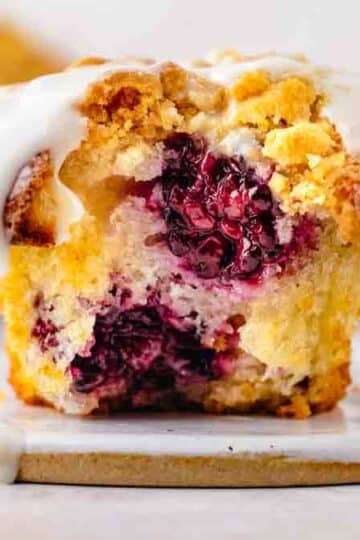
- Toss fruit in flour before folding it in. Use a spoonful straight from your measured dry ingredients, just enough to lightly dust every piece. A fine sifter or strainer afterward removes the excess so you're not adding raw flour clumps to your batter. Case in point: Blackberry Crumb Muffins.
- Cut fruit into smaller pieces. Smaller, lighter pieces sink slower and distribute more evenly than big chunks. If you're getting sinking even with flour coating, oversized pieces are the likely culprit.
- Drain and dry wet fruit thoroughly. If your fruit's been soaked, frozen, or sitting in syrup, pat it dry before it goes anywhere near the batter. Less surface moisture means less weight and less slip.
- Use a dense batter, not a thin one. This is genuinely the biggest lever you have. A thicker, sturdier batter naturally holds fruit better than a runny one. If a recipe consistently gives you sinking fruit, it might just be running too thin to begin with.
- Layer the batter and fruit instead of mixing everything at once. This is the most reliable fix when everything else still isn't cutting it. Spread half your batter in the pan, top it with half the fruit, spread the rest of the batter over that fruit layer, then finish with the remaining fruit on top. Layering physically distributes the fruit through the height of the cake instead of relying on the batter to hold it suspended on its own.
Quick Summary
Sinking fruit isn't a sign you did something wrong. It's just density and gravity doing exactly what they do, and it happens to every kind of add-in that's heavier than the batter around it, not just cherries. Start with the basics: cut your fruit smaller, dry it well, and toss it in flour. That solves this for most home bakes. If you're still getting a soggy fruit layer at the bottom after that, your batter's probably too thin, and layering the batter and fruit in stages is your most reliable fix from there.

Comments
No Comments