
Why do most people use a toothpick to determine if a cake is cooked vs. a thermometer? Both methods work, they're just built for different jobs. A thermometer gives you real precision and keeps you from overbaking. A toothpick's the fast, old-school way to check that the wet batter's actually gone.

Temperature Method
Best for: nailing accuracy, keeping cakes from drying out, and yeast breads especially.
How it works: slide a digital probe into the true center of the bake, and make sure you're not hitting the bottom of the pan.
Insert an instant-read thermometer into the center of whatever you're baking, avoid touching the pan, read the number. Compare it to your target temp. That's it - no interpretation needed, no "does this crumb count as clean."
Target Temperatures
| Baked Good | Target Internal Temperature |
|---|---|
| Cakes and cupcakes | 200–210°F (pull around 205°F and they stay noticeably moister) |
| Quick breads, muffins | 200–205°F |
| Yeast breads | 190°F–210°F |
| Brownies | 165–175°F (lower on purpose, so they stay fudgy) |
| Cheesecakes | 150°F |
Quick note on that cheesecake number - it's noticeably lower than everything else on the list because cheesecake is a custard, not a true cake. Push it past 160°F and you risk cracking, so 150°F is where you want to pull it and let it finish setting as it cools.
Toothpick Method
Best for: speed and convenience, basically your go-to for everyday baking.
How it works: poke the middle, pull it out, see what clings to it.
Here's what's actually happening inside your cake. At around 205°F, your cake is fully baked - set, tender, perfect crumb. But a toothpick doesn't come out totally clean until the cake reaches 212°F, the boiling point of water. That's a real gap. And in that gap, if you keep baking because your toothpick looked a little tacky, you're pushing a done cake into overbaked territory.
This isn't a "you're doing it wrong" problem. It's a limitation baked into the test itself (pun intended). The toothpick measures texture, and texture lags behind actual doneness.
What to look for:
- Cakes: you want a few dry or moist crumbs, not wet batter. But watch out - a completely bone-dry toothpick usually means you've gone too far and overbaked it.
- Brownies: sticky, moist crumbs are what you're after. Clean means you've overshot.
Where Sight Still Matters
I'll say this clearly: temperature isn't the only signal, especially with rustic, crusty bread. A loaf's internal temperature physically can't go above 212°F - water boiling caps it there - so some bakers treat the crust's color and sound (that hollow knock) as the real tell for artisan loaves, using temperature as backup rather than gospel. I think that's fair for sourdough and baguettes specifically. For soft sandwich bread and dinner rolls, though, temperature is reliable on its own - aim for 190°F at the center.
My Take
The toothpick test isn't useless, but it's a blunt tool for a job that deserves precision. A thermometer gives you an actual number instead of a vibe.
Try It On These Cakes
Here's your chance to put this into practice on actual recipes. If you're making a layer cake, temp it, don't toothpick it - my Raspberry Lemon Layer Cake is a great one to start with since layers dry out fast if you overbake even slightly.
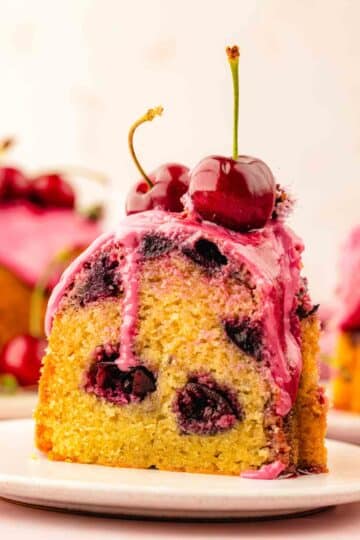
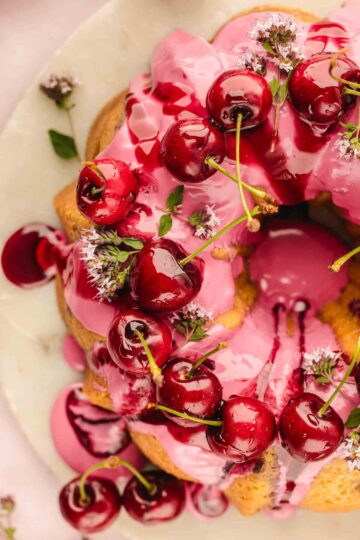
Baking a bundt? Bundts are notorious for looking done on the outside while the dense center's still gummy, so this is exactly where a thermometer earns its keep. Try it on my Cherry Bundt Cake or the Apple Pecan Bundt Cake with Salted Bourbon Caramel - both have enough density that the toothpick test alone can genuinely fool you.
And if you're leaning toward something simpler, my Apple Cinnamon Cake or German Apple Sheet Cake are both good, lower-stakes practice runs for getting comfortable with a thermometer before you commit to a fussier bake.

Comments
No Comments