
If you've ever stared at a box of pasta wondering "Is this enough?", you're not alone. The right amount depends on whether pasta is the main dish, a side, and whether it's dry, fresh, or filled like ravioli. And if you're anything like me, you want just enough to eat now-no leftovers.
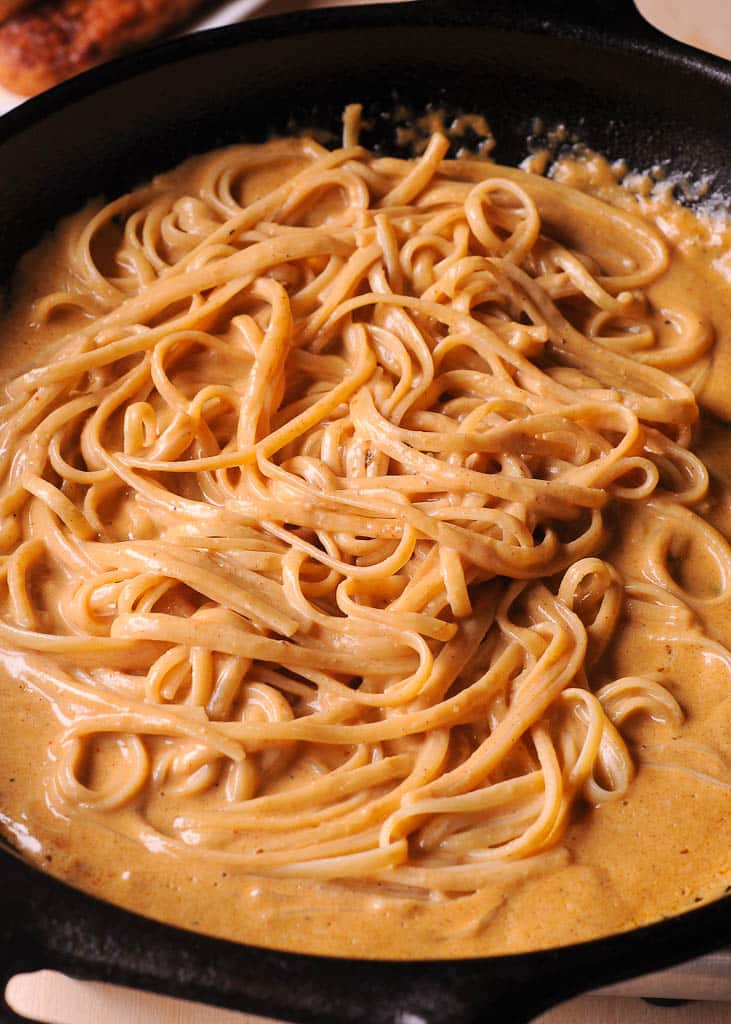
We've all been there: you eyeball a handful of dry spaghetti, it looks reasonable, and 10 minutes later you're staring down a mountain of noodles big enough to feed the entire building. The flip side? Undershooting it and watching four hungry people politely pretend they're "so full" after half a plate.
Getting pasta portions right isn't just about avoiding waste-it's the difference between a satisfying bowl of al dente comfort and a meal that feels skimpy or over-the-top. By the way, my How to Emulsify Pasta Sauce with Pasta Water and How to Cook Pasta Al Dente are two great resources on this exciting topic of how much pasta per person is correct!
Most pasta packages will tell you "2 ounces per serving," but that doesn't help much when you're cooking for a mix of kids, ravenous teenagers, and adults, or when you're not using a scale and just want to know how full to make the measuring cup. And the "right" amount changes depending on whether the pasta is your main event, a small side next to steak, or a little handful going into soup.
In this guide, I'll break down exactly how much pasta to cook per person (dry pasta straight out of the box) for different shapes and situations-main course vs. side, adults vs. kids, hearty eaters vs. light appetites-plus how to measure it without a scale using cups, handfuls, and a few visual cues you can actually remember at 6 p.m. on a Tuesday.
Use it along with The Complete Guide to Pasta Recipes as your go-to chart any time you're standing over the pot wondering if you should toss in "just a little more."
Quick Rule of Thumb of How Much Pasta per Person
For home cooking, it's easier to think in cups instead of ounces or grams. Here's a simple guide for most common shapes:
Use about 1 cup of dry pasta (uncooked) per adult when pasta is the main dish, and about ½-¾ cup dry pasta (uncooked) per person when it's a side. Use regular measuring cup and measure accordingly.
When cooked, 1 cup of dry pasta (like penne) yields about 2 cups, and in my experience, this ratio works perfectly every time per 1 adult.
Most brands define a standard serving as 2 ounces dry (about 56 g), which for many shapes is close to ½-1 cup dry, and yields about 1-1½ cups cooked pasta per serving.
If you are feeding 2 people for dinner, then scoop up 2 cups of dry pasta right out of the box.
Dry Pasta Measurements (Quick Reference in Cups)
- Main dish (hungry adult): 1 cup dry short pasta (penne, fusilli, macaroni, shells) per person.
- Lighter meal or side dish: ½-¾ cup dry short pasta per person.
- Long pasta (spaghetti, linguine, fettuccine): about ¾-1 cup dry pasta "pieces" per person if you break them to fit in a cup; this corresponds to the usual 2-3.5 oz range per serving.
Why 1 cup dry pasta per person works
Many professional and brand guidelines recommend anywhere from 2 oz to 3.5 oz of dry pasta per person, depending on whether pasta is a side or a full meal.
- 2 oz dry pasta (standard "nutrition label" serving) = roughly ½-1 cup dry, depending on shape, and cooks to about 1 cup of pasta.
- 3.5 oz (about 100 g) dry pasta is a common recommendation when pasta is the star of the plate and yields around 1½-1¾ cups cooked pasta.
For small and medium shapes, 1 cup dry is usually right around that 3-3.5 oz "comfortably full" main-course portion, which is why "1 cup dry per person" is such a practical rule at home.
Cups of dry pasta by shape (quick chart)
These estimates are for one adult. Use the higher end for big appetites, the lower end for sides.
| Pasta role | Short shapes (penne, fusilli, macaroni, shells) | Long shapes (spaghetti, linguine, fettuccine) |
|---|---|---|
| Main dish | 1 cup dry ≈ 3–3.5 oz, about 1½–2 cups cooked | ¾–1 cup dry “broken to fit” ≈ 2–3.5 oz, about 1½–2 cups cooked |
| Side dish | ½–¾ cup dry ≈ 2–2.5 oz, about 1–1¼ cups cooked | ½–¾ cup dry ≈ 2–2.5 oz, about 1–1¼ cups cooked |
Brands like Barilla publish charts where a 2-ounce serving of various shapes ranges from about ⅓ to ¾ cup dry, which is why the exact cup amount depends on shape but still clusters around ½-1 cup per person.
Use these measurements for any of my 10 best pasta recipes.
Basic Pasta Serving Rules
- Dry pasta (main course): 3.5 ounces / 100 grams per adult.
- Fresh pasta (main course): 4.2 ounces / 120 grams per adult.
- Filled pasta (ravioli, tortellini): 5.3 ounces / 150 grams per adult.
- Side dish portions: use about half to two‑thirds of the main‑course amount.
- Kids: plan 50-70% of an adult portion, depending on appetite.
If you prefer cups instead of a scale, 2 ounces of dry pasta usually cooks up to around 1 cup of cooked pasta. For most shapes, that means 1 cup cooked pasta is a modest serving and 1 ½ cups is a generous one.
And if you've ever wondered about the age‑old question, How To Cook Pasta Al Dente? you're in the right spot.

How Much Pasta For a Crowd?
Here's a quick planning guide when you're cooking for more than just your family.
- 2 people: 7 ounces / 200 grams dry pasta
- 4 people: 14 ounces / 400 grams dry pasta (about 1 box / 1 pound)
- 6 people: 1 pound plus 3-4 ounces (500-600 grams)
- 8 people: 1 ½ pounds (700-800 grams)
One pound of dry pasta typically serves about 4 people as a main dish and makes roughly 8 cups of cooked pasta. You can clearly see how much it will feed in Creamy Chicken Pasta and Chicken Pasta in White Wine Cheese Sauce.
Quick Pasta Per Person Cheat Sheet
- 2 people: 7 oz (about 200 g) dry
- 4 people: 14-16 oz (400-450 g) dry
- 6 people: 21-24 oz (600-675 g) dry
- 8 people: 28-32 oz (800-900 g) dry
1 pound (16 oz) dry pasta ≈ 4 adult main‑dish servings
Everyday Portion Guide
When pasta is the main event, that "1 pound serves 4" line on the box is actually a pretty solid starting point: a 16‑ounce box divides neatly into four 4‑ounce portions, which cook up to roughly 2 cups of pasta per person-enough to feel like a real meal, not a tasting.
In practice, though, the yield is a little fluid: lighter shapes like spaghetti and linguine seem to stretch further in the bowl than dense tubes or chunky shells, and rich, creamy sauces or hearty ragùs make the same portion feel more substantial than a light tomato or olive‑oil situation.
Think of one pound as four average appetites, three very hungry adults, or up to six smaller servings if pasta's sharing the plate with salad, bread, and a protein; once you've cooked a few boxes with this in mind, it becomes an easy mental ruler for every pasta night.
ADULT MAIN DISH
- Dry pasta: 3.5 oz (about 100 g) per person (1 cup uncooked dry pasta)
- Fresh pasta: 4.2 oz (about 120 g) per person
- Filled pasta (ravioli, tortellini): 5.3 oz (about 150 g) per person
ADULT SIDE DISH
- Dry pasta: 2-2.5 oz (60-75 g) per person
- Fresh pasta: 3 oz (85-90 g) per person
- Filled pasta: 3.5 oz (100 g) per person
KIDS
- Toddlers: about 1 cup cooked pasta
- Younger kids: 1-1 ½ cups cooked
- Pre‑teens/teens: use adult amount
Cups vs Grams vs Ounces
Measuring pasta by weight is more accurate than using cups, especially for shapes with lots of air gaps like penne or rigatoni
- 2 ounces (56 g) dry pasta ≈ 1 cup cooked pasta for many shapes.
- 3.5 ounces (100 g) dry pasta ≈ 1 ½-1 ¾ cups cooked pasta.
- Tube and chunky shapes vary more by volume, so a digital scale is best for those.
If you don't have a scale, you can still estimate:
- Long pasta (spaghetti, linguine): A bundle about the diameter of a quarter (roughly 2 ⅛ inches around) is close to a 2‑ounce serving. Garlic Basil Shrimp Pasta uses long pasta.
- Short pasta: ¾ cup dry usually cooks to around 1 ½ cups for many small shapes. See Chili Crisp Garlic Pasta for an example of short pasta shapes and volume.
Adjusting For Appetite and Sauce
The chart above is a starting point. You can adjust up or down based on:
- Who you're feeding: Athletes and teens will eat more than small kids or light eaters. For example, this Creamy Chipotle Chicken Pasta will feed an entire army of teens,
- The rest of the menu: If you're serving rich appetizers, bread, and dessert, stick to the lower end of the range.
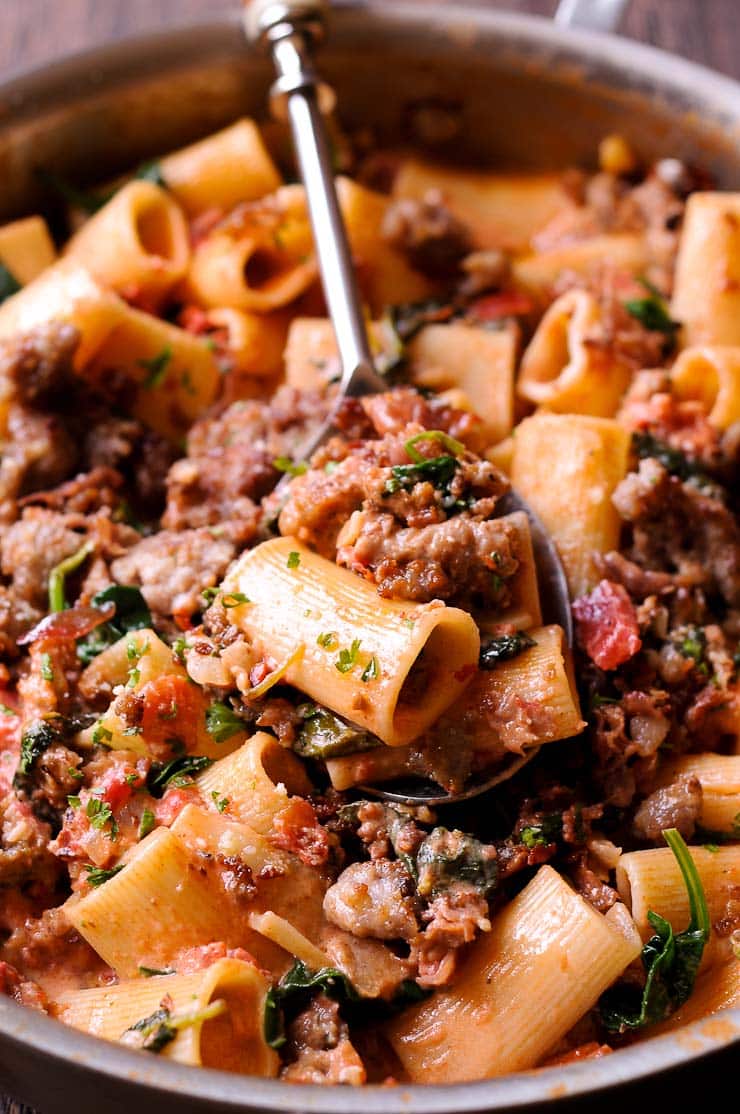
- Sauce type: Light oil‑based sauces and veggie sauces usually mean people eat more pasta; rich cream or meat sauces, like Sausage Bolognese à la Vodka are more filling, so the standard portion feels.
When in doubt, err on the generous side for dry pasta; leftovers reheat well and can be turned into pasta salad the next day.
Sharon says
You didn't really suggest people break long noodles into pieces. That's sacrilegious. Weighing it is actually quicker than breaking pieces up to fit in a cup.
Olya Shepard says
You maybe right Sharon, but I do break my noodles all the time.