
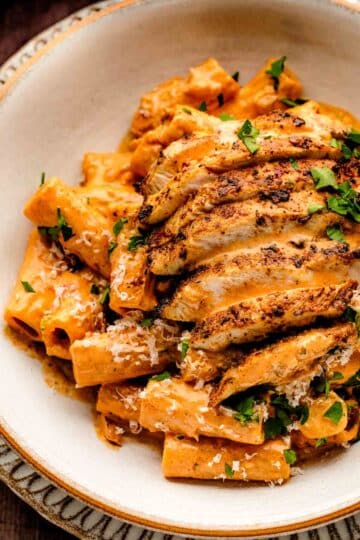
This pan-seared chardonnay chicken pasta is a 30-minute one-skillet dinner - chicken breasts seared until golden, deglazed with Chardonnay, and finished in a Parmesan cream sauce that coats every piece of pasta.

I used to think a great white wine pasta sauce was all about the cream. It's not - it's about the sear. Don't skip it, don't rush it, don't move the chicken around. Let it sit until it releases on its own with a deep golden crust, then deglaze that pan with Chardonnay and watch the sauce build itself. I specifically use Chardonnay because it's buttery and mellow where other white wines turn bitter or sharp when reduced - and the result is a cream sauce that tastes like something you'd order on date night, made on a Tuesday in your pajamas.
Originally shared in November 2017, this Chardonnay chicken pasta now has fresh photos and updated instructions so it's even easier to follow.
Why I Use Chardonnay (And Not Just Any White Wine)
The white wine you choose changes how the sauce tastes - and not in a subtle way.
I've cooked this with Sauvignon Blanc, Pinot Grigio, and a generic bottle of "white cooking wine" from the grocery store shelf. They all get the job done technically - sauce forms, pasta gets coated, dinner is served. But Chardonnay does something the others don't. Its natural butteriness and light oak character add a richness to the cream sauce that drier, more acidic wines can't replicate. Sauvignon Blanc can turn sharp as it reduces. Pinot Grigio tends to taste thin. Chardonnay melts into the cream and Parmesan like it belongs there - because it does. That's fat content and fine wine working in your favor.
But, of course, you don't need an expensive bottle. I always go for a Chardonnay I'd actually pour a glass of, usually in the $10-$15 range. If I wouldn't drink it, I don't cook with it.
Curious whether light oaks wines (Italian equivalent to Chardonnay) are used in Italian cooking? I get into that in my guide to cooking with wine for Italian food.

The Best White Wines for Cream Sauces
If Chardonnay isn't what you have, here's how the options rank:
- Chardonnay (first choice) - buttery, full-bodied, reduces into a silky sauce
- White Burgundy - essentially French Chardonnay; works beautifully
- Viognier - slightly floral, similar body, a great second option
- Pinot Grigio - works in a pinch; expect a lighter, less rich result
- Sauvignon Blanc - reduce it fully before adding the cream so the sharpness cooks off
Skip anything labeled "cooking wine" with added salt. Once it's in the pan, there's no fixing the flavor.
Can You Substitute a Non-Alcoholic Wine?
Yes, and it works better than you'd expect. Look for a dealcoholized white wine rather than grape juice - grape juice is too sweet and will throw the sauce off. Use it in the same quantity the recipe calls for. The sauce won't have quite the same depth, but it will still be creamy and delicious. In a pinch, a splash of chicken broth with a teaspoon of white wine vinegar gets you most of the way there on a weeknight.
The Sear Makes the Sauce - Here's Why It Matters
I used to rush this step. Medium heat, chicken moving around the pan, cutting into it too early - and a cream sauce that always tasted a little flat no matter what else I did. The sear wasn't the problem. Skipping the real sear was the problem.
A hard, leave-it-alone sear on the chicken breast is what builds the flavor foundation for the entire sauce. Once you understand the why, you won't rush it again.
How to Pan-Sear Chicken Breasts Perfectly Every Time
I have a full guide on how to pan-sear chicken breasts if you want to go deeper, but here's everything you need for this recipe:
- Pat the chicken completely dry before it hits the pan - moisture creates steam, steam kills browning
- Season right before cooking, not hours ahead
- Use stainless steel or cast iron - nonstick pans won't build a real crust and don't leave behind fond
- Heat the pan first, then add the oil - when it shimmers and you see the first wisp of smoke, you're ready
- Put the chicken in and walk away - 3 to 4 minutes, completely untouched, until it releases on its own and is deeply golden
- Flip once, another 3 to 4 minutes, then remove and rest while you build the sauce
Eight minutes. That's the whole sear. Everything else in this recipe depends on it.
What Is Fond and Why It Builds Flavor
After you pull the chicken out, look at the bottom of your pan. Those golden-brown bits stuck to the surface? That's fond - caramelized proteins and sugars from the sear - and it is the best thing in your kitchen right now.
When butter and Chardonnay go into that hot pan next, the fond dissolves off the bottom and straight into your sauce. That process is called deglazing, and it's the reason a sauce built in the same pan as the seared chicken always tastes richer than one made separately. Every bit of flavor goes directly into the Chardonnay cream sauce. Nothing gets lost.
Reader variations worth trying: A few readers have asked about swapping the chicken for shrimp - it works great. Sear large shrimp 2 minutes per side, remove them, build the sauce exactly as written, and add the shrimp back at the very end just to warm through. Another reader suggested finishing the sauce with 2 tablespoons of cream cheese instead of all heavy cream - slightly tangier, noticeably thicker, and genuinely delicious. Both are worth making once you've tried the original.

What Goes Into This Chardonnay Chicken Pasta (And Why Each One Matters)
The chicken: I use boneless, skinless chicken breasts here, pounded to an even thickness. Not thighs - breasts. I know thighs are the "juicier, more forgiving" pick that everyone recommends, but for this specific dish I want the lean chicken breasts against the richness of the Chardonnay cream sauce. The contrast is the entire point of this dish. Pound them to about ¾ inch so they sear evenly without the thin end overcooking before the thick end catches up.
The Chardonnay: Already covered why - but buy a bottle you'd pour yourself a glass of while you cook. I always do.
The cream: Heavy cream, not half-and-half. Half-and-half can break when it hits the wine and high heat, and you'll end up with a grainy, separated sauce. Heavy cream is stable and it gives you that silky, restaurant-quality consistency. This is one place I don't compromise.
The Parmesan: Buy a block and grate it yourself. Pre-shredded Parmesan has anti-caking agents that prevent it from melting smoothly - you'll get clumps in the sauce instead of that velvety finish. Two minutes of grating makes a real difference.
The pasta: I use penne or rigatoni. The ridges and hollow centers catch and hold the Chardonnay cream sauce in a way that spaghetti or linguine simply don't. This is my go-to shape for any cream sauce with chunks of protein - every bite gets properly coated.
The butter: Unsalted, and I use it twice - once at the start of the sauce to soften the shallots and garlic, and once at the very end, off the heat, swirled in for gloss. That final tablespoon of cold butter is a restaurant trick and it is worth doing every single time.
Notes on the Cream Sauce Ingredients
- Shallots over onion - shallots melt into the sauce and disappear; white onion can stay a little sharp and chunky even when fully softened. I make this for weeknights when I want elegance without effort, and shallots are part of that.
- Fresh garlic only - garlic powder in a cream sauce tastes like jarred Alfredo from a box. Four cloves, minced fine.
- Italian seasoning + a pinch of red pepper flakes - the flakes aren't there to make it spicy. They're there to add a subtle background warmth that keeps the cream sauce from tasting flat. If you skip them, you'll notice something is missing even if you can't name it.
- Salt your pasta water aggressively - it should taste like mild seawater. This is the only chance you have to season the pasta itself, and under-seasoned pasta will dull even the best cream sauce. Here's How Much Salt Should You Add to Pasta Water.
How to Make Chicken Pasta in White Wine Sauce (Step-by-Step)
This is a one-skillet dinner from start to finish - the chicken, the sauce, everything happens in the same pan in the right order. I make this on Friday nights when I want something that feels like a treat but I'm not willing to stand at the stove for an hour. The whole thing is done in 30 minutes and uses one pan, which means less cleanup and more time sitting down with a glass of whatever Chardonnay is left in the bottle.
Step 1 - Sear the Chicken
Get your stainless steel or cast iron skillet hot over medium-high heat before anything goes in. Add a tablespoon of olive oil and wait until it shimmers - when you see that first faint wisp of smoke, the pan is ready.
Season the chicken breasts on both sides with salt, pepper, and a pinch of garlic powder right before they go in. Lay them away from you into the pan so the oil doesn't splash toward you, and then - this is the part that matters - do not touch them. No pressing, no peeking, no moving them around to check. Leave them completely alone for 3 to 4 minutes.
You'll know they're ready to flip when they release cleanly from the pan without any resistance. If they're sticking, they need more time. A properly seared chicken breast tells you when it's ready - you don't have to force it. Flip once, another 3 to 4 minutes on the second side, then transfer to a plate and tent loosely with foil. They'll finish cooking off the heat while you build the sauce. Here a link to my post on how to pan-sear chicken to perfection. It explains in detail what chicken to choose, what tools to use, etc.
Do not wipe out the pan. Those golden-brown bits on the bottom are the whole point of Step 2.

Step 2 - Build the Chardonnay Cream Sauce
Turn the heat down to medium and add a tablespoon of butter to the same pan. When it melts, add the shallots and cook for 2 minutes until they soften and just start to turn translucent. Add the garlic and cook for another 30 seconds - just until fragrant, not browned.
Now pour in the Chardonnay. You'll hear it sizzle and steam, and you'll see all those browned bits lift off the bottom of the pan immediately. Use a wooden spoon to scrape up anything that's still stuck - that fond is dissolving directly into your sauce right now and it's why this tastes the way it does. Let the wine reduce for about 2 minutes until it's roughly halved in volume.
Pour in the heavy cream and add the Italian seasoning and red pepper flakes. Stir to combine and let it simmer on medium-low for 3 to 4 minutes, stirring occasionally, until the sauce thickens enough to coat the back of a spoon. Taste it here - this is your moment to adjust salt before the Parmesan goes in, because Parmesan adds its own saltiness and you don't want to overshoot.

Step 3 - Combine and Finish with Parmesan
Slice the rested chicken into strips and add it back into the skillet along with your drained pasta (here's everything on How to Cook Pasta Al Dente and How to Emulsify Pasta Sauce with Pasta Water. Toss everything together so the pasta is fully coated and the chicken is nestled into the sauce.
Take the pan off the heat - this part is important - and add the grated Parmesan a handful at a time, stirring between each addition. Removing the pan from the heat before the Parmesan goes in prevents the sauce from breaking or turning grainy. The residual heat melts the cheese smoothly into the sauce without scrambling it.

Finish with that last tablespoon of cold butter, swirling it in until it's fully incorporated and the sauce has a glossy, restaurant-quality sheen. Taste one more time for salt. Plate it, top with a little extra Parmesan and fresh parsley if you have it, and serve immediately - cream sauces thicken as they sit, so this one is best eaten right away.
This is my go-to for the moment when I want dinner to feel like an occasion but I have exactly 30 minutes and one free hand. The Chardonnay cream sauce reheats beautifully the next day with a splash of chicken broth stirred in - so if you're making this for two, consider doubling it.

Pan-Seared Chicken Pasta in Chardonnay White Wine Cream Sauce
Ingredients
- 10 oz pasta such as penne or rigatoni
For the Chicken:
- 1 tablespoon olive oil
- 1 lb. boneless, skinless chicken breasts pounded to even thickness
- Salt and pepper to taste
- 1 teaspoon Italian Seasoning thyme, oregano, basil and rosemary
- ¼ teaspoon Red Pepper Flakes
For the white wine sauce:
- 2 shallots chopped
- 4 tablespoon butter
- 3 garlic cloves sliced
- 1 tablespoon flour
- 1 cup Chardonnay wine
- 1 cup heavy cream
- ¼ cup chicken stock
- ½ cup Parmesan shredded, more for garnish
- 2 teaspoon Italian Seasoning
- ½ teaspoon salt more if desired
- ½ teaspoon paprika
Instructions
Cook pasta
- Start boiling water to cook pasta al dente (not too soft - we will add it to the sauce later where it will have a chance to soften up) in salty water.
- Drain, but do not rinse.
Cook chicken
- Paper towel dry the chicken and generously season with Italian seasoning, salt, pepper and a pinch of red pepper flakes.
- Heat 1 tablespoon olive oil in a large deep skillet.
- Add chicken breasts and cook on medium-high heat for about 4 minutes on each side, without moving them, until a deep golden crust forms on both sides (about 8 minutes total).
- If it's not done yet, reduce heat to medium, cover with a lid and cook covered for 4-5 additional minutes until no longer pink in the center.
- Make sure that all liquid, if any, is removed after cooking the chicken (depends on the chicken you use), otherwise the dish will be too watery. Remove chicken from the skillet.
Make wine sauce
- Melt butter in the hot stainless steel skillet and add chopped shallots. Cook on medium high until shallots are softened for a total of 4 minutes.
- Add sliced garlic cloves and cook for additional 2 minutes.
- Add 1 tablespoon flour to pan and stir to combine with a wooden spoon.
- Add wine and cook on medium high for 2-3 minutes until the wine reduces by about half and most of the alcohol cooks off.
- Add heavy cream and chicken stock, reduce heat and simmer for 3 minutes.
- Turn off heat, add shredded Parmesan cheese and whisk until you have a smooth mixture. Add Italian Seasoning, salt, and paprika. Mix well. Taste the sauce and add more seasoning if desired.
Final assembly
- Add cooked pasta to the skillet with the sauce and mix it into the sauce with a wooden spoon.
- While pasta is absorbing the sauce, slice cooked chicken breasts. Add sliced chicken to the pan and cover with a lid to reheat them.
- You can serve sliced chicken either mixed in with pasta or on top of pasta and don't forget to sprinkle with Parmesan cheese.
Tips, Substitutions & Variations
Can I Use Chicken Thighs Instead of Breasts?
Yes, you can absolutely use chicken thighs here. When I'm cooking for a crowd that loves darker meat, I swap in boneless, skinless thighs and keep everything else exactly the same. The sear is even more forgiving with thighs because they have a little more fat, so they brown beautifully and stay juicy.
If you go this route, trim any large pieces of fat, pat the thighs very dry, and sear them about 4 to 5 minutes per side until the centers reach 165°F. I make the thigh version when I know I'll have leftovers, because reheated thighs stay tender longer than breasts. The flavor is a bit richer and slightly more savory, which pairs really nicely with the Chardonnay cream sauce.
Make It Lighter (Cream Substitutes)
There are nights when I want the full, cozy, restaurant-style cream sauce, and there are nights when I want something a little lighter. When I'm in the second mood, I swap half of the heavy cream for whole milk and add 1 to 2 teaspoons of flour to the shallots and garlic before pouring in the wine. The flour gives the sauce just enough body to feel creamy without relying fully on heavy cream.
Another option I use is adding 2 tablespoons of cream cheese and using the rest whole milk. The cream cheese melts into the sauce and gives you that velvety texture with a slightly tangier flavor. This is my go-to version when I'm cooking this on a weeknight and I want something that feels a bit lighter but still tastes like a treat. If you try a lighter version, just remember: keep the heat gentle once the dairy goes in so it doesn't separate.
How to Store and Reheat Leftovers
When I make this for just two of us, I always plan on having leftovers for lunch the next day. Let the pasta cool slightly, then transfer it to an airtight container and store it in the refrigerator for up to 3 days. The sauce will thicken as it chills - that's completely normal.
To reheat, I add a splash of chicken broth or milk (about 1 to 2 tablespoons per serving) and warm it gently in a skillet over low heat, stirring often. You want just enough liquid to loosen the sauce so it becomes silky again without turning watery. If you prefer the microwave, use short bursts and stir between each one. I don't recommend freezing this one; cream-based sauces tend to separate after thawing, and the texture just isn't the same.
Frequently Asked Questions
Can I make this without wine?
Yes. Use an equal amount of chicken broth plus 1 to 2 teaspoons of white wine vinegar to mimic the brightness. The flavor will be a little different, but the sauce still turns out creamy and satisfying.
What pasta shape works best for this sauce?
I like to use penne or rigatoni because the ridges and hollow centers hold onto the sauce. Short pasta with some texture is my preference for any cream sauce with chicken. Here's more on Types of Pasta Shapes and When to Use Each.
Can I add vegetables to this pasta?
Absolutely. I often stir in a few handfuls of baby spinach or some sautéed mushrooms at the end. Sun-dried tomatoes are another favorite addition and add a nice pop of flavor.
How salty should I make the pasta water?
Your pasta water should taste like mild seawater. This is the only chance you have to season the pasta itself, and well-seasoned pasta makes the whole dish taste better. Here's everything you need to know on How Much Salt Should You Add to Pasta Water.
Can I use pre-grated Parmesan?
You can, but I recommend grating it yourself from a block. Pre-grated Parmesan contains anti-caking agents that can keep it from melting smoothly into the cream sauce.
And if you are in a full pasta mode, then let's zoom out all the way to The Complete Guide to Pasta Recipes and Best Italian Chicken Pasta Dishes (and How to Choose One).
Serving Suggestions
This dish is rich and wine-forward, so it pairs beautifully with clean, simple sides.
- Crusty bread or focaccia - essential for soaking up the white wine sauce
- Simple arugula salad with lemon vinaigrette to contrast the richness
- Roasted asparagus or broccolini - pairs naturally with garlic and lemon flavors
- Lemon green beans tossed with olive oil and salt for a clean, fresh side
- A glass of the same white wine used in cooking - Pinot Grigio or Sauvignon Blanc complement the sauce beautifully
- Serve in wide, shallow pasta bowls that keep the dish warm and showcase the sauce
More Creamy Chicken Pasta Recipes You'll Love
- Spicy Chicken Lazone Pasta - perfect for any night you want a little heat
- Creamy Chicken Pasta with Bacon - cheesy, smoky, and deeply satisfying
- Italian Sausage and Spinach Pasta - one of the most popular recipes on this site, for good reason
- Louisiana Chicken Pasta
- Creamy Cajun Chicken Pasta with Smoked Sausage
- Chicken Pesto Pasta in Creamy White Wine Sauce
Jo says
I try to follow lighted recipes, but this dish sounds delicious, can this dish be lightened with cream cheese instead of heavy cream?
Olya Shepard says
Absolutely!
Olya says
Absolutely! Cream cheese can replace both the cream and parmesan.
Brian says
Really trying to make this but how much flour? How much wine? Not a chef. I need this info lol
Olya says
The measurements are listed in the recipe section at the bottom of the post. You can also get to it by clicking "Jump to Recipe" right on top.
Rachel says
So good! I make this often and picky eaters love it.
Olya says
Thank you Rachel - the picky eaters are the best!
Diane says
Hi! For the chicken, the ingredients read:
1 teaspoon Italian Seasoning, thyme, oregano, basil and rosemary
The recipe only says to season the chicken with Italian Seasoning. Can you clarify if we are supposed to combine Italian Seasoning with thyme, oregano, basil and rosemary.
Thanks!
Olya says
It's either Italian seasoning OR a combination of thyme, oregano, etc., but not both.
Sarah says
Does this sauce do ok as leftovers?
Olya says
Yes - as long as it is refrigerated (not frozen).
Sharon says
Wonderful recipe! I cooked som shrimp with the chicken, and I added some fresh spinach with the veggies. Everyone raved!
Olya says
Adding shrimp definitely is a YES!!! I am soooo happy everyone raved!