

If you've spent any time in my kitchen, you already know pasta is my backup plan, my comfort food, and my "I need dinner on the table now" answer to just about everything. Some nights it starts with a proper skillet sauce and seared chicken, and other nights it's just me staring into the pantry, grabbing noodles, olive oil, lemon, Parmesan, and whatever herbs I can find, then calling it dinner before I've fully thought it through.
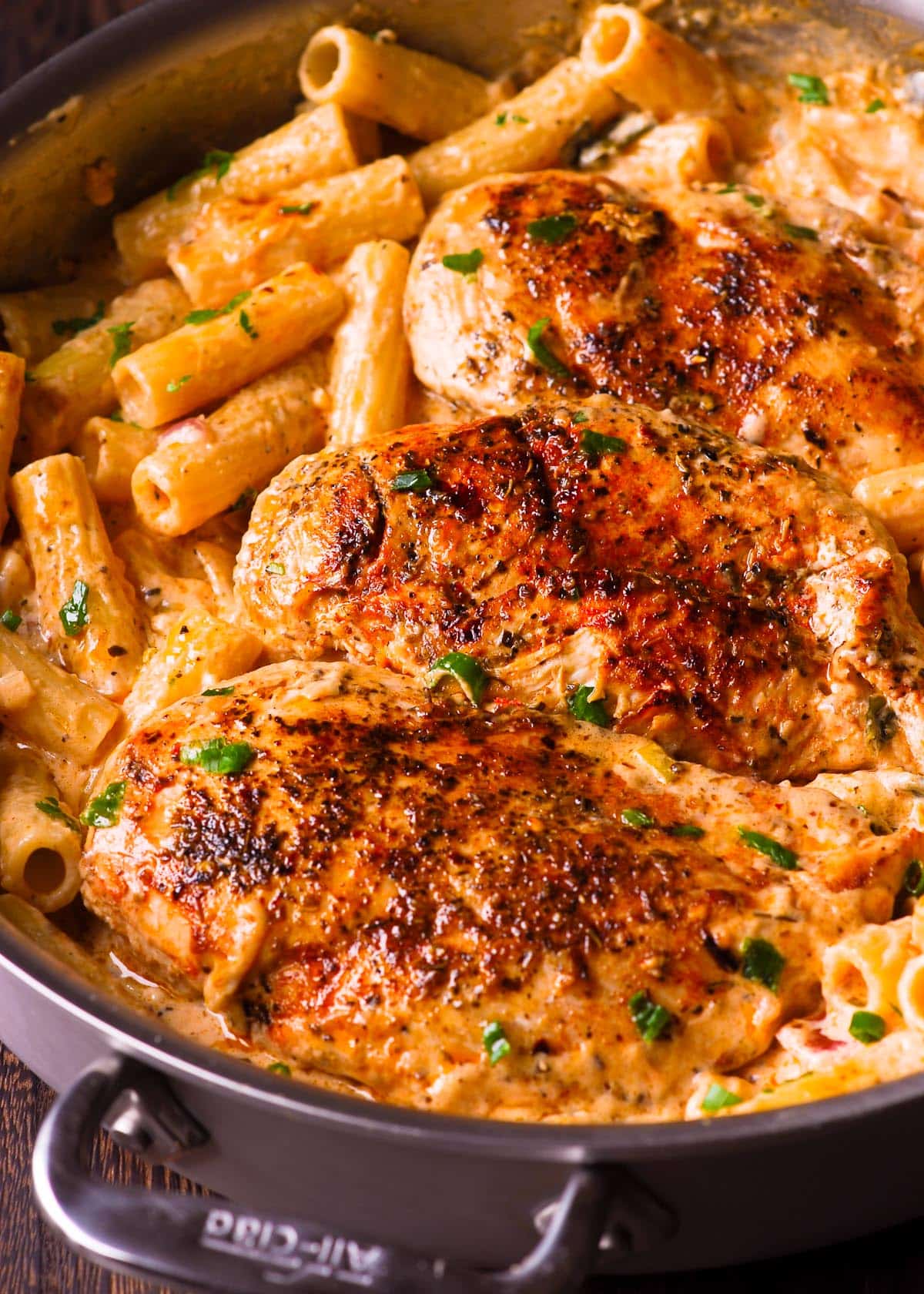
I love pasta because it doesn't ask for much. Boil some noodles, toss them with good olive oil, a squeeze of lemon, a handful of Parmesan, and a few spices, and suddenly you've got something that feels way more put together than the effort it took. It's the kind of meal that saves you when you're hungry, tired, and absolutely not in the mood to make a production out of dinner - which, honestly, is probably most weeknights.
If you want a quick starting point, Creamy Chicken Pasta Recipes are the most popular on the site.
How Much Pasta to Cook (and for Whom)
Before I even think about sauce, I want to know how much pasta I'm cooking and who I'm feeding. There's nothing worse than finishing a beautiful skillet of chicken pasta and realizing you have either twice as much as you needed or barely enough for everyone at the table.
I break the math down in detail in my guide to How Much Pasta Per Person, but here's the short version of how I think about it in real life:
- Weeknight family dinner with a hearty sauce (chicken, shrimp, or bacon): I lean toward a slightly smaller portion per person because the protein and sauce are substantial.
- Lighter vegetarian pasta or simple olive oil-based sauces: I bump the pasta amount up a bit since the noodles themselves are doing more of the filling.
- Big pans of something like Louisiana chicken pasta or Cajun chicken pasta: I assume people will go back for seconds and plan accordingly.
Getting the quantity right first makes it a lot easier to nail cooking time, water, salt, and sauce consistency later.
The Core Techniques I Use Over and Over
I don't believe you need a complicated checklist of rules to make great pasta, but there are three core techniques I come back to in almost every recipe on this site: cooking to al dente, salting the water properly, and finishing the pasta in the pan with the sauce.
Cooking pasta to true al dente
Perfect pasta starts with doneness. If it's mushy, no sauce can save it; if it's undercooked in the center, no amount of cream or cheese will make up for the chalky bite.
My full walkthrough with timing, visual cues, and tasting is in How to Cook Pasta Al Dente. In most of my one‑pan chicken pastas, I stop the pasta just shy of al dente in the water, then finish it in the sauce. That's how I get the pasta to actually absorb the flavors from the pan instead of just being coated on the outside.
Using pasta water like an actual ingredient
The second technique is one I talk about a lot: using pasta water to emulsify sauces. I dedicated a whole guide to it - How to Emulsify Pasta Sauce with Pasta Water - because it quietly separates "pretty good" pasta from the glossy, restaurant‑style sauces that actually cling.
You'll see this in action in dishes like:
- Chicken Pasta in Creamy White Wine Parmesan Cheese Sauce, where starchy pasta water brings together white wine, cream, and Parmesan into a silky coating.
- Chicken Pasta with Spinach and Cherry Tomatoes in Wine Cheese Sauce, where pasta water helps the wine‑cheese sauce hug the pasta, chicken, and vegetables instead of sliding off.
- Chicken Penne with Bacon and Spinach in Creamy Tomato Sauce, where it binds tomato, cream, bacon, and chicken into one cohesive sauce.
Once you get comfortable with that method, you can take almost any combination of fat (butter, olive oil, cream) and flavor (wine, stock, spices) and turn it into a proper sauce with a ladle of starchy water and a little patience over heat.
Choosing the Right Pasta Shape
I don't have a one‑shape‑fits‑all rule (except that I wrote a whole article on Types of Pasta Shapes and When to Use Each), but I do think about the sauce first and the shape second. In my kitchen, the pattern looks like this:
- Long strands (spaghetti, fettuccine, linguine) for silky cream sauces or lighter oil‑based sauces that want to wrap around the pasta.
- Short shapes (penne, rotini, rigatoni) for chunky sauces with bacon, spinach, chicken pieces, or shrimp that tuck into the nooks and crannies.
- Wider shapes or tubes for heavier Cajun or Louisiana‑style sauces that are packed with flavor and texture.
A pan of Creamy Lemon Garlic Chicken Pasta for example, feels better with a sturdy shape that can stand up to the creamy, spicy sauce and bits of chicken and vegetables. A delicate white wine Parmesan cream sauce is happiest clinging to long, tender strands.
Fresh vs. Dried Pasta (and When I Use Each)
Most of the pasta recipes on What's In The Pan are written for dried pasta. It's easy to keep on hand, forgiving to cook, and perfect for one‑pan chicken and shrimp dinners where the sauce really does the heavy lifting.
I reach for dried pasta when:
- I'm building a cream or tomato‑based sauce directly in the skillet with chicken, shrimp, bacon, or sausage.
- I want the pasta to finish cooking in the sauce so it can soak up flavor.
- I'm feeding a crowd and need reliability and structure.
Fresh pasta has its place-especially with lighter, delicate sauces-but in the world of weeknight one‑pan and skillet pasta, dried pasta is my workhorse, and most of my recipes are tested exactly that way.
How I Think About Sauce Pairings
Once you know how to cook pasta to al dente and how to use pasta water to emulsify, sauce pairings stop being about strict rules and start being about what you're in the mood for. I tend to group my pasta recipes by the kind of sauce and protein you might be craving.
One‑Pan and Skillet Pasta Recipes
These are the recipes where almost everything happens in one pan-from browning the chicken or shrimp to finishing the pasta in the sauce.
A classic example is Chicken Pasta in Creamy White Wine Parmesan Cheese Sauce: I brown the chicken, build a quick white wine cream sauce in the same skillet, then finish the pasta right in that pan until the sauce turns glossy and thick.
Chicken Pasta Recipes
Chicken is the protein I lean on most for pasta: it's neutral enough to take on any flavor, but hearty enough to make a skillet of pasta feel like a full meal.
On What's In The Pan, that looks like:
- Creamy, date‑night‑feeling dishes like Chicken Pasta in Creamy White Wine Parmesan Cheese Sauce.
- Lighter but still comforting recipes like Chicken Pasta with Spinach and Cherry Tomatoes in Wine Cheese Sauce.
- Rich, layered favorites like Chicken Penne with Bacon and Spinach in Creamy Tomato Sauce.
- Bold, smoky options like Chipotle Chicken Pasta and my Louisiana‑style and Cajun chicken pasta recipes, where a creamy, spicy sauce wraps around every piece of chicken and pasta.
Shrimp and Seafood Pasta
Shrimp and seafood pastas are where speed really matters. Shrimp cooks in minutes, so the pasta and sauce need to be ready to meet it.
For these recipes, I:
- Cook the pasta to just shy of al dente.
- Build a fast sauce-often garlicky, lemony, or tomato‑based-in the pan.
- Add shrimp toward the end so it doesn't overcook like I did in Shrimp and Pancetta Pasta.
- Finish everything together with pasta water to bring the sauce together: Creamy Cajun Shrimp and Sausage Pasta.
30‑Minute Pasta Dinners
Most of my pasta recipes are weeknight‑friendly by design. When I say 30‑minute pasta dinners, I mean:
- The pasta and sauce cook at the same time: Brennan's-Style Chicken Lazone.
- The protein (chicken, shrimp, sausage) cooks in the same pan as the sauce: Pasta Da Vinci in Madeira Sauce.
- The pasta finishes in the sauce with pasta water so there's no last‑minute scrambling.
Baked Pasta Recipes
Baked pastas show up less often in my kitchen than skillet pastas, but when they do, they're usually big, comforting pans meant for sharing.
The same principles apply:
- Cook the pasta just under al dente so it doesn't turn mushy in the oven.
- Season the water properly.
- Build a sauce that's flavorful enough to stand up to a second round of cooking: Baked Ziti with Sausage, Broccoli and Spinach.
Vegetarian pasta recipes
Even though I lean heavily on chicken and shrimp, some of my favorite pastas on What's In The Pan are built around vegetables, cheese, and pantry items.
The key moves are the same:
- Use properly salted water and good al dente texture to make perfect Garlic Butter Spaghetti
- Build flavor in the pan with aromatics, olive oil, and maybe a splash of wine or stock.
- Use pasta water to bind the sauce instead of relying on heavy cream every time.
How to Use This Guide
This page is meant to be your jumping‑off point. If you're new here and not sure where to start, I'd suggest this flow:
- Use How Much Pasta Per Person to decide how much to cook.
- Read How to Cook Pasta Al Dente so you're confident in timing and texture.
- Learn How to Emulsify Pasta Sauce with Pasta Water so your sauces are glossy instead of greasy.
- Then jump into whatever you're craving:
- Creamy chicken pastas like the White Wine Parmesan Italian Chicken Pasta or the Chicken, Bacon and Spinach Tomato Penne.
- Shrimp and seafood pastas for lighter but still satisfying dinners: Garlic Basil Shrimp Pasta and Shrimp and Pancetta Pasta
- Bold, smoky options like Creamy Chipotle Chicken Pasta or Creamy Cajun Chicken and Sausage Pasta when you want big flavor in one pan.
- Orzo! Lemon and Herb Shrimp Orzo and Instant Pot Shrimp Orzo with Tomatoes and Feta.
- Pastas without any meat or chicken: Garlic Butter Spaghetti and Creamy Prosciutto Pasta with Zucchini (OK it has proscuitto).
Billy says
I was feeling fancy and made the ravioli.
Olya Shepard says
Ravioli is so amazing! I love making them from scratch.