
Confused about kosher salt vs table salt? Learn why they're not interchangeable, how density affects saltiness, and which salt to use for cooking, brining, and finishing.

And have you ever tried different salts and thought, "hm, this one actually tastes saltier than the kind I normally use"? Good news: you're not crazy. You're actually just very perceptive. Here's the thing - some salts are saltier than others. Mind blown, right?
The difference is in the sodium chloride. All foods would be infinitely less delicious without the addition of that most magical of seasonings. But here's something that might surprise you: while pure sodium chloride is the foundation of every salt on your shelf, most salts you cook with aren't just sodium chloride. From added iodine to anti-caking agents to naturally occurring trace minerals, what's inside that shaker is more interesting than you'd think.
If you want to get even deeper into the salt subject, head over to Which Salt To Use and When (Table, Kosher, Sea, Himalayan, Flaky, and Celtic).
It's All About Density
To be more specific, salts aren't chemically different from one another. They're all the same compound, sodium chloride. The difference comes down to density - how much air or space is inside each crystal, which affects how much actual sodium chloride that crystal contains. Put simply: some types of salt pack more saltiness per crystal than others, which means they hit your taste buds harder.
What's Actually Inside Your Salt?
Not all salts are created equally pure, either. Table salt is highly refined and contains minor amounts of anti-caking agents - like calcium silicate or magnesium carbonate - to prevent clumping. Most table salt also contains added iodine (in the form of potassium iodide or iodate), a practice that became widespread in the early 20th century to prevent iodine deficiency. Depending on the source, it may also contain trace minerals like potassium, calcium, and magnesium.
Kosher salt, by contrast, is almost entirely pure sodium chloride - typically 99.5%+ purity - and is generally less processed than table salt. A few key distinctions worth knowing:
- No iodine - Unlike table salt, kosher salt is usually non-iodized
- Larger, coarser grains - Designed specifically to adhere to meat during the koshering process
- Generally additive-free, but not always - Some brands, like Morton Kosher Salt, do add small amounts of anti-caking agents such as yellow prussiate of soda, so check the label if purity matters to you
- Less processed - It lacks the added minerals sometimes found in sea salt, but it isn't guaranteed to be 100% additive-free across all brands
Table Salt vs. Kosher Salt
Bringing it back to your kitchen: table salt is roughly twice as salty as kosher salt by volume. Double! So if a recipe calls for 2 teaspoons of kosher salt and you reach for the table salt shaker, you're adding twice the intended saltiness to your dish - and that, my friends, can be a culinary disaster.
The fix is simple in theory: measure salt by weight, not volume. A kitchen scale removes all the guesswork. But realistically, most of us aren't pulling out a scale for a pinch of salt. As long as you know table salt is roughly double the strength of kosher salt, you can adjust on the fly as you cook.
This is also exactly why I tend to write "salt to taste" in my recipes rather than specifying a quantity - the variety of salt you use at home matters more than any number I could give you. This same principle applies when cooking pasta - if you've ever wondered how much salt to actually add to pasta water, the type of salt you're using makes a significant difference there too.
So What Exactly Is Kosher Salt?
Despite the name, kosher salt isn't necessarily kosher in the religious sense (i.e., blessed by a rabbi and compliant with the laws of Kashrut). The name actually comes from its use in the koshering process. Jewish dietary laws require meat to be free of blood, and the larger, coarser grains of this salt were favored for drawing out any excess blood from meat. Over time, that style of salt became generically known as "kosher salt" - though honestly, "koshering salt" would clear up a lot of confusion.
Pro tip: If you can't find kosher salt locally, I'd advise against calling your nearest synagogue to track some down. It's a bit like calling the Belgian embassy to ask where the waffles are. Just order it online - both major brands, Morton and Diamond Crystal, are widely available.
Why Is Kosher Salt Preferable for Cooking?
Once you start cooking with kosher salt, it's hard to go back. Here's why most home cooks and professional chefs reach for it first:
- Easy to distribute - The larger grains are more tactile, making it easy to pinch between your fingers and sprinkle with precision. You feel exactly how much you're using.
- Less likely to over-salt - Since it's about half as potent as table salt by volume, it takes significantly more of it to over-season a dish, giving you a wider margin for error. I recommend using kosher salt for that reason in my The Complete Guide to Cooking Shrimp: How to Buy, Thaw, Season, and Cook Shrimp Every Way.
- Great base for bark - If you're into barbecue, the coarser grains are ideal for building a flavorful crust (see how I do it in Oven Baked Ribs - Fall-Off-the-Bone (Easy Method). The ability to apply more salt without overdoing it makes kosher salt a natural partner for that coveted bark - which is also why most BBQ pitmasters pair it with coarse cracked pepper.
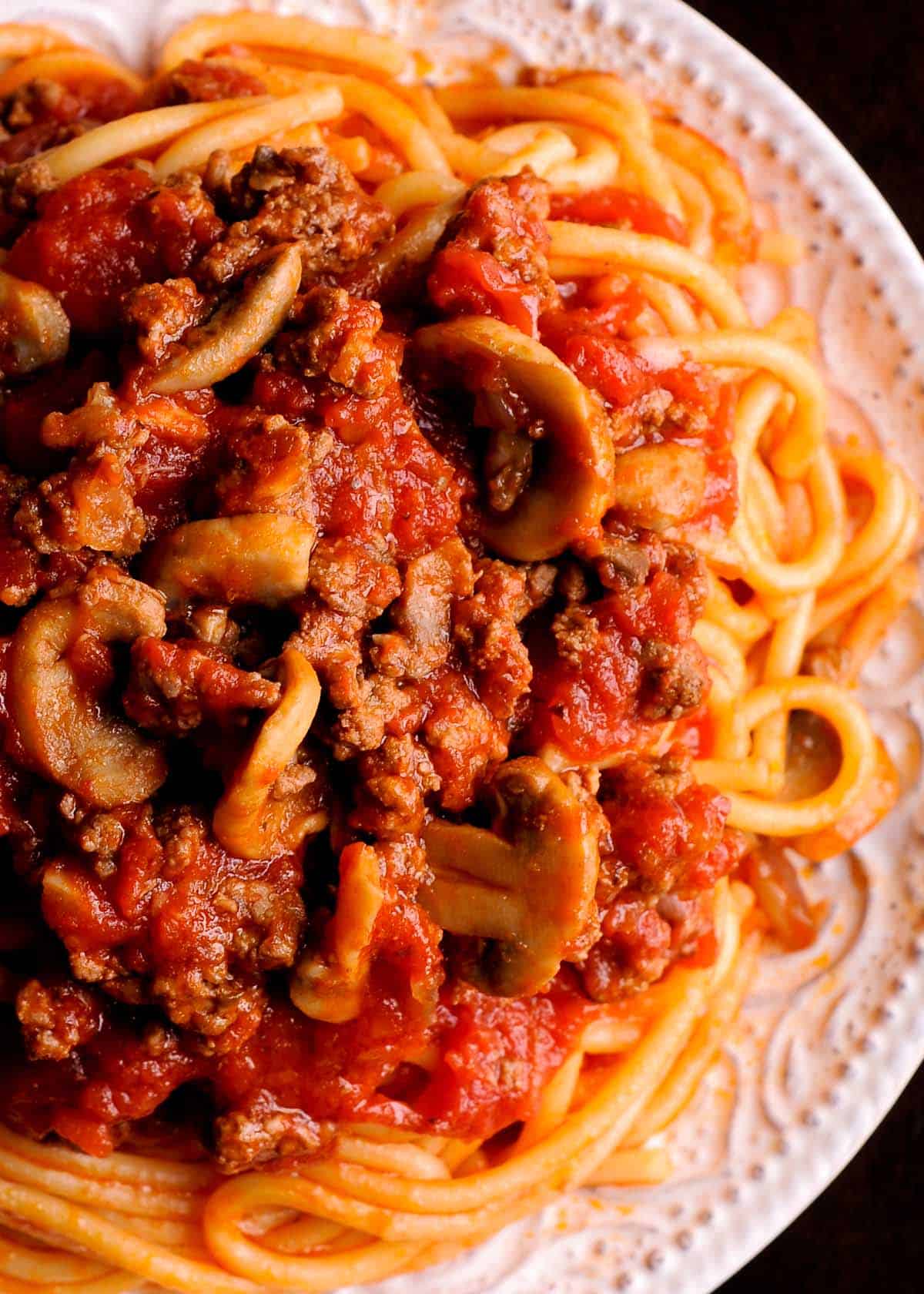
Now that you know which salt to use, try it with one of my 10 go-to pasta recipes.
Morton vs. Diamond Crystal: Not All Kosher Salt Is Equal
Here's another layer of complexity: Morton and Diamond Crystal kosher salts have significantly different densities from each other, meaning even within the kosher salt category, one brand can taste saltier than the other by volume. Always check the side of the box for guidance, and when in doubt, taste as you go.
Other Types of Salt Worth Keeping on Hand
While we're on the subject, it's worth expanding your salt arsenal beyond just kosher. Different salts shine in different situations:
- Flaky finishing salt (e.g., Maldon) - The large, flat flakes make a beautiful visual contrast on steaks and roasted vegetables, and they're absolutely stunning on top of cookies finished with flaky salt - the contrast of sweet and crunchy-salty is unbeatable. Since the flakes sit on the surface rather than dissolving in, you can easily brush away any excess if you've gone too heavy.
- Fleur de Sel - This French finishing salt has larger, clumpier granules than kosher salt, making it perfect for Salted Caramel Frosted Cookies and any dessert that needs a definitive, punchy salty hit among the sweetness. It also works beautifully in Salted Caramel Pretzel Brownies (Sweet and Salty), where that burst of salt cuts through the richness of the caramel.
- Pickling salt - When brining, pickling salt is ideal for dishes such as Cowboy Candy (Candied Jalapenos). Its very fine granules dissolve quickly and completely in water, leaving no cloudiness or residue behind.
Speaking of dissolving salt in water - if you're a pasta lover, be sure to check out the complete pasta guide for everything you need to know about cooking pasta properly, including exactly how much salt belongs in your pasta water.
The Takeaway
All of the above is exactly why "salt to taste" is such an important instruction - it accounts for the salt you have in your pantry, and the most immeasurable variable of all: personal taste. However you season, just remember the golden rule: you can always add more, but you can never take it back out.
Want to explore the relationship between salt and meat further? Check out this Herb and Citrus Turkey Brine and make your thanksgiving turkey even more flavorful!
More Ways to Use Salt Creatively
- Dutch Oven Bread: Did you know that the salt is the essential flavor component in any bread recipe and without salt the bread would be inedible?
- Monster Cookie Bars: Flaky salt on top is yum!
- German Style Pretzels: Coarse salt isn't just a topping here - it's the defining characteristic of the pretzel. These German Style Soft Pretzels wouldn't be the same without it.
- Bakery-Style Salted Caramel Chocolate Chip Cookies: The name says it all - use salt as a flavor feature, not an afterthought.

Comments
No Comments