
Sweet potatoes are the overachievers of the vegetable drawer: they crisp up like fries, mash like dessert, and somehow still count as dinner. Here you'll learn exactly how to do whole baked sweet potatoes, roasted cubes, and fries with simple time and temperature cues so you get caramelized edges and creamy centers instead of sad, steamed chunks. However you like to eat them, you'll come away with a default method you can use on autopilot every week.
First, Understand What You're Working With
Before you even turn on your oven, it helps to know why sweet potatoes behave the way they do. These are not regular potatoes. They contain significantly more natural sugar - primarily sucrose and maltose - and an enzyme called amylase that converts starches into even more sugar when exposed to gradual heat. That's the science behind why a slow-baked sweet potato tastes almost candy-sweet while a microwaved one tastes flat and starchy by comparison. The longer that enzyme gets to work before the potato fully cooks, the sweeter it becomes.
This one piece of information will change every decision you make about how to cook them.
Method 1: Roasting (Cubed)
Best for: side dishes, grain bowls, sheet pan dinners, savory flavor combos
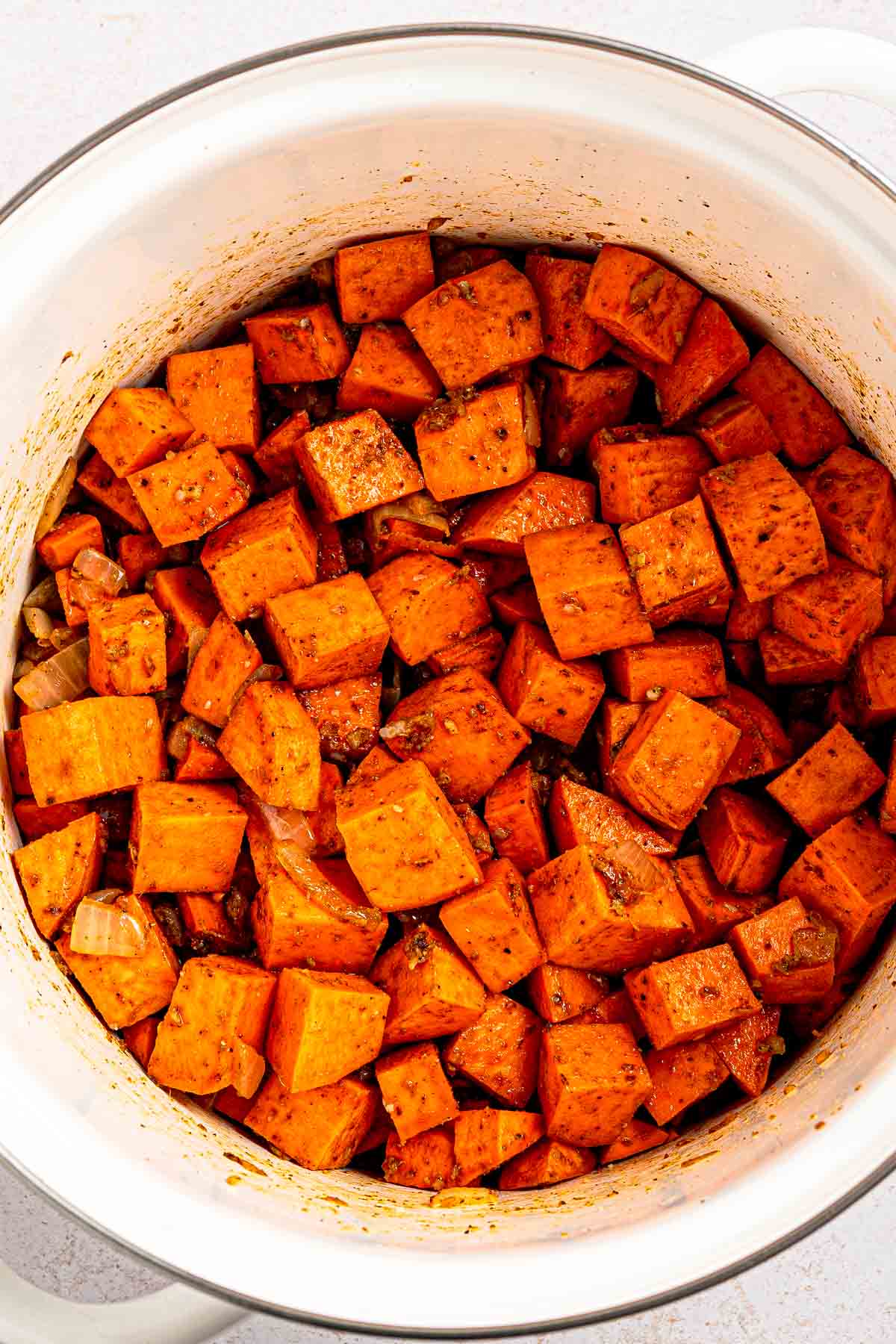
This is the weeknight workhorse. Cut your sweet potatoes into ½-inch cubes - uniform size matters here, because uneven pieces mean some burn while others are still raw in the center. Toss with oil, spread in a single layer on a sheet pan, and roast at 425°F for 27-35 minutes, flipping once halfway through.
The single-layer part is non-negotiable. Crowd the pan and you're steaming, not roasting. Steaming is fine if that's your goal, but if you want those crispy, caramelized edges with a tender center - and you do - every cube needs direct contact with hot air on at least two sides.
Want to take roasted sweet potatoes in a savory direction? My Garlic Parmesan Sweet Potatoes uses this exact technique - thinly sliced and coated in a garlicky Parmesan butter sauce that turns a basic side dish into the thing everyone asks for seconds of. And if you want to turn those roasted cubes into a full dinner, my Chicken and Sweet Potatoes Skillet does exactly that - caramel sweet potatoes, candied pecans, and cranberries all coming together in one pan in about 40 minutes.
→ Full technique: How to Roast Sweet Potatoes
Method 2: Baking Halves, Cut-Side Down
Best for: weeknight dinners, stuffed sweet potatoes, maximum caramelization
This is my personal favorite method and the one I wish someone had told me about years ago. Halve your sweet potatoes lengthwise, brush the cut side with a neutral oil, and place them cut-side down directly on a bare sheet pan- no parchment, no foil - at 425°F for 30-35 minutes.
What happens is nothing short of extraordinary. The flat cut surface, pressed directly against hot metal, caramelizes into a deep amber crust that tastes like the inside of a crème brûlée decided to become a vegetable. The skin blisters. The interior steams from within and turns fluffy. You flip it at the end and the bottom looks lacquered, glossy, almost too beautiful to eat.
Skip the parchment here. I mean it. Parchment insulates the pan surface and kills the caramelization you're working toward. You want direct metal contact, dry heat, and time.
→ Full technique: How to Bake Sweet Potato Halves Cut-Side Down
Method 3: Baking Whole
Best for: simple prep, split-and-top presentations, meal prepping a batch
The classic. Pierce your sweet potato a few times - or better yet, slash it once down the center - and roast it whole at 425°F for 45-60 minutes, depending on size. A medium sweet potato (about 8 ounces) takes roughly 45 minutes. A large one (over 12 ounces) needs closer to an hour.
The slash matters more than you'd think. A single lengthwise cut allows steam to escape gradually and gives you more control over texture. Stab it all over with a fork and you get uneven steam release, which can lead to a partially dry, partially gummy interior. The slash also gives you that gorgeous split-open look when it's done - the orange flesh puffing up through the opening like a little lava moment.
You'll know it's done when a knife slides in with zero resistance and you smell actual caramel coming from your oven. If you don't smell caramel yet, give it five more minutes.
Method 4: Scalloped Sweet Potatoes
Best for: dinner parties, holiday tables, when you need a showstopper side dish
If roasted sweet potatoes are the reliable weeknight friend, scalloped sweet potatoes are the one who shows up to the dinner party looking impossibly put-together. Thin slices of sweet potato layered into a baking dish, blanketed in a rich cream sauce, baked low and slow until the edges crisp and the center is pure, molten, barely-holding-together bliss.
The technique here is fundamentally different from every other method on this list. You're not trying to concentrate flavor through roasting or preserve moisture through steaming. You're building a dish - layers of potato, fat, aromatics, and cream working together over time into something greater than the sum of its parts. Slice thickness is everything: aim for about ⅛ inch on a mandoline. Too thick and the centers stay starchy; too thin and the slices dissolve into the cream before the dish sets. Cover the dish for the first two-thirds of cooking, then uncover to build that blistered, golden top everyone fights over.
My Garlic Parmesan Scalloped Sweet Potatoes takes this technique all the way - fresh garlic, shallots, heavy cream, Parmesan, and fresh thyme layered into something that pairs beautifully with everything from holiday turkey to a simple weeknight roast chicken. It's make-ahead friendly, it reheats like a dream, and it has converted more than a few self-described sweet potato skeptics.
→ Full recipe: Garlic Parmesan Scalloped Sweet Potatoes
Method 5: Sweet Potato Casserole
Best for: Thanksgiving, Christmas, holiday spreads, feeding a crowd
This one exists in a category of its own. Sweet potato casserole isn't really a cooking technique - it's an event. You're mashing the potatoes down into a creamy, spiced base and then building an entire second act on top: marshmallows, streusel, pecans, or some glorious combination of all three. It is, by design, over-the-top, and it is perfect.
The mashing step is where most people quietly go wrong. After boiling or steaming the sweet potatoes until fork-tender, drain them completely and let them steam-dry in the pot for a minute before you start mashing. Residual water is the enemy of a creamy casserole. Mash with butter, brown sugar, cinnamon, nutmeg, vanilla, and a splash of heavy cream until the mixture is smooth and luxuriously rich. The filling should taste almost dessert-like before you even add the topping - because once it goes in the oven, the topping will dominate, and you need the base to hold its own.
My Sweet Potato Casserole with Marshmallows and Cinnamon Streusel does both toppings at once - a layer of mini marshmallows covered in a brown sugar cinnamon streusel that bakes into a caramelized, slightly crunchy crown over the creamy filling. It's been on my holiday table every year since I developed it, and there are never leftovers.
→ Full recipe: Sweet Potato Casserole with Marshmallows and Cinnamon Streusel
Method 6: Steaming
Best for: mashing, fillings, soups, meal prep where you want a neutral base
Steaming is the "clean slate" method. You're not building caramel notes or crispy edges here - you're cooking the sweet potato as quickly and gently as possible to get a moist, tender result that takes on whatever flavor you add to it. Cut into 1-inch chunks and steam over boiling water for 10-15 minutes. Whole sweet potatoes steamed take 25-35 minutes depending on size.
Steamed sweet potatoes have a lighter, less concentrated sweetness than roasted ones - which is actually what you want when you're blending them into a soup, mashing them for a filling, or building a purée. Speaking of which: my Spicy Sweet Potato Soup uses steamed sweet potatoes as its backbone - the neutral, creamy base lets the warming spices and heat do the talking without competing with caramelized roasted flavor. It's one of those soups that tastes like it simmered all day when it actually comes together in under 30 minutes.
→ Full recipe: Spicy Sweet Potato Soup
Method 7: Instant Pot / Pressure Cooker
Best for: fastest possible cook time, batch cooking, mashing
If you need cooked sweet potatoes in under 15 minutes - start to finish - the Instant Pot is your answer. Place whole sweet potatoes on the trivet with 1 cup of water, seal the lid, and cook on high pressure for 15-18 minutes for medium potatoes, 20-25 minutes for large. Quick release when done.
The texture is somewhere between steamed and baked - very soft, slightly more uniform than oven methods, with less concentrated flavor. It's not my first choice when I want them as a standalone side dish, but for batch cooking a week's worth of meal-prep sweet potatoes? Nothing beats it for speed.
The One Method I Don't Recommend
Boiling. I said it. Boiling sweet potatoes is the fastest way to make them taste like nothing. The water pulls out the natural sugars and the water-soluble nutrients right along with them, and you end up with a pale, watery, vaguely sweet potato-flavored thing that needs to work very hard to redeem itself with butter and seasoning. The one exception: sweet potato casserole, where you're mashing everything with enough butter, cream, and brown sugar that the boiling head start doesn't matter - and you'll want to steam-dry them in the pot after draining to cook off any residual water. But for every other preparation? Steam them instead. Same speed, dramatically better flavor.
Sweet Potatoes as a Dinner, Not Just a Side
Before we get to the method comparison, it's worth saying out loud: sweet potatoes don't have to live on the side of the plate. Some of the best sweet potato dishes I've made put them at the center of the meal - or at least give them equal billing with the protein.
My Chicken Bites with Roasted Butternut Squash and Toasted Pecans is the kind of one-pan dinner that looks like you planned it, even when you didn't. Roasted sweet potato and butternut squash cubes, seared chicken thigh bites, and maple-glazed pecans all come together in a single cast iron skillet. Sweet, savory, nutty, and done in about an hour. It's the recipe I make when I want something that tastes genuinely special without actually spending that much time in the kitchen.
Which Method Should You Use?
| Method | Temp & Time | Texture | Best Use |
|---|---|---|---|
| Roasted cubes | 425°F / 30 min | Crispy edges, tender center | Side dish, skillets, bowls |
| Baked halves, cut-side down | 425°F / 30–35 min | Caramelized crust, fluffy inside | Stuffed, weeknight dinner |
| Baked whole | 425°F / 45–60 min | Fluffy, slightly charred skin | Split-and-top, simple prep |
| Scalloped | 400°F / 45–60 min | Creamy layers, golden cheesy top | Holidays, dinner parties |
| Casserole | 375°F / 30 min | Creamy mash, crunchy topping | Thanksgiving, Christmas |
| Steamed chunks | Boiling / 10–15 min | Moist, neutral | Mash, soups, fillings |
| Instant Pot whole | High pressure / 15–25 min | Very soft, uniform | Batch cooking, meal prep |
One Last Thing
Sweet potatoes are extraordinarily hard to ruin, which is both their greatest strength and why so many people never bother learning to cook them well. But there's a meaningful difference between a sweet potato that's edible and a sweet potato that stops you mid-bite because of how good it tastes. That difference almost always comes down to one thing: heat management. Give them enough heat, give them enough time, and let the chemistry do the rest. And when you're ready to go beyond the basics, every recipe linked above is a good next step.
Valerie says
Great recipe. I make these with my chicken thighs for weeknights! Super easy after work.