
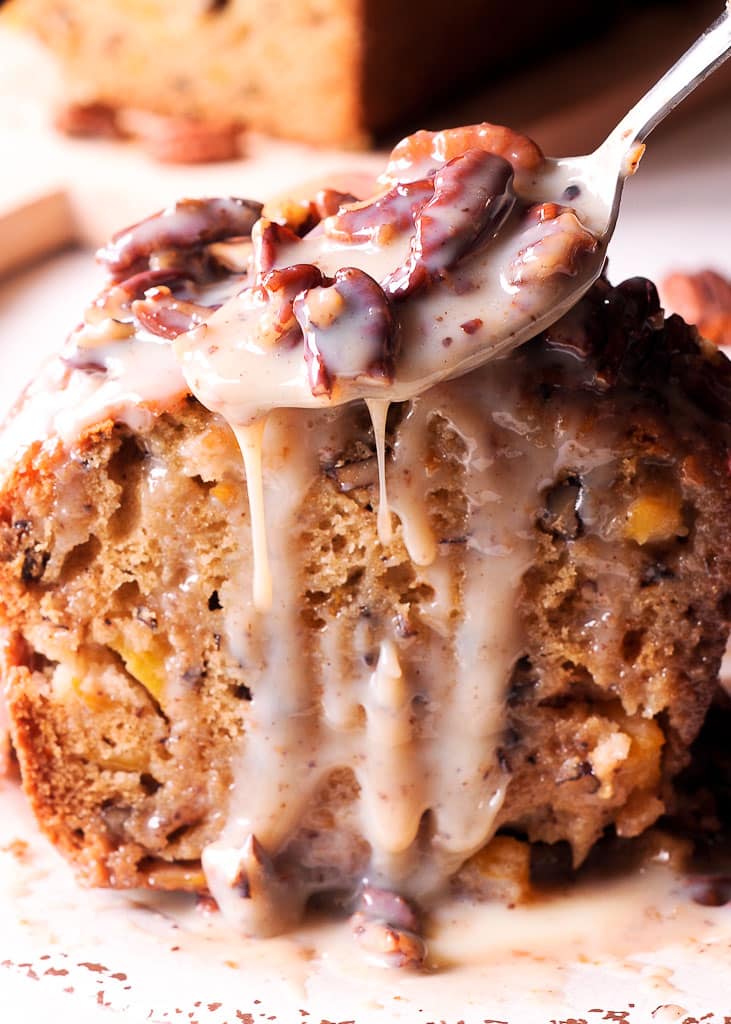
Nobody makes Southern Peach Bread quite like a New Yorker who refuses to cut corners on a Southern classic. My version gives you a stovetop pecan praline drizzle built with sweetened condensed milk - a real praline reduction, not a glaze - olive oil in place of vegetable oil for a noticeably richer crumb, and a doneness protocol that accounts for your altitude, your oven, and the pan you're working with.
Love Peaches? Try Peach Kuchen, Peach Galette, and Peach Cobbler Cheesecake next.
📝 Southern Peach Bread Summary
✅ Prep Time: 15 minutes
⏲️ Bake Time: 50-55 minutes
🍑 Serves: 10 slices
💰 Cost: ~$14 total (about $1.40 per slice)
👨🍳 Skill Level: Easy (one bowl, no mixer)
📦 Equipment: 8.5×4.5-inch loaf pan, small saucepan, whisk
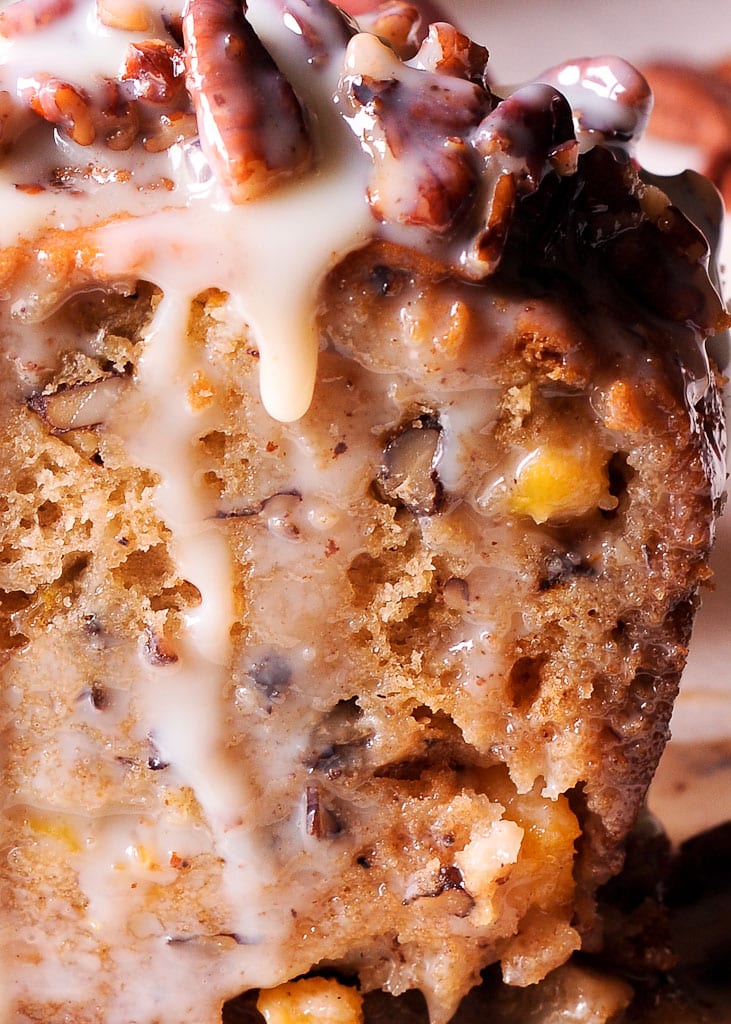
This isn't a powdered-sugar-drizzle peach bread. It's a moist, olive-oil quick bread loaded with peaches, finished in a stovetop pecan praline made from real sweetened condensed milk - the kind of topping that hardens at the edges and stays glossy and soft in the center.
Jump to:
- 📝 Southern Peach Bread Summary
- 💬 Why You'll Love This Peach Bread
- Ingredients for Southern Peach Bread
- Two Ways to Handle Your Peaches
- Why I Sift the Flour
- Pecan Praline Topping Ingredients
- How to Make Southern Peach Bread Step by Step
- Southern Peach Bread with Pecan Praline Topping
- How to Know When Peach Bread Is Done
- Storage, Freezing, and Make-Ahead Tips
- Recipe Questions
- More Peach Recipes
- More delicious Southern Bread Recipes
- Reviews
💬 Why You'll Love This Peach Bread
- Olive oil gives the bread a velvety texture vegetable oil can't touch
- The praline topping is cooked on the stovetop, not stirred together cold
- Works with fresh peaches in summer or well-drained canned peaches all year
- Sour cream keeps it moist for days without refrigeration
- One bowl, no mixer, no yeast - a genuine weeknight bake
- Medium Loaf Pan, such as this 8.5 Inch x 5.5 Inch Aluminized Steel Loaf Pan.
Ingredients for Southern Peach Bread
- Olive oil - Used instead of vegetable oil. The crumb comes out more tender and the flavor carries a subtle richness that neutral oil doesn't give you in a peach loaf. Use a mild, not robust, olive oil so it doesn't compete with the peaches.
- Sour cream - Your moisture insurance. It keeps the crumb soft for days, adds a faint balance to the sweetness, and gives the batter body that oil alone can't provide.
- Eggs - Two large eggs, whisked into the oil first. They bind the batter and build that tight, sliceable crumb.
- Brown sugar - Deeper, more caramel-like sweetness than white sugar, and it pairs naturally with peaches. Don't swap it for white sugar unless you have no other option.
- Vanilla extract - One teaspoon, real extract.
- All-purpose flour, sifted - See the section below for why sifting earns its place here.
- Baking soda - The leavening. If yours has been open in your cabinet for more than six months, replace it before you bake.
- Sea salt - Balances the sweetness and sharpens every other flavor in the loaf.
- Pecans - I always toast mine first. Here's How to Toast Pecans (Stovetop or Oven) if you need the method.
Two Ways to Handle Your Peaches
Here's my core rule: the batter stays the same either way, you just choose your fruit based on the season. Peak-season fresh peaches give you the most aroma and juice. Off-season canned peaches, handled properly, give you the same moist result without the guesswork.
🍑 Fresh Peach Method
Best for: peak summer months, farmers-market peaches, when you want maximum aroma
How to prep: Peel the peaches, dice them small, and fold them into the batter as written. Don't add more than the recipe calls for - too much fresh fruit and the center won't set properly.
Why it works: the natural juice releases into the batter as it bakes, and small, distinct chunks hold their shape instead of dissolving.
🥫 Canned Peach Method
Best for: fall through spring, when good fresh peaches aren't available
How to prep: Drain the peaches thoroughly. If they still feel wet, press them gently between paper towels. Dice them small enough to distribute evenly through the batter.
Why it works: a well-drained, small-diced canned peach behaves almost identically to fresh in the oven. A large, waterlogged chunk is what causes a soggy center - the draining step is what prevents it.
✅ Quick Chooser
- Peaches in season and fragrant? Go fresh.
- No good peaches at the store? Go canned, well-drained.
This is the question most peach bread recipes answer with a shrug - "fresh or canned, both work" - and move on. It matters more than that. Handled correctly, either route gets you the same moist, peachy loaf, whether you're baking in August or January.
Why I Sift the Flour
Sifted flour is lighter than flour scooped straight from the bag, and when you fold lighter flour into an oil-based batter, it incorporates more evenly with less overmixing. Less overmixing means less gluten development, and less gluten development means a tender, open crumb instead of a dense one. It takes thirty extra seconds.
Pecan Praline Topping Ingredients
The topping is where this loaf separates itself from other peach quick breads. Most finish with a powdered sugar glaze. This one finishes with a stovetop praline reduction.
Unsalted butter - 2 tablespoons, the fat base that starts the praline and toasts the pecans.
Pecans, chopped - Half a cup, cooked in the butter first until fragrant. Raw pecans scattered on top of a loaf taste flat. Toasted pecans folded into a caramelized sauce taste Southern.
Sweetened condensed milk - One full 14-ounce can. This is what makes the topping a praline instead of a nut glaze. It reduces into the butter and pecan mixture, thickens as it cools, and sets into a sticky, glossy crust that hardens slightly at the edges while staying soft in the center.
You don't have to make the topping to enjoy this bread - the loaf holds up on its own. But it's a five-minute stovetop step for a topping this good.
How to Make Southern Peach Bread Step by Step
Mixing the Batter
1. Start with your wet ingredients.
Add the eggs and olive oil to a large bowl and whisk them together until combined. Olive oil works beautifully here - if you have ever wondered can I use olive oil in peach quick bread, the answer is yes, and it is actually the better choice. It produces a more tender, moist crumb than vegetable oil, and a mild olive oil will not flavor the bread at all.
2. Add the sugar, then the sour cream and vanilla.
Mix the sugar into the egg and oil mixture until it dissolves slightly, then add the sour cream and vanilla. The sour cream is what makes this a genuinely moist southern peach bread - it keeps the crumb soft long after the loaf has cooled, and the fat content works with the olive oil to create a texture that is closer to a good pound cake than a dry, crumbly quick bread.
3. Fold in the peaches and pecans.
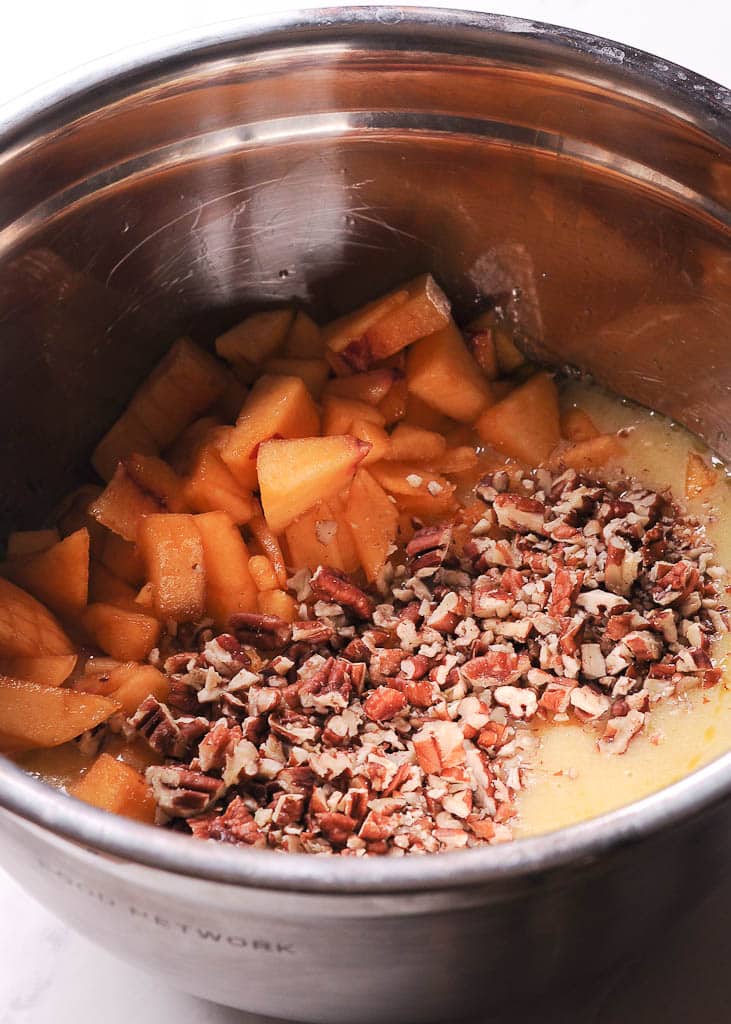
Add your peaches - fresh or properly drained canned - and the chopped pecans directly into the wet mixture. Stir to distribute evenly. You want small, uniform pieces throughout so every slice gets both.
4. Add the dry ingredients last.
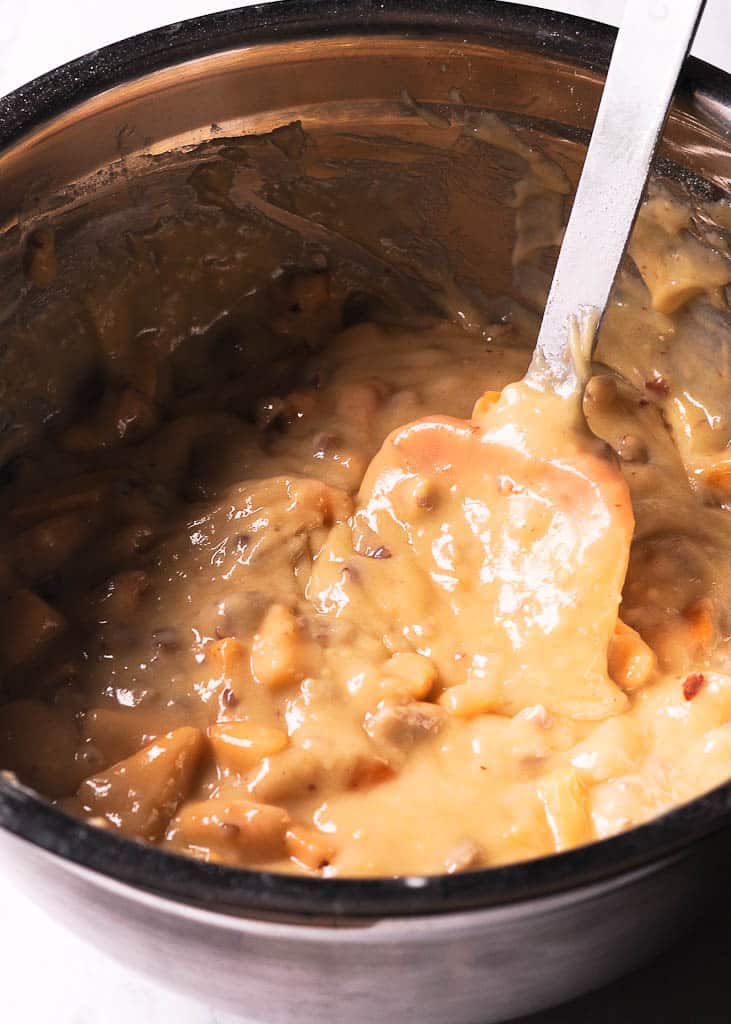
Sift your flour, baking soda, and salt together, then add to the batter a little at a time, folding gently. Do not overmix. Stir just until no dry streaks remain - overmixing develops gluten and turns a tender quick bread dense and tough.
5. Pour into your prepared loaf pan.
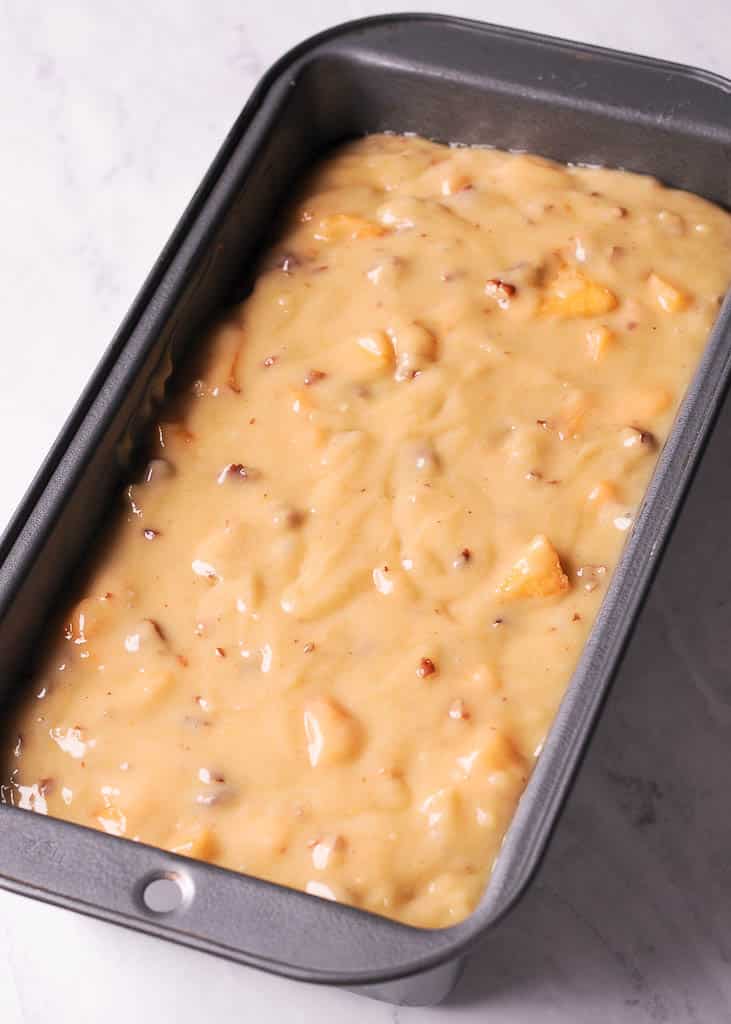
Use a greased 8.5 x 4.5 inch loaf pan. Pour the batter in and smooth the top lightly. It will be thick.
Baking at 350°F - The Doneness Protocol
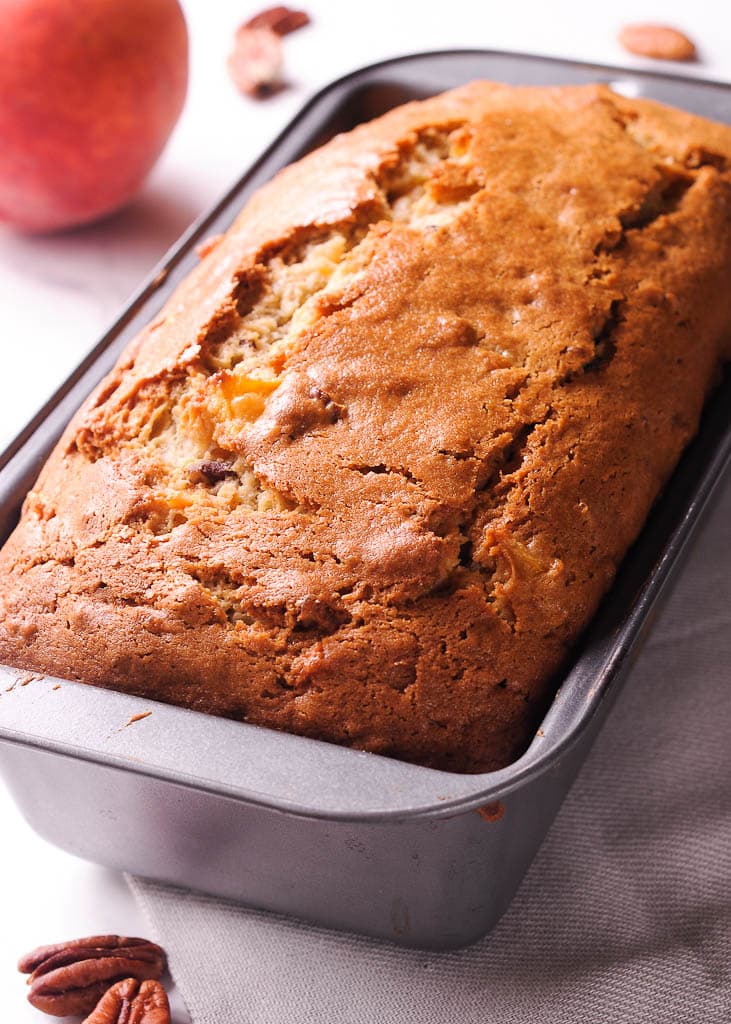
Bake at 350°F for 50 to 55 minutes - but read the section below before you set a timer and walk away, because this is where most peach bread goes wrong.
Do not open the oven before 40 minutes. The batter needs uninterrupted heat to set the structure in the center. Open it too early and you risk a collapse you cannot fix.
Making the Stovetop Pecan Praline Drizzle
While the loaf cools, make the topping. If you have been searching for how to make pecan praline drizzle with condensed milk, this is the method - and it is simpler than it sounds.
1. Toast the pecans in butter.
Heat a small saucepan over medium-high heat. Add the butter and chopped pecans and cook for about five minutes, stirring occasionally, until the pecans are fragrant and the butter is starting to turn golden. Do not skip this step - it is what gives the topping its deep, nutty flavor rather than tasting like sweetened nuts on bread.
2. Add the sweetened condensed milk.
Pour the entire 14-ounce can into the pan and stir it into the butter and pecan mixture. It will bubble. Keep stirring and let it cook for another two to three minutes until it thickens slightly and coats the back of a spoon.
3. Cool slightly, then pour.
Take the pan off the heat and let the mixture cool for several minutes - it thickens considerably as it sits. Pour it over your fully cooled loaf. Do not pour it over a warm loaf or it will run straight off the sides and pool on your board.
Let the topping set for at least 15 minutes before slicing. It will firm up at the edges and stay soft and sticky in the center. That contrast - crunchy caramelized edge, glossy soft center - is the whole point.


Southern Peach Bread with Pecan Praline Topping
Ingredients
- ½ cup vegetable oil (or olive oil)
- 2 large eggs
- 1 cup granulated sugar
- ½ cup sour cream
- 1 teaspoon vanilla
- 1 large peach (finely peeled and diced)
- ½ cup pecans
- 1 ½ cups all-purpose flour (sifted)
- 1 teaspoon baking soda
- ½ teaspoon sea salt
Pecan Praline Drizzle
- 2 tablespoon unsalted butter
- ½ cup pecans chopped
- 14 oz sweetened condensed milk (1 can)
Instructions
- Preheat the oven to 350 degrees F.
- Prepare 8.5 Inch x 4.5 Inch Loaf Pan. Grease it with oil or oil spray.
Wet Ingredients:
- Add the eggs and oil to a large bowl and whisk together.
- Add sugar to the mixture and mix well.
- Add sour cream, vanilla chopped peaches and chopped pecans, mix well.
Dry Ingredients:
- Add sifted flour, baking soda and salt to the mixture a little at a time and mix well.
Bake:
- Pour into a prepared loaf pan and bake for 50-55 minutes or until the sides of the cake just start to pull away from the pan, or when a toothpick inserted into the center comes out clean with no streaks
Pecan Praline Topping:
- To make the topping, preheat a small pan on medium high heat, add butter and pecans and cook them for about 5 minutes.Next add sweetened condensed milk and stir into the butter/pecan mixture. Let the mixture cool for several minutes and then pour over the cooled cake.
How to Know When Peach Bread Is Done
Knowing how to tell when peach bread is done baking is genuinely the most useful skill in this recipe - the time range in the recipe card is a starting point, not a finish line.
- Start checking at 40 minutes. Insert a toothpick into at least two spots across the center of the loaf, not just one. Quick breads can be done on one side and raw in the middle, especially if your oven runs hot or cold on one side.
- What you're looking for: the toothpick comes out clean or with a few moist crumbs attached. Wet batter means it needs more time. Bone dry means you're close to overbaking.
- The 5-minute rule. Once this loaf passes the 40-minute mark, it cooks fast. What seems like five harmless extra minutes will often dry out the crumb or cause the center to over-set and crack. Check every two to three minutes after your first toothpick test, not every five.
- Altitude, oven calibration, and pan material all matter. A ceramic loaf pan holds heat differently than a metal one and adds time. A high-altitude kitchen behaves differently than sea level. The sides of the loaf pulling slightly away from the pan is a reliable visual cue that you're close.
- Don't pull an underdone loaf. If the center is still wet and you take it out because the top looks done, the middle will sink as it cools, and there's no recovering it. Leave it in and check again in two minutes.
Storage, Freezing, and Make-Ahead Tips
This loaf keeps well and is a strong make-ahead candidate, especially for brunch or breakfast.
- Counter storage: In a dry climate, if you'll eat the loaf within two days, wrap it tightly in plastic wrap and leave it on the counter. The crumb stays soft and the topping holds its texture.
- Refrigerator: In a humid climate, or anywhere in summer, refrigerate it. Humidity is the enemy of a praline topping. Store it wrapped or in an airtight container for up to five days. Bring slices to room temperature before serving, or warm them 15 seconds in the microwave.
- Freezer: Slice the loaf first, freeze slices on a parchment-lined baking sheet until solid, then transfer to a zip-top freezer bag. Pull one slice at a time instead of defrosting the whole loaf. Keeps well up to two months.
- Defrost: Move slices to the refrigerator the night before, then bring to room temperature before serving. The topping softens back to its glossy texture. Don't microwave from frozen - it makes the crumb rubbery.
- Make-ahead note: Bake the loaf a full day ahead and hold the praline topping separately, covered, at room temperature. Pour the topping just before serving for the best presentation. This is the move for brunch.
Recipe Questions
Can I use vegetable oil instead of olive oil?
Yes, but the crumb will be noticeably less tender. If you have olive oil on hand, use it - a mild variety won't add any flavor, just texture.
Do I have to make the praline topping?
No. The loaf is moist and flavorful without it. But the stovetop praline is a five-minute step that turns a good quick bread into a Southern-style dessert.
Can I make this loaf without pecans?
Walnuts work as a substitute in both the batter and the topping, though the topping won't taste quite as distinctly Southern.
Why did my loaf sink in the center?
It was likely pulled before the center fully set. Use the multi-point toothpick test starting at 40 minutes, and don't remove the loaf until it passes cleanly in at least two spots.


Karen says
This sounds amazing! Can you use peach pie filling?
Olya says
Yes, absolutely!