
If you've never voluntarily made yourself a salad, you're not alone - and it's not because you don't like vegetables. The real reason most homemade salads fall flat is that they're missing a few key tricks that restaurant kitchens use without even thinking about it.

When you strip it down, "the secret to a great salad" is really a pattern: the salads you remember aren't just bowls of leaves, they're built around contrast and balance. My Nectarine Tomato Burrata Salad is a good example of that formula in action-sweet, juicy fruit and tomatoes for brightness, creamy burrata for richness, crunchy elements for texture, and a balanced Homemade Hot Honey Dressing with Fresh Herbs to glue it all together. On the more everyday side, my Black Bean Corn Avocado Salad follows the same rules using pantry ingredients, loading up on beans, corn, avocado, and tomatoes so you get protein, healthy fats, and plenty of fiber instead of just a pile of plain lettuce.
Salt Your Greens
My mom stands by the fact that restaurant salads are so much better because they add salt and pepper.
This is the single most overlooked step in home salad-making - and the most impactful. Restaurants season their greens. Home cooks don't.
Salt definitely makes a huge difference. I found salting the leaves directly with a very fine salt before adding anything else really brings it up a level.
The fix is simple: before you add a single topping, season your greens directly. Fine salt clings to the leaves (see Kosher Salt vs. Table Salt to learn more about differences in the type), seasons every bite, and makes everything else taste brighter. This alone explains why your salad at home tastes dull compared to the same ingredients at a restaurant.
Build a Proper Dressing
A great dressing isn't bottled - and it's not complicated. I love a simple vinaigrette with either vinegar or lemon juice and olive oil. Salt, pepper, and your preferred herbs are a good place to start. Finely minced shallots are a nice addition too if they get a chance to sit in the vinegar for a few minutes.
Two details elevate a basic vinaigrette into something genuinely great:
- Mustard as a binder: A little bit of mustard really helps emulsify the dressing and adds a nice tangy note. Chicken and Spinach Salad with Honey Mustard Vinaigrette is a great example of that.
- A pinch of honey or sugar for balance: As always when working with vinegar or lemon, a little pinch of sugar goes a long way to balancing out the sourness. See Blackberry and Avocado Salad with Everyday Honey Lemon Vinaigrette.
- Asian salads are different: Another great dressing is sesame oil, soy sauce, honey, and grated ginger. This four-ingredient dressing works beautifully on Asian-inspired salads, napa cabbage bases, such as this Viral Dumpling Salad with Spicy Peanut Dressing or anything with a sesame or soy profile.

Pro tip: How you dress the salad matters as much as the dressing itself. Toss, don't drizzle!
Rather than simply pouring vinaigrette over your salad, mix it in with two forks or tongs.
Don't pour it straight from the bottle onto the leaves. Add it gradually while tossing with tongs or two forks, coating every leaf lightly and evenly. This single technique is one of the biggest reasons restaurant salads taste better than ones made at home.
The Dressing Secret: What Chefs Know That We Don't
Match Your Dressing to Your Greens
The most important dressing rule isn't about flavor - it's about weight. You want to match the hardiness of your dressing to the hardiness of your salad greens. Delicate greens - arugula, baby spinach, mâche, and so forth - are easily overwhelmed or wilted by heavier dressings. You want to look to lighter vinaigrettes and add just enough to provide a gossamer slick on the leaves." On the other end of the spectrum, "as your dressing becomes thicker, so should the items that you're dressing" - think romaine and iceberg, along with hardier greens like kale.
A simple cheat sheet:
| Green | Hardiness | Best Dressing Style |
|---|---|---|
| Arugula, baby spinach, mâche | Delicate | Light vinaigrette, lemon + olive oil |
| Mixed greens, butter lettuce | Medium | Classic Dijon vinaigrette |
| Romaine, iceberg | Sturdy | Creamy Caesar, ranch, thicker vinaigrettes |
| Kale, radicchio, cabbage | Hardy | Tahini, sesame-soy, massaged dressings |
Emulsify, Emulsify, Emulsify
You can drizzle olive oil and vinegar on a pile of greens and call it a salad - but don't be surprised if you wind up with a bunch of oily leaves floating in a pool of vinegar a few minutes later.
The fix is emulsification: adding a surfactant to your vinaigrette binds the oil and the water-based acid into a stable mixture. The result is a dressing in which both the oil and the vinegar cling tightly to the leaves, giving you balanced flavor in every mouthful.
Mustard is the most common salad dressing surfactant, but a dollop of mayonnaise or honey works just as well - and honey has the bonus of adding that sweet-salty contrast.

Buy a Squeeze Bottle
This is the cheapest, most overlooked upgrade in home salad-making. A restaurant-style squeeze bottle lets you combine, shake, and store your dressing in one vessel - and gives you precise, controlled drizzling so you never accidentally flood your salad. It also keeps emulsified dressings shelf-stable and easy to re-shake before each use. A pack of three costs less than $10 and changes how you make every salad going forward.
Take It Slow - You're Probably Overdressing
The last thing you want to do is flood your carefully made salad with too much dressing. You want the dressing to lubricate the salad, but too much dressing will kill the fragrance and crispness of good ingredients.
At home we tend to overdress by sight
The pro technique: add dressing incrementally, tossing and tasting along the way. I personally like to season as I go - the vinaigrette, the salad in the bowl, and then possibly once again to finish. Three small additions, tasting each time, always beats one heavy pour.

Technique Secrets That Change Everything
Great ingredients and a perfect dressing still won't save a salad that's been tossed wrong, built with soggy tomatoes, or made with kale that feels like chewing cardboard. These three technique tips from professional chefs fix all of that.
1. Toss by Hand
Set your salad servers aside. You'll have a much easier time coating your ingredients evenly if you just get your hands a little dirty. The reason is simple: hands are more sensitive than tongs - you can feel whether every leaf is coated and adjust as you go, without snapping delicate greens or smashing softer toppings like avocado or berries.
Two rules for hand-tossing:
- Use a very large bowl - at least three times the volume of your salad so you can toss freely without ingredients flying out or getting crushed against the sides
- Be gentle - rough tossing bruises and wilts delicate leaves like arugula, baby spinach, and mâche almost instantly
This is especially important for the Blackberry and Avocado Salad, where both the blackberries and the avocado are soft and bruise easily. A light hand-toss at the very end preserves their shape and keeps the presentation beautiful.

2. Marinate Tough Greens in Oil
The one time you actually want your leaves to sit in straight oil is when you're working with a tough green like kale. The waxy cuticle that coats kale leaves is oil-soluble - massaging them with oil and letting them marinate for even 10-15 minutes yields far more tender, pliable greens. Raw kale straight from the bag is unpleasantly stiff; massaged kale is silky, almost creamy in texture, and absorbs dressing beautifully.
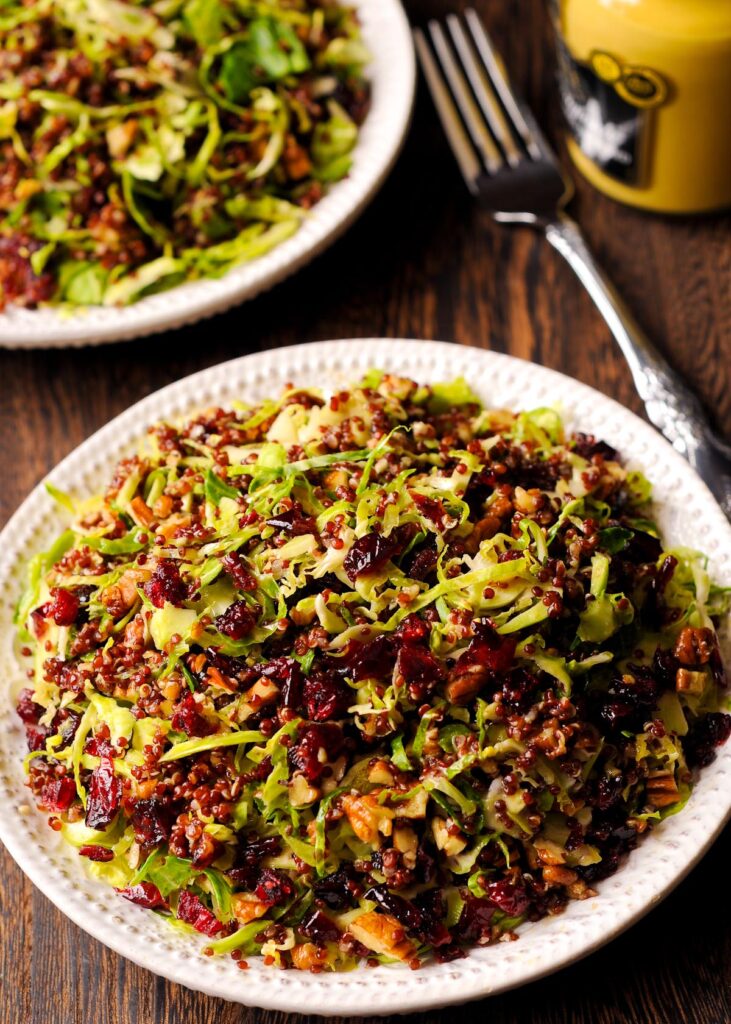
This is the move that makes warm kale-based salads - like the Warm Quinoa Brussels Sprout Salad - work as a truly cohesive dish rather than a bowl of underdressed tough leaves sitting on top of grain. Massage the kale with olive oil first, let it rest, then build the salad around it.
3. Account for Moisture
This is the tip most home cooks never think about until their salad is sitting in a puddle. Always consider the moisture level of the ingredients you're using. If you have a lot of tomatoes, they'll be adding their own moisture to the bowl.
The fix is simple but requires a little planning:
- Salt your wet ingredients - tomatoes, cucumbers, even fresh herbs like parsley - and let them sit in a strainer for 10-15 minutes before adding them to the bowl
- This drains off the excess liquid, concentrates their flavor, and keeps your dressing from being diluted the moment it hits the salad
Even better: that drained liquid doesn't have to go to waste. It's deeply flavored and can be whisked directly into your dressing - tomato water in particular adds a bright, savory note to a simple vinaigrette that you can't get any other way.
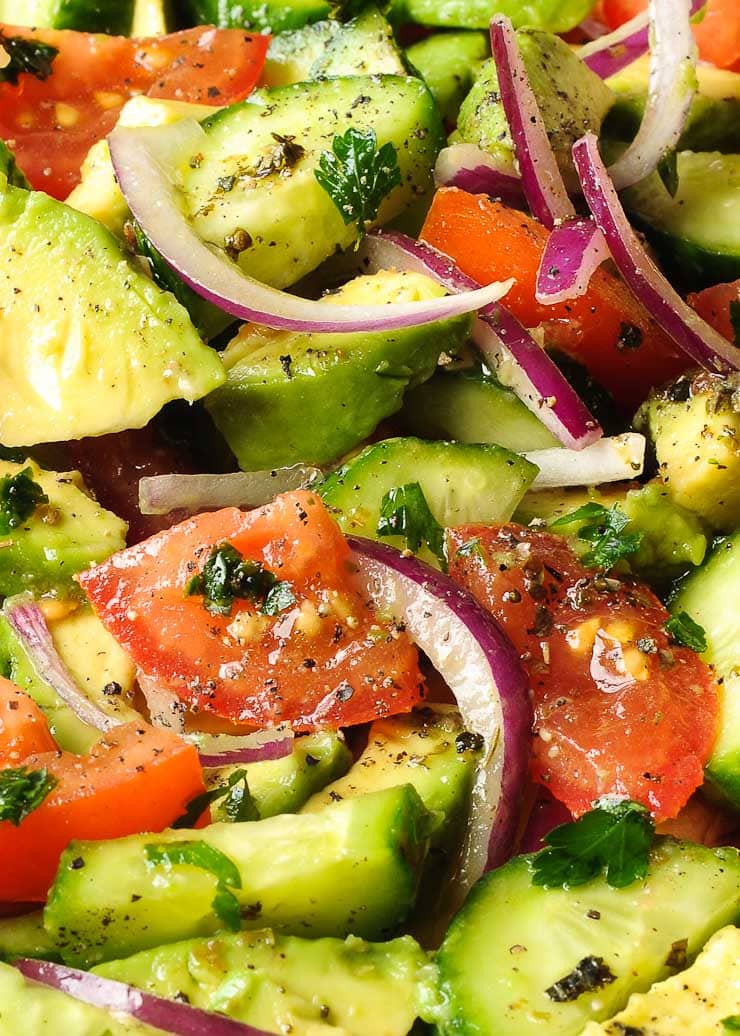
This tip is especially relevant for Avocado, Tomato & Cucumber Salad, where the tomatoes and cucumbers together can quickly make the bowl watery. Salting and draining the tomatoes beforehand keeps the salad crisp and bright from the first bite to the last.
Nail the Texture
The texture is the secret that separates a forgettable salad from one you'd order again. I personally love a crunch. Croutons, seeds, walnuts, tortilla strips!
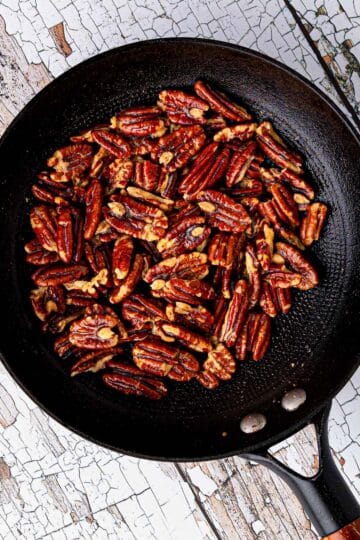
Also critical: cut your greens to the right size. For me it's making sure that the green used is bite sized, because large, unwieldy leaves are harder to eat, harder to dress evenly, and less enjoyable - a simple teardown or rough chop fixes this completely. My Mango Pecan Avocado Salad combines perfect chunks juicy mango, creamy avocado, crunchy pecans, and crisp greens and checks all the boxes for texture!
Play with Sweet and Salty
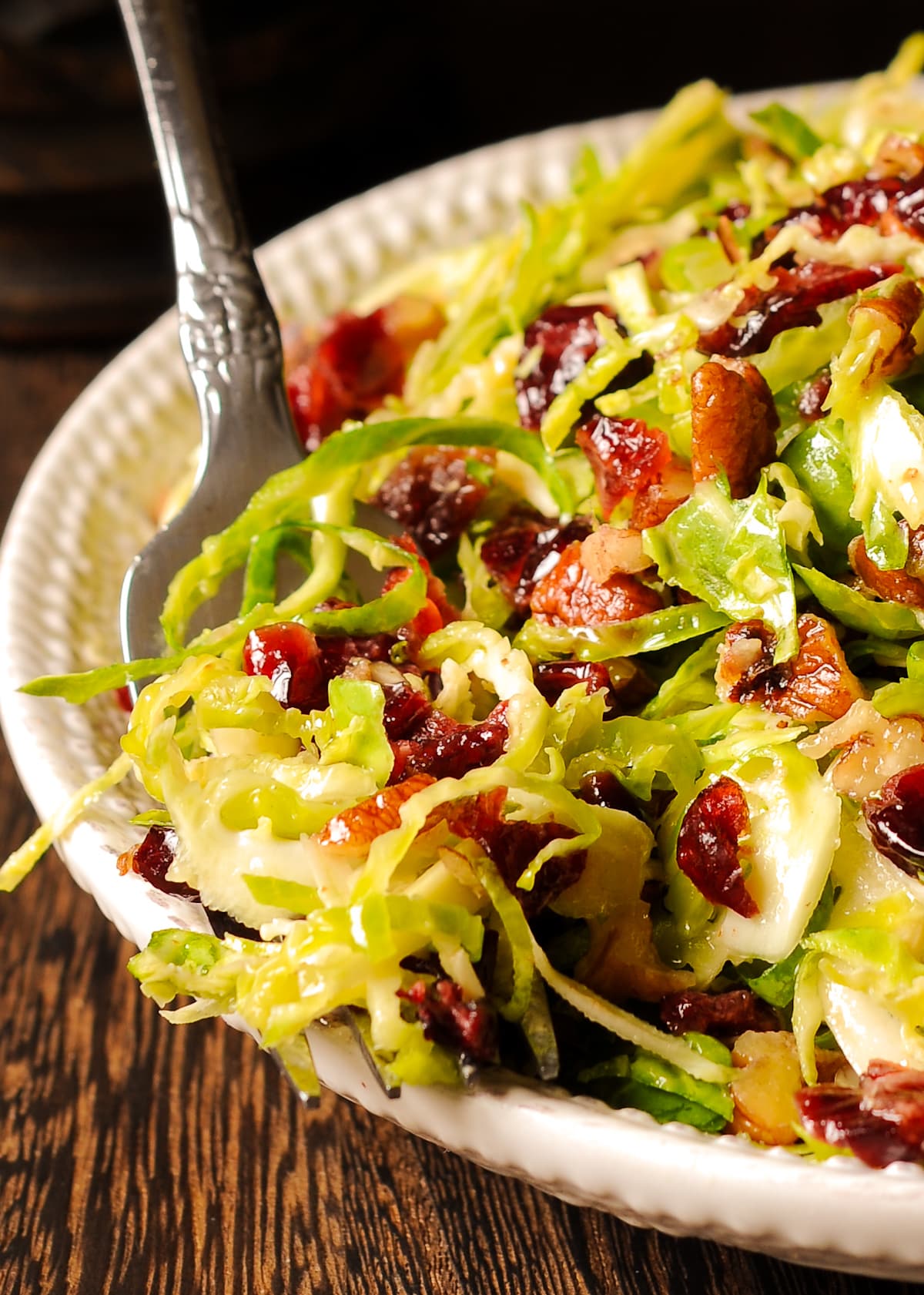
The sweet-salty contrast is one of the most powerful flavor dynamics in cooking - and salads are one of the best places to use it. Dried cranberries (see Brussels Sprout Cranberry Salad), fresh apple slices, strawberries, or blackberries paired with salty cheeses (blue cheese, feta, Parmesan) create the kind of flavor tension that makes a salad genuinely exciting to eat.
Adding Parmesan or feta helps! Both are salty, umami-rich, and add a creamy or crumbly textural contrast that lifts every other ingredient around them.
Play with Adding Proteins to Make Your Salad a Full Meal
If you want to see what a truly filling salad looks like, my Grilled Shrimp Avocado Salad and Grilled Steak Salad with Corn, Avocado, and Red Wine Vinaigrette check every box from this article. You get protein, healthy fats, texture, and a bright, well‑seasoned dressing in every bite-which is exactly the combination that turns a salad from a side into a satisfying main.

Study the Classics First
The most practical long-term advice in the thread came in two forms - study classic salads, and reverse-engineer restaurant ones.
Look up some 'classic' salads - Waldorf, Cobb, Greek, wedge, etc. - and play around with the ingredients to fit your diet.
These classics are blueprints. Each one was engineered to hit multiple texture, flavor, and satiety notes at once. The Cobb has protein (chicken, bacon, eggs), fat (avocado, blue cheese), crunch (lettuce), and acid (red wine vinaigrette). The Greek has brininess (olives, feta), crunch (cucumber, peppers), and fat (olive oil). Study the formula, then riff on it.
When I have salads at restaurants that I really like, I look up the menu at home and try to recreate (like I did in this Olive Garden Salad Copycat). It is never exactly the same but it gives me inspiration to make something close. Really has helped me up my salad game.
Now that you know how to build a salad that actually tastes great, the next question is whether it will keep you full. Technique and flavor are only half the equation - the other half is knowing which ingredients do the heavy lifting on satiety. If you've ever eaten a beautifully made salad and still found yourself hungry an hour later, How to Make Any Salad More Filling breaks down exactly why that happens and how to fix it.

Try a Bag Salad to Find Your Preferences
I personally love to try out some of the varieties of bagged salads that have all the fixins included to see what flavor combinations I might like without buying large amounts of ingredients I might not use or like.
Bagged salad kits aren't a long-term solution, but they're a low-commitment way to discover whether you prefer sesame ginger over creamy Caesar, or whether you lean toward nuts and fruit or croutons and cheese. Use them as a tasting lab - then recreate your favorite from scratch.
Basic Salad Success Formula
| Element | What It Does | My Picks |
|---|---|---|
| Fine salt on greens | Seasons every bite like a restaurant | Popcorn salt, fine sea salt |
| Homemade vinaigrette | Emulsified, balanced, bright | Olive oil + lemon + Dijon + pinch of sugar |
| Crunch element | Textural contrast and satisfaction | Walnuts, seeds, tortilla strips, croutons |
| Soft element | Creaminess and richness | Avocado, boiled eggs, feta |
| Sweet element | Contrast against salty/bitter | Craisins, apple, berries |
| Salty element | Depth and umami | Feta, Parmesan, blue cheese, olives |
| Bite-sized greens | Even coating and easy eating | Torn or chopped to fork-friendly pieces |
The secret isn't one thing. It's layering the right things, in the right way, from the very first pinch of salt on the leaves.
Vinaigrettes are Not Just for the Salads
Let me just mention that vinaigrettes go far beyond salads - they're marinades, drizzles for roasted vegetables, and finishers for grilled proteins. So definitely take them further and use them on Sirloin Steak (Pan-Seared, Juicy Every Time), Santa Maria-Style Tri-Tip or Easy Pan-Seared Pork Chops.
Comments
No Comments