
This steak salad is built around perfectly grilled New York strip with restaurant-quality grill marks, fresh greens, grilled corn, and creamy avocado. The homemade Mediterranean Honey-Balanced Vinaigrette uses red wine vinegar, lemon juice, and honey to balance richness and acidity. Steak rests at room temperature for an hour, then grills in under 10 minutes.

This grilled steak salad is built around perfectly cooked steak with restaurant-quality crosshatch grill marks, achieved by grilling the steak for 2-3 minutes, rotating it 90 degrees on the same side, then flipping and repeating. The steak sits at room temperature for one hour before grilling - a step that ensures the center cooks evenly without the outside charring - and comes off the grill 5-10 degrees before the target temperature to account for carryover cooking during the rest. If you need a detailed walkthrough, see my guide on how to grill steak.
A homemade red wine vinaigrette with honey, lemon juice, and garlic powder ties together fresh greens, grilled corn, creamy avocado, feta cheese, and thinly sliced red onion. The result is a main-dish steak salad that works for weeknight dinners, meal prep, or casual entertaining, ready in 34 minutes from start to finish.

Ingredients and Why Each One Matters
For the Dressing
- Olive oil - I bought extra virgin olive oil because it has more flavor than regular olive oil; this is the fat base of the vinaigrette and helps the dressing coat the greens evenly instead of sliding off.
- Red wine vinegar - Sharp, acidic, and the backbone of the dressing; it cuts through the richness of the steak and balances the sweetness from the honey.
- Honey - I use raw honey because it dissolves smoothly; this balances the acidity from the vinegar and lemon without making the dressing taste sweet.tastingtable+1
- Lemon juice - Freshly squeezed from half a lemon; the citric acid adds brightness and works alongside the vinegar to create layered acidity instead of one-note sourness.
- Garlic powder - Easier to incorporate into vinaigrette than fresh garlic, which can be harsh and overpowering when raw; adds savory depth without chunks.
- Kosher salt - I use Diamond Crystal kosher salt because it dissolves faster than table salt and the coarse crystals are easier to control when seasoning.
- Coarse ground pepper - Black pepper with visible texture; adds mild heat and a slight bite that complements the acidity.
For the Steak
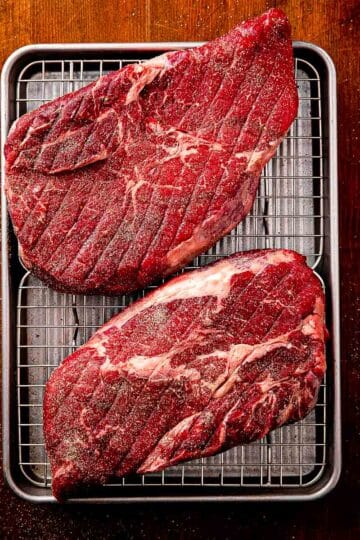
- New York strip steak - I bought two steaks, each about 1 to 1.5 inches thick; this cut has good marbling for flavor and tenderness but holds its shape when sliced for salad better than fattier cuts like ribeye.
- Olive oil (for stovetop cooking only) - Only needed if you're cooking the steak in a cast iron pan instead of on the grill; prevents sticking and helps the seasoning adhere to the surface.
- Kosher salt - Coarse crystals create an even coating on the steak surface; this is what forms the seasoned crust when the steak hits the hot grill.
- Coarse ground pepper - Black pepper adds mild heat and develops a slightly charred, aromatic crust when seared.
- Onion powder - Adds savory sweetness without the moisture that fresh onion would introduce; helps build a more complex seasoned crust.

For the Salad
- Greens - I bought a spring mix blend because it has varied textures and flavors; use any combination of spinach, romaine, butterleaf, or arugula depending on what you prefer.
- Cooked corn - Grilled corn sliced off the cob adds sweetness and a slight char that complements the grilled steak; you can also use roasted or even good-quality canned corn if grilling isn't an option.
- Cherry tomatoes - Halved for easier eating; the acidity and juiciness add freshness and balance the richness of the avocado and steak.
- Avocado - Ripe but still firm enough to slice cleanly; adds creamy richness and healthy fat that balances the acidity in the dressing.
- Feta cheese crumbles - I bought block feta and crumbled it myself because pre-crumbled feta often has anti-caking agents that make it dry; the salty, tangy flavor cuts through the richness of the steak and avocado.
- Red onion - Sliced thin so it's not overpowering; raw red onion adds sharp bite and crunch that contrasts with the softer textures in the salad.
- Fresh basil - Chopped or sliced into ribbons; adds herbal brightness and a slight peppery note that complements both the steak and the dressing.
- Micro greens (optional) - Delicate and mild; used as a garnish for visual appeal and a slight texture contrast.
- Chopped cilantro (optional) - Fresh and citrusy; adds brightness if you like cilantro, but skip it if you're one of the people for whom it tastes like soap.

Choosing the Right Cut of Steak
New York strip is my go-to for steak salad because it has enough marbling to stay tender and juicy but not so much fat that it falls apart when you slice it thin. The texture holds up well when chilled, which matters if you're making this ahead or serving it as leftovers.
Other good options are:
- Ribeye has more fat and flavor but can be too rich for a salad with creamy avocado and cheese already in the mix.
- Flank or skirt steak work well too - they're leaner and slightly chewier, but they slice beautifully against the grain and have good beefy flavor.
- Sirloin is a solid budget option with less marbling than strip but still tender enough for salad as long as you don't overcook it.
Why the Dressing Uses Both Vinegar and Lemon
Red wine vinegar provides sharp, tangy acidity with a slightly fermented depth that works well with grilled meat. Lemon juice adds bright, citrusy acidity that tastes fresher and lighter than vinegar alone.
Using both creates layered acidity instead of one-dimensional sourness - the vinegar gives backbone, the lemon gives brightness, and together they balance the richness of the steak, avocado, and feta without tasting harsh or overpowering.
Why Honey Balances the Acidity: Honey doesn't just add sweetness - it rounds out the sharp edges of the vinegar and lemon so the dressing tastes balanced instead of mouth-puckeringly sour. The natural sugars in honey also help the dressing emulsify slightly when you shake it in the jar, which keeps the oil and vinegar from separating as quickly as they would in a dressing without any sweetener.
The key is using just enough to balance the acid without making the dressing taste sweet - you shouldn't be able to identify honey as a distinct flavor, you should just notice that the dressing doesn't taste harsh.

How to Make Grilled Steak Salad
1. Make the Red Wine Vinaigrette
Add all the dressing ingredients to a mason jar - olive oil, red wine vinegar, honey, lemon juice, garlic powder, salt, and pepper - screw the lid on tight, and shake hard for 15 to 20 seconds until the mixture emulsifies and looks cloudy instead of separated. The honey helps bind the oil and vinegar together temporarily, but they'll separate again if the dressing sits too long. Give it another shake right before drizzling it over the salad.

I make the dressing first and let it sit while I prep everything else so the flavors have time to meld. The garlic powder hydrates slightly in the liquid, the salt dissolves completely, and the acidity mellows just enough to taste balanced instead of harsh.
2. Grill the Steak with Perfect Grill Marks
Preheat the grill to medium or medium-high heat - you're aiming for 400-450°F - and make sure the grates are clean and lightly oiled so the steak doesn't stick. Season the steak generously on both sides with salt, pepper, and onion powder and let it sit while the grill heats up. The seasoning pulls moisture to the surface, which helps create a better sear.
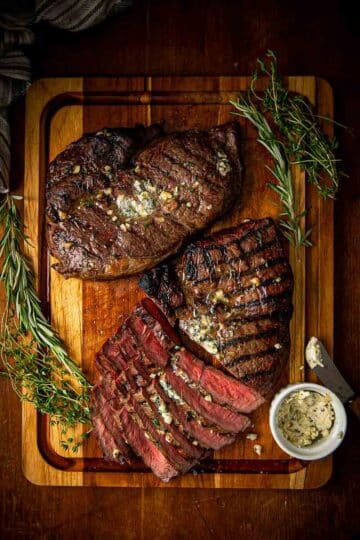
Place the steak on the grill and don't touch it for 2 to 3 minutes. This is the hardest part for most people - the urge to flip or move the steak is strong, but leaving it alone is what creates a deep sear and those defined grill marks. After 2 to 3 minutes, rotate the steak 90 degrees without flipping it over. This puts the steak in contact with fresh, hot grill grates running in a different direction, which is what creates the crosshatch pattern.

Grill for another 2 to 3 minutes in the rotated position, then flip the steak and repeat the process on the second side: 2 to 3 minutes undisturbed, rotate 90 degrees, another 2 to 3 minutes. The total grill time is around 8 to 12 minutes depending on thickness and your target doneness, but the rotation method is what makes the marks look professional instead of random.
3. Assemble the Salad
Toss the greens, grilled corn, halved cherry tomatoes, sliced red onion, and chopped basil together in a large bowl or spread them out on a serving platter if you want a more composed presentation. I like to build steak salads on a platter because it gives you control over how everything is layered and makes it easier to distribute the toppings evenly.

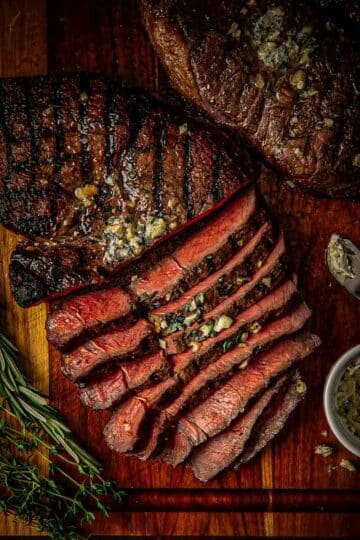
Slice the rested steak against the grain into thin strips - cutting against the grain shortens the muscle fibers and makes the steak more tender to chew.
Arrange the sliced steak over the greens, then add the avocado slices and scatter the feta crumbles on top. Drizzle the red wine vinaigrette over everything right before serving so the greens don't wilt or get soggy from sitting in dressing.
Garnish with micro greens and cilantro if you're using them, and serve immediately.

Grilled Steak Salad with Corn, Avocado, and Red Wine Vinaigrette
Ingredients
Dressing
- ½ cup olive oil
- ¼ cup red wine vinegar
- 3 tablespoon honey
- ½ lemon juiced
- ½ teaspoon garlic powder
- teaspoon kosher salt
- ⅛ teaspoon coarse ground pepper
Steak
- 2 New York strip steak set out at room temperature for 1 hour
- 2 tablespoon olive oil (only if cooking steak on the stove)
- 1½ teaspoon kosher salt
- ½ teaspoon coarse ground pepper
- ¼ teaspoon onion powder
Salad
- 6 cups greens (spring mix, spinach, romaine, butterleaf,etc)
- 1 cup cooked corn (I grilled my corn on the cob then sliced the kernels off)
- 1 cup cherry tomatoes halved
- 1 ripe avocado sliced or chopped
- ½ cup feta cheese crumbles
- ¼ red onion sliced thin
- 2 tablespoon fresh basil chopped or sliced
- micro greens for garnish, optional
- chopped cilantro for garnish, optional
Instructions
Dressing
- Add all your ingredients to a mason jar and shake it with a lid on until the dressing is combined. Set aside until ready to use.
Steak
- Preheat your grill over a medium to medium-high temperature. Aim for about 400-450 F.
- Season the steak generously on both sides with the salt, pepper and onion powder. Let the steak sit with the seasoning on it until the grill is ready.
- Place the steak on the grill and grill for 2-3 minutes then rotate the steak 90 degrees and grill for another 2-3 minutes on the same side.
- Flip the steak over and grill the same way. This helps you get the nice criss-cross grill marks. Cook the steak until it's about 5-10 degrees shy of your preferred cook. It will cook an additional 5-10 degrees once removed from the grill. If you pull the steak off when it's the right temperature, by the time it's done resting it will be over-cooked. Let the steak rest for 5-10 minutes before slicing into thin strips.
Salad
- Toss all of your salad ingredients together and top with the sliced steak and a drizzle of dressing and your garnishes.
Tips for the Best Results
I've grilled hundreds of steaks over the years, and the difference between good grilled steak and great grilled steak comes down to three details.
- Starting with room-temperature steak.
- Using the 90-degree rotation method for crosshatch grill marks
- Pulling the steak off the grill 5-10 degrees before your target doneness to account for carryover cooking
Pull the steak out of the fridge 30 to 60 minutes before grilling so it has time to come up closer to room temperature. Pat it dry, season generously with salt and freshly ground black pepper (and your favorite steak seasoning, if using), then grill over medium-high heat, flipping once, until nicely charred on both sides.
I grill each side using the rotation method - 2-3 minutes, rotate 90 degrees without flipping, another 2-3 minutes, then flip and repeat. This creates the deep sear marks that come from hitting fresh hot grill grates in two directions.
For medium-rare, pull the steak off the grill when it reaches 120-125°F, then transfer it to a cutting board. Let it rest for 5-10 minutes so carryover cooking can bring it up to the perfect temperature and the juices redistribute before you slice it for the salad.
The steak comes off at 120-125°F for medium-rare because residual heat pushes the internal temperature up another 5-10 degrees during the rest, and pulling it early is what keeps it from crossing into medium or medium-well territory by the time you slice it.

How to Get Crosshatch Grill Marks on Your Steak
Clean and preheat your grill over medium-high heat for at least 10 minutes, then lightly oil the grates.
Place the steak on the grill at a 45-degree angle to the grates and cook undisturbed for 2 to 3 minutes, then rotate it 90 degrees without flipping and grill another 2 to 3 minutes to create crosshatch marks.
Flip and cook to your desired doneness, using an instant-read thermometer for accuracy. For steak salad, I like to pull the steak at 120-125°F for medium-rare, then let it rest 5-10 minutes before slicing so it stays juicy and tender.
No grill?
You can also cook the steak in a hot cast-iron skillet on the stove. Sear over medium-high heat in a thin layer of oil, flipping once, and cook to 120-125°F for medium-rare, then rest before slicing."
Make-Ahead, Storage, and Meal Prep
Storing Leftover Steak Separately
Store the sliced steak in its own airtight container, separate from the greens and dressing. Steak that sits in dressing or on wet greens absorbs moisture, turns gray on the surface, and loses its texture. Keep it dry and it stays closer to its original state when you reheat or eat it cold.
I store leftover steak in the fridge for up to 3 to 4 days. Let it come to room temperature for 15 to 20 minutes before serving if you want it less cold, or reheat it gently in a skillet over medium-low heat for 1 to 2 minutes per side - just enough to warm it through without cooking it further and pushing it past your original doneness level.
How Long the Salad Keeps
- Salad: Undressed greens, corn, tomatoes, and red onion keep in an airtight container in the fridge for 3 to 4 days. Don't add the avocado until you're ready to eat - sliced avocado oxidizes and turns brown within a few hours, and even when stored with lemon juice or in an airtight container, the texture degrades significantly after 24 hours.
- The red wine vinaigrette keeps in the fridge for up to 1 week in a sealed jar. The oil will solidify when cold, so pull it out 15 to 20 minutes before serving and let it come to room temperature, then shake it hard to re-emulsify before drizzling.
- Once the salad is fully assembled and dressed, it wilts within 1 to 2 hours. Greens break down quickly once they're coated in dressing, and the acid in the vinaigrette softens them even faster. If you're not eating immediately, keep everything separate and assemble portions as needed.

Make-Ahead Strategy for Meal Prep
For meal prep, I grill the steak, slice it, and store it in individual containers - one container per meal portion. I prep the salad components separately: greens washed and dried in one container, corn and tomatoes mixed together in another, sliced red onion in its own small container, and feta crumbles kept separate. The dressing goes in small mason jars or leakproof containers, one per portion.
When I'm ready to eat, I build one serving at a time: greens in a bowl, add corn and tomatoes, top with steak, scatter feta and red onion, slice fresh avocado right before serving, and drizzle with dressing. This method keeps everything at peak texture and flavor for 3 to 4 days instead of the 1 to 2 hours you'd get from a pre-assembled salad.
If you want to bring this to work or pack it for lunch, layer the ingredients in a jar or container with the dressing on the bottom, then heartier ingredients like corn and tomatoes, then greens, then steak on top. Flip it onto a plate or bowl when you're ready to eat and everything stays crisp and separated until the moment you combine it.
More Grilled Steak and Salad Recipes
- Peppercorn Steak - Pan-seared with a creamy black pepper sauce.
- Steak Diane - Classic pan sauce with mushrooms, Dijon, and brandy.
- Garlic Butter Steak Bites - Bite-sized pieces in rich herb butter.
- Chimichurri Marinated Flank Steak - Grilled with fresh herb sauce.
- Sirloin Steak - Budget-friendly cut with perfect sear technique.
Comments
No Comments