
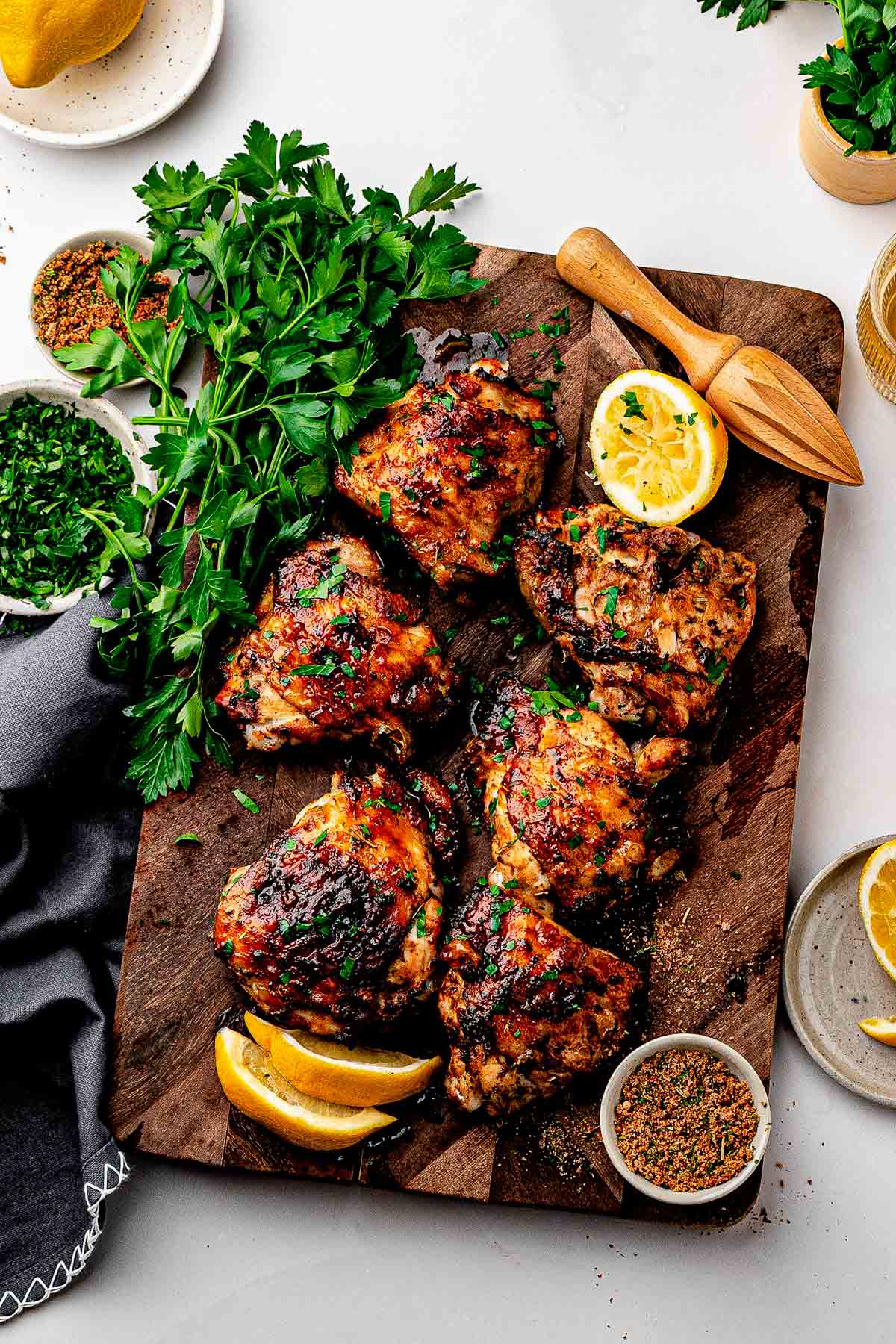
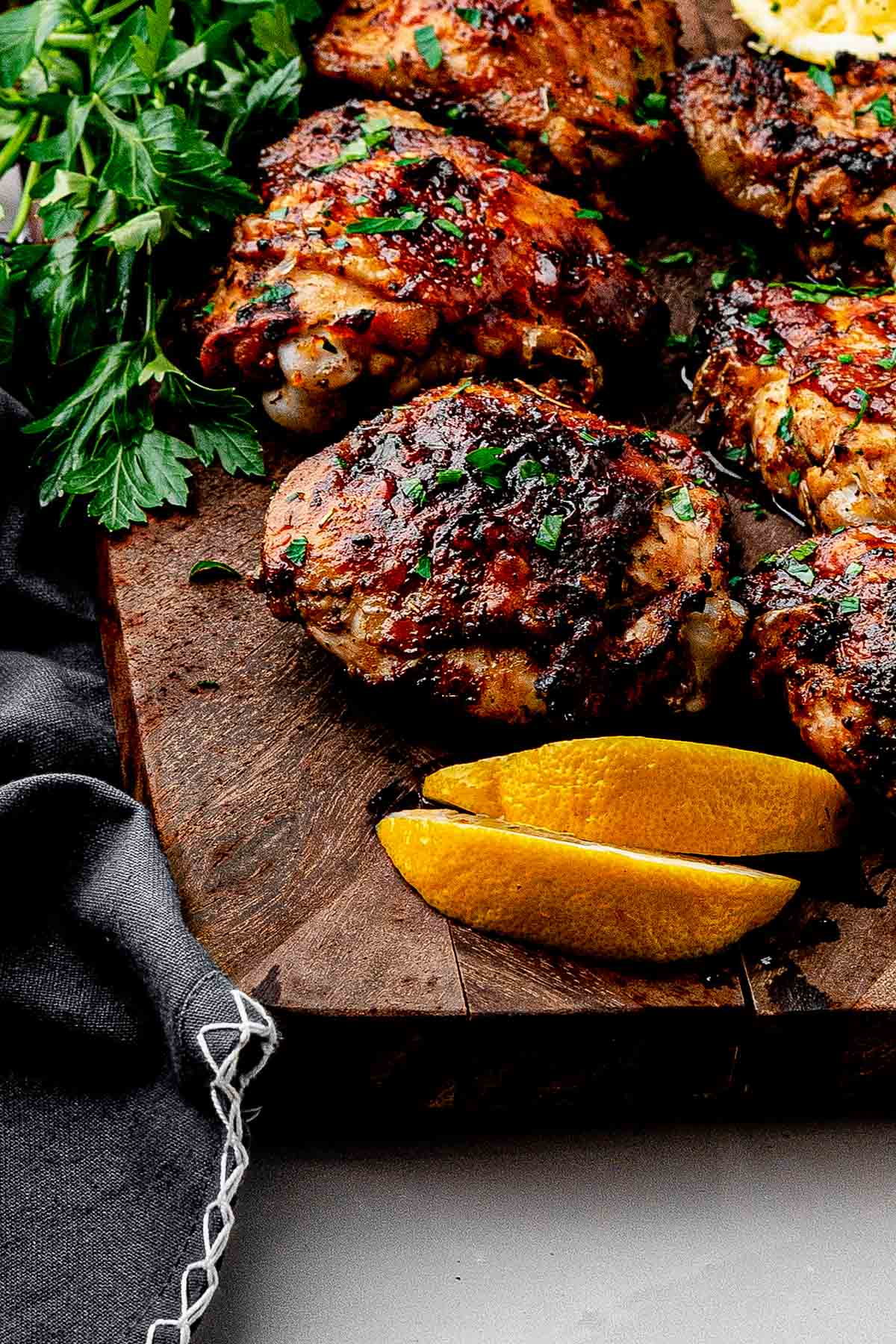
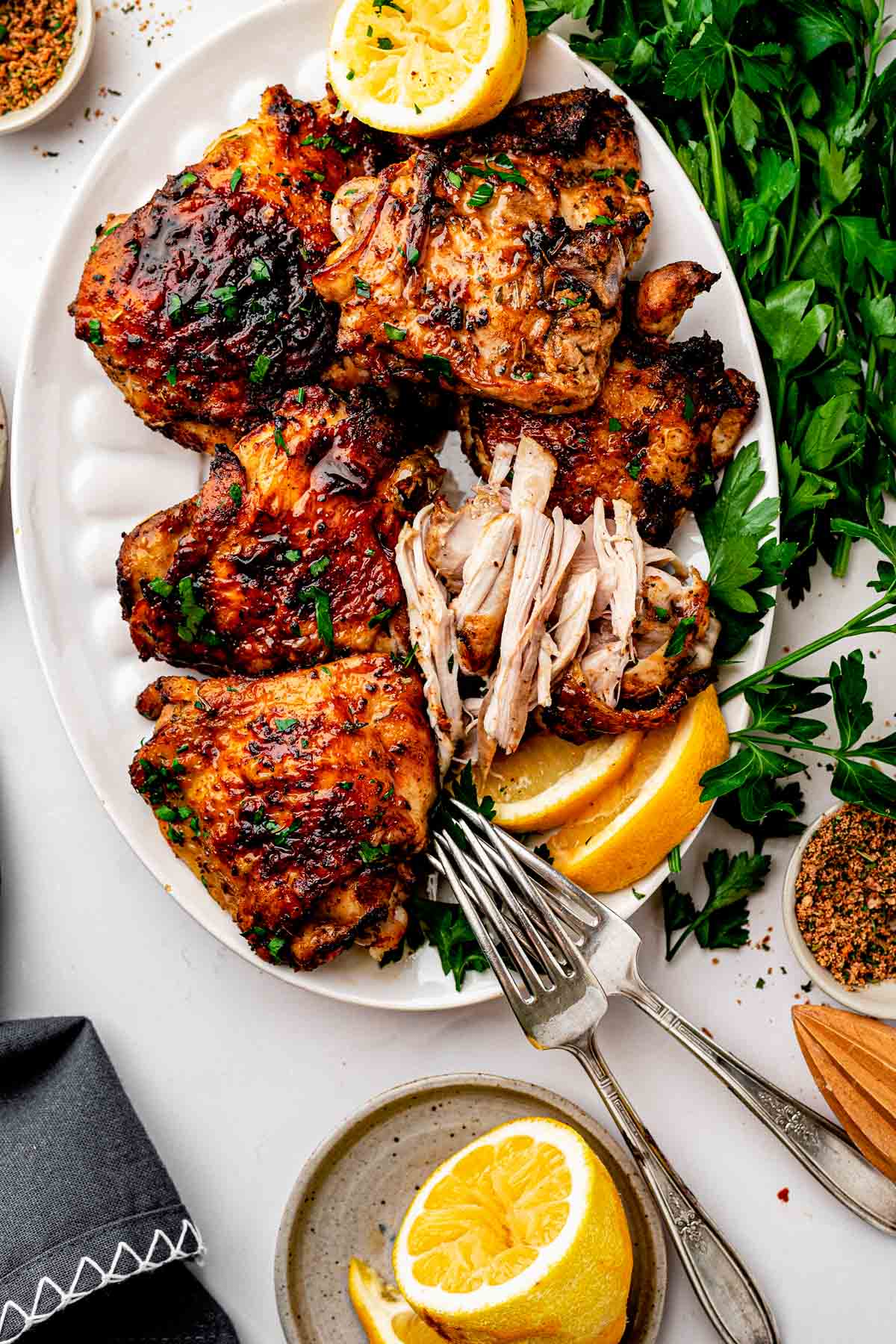
This dry rub chicken combines crispy, golden bone-in thighs with my personal version of a lemon-herb rub (aka homemade lemon pepper seasoning): fresh lemon zest, black pepper, oregano, thyme, rosemary and paprika. It's the lemon pepper alternative for anyone tired of salty store-bought blends.
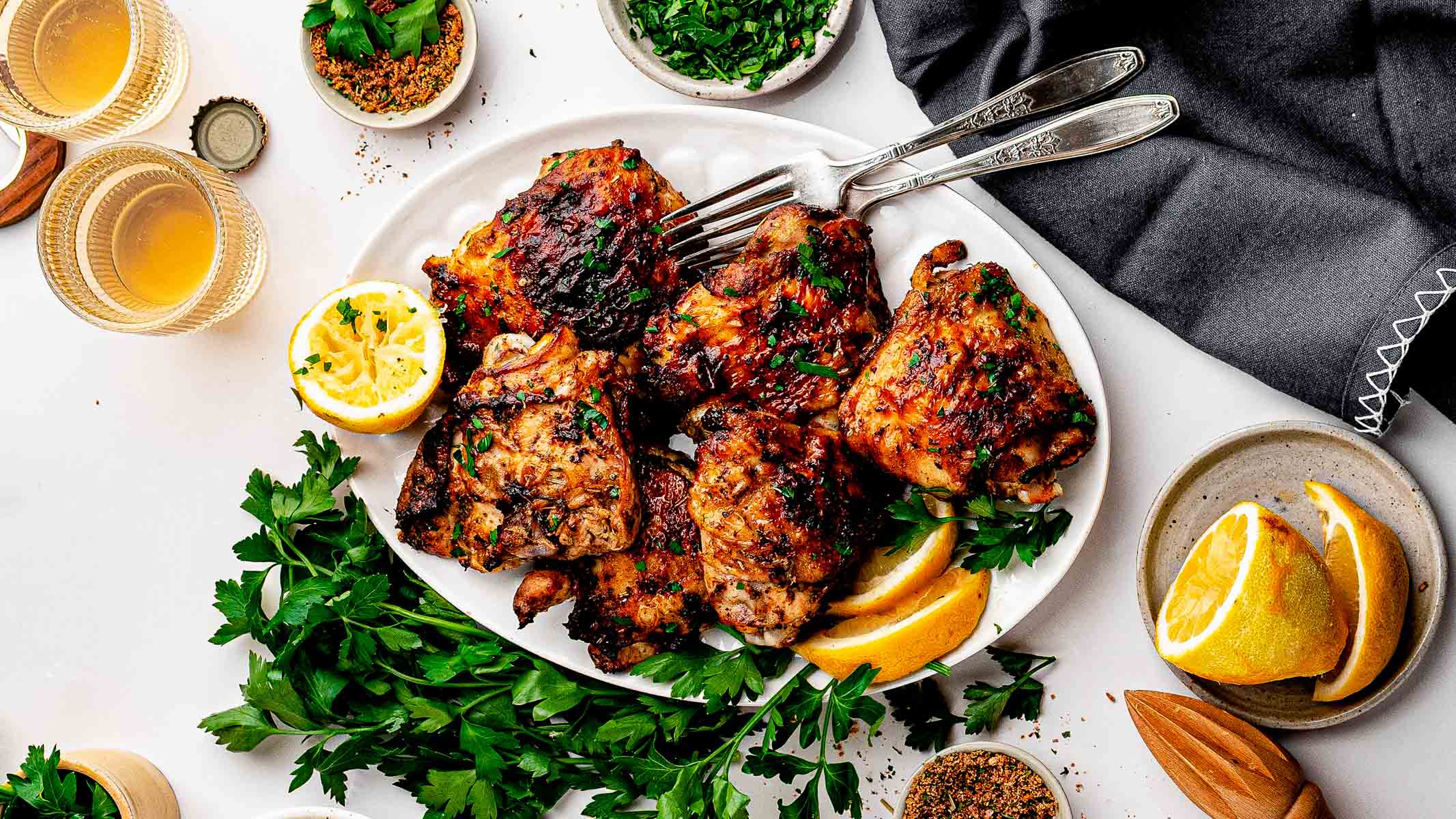
This rub makes enough for 6 thighs. Roast at 425°F for 35-45 minutes.
I rub it into every inch of the chicken and roast the thighs on one pan in about an hour, mostly hands-off. The whole kitchen smells amazing. Then I finish with a squeeze of lemon at the table.
The flavor is so unexpected, and nothing like the grocery store lemon pepper I have bought in the past. I mean like, wow, I'm putting it on everything from now on.
If you want a lemon pepper chicken dinner that is actually lemon-y vs. salty with a faint flavor of lemon, this dry rub chicken is it. Making it myself means I control the salt, and the lemon comes from real zest.
If you want rosemary to be the star instead of one of the herbs, try my oven-roasted rosemary chicken thighs.
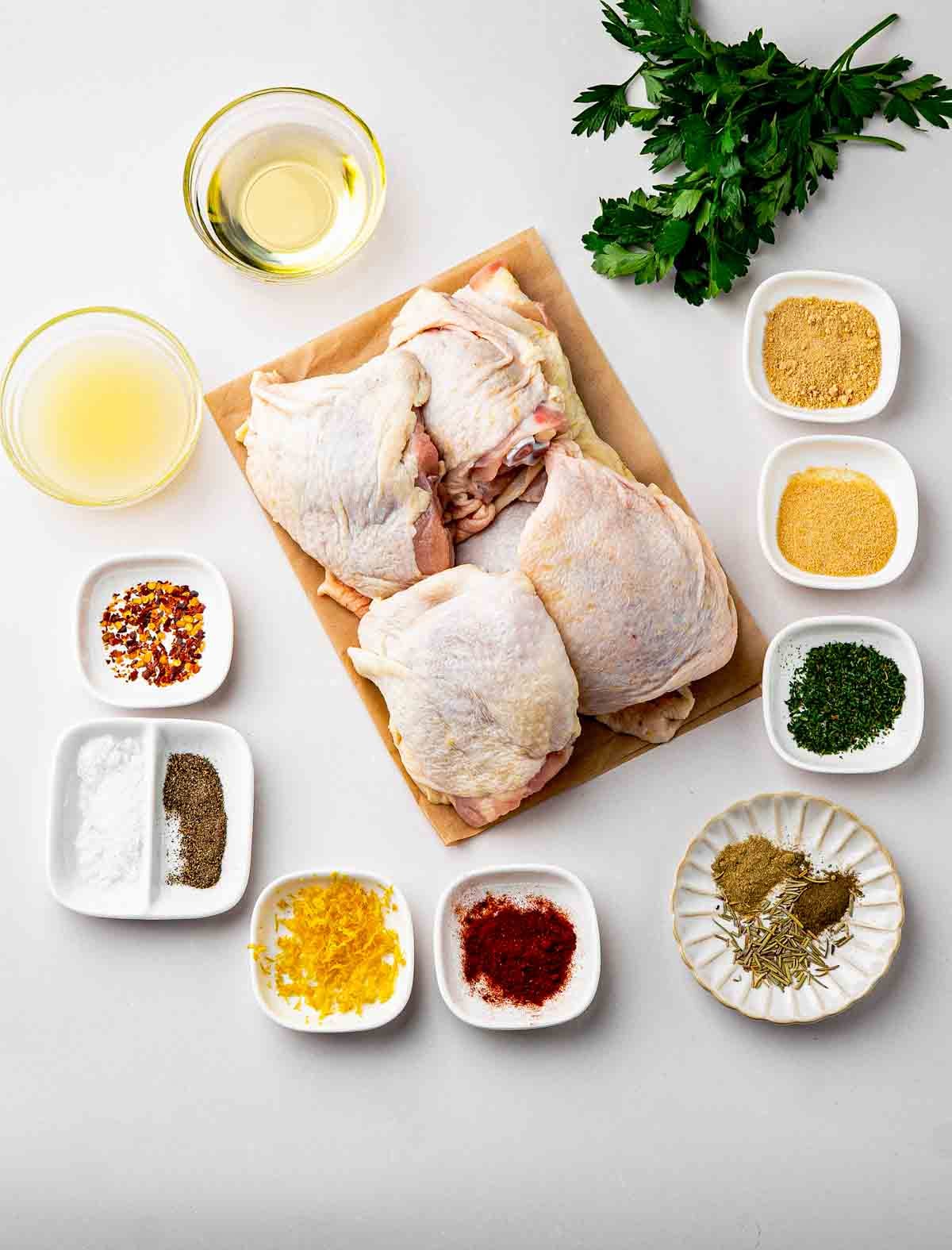
Ingredient Notes For Dry Rub Chicken
Bone-in, skin-on chicken thighs: These are what I buy for this. The bone keeps the meat juicy, and the skin crisps up into the best part of the dish. Thighs forgive a few extra minutes in the oven, which is handy on a busy night. Drumsticks work with the same rub. Boneless thighs work too, but they cook faster and you lose the crispy skin, so start checking early.
Kosher salt: I love to control my own salt proportions. I use kosher because it's easy to pinch and sprinkle. If you only have table salt, use less and taste the rub before it goes on the chicken.
Black pepper: It's a big part of why I call this a lemon pepper alternative. Fresh ground has more bite, but pre-ground works fine.
Paprika: It gives the skin its golden-red color and won't make the chicken spicy.
Garlic powder and onion powder: They cover the savory background. I use powder instead of fresh because fresh garlic can burn in a 425°F oven, and powder doesn't.
Dried oregano, thyme and rosemary: These three give the chicken that herb-roasted flavor. Crumble the rosemary in your fingers so you don't bite into a hard needle. If you only have two of the three, the rub still works.
Lemon zest: This is the whole reason I started making my own. Zest holds the lemon oils, and I grate it fresh because that's where the flavor is. If you don't have a Microplane, the small holes of a box grater work.
Dried parsley: It's mostly for color and a mild green flavor. If you leave it out, nobody will notice. Fresh parsley goes on at the end.
Red pepper flakes: Just a little, for a quiet kick at the back of each bite. Use less for kids, or add cayenne if you like heat.
Olive oil: It gives the dry rub something to stick to and helps the skin brown. Avocado oil works well too, and it handles high heat.
Fresh lemon juice: A little goes in the toss with the olive oil, and I save most of the lemon for the squeeze at the table
Lemon wedges and fresh parsley: These go on right before serving. The squeeze wakes the whole plate up.
How to Make Dry Rub Chicken
Each step below includes why I do it and what to do if it goes sideways. The recipe card keeps the short version.
Step 1: Preheat and pat dry
Turn the oven to 425°F. Then pat the thighs dry with paper towels. I mean really dry, and I use more towels than seems reasonable.
This is the step that decides whether you get crispy skin. Wet skin steams in the oven and stays soft, and dry skin browns. If you have a few spare minutes, pat them dry a second time after the first towel gets damp.
Step 2: Mix the rub
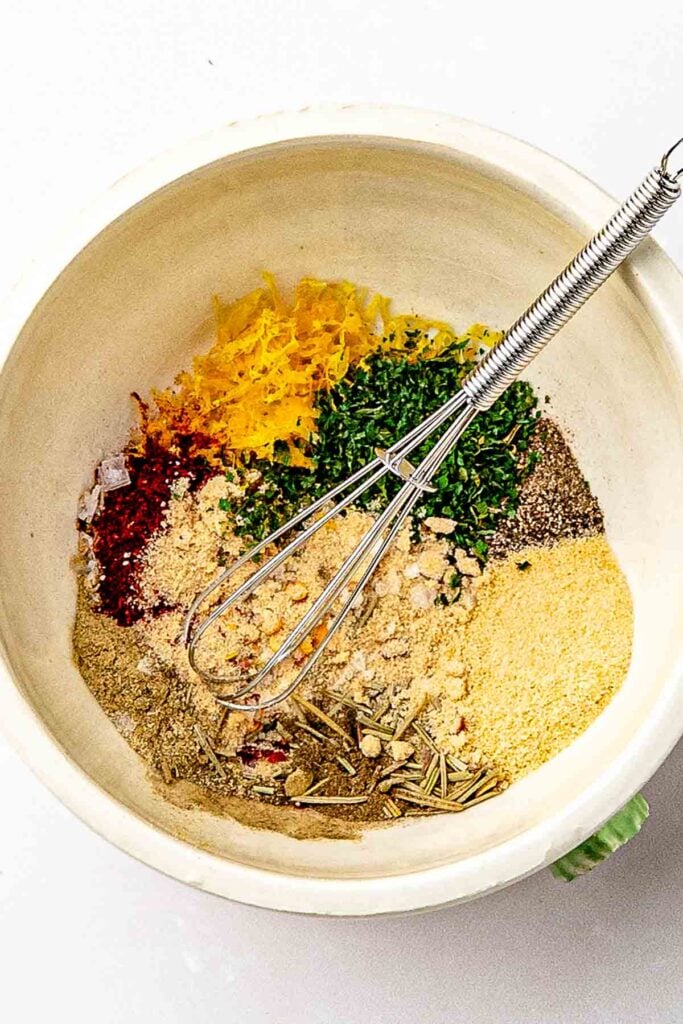
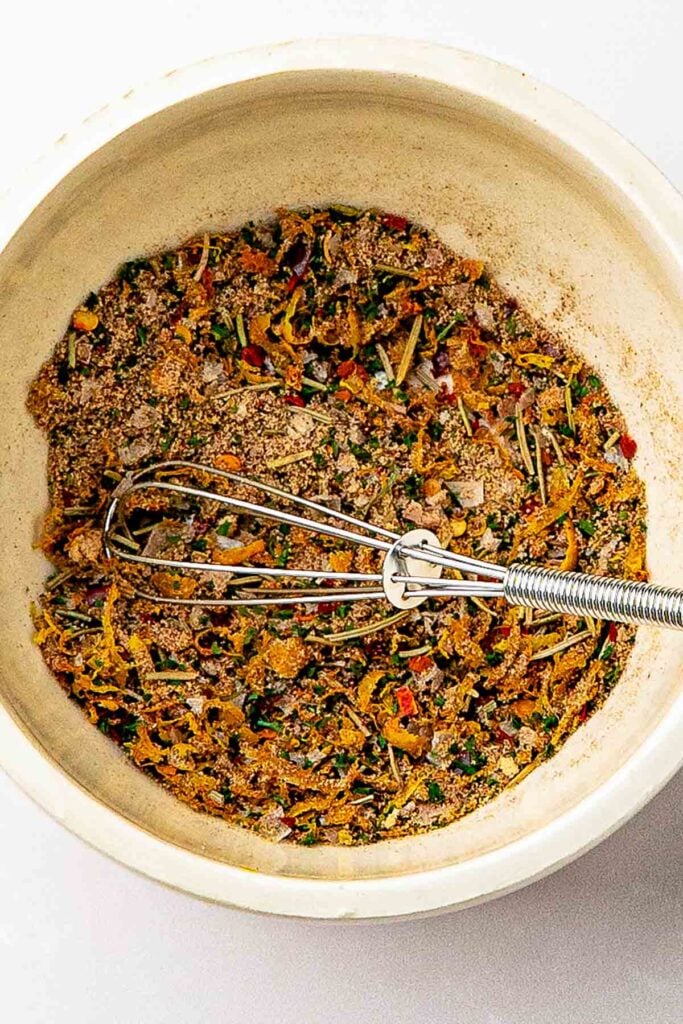
Stir the salt, paprika, garlic powder, onion powder, oregano, thyme, rosemary, black pepper, lemon zest, parsley and red pepper flakes together in a small bowl.
Then taste a tiny pinch. I do this every time, because it's the only point where you can change the salt or the heat. Too salty for you? Stir in a little more paprika or pepper. Too mild? Add another pinch of pepper flakes.
Step 3: Oil, lemon juice and rub
Place the chicken thighs in a large bowl. Drizzle with olive oil and lemon juice, and toss to lightly coat. You want a thin coating, not a marinade.
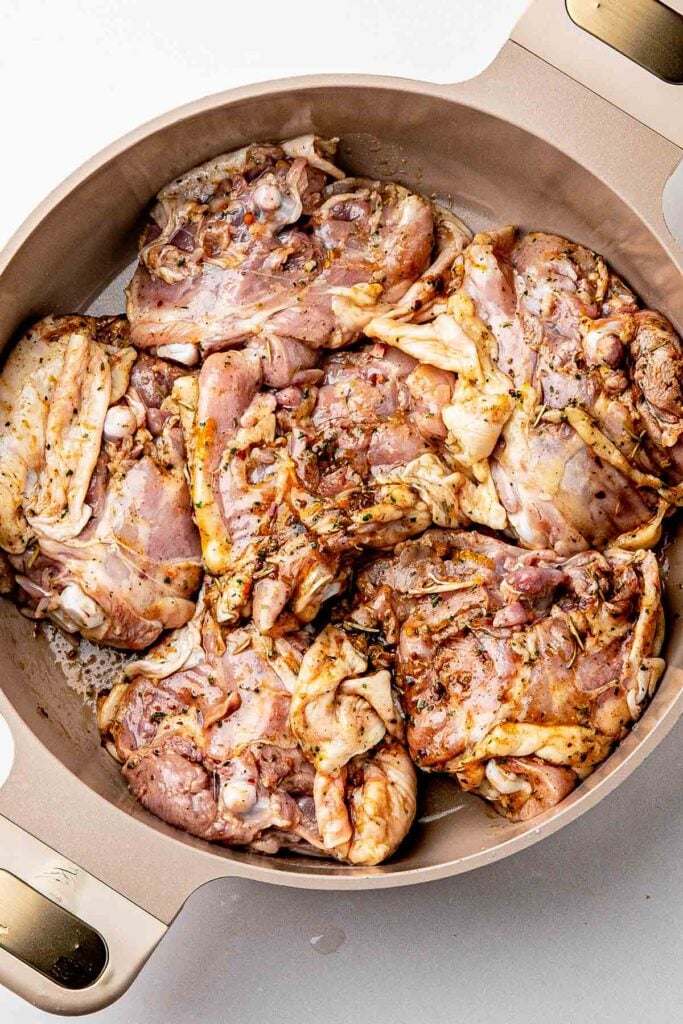
Sprinkle the dry rub generously over the chicken. Rub it into the skin and all around the chicken so every piece is nicely seasoned. Lift the skin gently and press a pinch of rub onto the meat if you like.
If you have a few extra minutes, let the seasoned chicken sit at room temperature for about 15-20 minutes before roasting. It takes the chill off, so the thighs cook more evenly.
Step 4: Roast
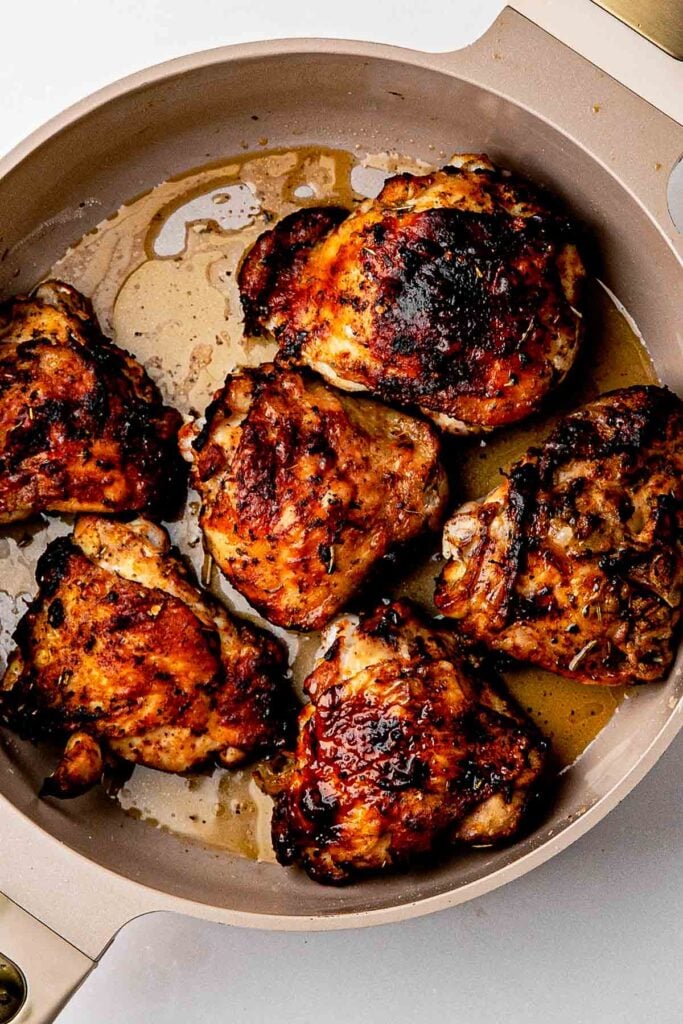
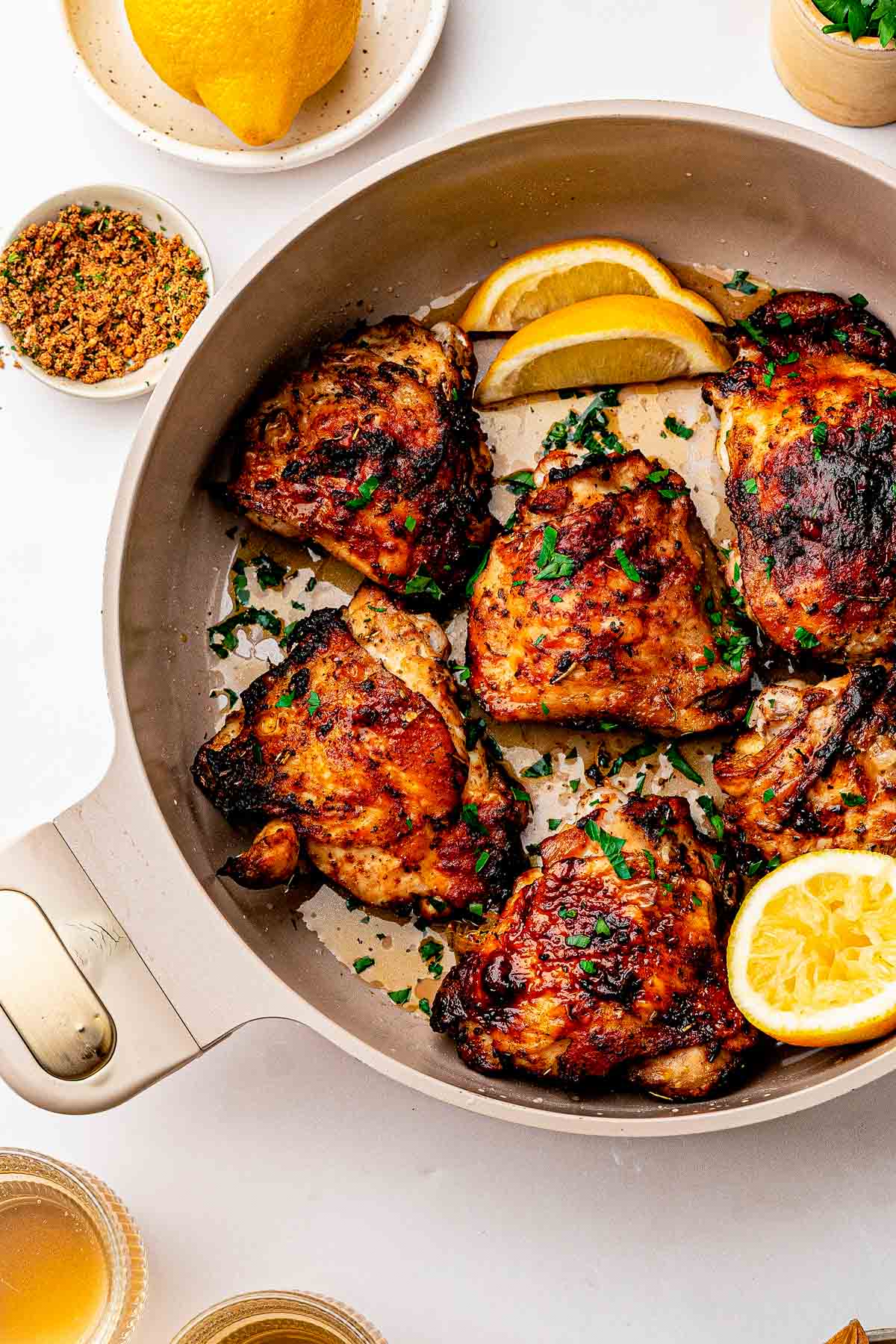
Place the thighs skin-side up in a cast-iron skillet, baking dish or sheet pan. Roast for 35-45 minutes. You're looking for deeply golden skin and 165°F in the thickest part, away from the bone.
165°F is the safe minimum. Bone-in thighs have more connective tissue, so they get more tender a little past that. If yours hit 175°F, that's fine.
Step 5: Broil if you want more color
If the chicken is cooked but the skin could use more color, broil for 1-2 minutes. Stay by the oven, because paprika and herbs go from golden to burnt fast.
Step 6: Rest and serve
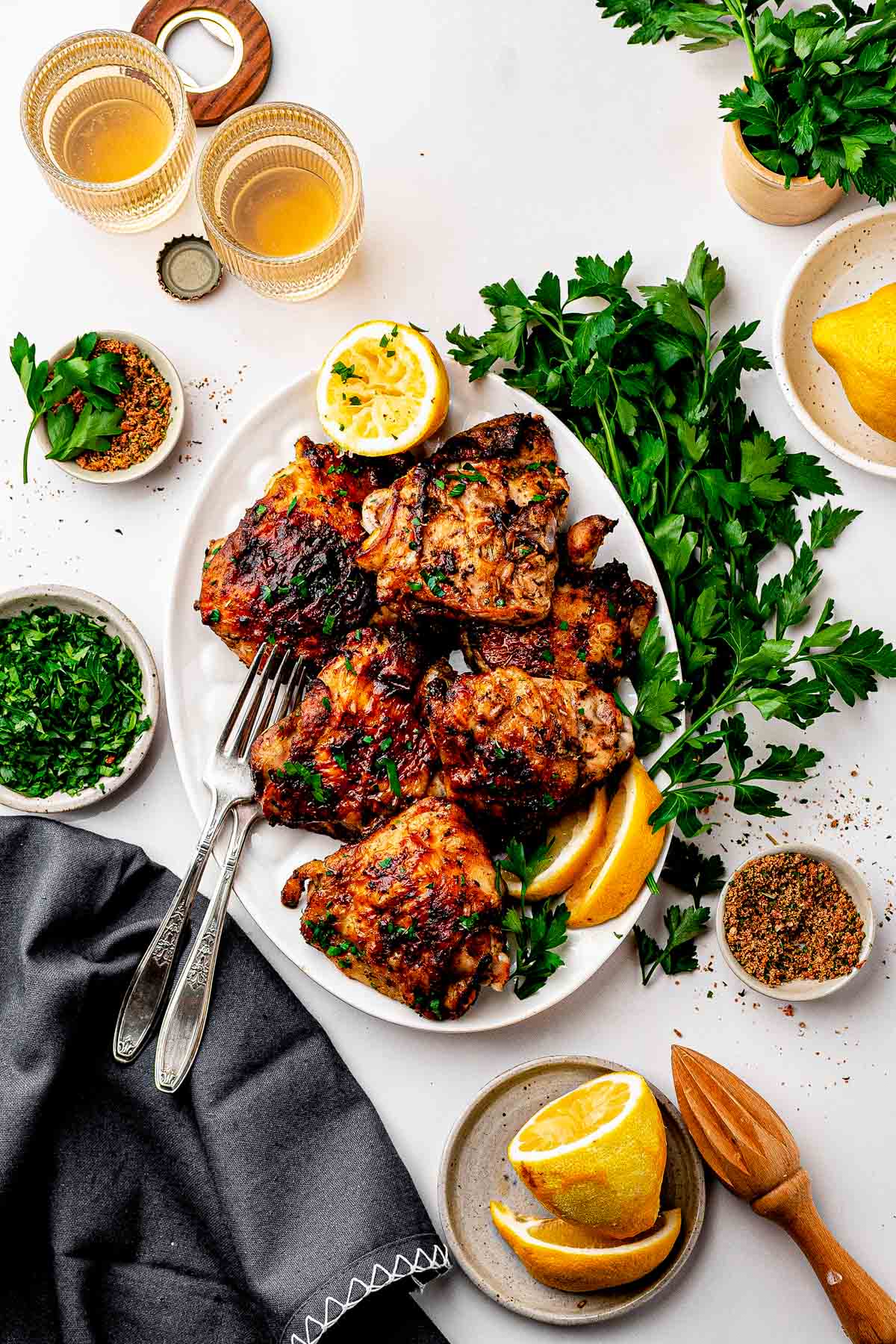
Let the chicken rest for about 5 minutes so the juices settle. Then add fresh parsley and a squeeze of lemon right before serving.
Dry Rub Chicken (Lemon Herb Crispy Chicken Thighs)
Equipment
- large mixing bowl
- Small mixing bowl
- Measuring spoons
- Microplane or fine grater for the lemon zest
- paper towels
- Cast-iron skillet, baking dish, or sheet pan
- Instant-read thermometer
- Tongs
- cutting board
- Chef's knife
- serving platter
Ingredients
For the dry rub
- 2 teaspoons kosher salt + ½ teaspoon black pepper
- 1 ½ teaspoons paprika
- garlic powder 1 teaspoon + 1 teaspoon onion powder
- 1 teaspoon dried oregano
- 1 teaspoon dried thyme
- ½ teaspoon dried rosemary
- 1 teaspoon lemon zest
- ½ teaspoon dried parsley
- red pepper flakes ⅓ teaspoon
For the chicken
- 6 bone-in skin-on chicken thighs
- 1 tablespoon olive oil
- 1 tablespoon fresh lemon juice
To serve
- Fresh Lemon wedges for serving and a sprinkle of fresh parsley
Instructions
Prep
- Get the chicken ready: preheat your oven to 425*F. Pat the chicken really, really, really dry with paper towels. This is one of the tiniest steps that make all the difference.
- Make the dry rub: in a small bowl, stir together the salt, paprika, garlic powder, onion powder, oregano, thyme, rosemary, black pepper, lemon zest, parsley, and red pepper flakes. Give it a little taste and adjust to your liking.
- Season the chicken: place the chicken thighs in a large bowl. Drizzle with olive oil and lemon juice, toss to lightly coat. Sprinkle the dry rub generously over the chicken, rubbing it into the skin and all around the chicken so every piece is nicely seasoned. If you have a few extra minutes, let the seasoned chicken sit at room temperature for about 15-20 minutes before roasting.
Roast and Serve
- Roast: place the chicken skin-side up in a cast-iron skillet, baking dish, or a sheet pan. Roast for 35-45 minutes or until the skin is deeply golden and the thickest part of the chicken reaches 165*F. If the chicken is cooked through but you want that skin a little more golden and crispier, put it under the broiler for 1-2 minutes. Watch it closely because it can go from gorgeous to burnt very quickly!
- Rest and serve: Let the chicken rest for about 5 minutes before serving. Finish with a sprinkle of fresh parsley and a squeeze of fresh lemon juice right before bringing it to the table. And that's it, dinner is done!
Recipe Tips
Roast on a rack: if you have a wire rack, set it on a foil-lined sheet pan. Hot air gets under the thighs, so the bottom skin doesn't sit in rendered fat.
Fridge-dry for crispier skin: leave the seasoned thighs uncovered on a rack in the fridge for a few hours or overnight. The surface dries out, and so does the skin.
Check the temp near the bone, not on it: touching bone gives a false reading.
Salt brand matters: 2 teaspoons of Diamond Crystal and 2 teaspoons of Morton are not the same saltiness. If you use Morton or fine salt, start with less.
Get some rub under the skin: lift the skin gently and rub a little seasoning directly on the meat.
Cleanup: line the pan with foil for easy cleanup. The rendered fat can smoke on a bare pan, so don't crowd it.
Serving Ideas
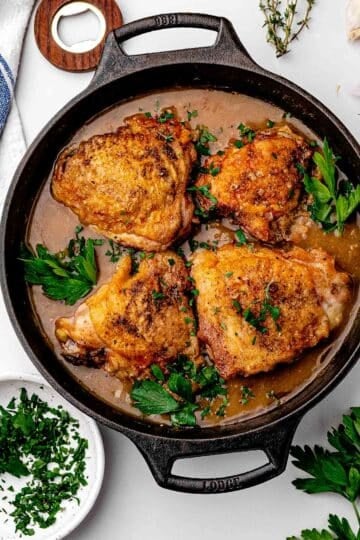
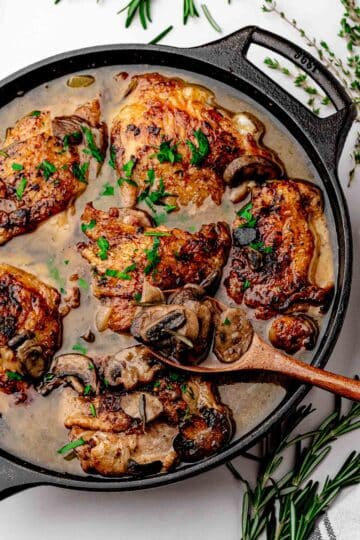
These thighs are also good with a pan sauce. Spoon on a bacon and white wine sauce, a French mustard wine sauce, or a creamy white wine sauce if you want the full dinner-party effect. Keep the sauce on the side so the skin stays crisp.
Storage and Leftovers
Make ahead: Season the chicken up to 24 hours ahead and keep it uncovered in the refrigerator, on a rack if you can. Take it out 15 minutes before roasting.
Storage: Refrigerate leftovers in an airtight container for up to 4 days. Reheat in a 375°F oven or air fryer to bring back some crispy skin. Freeze cooled chicken for up to 3 months and thaw overnight in the fridge.
FAQ
Is this just lemon pepper?
Not quite. It's a lemon pepper-style blend with herbs and paprika. You still get the lemon and the black pepper, but you also get oregano, thyme and rosemary for depth, and paprika for color and warmth.
The other big difference is the lemon. It comes from fresh zest, not from dried peel, and I control the salt instead of getting whatever's in the jar.
Why isn't my skin crispy?
It's usually one of three things: the chicken wasn't dry enough, the pan was crowded, or the oven wasn't hot enough.
A thigh can be cooked perfectly and still have soft skin. A minute or two under the broiler often fixes it.
Should I cover the chicken while it roasts?
Nope. Covering it traps steam, and steam makes the skin soft. Roast it uncovered.
Can I use boneless thighs?
Yes. They cook faster, so start checking around 20-25 minutes. You're looking for 165°F in the thickest part.
You won't get crispy skin with boneless, skinless thighs, but the rub still tastes great on them.
Why does a dry rub need oil?
The seasoning is dry, but a little olive oil helps it stick and helps the skin brown. A light coating is all you need.
Does the lemon juice make the skin soggy?
Just a little goes in the toss, so the coating is light. Pat the thighs very dry first, and the skin still browns and crisps. I add the real squeeze of lemon at the table so it doesn't soften the skin.

Comments
No Comments