
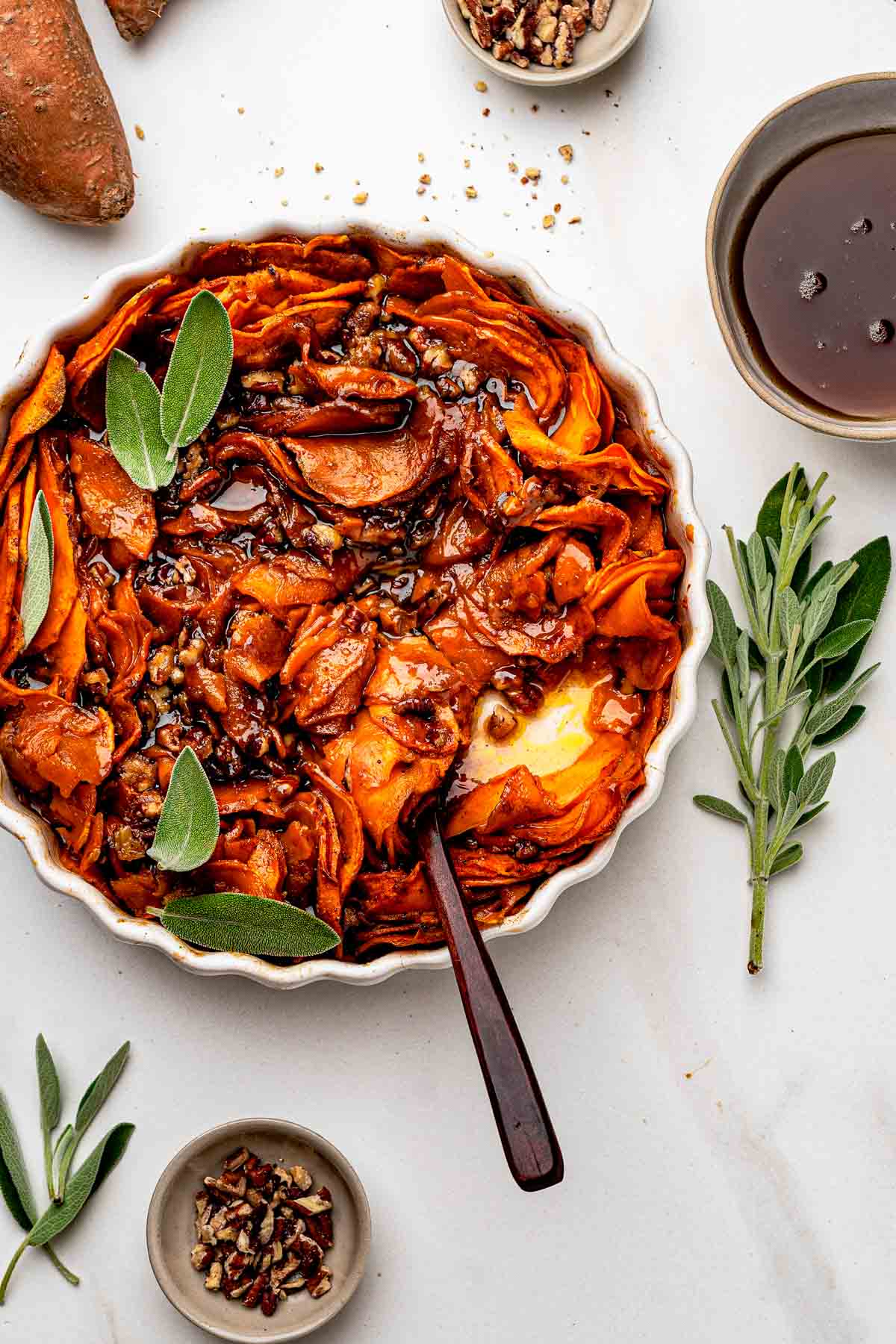
If you love sweet potato casserole but don't want a bowl of mash on the Thanksgiving table, this one is for you. I slice raw sweet potatoes really, really thin on my mandolin and layer them into a baking dish until it's overflowing.
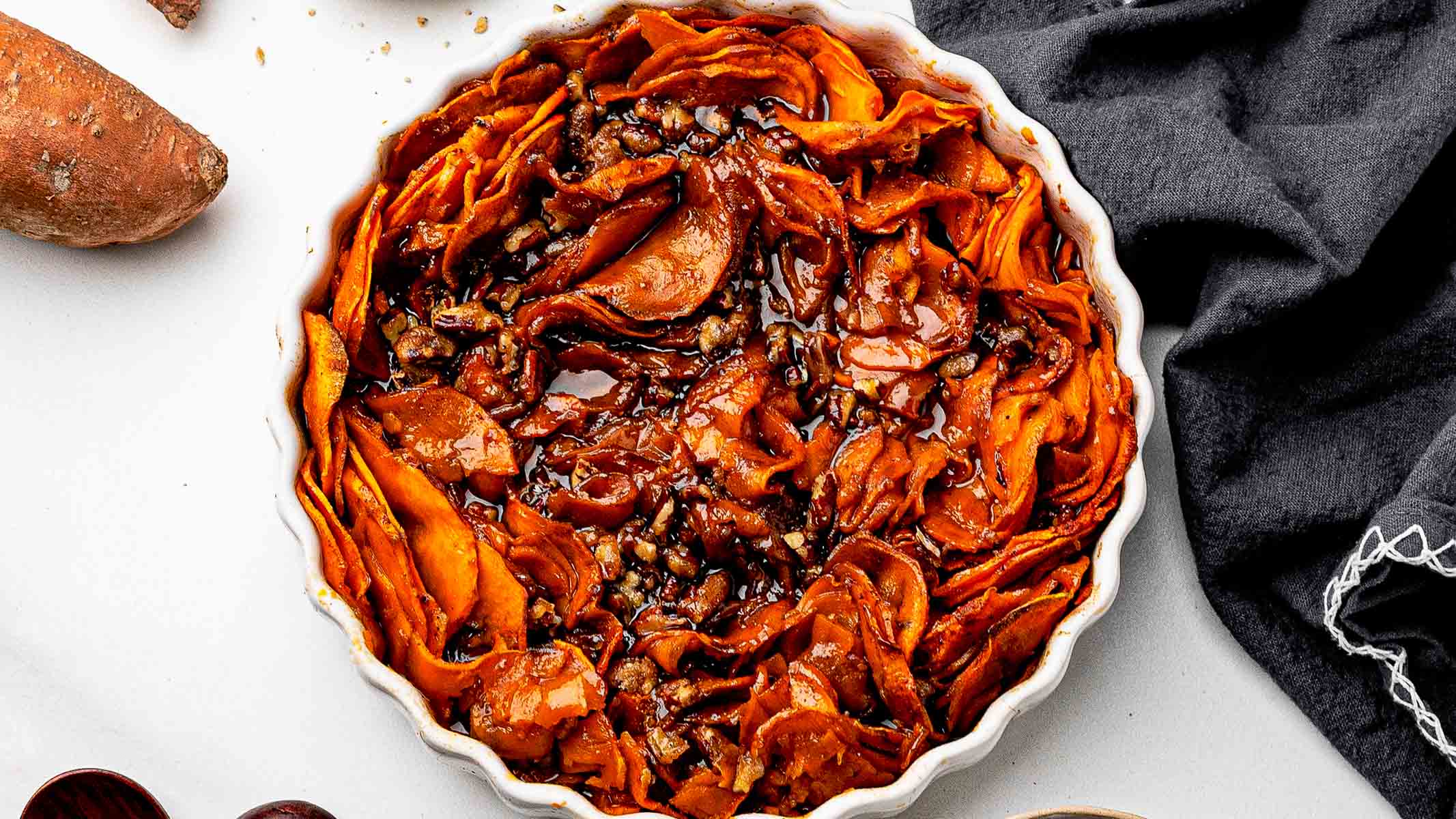
Butter, maple syrup, brown sugar and cinnamon work their way between every slice. Then pecans go on top, because obviously. It comes out soft and buttery in the middle, caramelized at the edges, and somewhere between a classic sweet potato casserole and a scalloped potato dish.
Why You'll Love This Sweet Potato Casserole
- The mandolin does the hard work. Once the sweet potatoes are peeled, you're slicing and layering. There's no boiling and no mashing.
- It's sweet, but it doesn't taste like dessert. Maple syrup and brown sugar give you that classic flavor without burying the sweet potatoes.
- Thin slices cook evenly. Every layer softens at the same pace, with no firm chunks hiding in the middle.
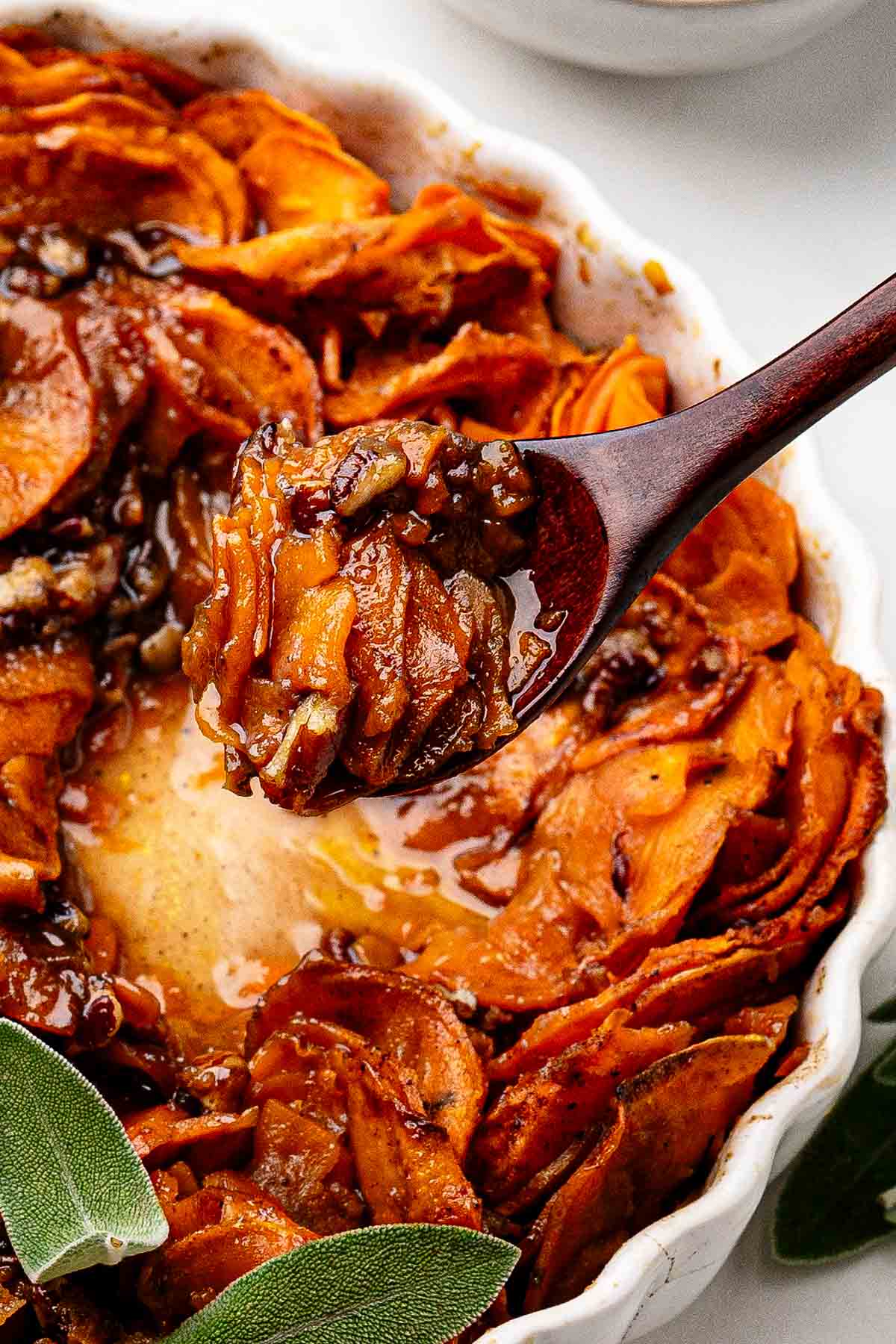
- The butter and maple make their own sauce. As it bakes, the butter, maple syrup and brown sugar work their way between every slice.
- The edges caramelize. Baking uncovered at the end browns the top and gives you those crispy, caramelized corners.
This is how I make it!
First, I slice. I peel the sweet potatoes, trim the ends, and run them over the mandolin at about ⅛ inch. When I slice them thinner than that, they fall apart. Thicker and the middle stays firm. Slice everything before you start layering, so you can see how many slices you have.
Then I whisk the butter, maple syrup, brown sugar, cinnamon, nutmeg, salt and vanilla together. It smells like Thanksgiving before anything is in the oven.
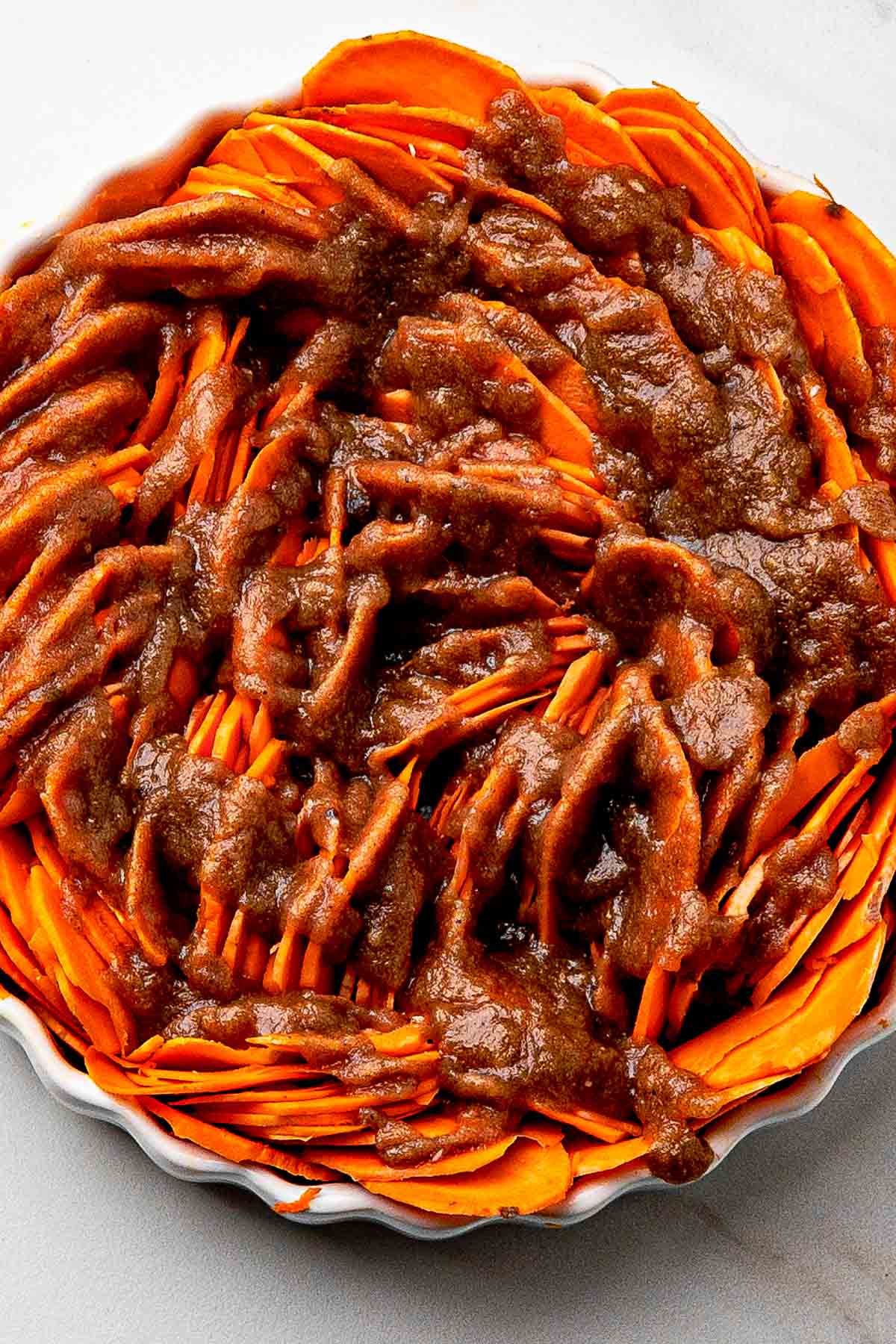
Next, I layer the slices into the dish and drizzle the butter mixture through as I go. The dish will look ridiculously full. Don't panic. Sweet potatoes shrink a lot, and that's what gives you tall layers instead of a half-empty dish.
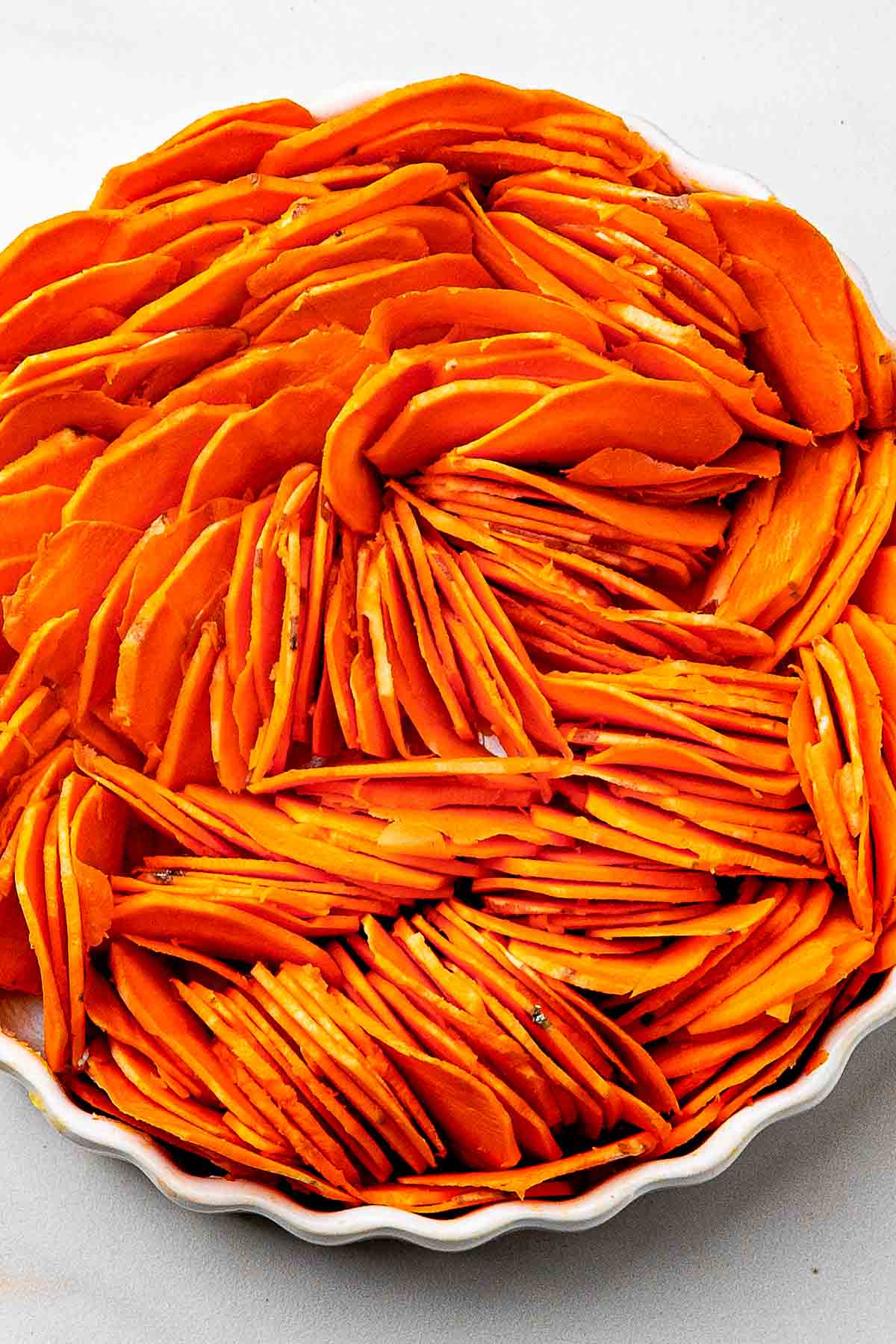
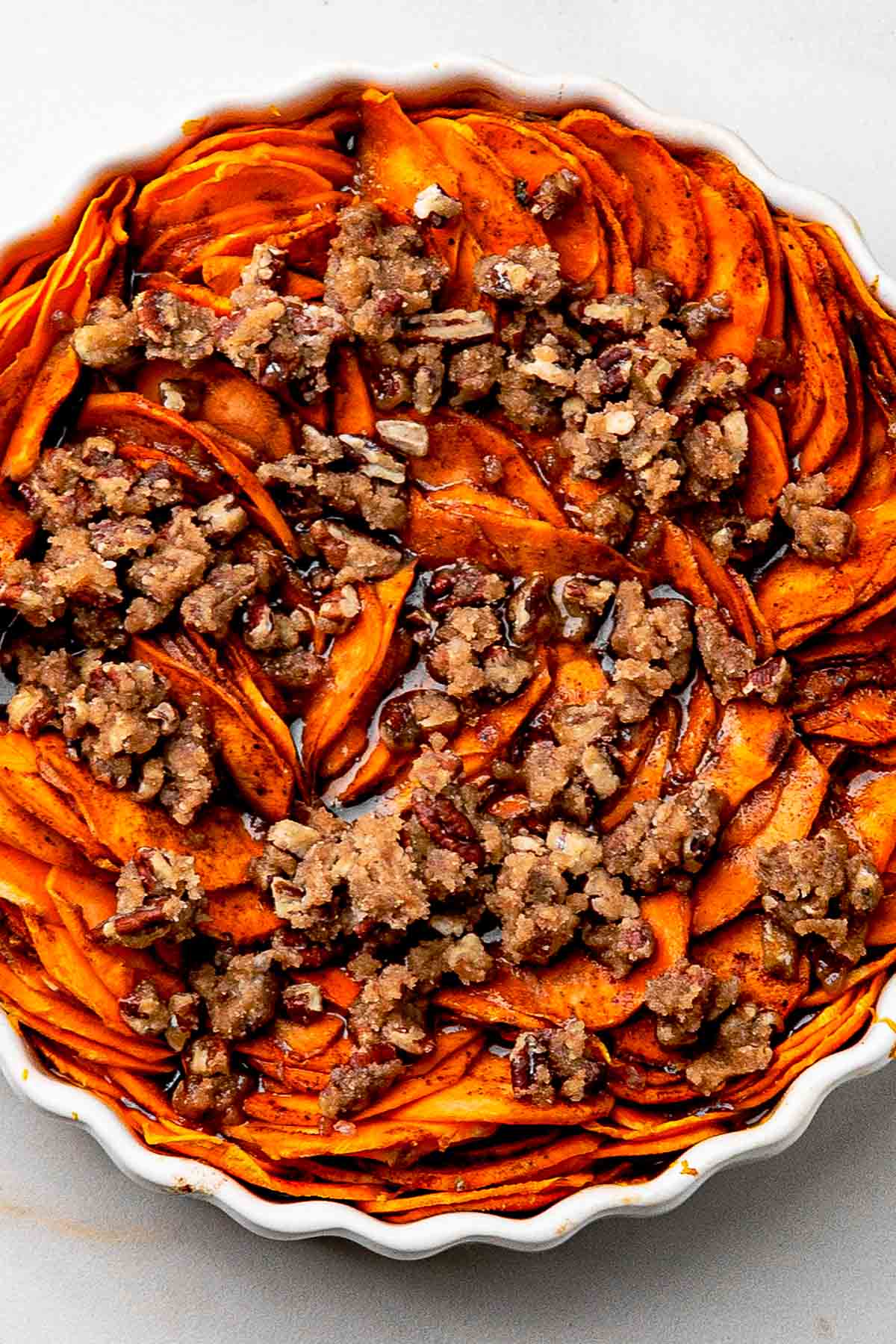
Foil goes on, and it bakes for about 40 minutes. The foil traps steam, so the potatoes soften all the way through. Then I scatter the pecan topping over the top, take the foil off, and bake until it's golden and a knife slides through the center.
Finally, I let it rest for 10 to 15 minutes. I know. Nobody wants to wait. But the resting time is when the buttery sauce settles into the layers instead of running to the bottom of the dish.
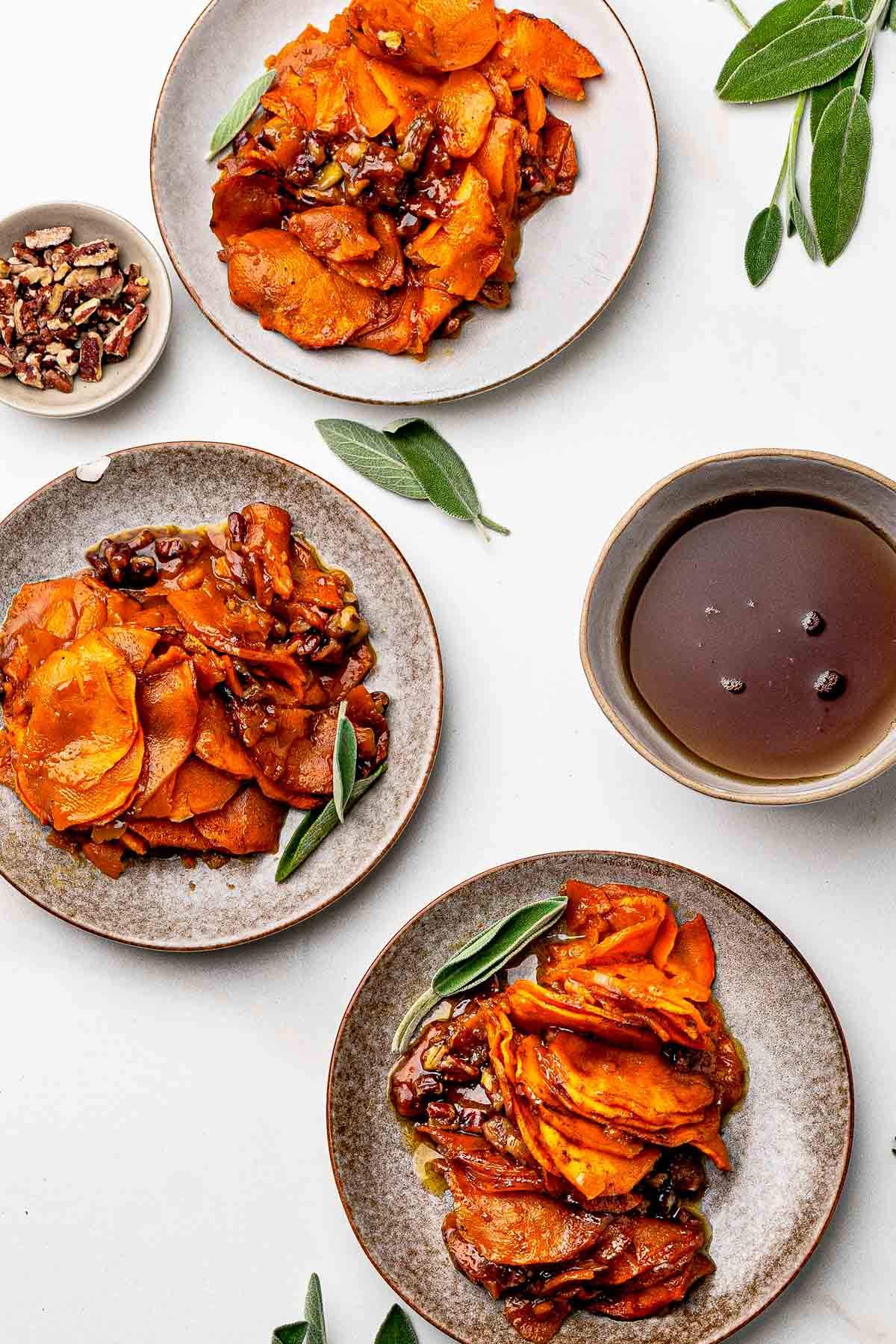
A drizzle of maple syrup and some flaky salt on top is optional. I always do it.
The best part is that you can build it a day ahead, which gets one more thing off your Thanksgiving list. It also looks like I worked a lot harder than I did, and I'm fine with that.

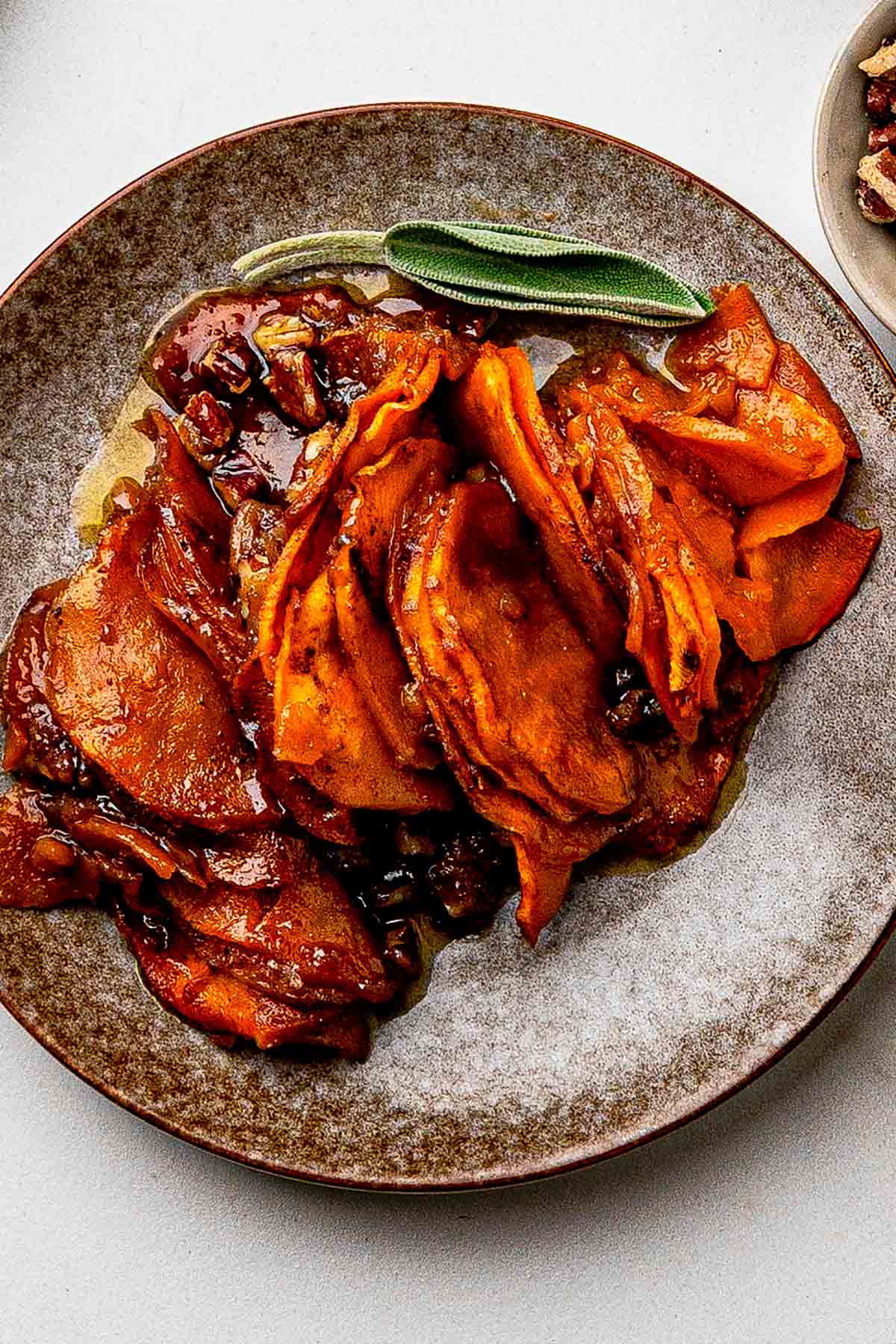
Sliced Sweet Potato Casserole
Equipment
- Mandolin slicer with hand guard
- 9x9 baking dish or pie plate
- Small mixing bowl
- measuring cups and spoons
- Aluminum foil
- Sharp knife
Ingredients
For the sweet potatoes
- 4 large sweet potatoes peeled
- 6 tablespoons unsalted butter melted
- ⅓ cup pure maple syrup
- ¼ cup packed light brown sugar
- 1 teaspoon ground cinnamon
- ½ teaspoon kosher salt
- ¼ teaspoon ground nutmeg
- 1 teaspoon vanilla extract
For the pecan topping
- ¾ cup chopped pecans
- 3 tablespoons packed brown sugar
- 2 tablespoons all-purpose flour
- 2 tablespoons melted butter
- ¼ teaspoon cinnamon
- Pinch of salt
To finish (optional)
- 1 tablespoon maple syrup
Instructions
- Get your oven going: preheat your oven to 375* and lightly butter your baking dish. Put the dish somewhere close because once you start slicing those sweet potatoes, you are going to want to have them layered fairly quickly.
- Slice the sweet potatoes: peel the sweet potatoes and trim off the ends. Using a mandolin, slice the sweet potatoes into very thin rounds, about ⅛ inch thick. Please use the hand guard with your mandolin. Try to keep the slices fairly even, so they cook at the same rate.
- Make the buttery maple mixture: in a small bowl, whisk together the melted butter, maple syrup, brown sugar, cinnamon, salt, nutmeg, and vanilla. It will smell like Thanksgiving before we've even put anything in the oven.
- Start layering: arrange a layer of sweet potato slices across the baking dish. Drizzle the buttery mixture through the layers. Don't worry if the potatoes look ridiculously high in the dish. They will shrink. And that's exactly what we want.
- Cover and bake: cover the casserole with foil and let it bake until the sweet potatoes are tender enough that a knife slides right through them. About 40 minutes. The foil gives the sweet potatoes a chance to steam and soften before we worry about those beautifully browned edges.
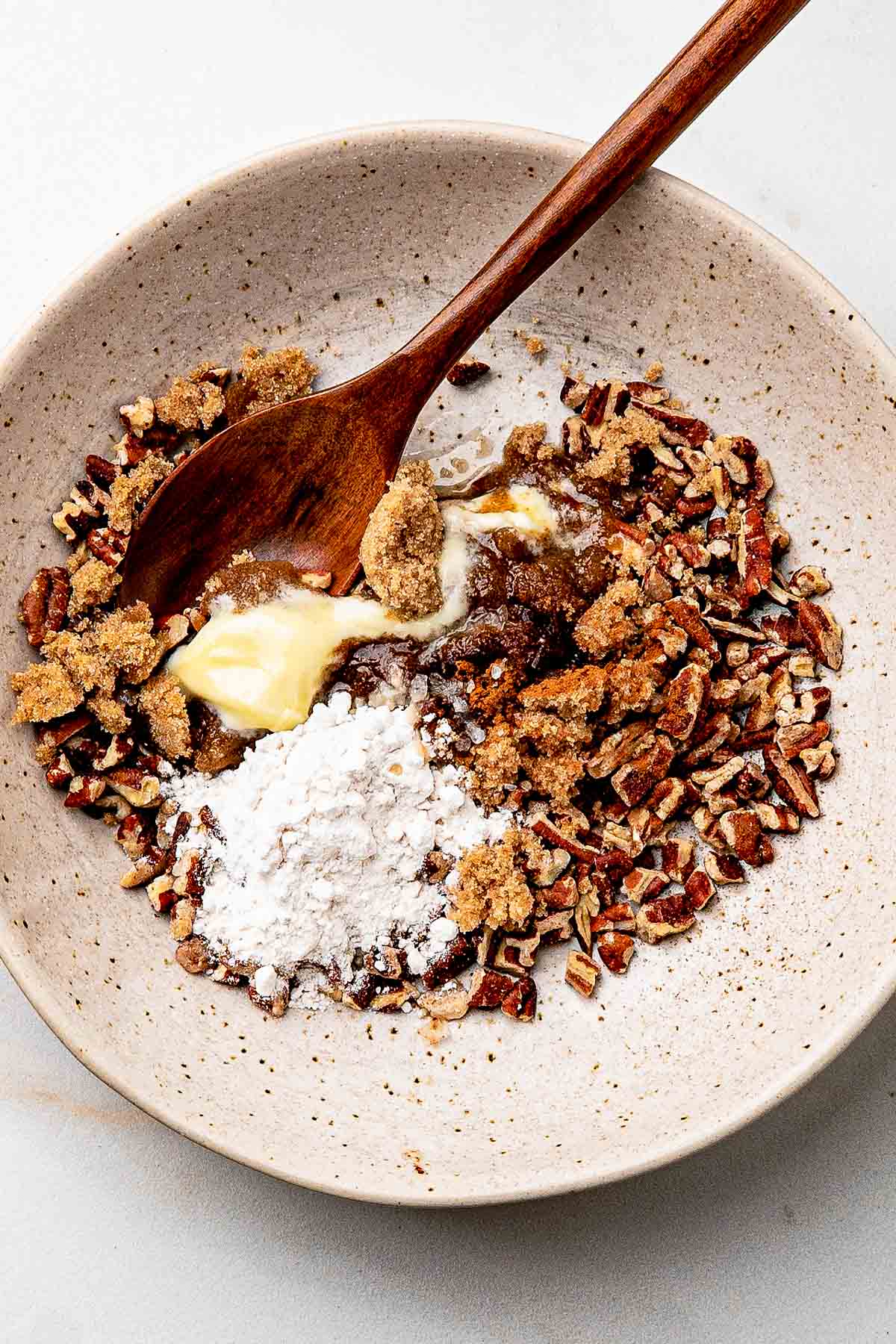
- Make the pecan topping: while the casserole is baking, stir together the chopped pecans, brown sugar, flour, melted butter, cinnamon, and salt. You want a crumbly mixture with little buttery clumps.
- Add the topping: Remove the foil after 40 minutes and check the potatoes with a thin knife. They should be starting to soften, but may still have some resistance in the center. Scatter the pecan mixture evenly over the top. Return the casserole to the oven, uncovered, and bake for another 15-25 minutes, or until the sweet potatoes are completely tender. And the top is golden brown. If the pecans are browning faster than you'd like, loosely cover the top with foil for the last few minutes.
- Let it sit: this is the part nobody wants to hear when they're hungry. Let the casserole rest for 10-15 minutes before serving. That little bit of resting time helps the buttery sauce settle in the other layers instead of running all over the bottom of the dish. If you want, drizzle the finished casserole with a tiny bit of maple syrup and a sprinkle of flaky sea salt right before serving
Success Tips
- Don't slice them paper thin. About ⅛ inch is thin enough to create layers and thick enough that the slices don't fall apart.
- Keep the foil on at first. The covered bake is what softens the sweet potatoes all the way through.
- Pack the dish generously. The slices shrink a lot, so a dish that looks overfilled at the start is a good sign.
- Check the center, not just the edges. The top browns first, but the middle tells you when it's actually done.
- Don't judge by the pecans. They can look beautifully browned while the center still needs time.
- Let it rest. Ten minutes makes a big difference in how neatly it serves.
Make Ahead, Storage and Freezing
Make ahead: You can assemble the casserole up to 1 day ahead. Layer the sweet potatoes and butter mixture in the dish, cover tightly, and refrigerate. Wait to add the pecan topping until you're ready to bake, so it stays crumbly. Take the dish out of the fridge while the oven preheats. Because the potatoes start cold, add 10 to 15 minutes to the covered bake time and check the center before taking it out.
Storing: Cover leftovers tightly and refrigerate for up to 4 days. Reheat portions in the microwave, or warm the casserole in a 350°F oven until heated through. The topping won't be quite as crunchy after refrigeration, but it's still really good.
Freezing: You can freeze it, though the sweet potatoes will have a slightly different texture after thawing. Cool completely, cover tightly, and freeze for up to 1 month. Thaw overnight in the refrigerator and reheat covered at 350°F until hot. Remove the cover toward the end to help the topping crisp back up.
What to Serve With It
This goes with everything on a holiday table:
- Roast turkey
- Honey-glazed ham
- Roast chicken
- Pot roast
- Chicken and green bean casserole
- Cranberry sauce
- Creamy Brussels sprouts
It's also good enough that I wouldn't save it just for Thanksgiving. It's a cozy side for a Sunday roast or any holiday dinner.
Fun Variations
- Walnuts: Use them in place of pecans.
- Orange: Stir a little fresh zest into the butter mixture for a bright, citrusy flavor.
- Savory: Cut the brown sugar and maple syrup in half, then add extra salt, black pepper and fresh thyme.
- Brown butter and sage: Brown the butter before making the maple mixture, then stir in a little finely chopped sage.
- Bourbon: Add 1 tablespoon to the butter and maple mixture.
- Apple: Tuck a few very thin slices of tart apple between the layers.
- Cranberries: Add a handful of dried cranberries between some of the layers.
- Bacon: Scatter about ½ cup cooked, crumbled bacon between the layers.
- Maple sugar: Replace half the brown sugar in the topping with maple sugar.
- Marshmallows: If your family would stage a protest without them, I won't argue. Add mini marshmallows for the last 5 to 7 minutes of baking and let them puff and toast.
Sweet Potato Casserole FAQs
Do I need to boil the sweet potatoes first?
Nope! The slices go into the dish raw. The foil does the work. Steam gets trapped under it for the first 40 minutes, so you never need a pot of boiling water.
Why are my sweet potatoes still firm in the middle?
Check your slice thickness first. When I slice thicker than ⅛ inch, the center is the last part to soften. Mine needed an extra 15 minutes covered. Make sure the foil is crimped tight around the rim too, because loose foil lets the steam escape. If the center is still firm after 40 minutes, re-cover the dish and bake another 10 to 15 minutes before adding the pecans.
Why did they shrink so much?
It's the water. Raw sweet potato slices lose a lot of volume as they soften, which is why the dish looks ridiculous going in. Mine sits about 1 inch over the rim and drops below it by the end. Pack it generously and trust the process.
Can I make this without the pecans?
Yes. Leave the topping off, or use walnuts. If you drop the nuts, I'd still make the brown sugar and butter crumble, because the top needs something to brown.
How do I know when it's done?
Push a thin knife into the center. It should go through with no firm spot. I don't go by the top, because the pecans brown long before the middle is ready.
Why did some slices cook faster than others?
Sweet potatoes aren't uniform. Some are denser, and the slices at the edge of the dish get more heat. If the edges are tender and the middle isn't, cover it and keep baking. Nothing is wrong.
Why does the butter mixture sit on top instead of soaking in?
A tightly packed dish or a cooled, thickened mixture will do it. Whisk the mixture again if it has set. The oven melts the rest, so don't chase every drop between the slices.
Why is my casserole watery?
Sweet potatoes release liquid, so a little pooling at the bottom is normal. When it's a lot, the dish usually stayed covered too long or came out too early. When mine looked soupy, 10 extra minutes uncovered fixed it. Uncovered baking is what lets the liquid cook down into a sauce.
A Note From Olya
When you see how high the sweet potatoes are piled in the dish, you'll think there's no way this fits. It does. Then you'll pull it out of the oven and wonder where half your sweet potatoes went. They shrink that much.
Also, please use the guard on your mandolin. I know I'm repeating myself, but I've watched enough cooking videos to know someone is thinking, "I can hold it carefully." No. Use. The. Guard.

Comments
No Comments