
You don't need a grill or a sous vide setup to make great steak at home. The combination of a hot skillet, generous seasoning, and a bit of butter at the end is enough to give you a steak that looks and tastes like it came from a restaurant.
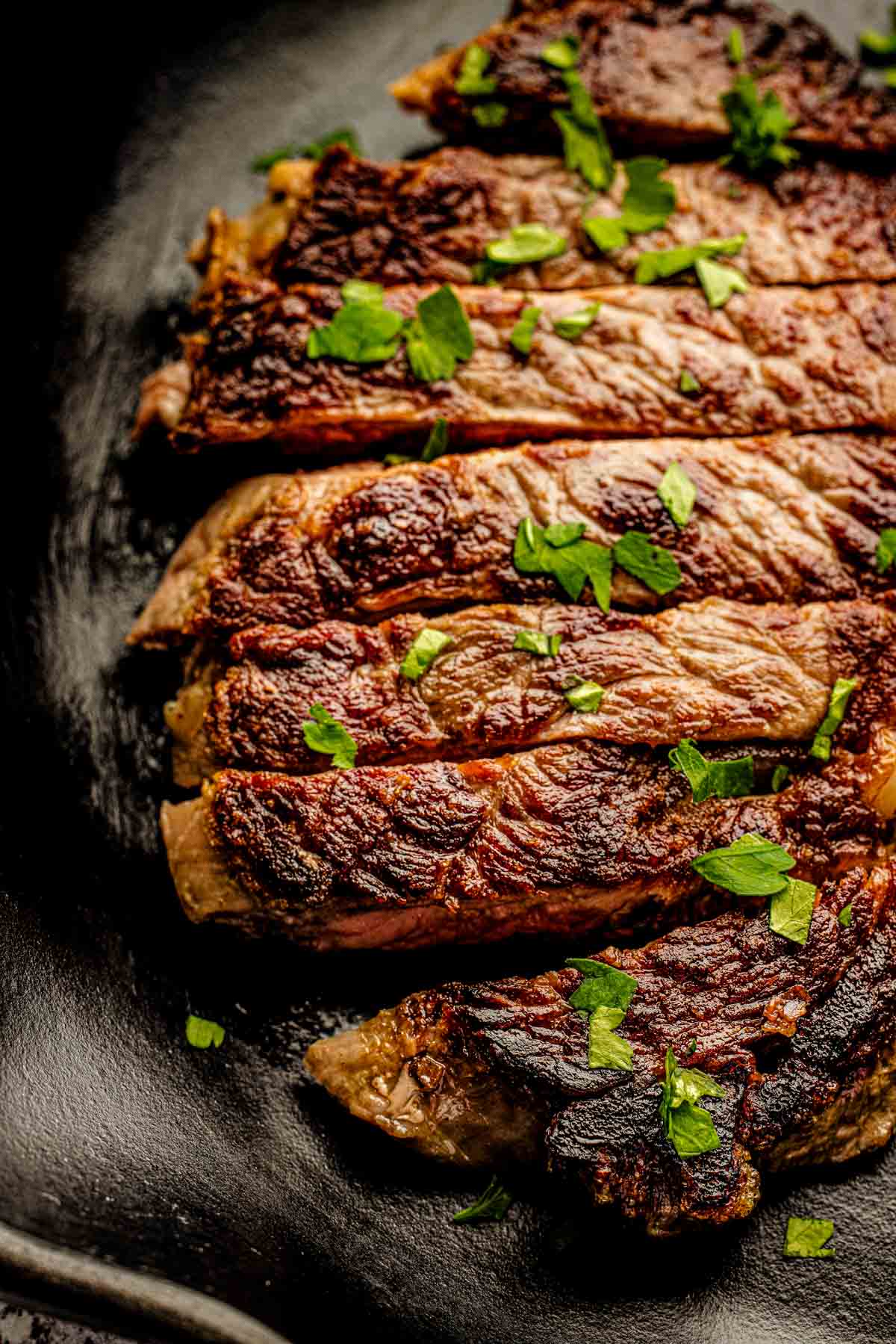
How to Cook Steak Perfectly Every Time (Pan-Sear Method)
Some of the best steaks never touch a grill. A heavy skillet, high heat, and a few minutes of attention can give you a deep brown crust, a juicy pink center, and a pan full of drippings just waiting to become sauce. This is the core method I use across my steak recipes-from simple pan‑seared sirloin with garlic‑herb butter, to peppercorn steak with creamy pan sauce, to a retro Steak Diane with mushrooms and brandy. Once you understand the basic steps, you can plug in any cut and almost any sauce flavor profile.
This guide walks you through choosing the right cut, searing it properly in cast iron or enameled cast iron, hitting your ideal doneness, and turning the browned bits at the bottom of the pan into something worthy of a restaurant plate.
Want to zoom out and see how this fits into the bigger steak picture? I walk through the full rundown on cuts, methods, and doneness in A Complete Guide to Steak.
The Best Steaks for Pan-Searing
Not all steaks behave the same in a skillet. The best cuts of steak for searing are about 1-1.5 inches thick, boneless, well‑marbled, and naturally tender.
Great options include:
- Top sirloin - budget‑friendly and perfect for my pan‑seared sirloin steak technique.
- New York strip - nicely marbled with a tender bite.
- Ribeye - rich and fatty, incredible crust and flavor.
- Filet mignon - leaner, but very tender; takes well to butter basting.
More fibrous cuts like flank or skirt can be pan‑seared too, but they need special slicing (very thin, against the grain) and often benefit from a marinade; those are better handled in more specific recipes.
Not sure when to pull your steak? Bookmark my Steak Doneness Temperatures Cheat Sheet for exact pull temps from rare to well‑done.
Let the Steak Warm Up First
Steak cooks more evenly when it isn't ice‑cold in the center. About 30-45 minutes before you plan to cook:
- Take the steak out of the fridge.
- Leave it loosely covered on the counter.
This short rest takes the chill off, which helps you get a better sear and more even doneness from edge to edge. It's the same move I use before searing sirloin in my garlic‑herb butter steak bites recipe.
Pat Dry and Season Generously
Moisture is the enemy of browning. Right before you cook:
- Pat the steak very dry on all sides with paper towels.
- Season all over with kosher salt and freshly ground black pepper. Don't be shy-thicker cuts need more seasoning than you think.
Chimichurri Marinated Flank Steak is especially sensitive to moisture so it's a key technique here.
If you have time, you can also dry‑brine: salt the steak 40-60 minutes or even several hours ahead, then pat dry again right before it hits the pan. This helps the seasoning penetrate and improves browning.


Choose the Right Pan (Cast Iron vs. Enameled)
For a proper sear, you want a pan that:
- Holds heat well
- Can tolerate high heat
- Has a heavy bottom
A regular cast iron skillet is ideal and what I use in most of my steak recipes. It gets ripping hot and stays there, which is what you need to build that deep crust you see on my peppercorn steak and Steak Diane.
An enameled cast iron skillet also works well, especially if you're planning a more acidic pan sauce (using wine, Marsala, or lots of tomatoes). The enamel helps prevent reactions with acid while still giving you excellent browning.

Preheat Until the Pan Is Truly Hot
This is where most home cooks under‑shoot. Put your empty skillet over medium‑high heat and give it time-3-5 minutes for cast iron-until it's very hot.
Then:
- Add a thin layer of high‑smoke‑point oil (avocado, canola, grapeseed, or a neutral vegetable oil).
- Swirl to coat.
- Wait until the oil is shimmering and just starting to barely smoke before adding the steak.
If you drop the steak into a pan that's only warm, it will steam and turn gray instead of searing. Hot pan, dry steak, enough oil-that's the trio you're going for.
Sear Without Touching
Lay the steak in the pan away from you to avoid splatter. The moment it hits, you should hear a strong sizzle.
Now, the hardest part:
- Don't move it.
- Don't peek.
- Don't nudge.
Let the first side sear undisturbed for about 3-4 minutes for a 1-1.25 inch steak. You're building the crust here-the same kind you see on the sirloin before it gets bathed in garlic‑herb butter.
When you finally peek and the first side is a deep golden brown with some darker spots, flip the steak.

Flip and Finish the Sear
Once flipped:
- Sear the second side for another 3-4 minutes for medium‑rare (again, on a 1-1.25 inch steak).
- Adjust 1-2 minutes shorter for thinner steaks or longer for very thick ones.
At this point, the steak will have color on both sides but may need just a bit more time to hit your ideal internal temperature. This is where butter and aromatics come in.
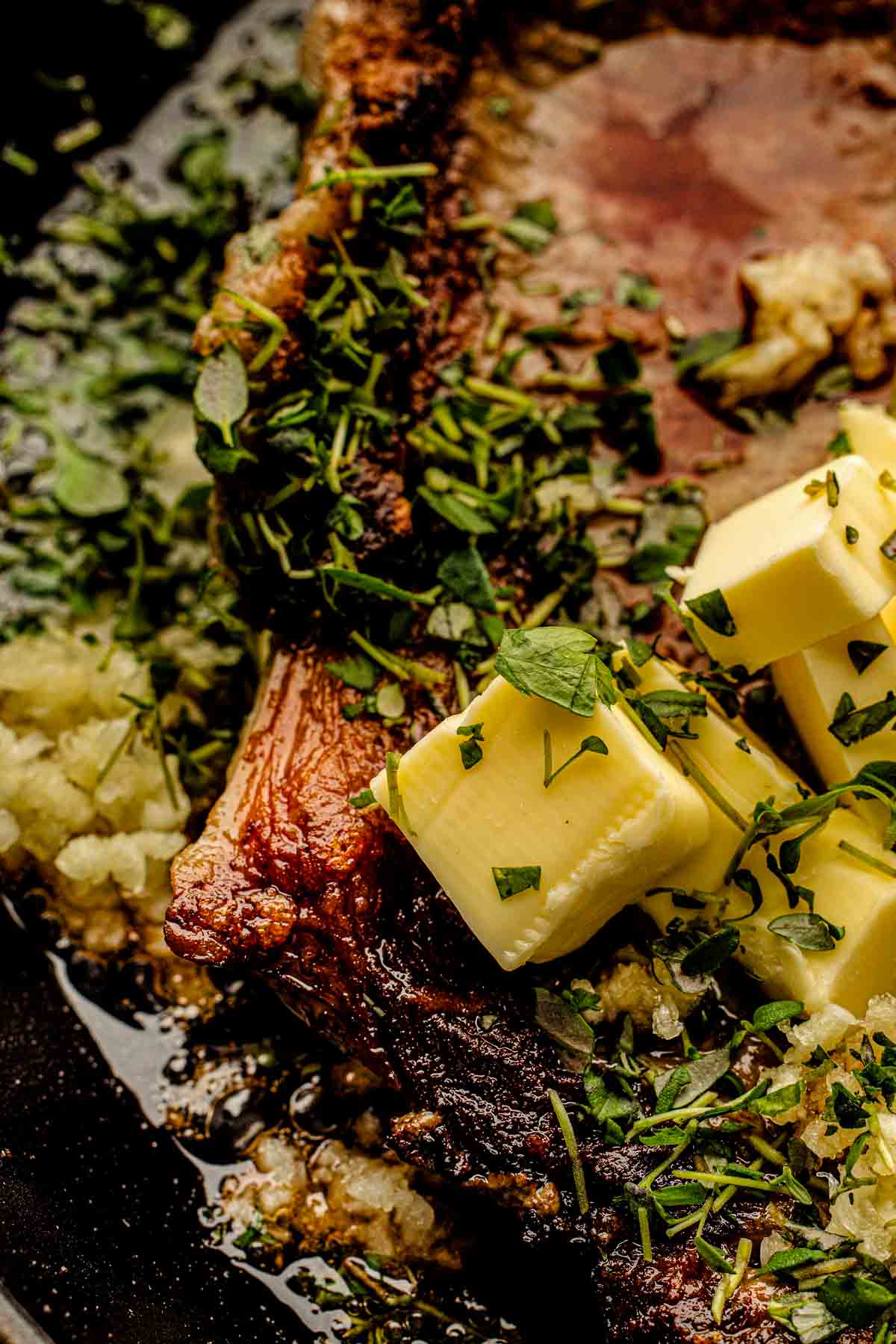
Butter Basting for Flavor (Restaurant Move)
In the last 2-3 minutes of cooking:
- Add 2-3 tablespoons of butter to the pan.
- Add a few smashed garlic cloves and a couple sprigs of thyme or rosemary.
- As the butter melts and foams, tilt the pan and spoon the hot butter repeatedly over the top of the steak.
This is the technique that makes simple pan‑seared steaks feel like a steakhouse dinner. It's the same move I use to finish the sirloin steak in herb butter, and it lays the foundation for sauces like the peppercorn cream in peppercorn steak and the Dijon‑Worcestershire sauce in Steak Diane.
Check Doneness with a Thermometer
Time is a guideline; temperature is the truth. Use an Instant Read Thermometer inserted into the center of the steak from the side:
- Rare: pull at about 120-125°F
- Medium‑rare: pull at about 130-135°F
- Medium: pull at about 140-145°F
The temperature will rise several degrees as the steak rests. Many steak lovers prefer the medium‑rare range for juiciness; readers should always cook to their own comfort level.
Rest Before Slicing
When the steak hits your target temp:
- Transfer it to a warm plate or cutting board.
- Let it rest 5-10 minutes, loosely tented with foil.
Resting allows the juices, which have moved toward the center during cooking, to redistribute. If you cut too early, those juices run out onto the board instead of staying in the steak.
For strip, sirloin, or similar cuts, slice against the grain right before serving for the most tender bite.

Don't Waste the Fond: Make a Quick Pan Sauce
The browned bits stuck to the bottom of the skillet (the fond) are pure flavor-that's the whole idea behind What's in the Pan. Want to riff on this and serve your steak with a quick pan sauce? Learn the basics in Pan Sauces 101.
While the steak rests:
- Pour off excess fat, but leave a thin layer in the pan.
- Return the pan to medium heat.
- Deglaze with a splash of wine, broth, or Marsala, scraping up the browned bits with a wooden spoon.
- Let it reduce slightly.
- Finish with a little cream or a knob of butter, and taste for salt and pepper.
This simple technique is perfect for:
- A classic peppery cream sauce (like peppercorn steak)
- A mushroom‑Dijon‑Worcestershire sauce (like Steak Diane)
- A Marsala and onion reduction (like Italian‑style beef liver "steak")
Spoon the sauce over the sliced steak and you've turned a basic pan‑seared steak into a complete, restaurant‑style dinner.
Troubleshooting: Common Steak Mistakes
A few issues you can address in a short FAQ or bullet section:
- Steak is gray, not browned: Pan wasn't hot enough, or steak was wet, or the pan was overcrowded.
- Steak is overcooked inside: Too long in the pan; next time, pull a few degrees earlier and trust carryover cooking.
- Pan is smoky: Heat too high, or using a low‑smoke‑point oil (like extra‑virgin olive oil).
- Uneven cooking (raw in middle, char outside): Steak was too cold or too thick; lower heat slightly after initial sear and/or finish briefly in the oven.
Tina Panayotis says
Made your sirloin steak several times. Very easy to follow recipe. Love this!