
This Chimichurri Marinated Flank Steak uses one bold herb sauce as both marinade and topping - infusing every bite with garlic, lemon, and fresh herbs. Done in 15 minutes. A next-level weeknight steak dinner that will earn you compliments every time.

Love Steak as much as I do? The you will enjoy Sirloin Steak (Pan-Seared, Juicy Every Time) and Steak Diane for Two.
If you've ever wished your chimichurri could do more than sit in a bowl on the side, this chimichurri marinated flank steak is your answer. By combining fresh-blended chimichurri - made with flat-leaf parsley, cilantro, oregano, lemon, and red wine vinegar - directly into the steak marinade alongside soy sauce and brown sugar, you get a cut of beef that's tender, herby, and loaded with flavor from the inside out.
Cook it over medium-high heat for just 6-7 minutes per side (grill or sear), and you have a showstopping dinner that works as easily on a weeknight as it does at a summer cookout. Slice it against the grain, fan it over a platter, and spoon the remaining chimichurri on top - dinner is served.
If you want to brush up on your steak pan-searing skills, my guide on How to Cook Steak Perfectly Every Time (Pan-Sear Method) is here to help!

Why I Love This Recipe
- One sauce, two jobs. The chimichurri does double duty as both a flavorful marinade and a fresh finishing sauce, so every bite of steak is packed with herby, garlicky flavor from the inside out.
- Restaurant results, simple method. You'll get a beautifully charred flank steak with a tender, juicy center using straightforward, repeatable steps (plus exact internal temperatures) instead of guesswork. Same straightforward easy recipe as my Garlic Butter Steak Bites in Rich Herb Butter Sauce.
- Grill or cast iron friendly. Make it on the grill in summer or in a hot cast iron skillet year-round - the method adapts to your kitchen without changing the flavor.
- Make-ahead and leftover gold. The chimichurri tastes even better after it sits, the steak can marinate ahead, and leftovers are perfect for tacos, salads, or grain bowls.
For more steak basics, from picking the right cut to nailing doneness, head over to A Complete Guide to Steak.

Ingredients You'll Need
For the Flank Steak & Marinade:
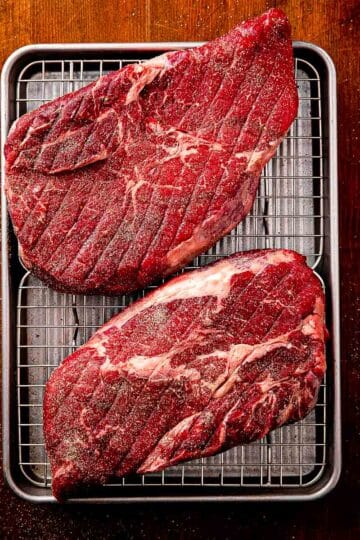
- Flank steak - look for a piece with even thickness so it cooks uniformly; ask your butcher to trim any excess silverskin
- Soy sauce - adds deep umami and salt that amplifies the beef's natural flavor; low-sodium works if you're watching salt
- Brown sugar - promotes caramelization on high heat and balances the acidity of the chimichurri in the marinade
- Worcestershire sauce - a small but powerful addition that adds another layer of savory, fermented depth to the marinade
- Reserved chimichurri sauce - the star of the marinade; you'll set aside a portion before serving so the same fresh sauce does double duty
For the Chimichurri:
- Salt and black pepper - season confidently and taste as you go; chimichurri should be boldly seasoned
- Fresh flat-leaf parsley - the backbone of the sauce; flat-leaf has more flavor than curly parsley and is worth seeking out
- Fresh cilantro - brightens and lifts the sauce; see the tip block above if cilantro isn't your thing
- Fresh oregano - adds an earthy, slightly peppery note that dried oregano can't replicate here
- Shallot - milder and sweeter than raw onion, it blends into the sauce without overpowering the herbs
- Garlic - use fresh cloves, not jarred; the flavor difference in a raw sauce like chimichurri is significant
- Red pepper flakes - brings gentle heat that you can dial up or down; add a fresh jalapeño if you want real spice
- Lemon - both the juice and the zest go in; the zest carries aromatic oils the juice alone can't deliver
- Red wine vinegar - the primary acid that tenderizes the steak and gives the chimichurri its signature tang
- Olive oil - use a good quality extra-virgin here; it's the body of the sauce and its flavor comes through
🌿 Hate cilantro? You're not alone
Cilantro is one of the most divisive ingredients in cooking - and if it tastes like soap to you, that's actually a genetic trait, not a preference. The good news: this chimichurri is just as vibrant without it. Simply swap the cilantro 1:1 for additional flat-leaf parsley. The sauce stays bright, herby, and garlicky - you won't miss it.

How to Make Chimichurri Marinated Flank Steak
1. Make the Chimichurri
Everything starts with the chimichurri, and the food processor is your friend here.
Add the parsley, cilantro, and oregano first - stems removed - followed by the shallot, garlic, red pepper flakes, lemon juice, lemon zest, and red wine vinegar. Pulse a few times to break everything down, then stream in the olive oil with the processor running until you have a cohesive, spoonable sauce.
Taste it at this point and season assertively with salt and pepper. Chimichurri should taste bold on its own - it's going up against a heavily marinated flank steak.
The key step: measure out half a cup of the finished chimichurri and set it aside in a separate container before it touches the raw meat. This reserved portion stays fresh and vibrant for finishing the dish. The rest goes directly into the marinade.


2. Build the Marinade and Marinate the Steak
In a large zip-lock bag or shallow baking dish, combine the reserved chimichurri with soy sauce, brown sugar, and Worcestershire sauce. Add the flank steak and turn it to coat evenly on all sides.
Seal or cover and refrigerate for at least 2 hours and up to 8. If you can plan for a 4-to-6-hour window, that's the sweet spot - long enough for the acid in the chimichurri to do meaningful tenderizing work, short enough that the surface proteins don't break down too far.
When you're ready to cook, pull the steak from the refrigerator 30 minutes beforehand and let it come closer to room temperature. A cold steak hitting a hot surface cooks unevenly - the exterior overshoots before the center catches up.
3. Cook the Steak
Pat the steak lightly with a paper towel to remove excess marinade from the surface; too much liquid on the meat steams rather than sears.
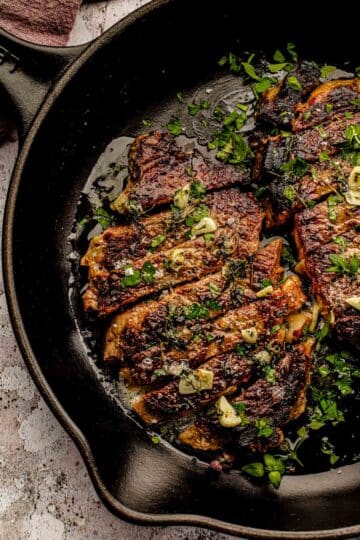
Place the flank steak directly over the heat and leave it alone. Resist the urge to move it - the steak will release naturally from the grates once a proper crust has formed, usually after 6 to 7 minutes. Flip once and repeat on the second side. Use an instant-read thermometer to check doneness rather than timing alone; and flank steak's lean profile means the margin between perfect and overdone is narrow. Pull it at 125-130°F for medium-rare, or 135-140°F for medium.

4. Rest, Slice, and Serve
Rest the steak for a full 10 minutes on a cutting board before slicing. During this time, the muscle fibers - which contract and push juices toward the center under heat - relax and redistribute that moisture back through the meat. Cut into a steak straight off once it's done cooking and those juices run straight onto your board instead of staying in the meat where they belong.
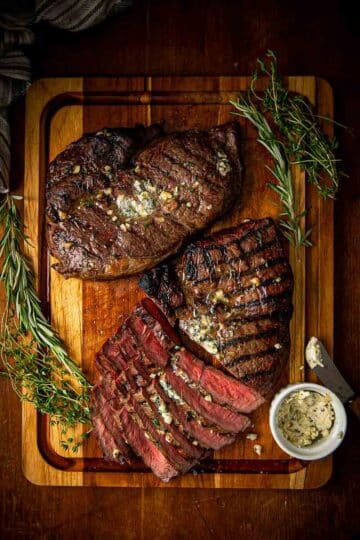
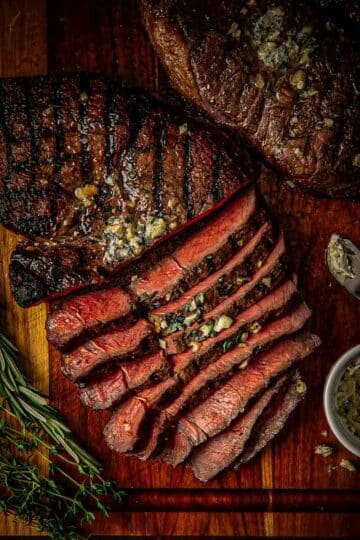
When you're ready to slice, orient the steak so that you're cutting perpendicular to the long muscle fibers running along its length - this is what it means to slice against the grain. On a flank steak, those fibers run lengthwise and are easy to see. Thin, angled slices about a quarter-inch thick work best. Fan them out on a serving platter, spoon the reserved fresh chimichurri generously over the top, and set the extra alongside for dipping.


Chimichurri Marinated Flank Steak
Ingredients
- 2 lbs flank steak
- 2 tablespoon soy sauce
- 2 tablespoon brown sugar
- 1 tablespoon worcestershire sauce
- ½ cups reserved chimichurri sauce
Chimmichurri
- 1 cup fresh flat leaf parsley stems removed
- ¼ cups fresh oregano stems removed
- 2 tablespoon shallot
- 1 tablespoon garlic
- 2 teaspoon red pepper flakes
- juice and zest of 1 lemon
- ¼ cup red wine vinegar
- 1 cup olive oil
- 1 teaspoon salt
- 1 teaspoon black pepper
Instructions
Make Chimichurri
- In a food processor, combine all the ingredients in the bowl and puree-taste for seasoning. Remove ½ cup for marinade.
- Combine soy sauce, brown sugar, worchestershire, and reserved chimichurri sauce. Allow to marinate for at least 2 hours and up to 8.
Sear or Grill
- Preheat a an oiled heavy duty skillet (cast iron or enameled) or grill to medium-high heat.
- Sear or grill for 6-7 minutes per side until browned on the outside and slightly pink on the insdie, or until cooked to your desired doneness. For medium-rare, cook to an internal temperature of 125°F; for medium, 135°F; and for medium-well, 145°F. Allow to rest for 10 minutes before slicing.
Slice
- Slice the meat against the grain and fan out on a serving platter. Spoon the chimichurri over the top of the steak and set the extra aside for dipping.
Flank Steak Doneness Guide
Flank steak is an unforgiving cut when it comes to overcooking. Because it's lean and relatively thin, it moves through doneness levels quickly on a hot surface - a few extra minutes can push a perfect medium-rare into a dry, tough medium-well. Use an instant-read thermometer and pull the steak before it hits your target temperature, as carryover cooking during the 10-minute rest will raise the internal temp by an additional 3-5°F.
An instant-read thermometer is MORE a good idea here; guessing by touch on a lean cut like flank steak is how you end up with an overcooked dinner.
| Doneness | Pull Temp (°F) | Final Temp After Rest (°F) | Celsius (Final) | Description |
|---|---|---|---|---|
| Rare | 120°F | 125°F | 52°C | Bright red center, very soft — for the confident few |
| Medium-Rare | 125–130°F | 130–135°F | 54–57°C | Pink-red center, juicy and tender — recommended |
| Medium | 135–140°F | 140–145°F | 60–63°C | Pink center, slightly firmer, still flavorful |
| Medium-Well | 145–150°F | 150–155°F | 66–68°C | Light pink to gray, noticeably less juicy |
| Well Done | 155°F+ | 160°F+ | 71°C+ | No pink, dry — not recommended for flank steak |
For flank steak, medium-rare to medium (final temp 130-145°F) is the sweet spot. Because flank is a lean cut with very little fat marbling, there's nothing to keep it moist once you push past medium-well - and no marinade, even a great chimichurri, can fully compensate for lost moisture. If your crowd skews well-done, slice their portions thinner to help with texture.
For a full breakdown of every doneness level across all cuts, I put together a Steak Doneness Temperatures Cheatsheet that makes it easy to reference at a glance.
A note on well done: Flank steak cooked to well done loses a significant portion of its natural moisture, and no marinade - however good - will fully compensate for that. If you prefer well-done beef, a fattier cut like a ribeye will serve you better. For this recipe, medium-rare is the target.

What Actually Changes Pan vs. Grill
The crust, not the temp. A cast iron skillet at medium-high heat generates intense direct contact heat that produces a deeper, more even Maillard crust on both flat sides - sometimes better than grill grates, which only sear where the bars touch. The interior doneness temperatures remain identical.
Cook time is slightly longer. For a flank steak in a cast iron skillet, plan for 4-5 minutes per side for medium-rare, versus 6-7 minutes on the grill - the pan's radiant heat is more concentrated but the ambient heat around the steak is lower than open-flame grilling.
Carryover is the same. Pull the steak 3-5°F before your target temperature regardless of cooking method - the rest period physics don't change.
If you prefer cooking steak indoors, this chimichurri flank steak is a great place to start - and you can dive deeper into cut selection and pan technique in my guide to the best cuts of steak for pan searing.
Why Chimichurri Works as a Marinade for Flank Steak
Most marinades rely on a single acid source - lemon juice, vinegar, or buttermilk - to denature surface proteins and open the meat to flavor. Chimichurri already contains two: red wine vinegar and fresh lemon juice. That double-acid base makes it a more aggressive tenderizer than a typical herb sauce spooned over a finished steak.
The soy sauce and brown sugar aren't afterthoughts. Together, they turn a simple chimichurri into a marinade that tenderizes, seasons, and primes the exterior for a proper sear - all in one bowl.
Timing matters. Two hours is the minimum for meaningful tenderizing; eight hours is the maximum before the acids break down surface proteins too aggressively, creating a mealy texture. For best results, aim for 4 to 6 hours.

What to Serve with Chimichurri Flank Steak
- Crusty bread or crostini - the best vehicle for soaking up extra chimichurri from the platter
- Creamy potatoes - creamy interior, crispy exterior; a natural pairing with flank steak
- Caprese Stuffed Avocados - keep the plate light and let the steak be the star of your dinner
- Slow Cooker Creamed Corn with Cream Cheese - corn sweetness plays beautifully against the chimichurri sauce.
If you're planning a full steak night, you'll find more ideas in my Steak Dinner Recipes collection - from pan-seared favorites to creamy skillet sauces you can pair with this chimichurri flank steak.
Make-Ahead and Storage Tips
Making it ahead:
- The chimichurri can be made up to 3 days in advance and stored in an airtight container in the refrigerator - the flavor actually improves after a few hours as the herbs steep in the olive oil and vinegar
- The steak can marinate for up to 8 hours in the refrigerator; beyond that, the acids begin to break down the surface texture
- For entertaining, marinate the steak the night before and make the chimichurri the morning of - dinner is essentially done before your guests arrive
Storing leftovers:
- Sliced steak keeps in an airtight container in the refrigerator for up to 5 days
- Store the chimichurri separately from the steak to keep it fresh and vibrant; once it sits on the meat it begins to oxidize and lose its bright green color. The chimichurri will solidify slightly in the refrigerator due to the olive oil - bring it to room temperature for 15 minutes and stir before serving
Reheating:
- Reheat sliced steak in a preheated cast iron skillet over medium-high heat for 1-2 minutes per side - just enough to warm through without overcooking
- Avoid the microwave if possible; it continues to cook the lean meat and toughens it quickly
- Cold leftover slices straight from the refrigerator also work beautifully in steak tacos, grain bowls, or over a simple arugula salad - no reheating required
Comments
No Comments