
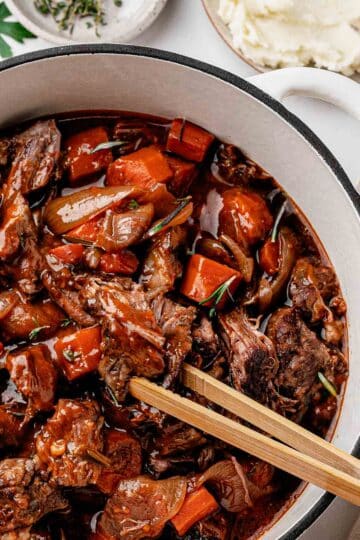
Fall-apart tender short ribs with a silky, glossy sauce - without complicated steps or hard-to-find ingredients. This recipe uses a simple but powerful technique (reducing the wine twice) to create deeper flavor than standard braises. It's the kind of dish that feels restaurant-level but works easily in a home kitchen.

There's something about red wine braised short ribs that feels a little special, but the process itself is surprisingly straightforward and very doable at home. You start by searing the beef until it's deeply browned on all sides (don't rush this step-it builds the foundation of flavor), then let it slowly cook in a mixture of red wine, beef stock, and simple aromatics like onion, carrot, and garlic. As the ribs gently simmer, they become incredibly tender while the sauce develops a rich, savory depth that tastes like it took far more effort than it actually did.
If you're new to braising or just want a quick refresher on the technique, I also have a full guide on How to Braise Short Ribs in the Oven that walks through searing, oven temperature, braising time, and exactly how to tell when the meat is perfectly tender.
What makes this version stand out is how the sauce is built from the very beginning. Instead of simply adding wine and moving on, the wine is reduced first to concentrate its flavor and remove any sharpness, then reduced again at the end after straining for a smooth, glossy finish. It's a small extra step that doesn't add much work, but it makes a noticeable difference in both taste and texture. The result is a lighter, more refined sauce that clings beautifully to the ribs-especially when served over something like Creamy Garlic Potatoes or mashed potatoes.
If you love deeply flavored, slow-cooked beef, this recipe sits alongside my Red Wine Braised Beef Chuck Roast as one of the most satisfying things you can make in a Dutch oven. Same technique, different cut - both deliver that fall-apart tender result with a glossy, refined sauce.

Why This Red Wine Braised Short Ribs Recipe Works
This recipe focuses on a few key techniques that make a noticeable difference in both flavor and texture. Instead of relying on long cook time alone, it builds depth in stages-starting with a proper sear, followed by a controlled braise, and finished with a refined sauce. Each step is designed to solve common issues like flat flavor, overly soft meat, or a thin, unbalanced sauce. This recipe leans on the same idea I use in Steak Diane, where simple ingredients and a quick pan sauce turn a basic cut of beef into something that feels restaurant-worthy.
The Case for a Two-Stage Reduction
Most recipes add wine and stock together and rely on the braise to do all the work, but that approach often leaves the sauce tasting diluted or slightly harsh. Reducing the wine first concentrates its flavor and removes any raw edge before it's combined with the other ingredients, creating a stronger base from the start. After braising, reducing the strained liquid a second time produces a smoother, more concentrated sauce with a clean, glossy finish, giving you a more balanced and layered result.
Why Bone-In Short Ribs Are Worth It
Bone-in short ribs hold their shape better during cooking, which helps prevent the meat from breaking down too quickly or falling apart completely. As they braise, the bones and connective tissue release collagen into the liquid, naturally enriching the sauce and giving it more body. The result is a dish that feels more structured on the plate, with tender meat and a fuller, more cohesive sauce than you typically get from boneless cuts.
If you're not sure which short ribs to grab at the store (English-cut, flanken, bone-in, boneless), I put together a full guide on short rib cuts explained that shows exactly what to look for and why the cut you buy matters so much for this recipe.
Ingredients You'll Need
- Beef short ribs (bone-in) - The main ingredient; look for well-marbled ribs since fat keeps the meat tender during the long cook.
- Fresh parsley, thyme, rosemary, bay leaf - I bought a small mixed herb pack; these add background flavor and get tied together so they're easy to remove later.
- Salt and black pepper - Basic seasoning, but important; salt helps bring out flavor while pepper adds mild heat.
- Olive oil - I used regular olive oil; this helps brown the meat and prevents sticking during the sear.
- Yellow onion - Adds sweetness and depth as it cooks down; dice it so it melts into the sauce.
- Carrots - I bought whole carrots and chopped them; they balance the richness with a subtle natural sweetness.
- Celery - Part of the classic flavor base; it adds a light, savory note that rounds everything out.
- Garlic cloves - I used fresh garlic; lightly crushing them releases flavor without burning.
- Tomato paste - A small amount deepens color and adds a subtle richness; it won't taste like tomato sauce.
- Dry red wine (Cabernet Sauvignon, Merlot, or Malbec) - I bought a mid-priced bottle I'd drink; the wine forms the base of the sauce, so quality matters.
- Beef stock - Adds body and keeps the braising liquid from being too strong or acidic.

How to Make Red Wine Braised Short Ribs (Step-by-Step)
1. Build Flavor From the Start
Everything begins with the sear, because that's where the foundation of the dish is built. You're not just browning the meat-you're creating a deep crust that will carry through the entire braise. Take your time here, keep the heat high, and don't overcrowd the pan. If the ribs release easily when you turn them, you're on the right track; if they stick, they're not ready yet.

2. Build the Braising Base
Once the ribs are out, you're working with all the browned bits left behind in the pan. That's flavor, and the vegetables go in to pick it up. As they cook, they soften and start to caramelize slightly, creating a base that's both savory and a little sweet. The tomato paste gets cooked briefly to deepen its flavor, then the wine goes in-not just to deglaze, but to reduce down into something more concentrated and less sharp.


3. Reduce Before You Braise
This is the step that changes how the final dish tastes. Instead of adding stock right away, the wine is reduced on its own until it thickens and looks glossy. That reduction removes any harshness and concentrates the flavor so it doesn't get lost once the liquid is added. You'll notice the bubbles change and the liquid cling more to the pan-that's your signal to move forward.

4. Gentle, Controlled Braising
Once the stock is added and the ribs go back in, the goal is to keep everything at a gentle simmer, not a boil. The liquid should move slightly but never aggressively. This slower cooking allows the connective tissue to break down gradually, turning tough meat into something tender while still holding its shape. Whether on the stovetop or in the oven, consistency matters more than speed here.


5. Finish the Sauce Properly
After the ribs are cooked, the liquid has done its job but still needs refinement. Straining removes the solids for a cleaner texture, and a final reduction tightens the sauce so it lightly coats a spoon instead of running thin. This step is what gives the dish a more polished feel without adding anything extra.

How to Tell When Short Ribs Are Done
The most reliable test is a knife or skewer inserted into the thickest part of the meat-it should slide in with very little resistance. The meat should feel tender but still hold together when lifted, not fall apart completely. If it's shredding or collapsing, it's gone a bit too far; if there's resistance, it needs more time.

Red Wine Braised Short Ribs
Equipment
- Heavy-bottomed Dutch oven (5-7 quart) with a lid - this is non-negotiable for even, consistent heat
- paper towels
- Wooden spoon or silicone spatula
- fine mesh strainer (for finishing the sauce)
- Instant-read thermometer optional but helpful)
Ingredients
- 4 sprigs parsley
- 8 sprigs thyme
- 1 sprig rosemary
- 1 bay leaf
- 2 lbs beef short ribs
- salt
- black pepper
- 2 tablespoon olive oil
- 1 large yellow onion diced
- 2 large carrots diced
- 2 celery ribs diced
- 4 cloves garlic peeled and lightly crushed
- 2 tablespoon tomato paste
- 3 cups red wine
- 8 cups beef stock
Instructions
- Tie the parsley, thyme, rosemary, and bay leaf together with kitchen twine to create a herb bundle. Set aside.
- Pat the short ribs dry with paper towels and season generously on all sides with salt and black pepper.
- Heat a large heavy pan over medium heat until smoking hot (about 5 minutes).
- Add the oil then when it's shimmering working in batches adding the short ribs. Sear on all sides for 2-3 minutes until deeply golden brown. Allow each side to develop a rich crust before turning. Transfer the ribs to a plate once browned.
- In the same pan, add the onion, carrots, and celery. Cook over medium high heat, stirring occasionally, until the vegetables soften and are slightly caramelized.
- Add the garlic cloves and cook briefly until fragrant. Stir in the tomato paste and cook for a minute or two until it darkens slightly and coats the vegetables.
- Pour in the red wine and scrape up any browned bits from the bottom of the pan.
- Increase the heat and simmer until the wine reduces to a thick, glossy consistency and the volume is reduced to about ¾ cup.
- Return the short ribs to the pan, nestling them into the reduced wine and vegetables. Pour in enough of the beef stock so the liquid comes about three quarters of the way up the ribs. Add the herb bundle and lightly season.
- Bring the liquid to a gentle simmer, then cover and cook, until the ribs are tender but still holding their shape, checking after about 2 hours. Continue cooking if needed until a knife slides in easily.
- Carefully remove the ribs from the pot and set aside to rest.
- Strain the cooking liquid into a saucepan, discarding the vegetables and herbs. Bring the liquid to a simmer and cook for about ten minutes or until slightly thickened and glossy. Taste and adjust seasoning if needed.
- Return the ribs to the sauce and spoon the sauce over the top before serving.
- Serve with mashed potatoes and a sprinkling of fresh thyme.
- Enjoy!
The Sauce: How to Strain and Reduce
By the time the ribs are done, the braising liquid is full of flavor but also a bit rough in texture from the cooked vegetables and herbs. Finishing the sauce separately lets you clean it up and concentrate it so it actually matches the richness of the meat instead of tasting diluted.
Why You Should Always Strain Your Braising Liquid
Straining removes the softened vegetables and herb fragments that have already given up their flavor. Leaving them in can make the sauce feel muddy and slightly grainy, especially once everything has broken down from the long cook. Running the liquid through a fine sieve gives you a smoother, more refined base, and lightly pressing on the solids extracts extra flavor without pushing too much pulp through.
What Consistency to Look For
After straining, the sauce should be simmered until it thickens slightly and takes on a glossy look. You're not aiming for a heavy gravy-just enough body so it coats the back of a spoon and slowly runs off instead of dripping like water. If you drag your finger across the spoon and it leaves a clean line, it's ready to go.
Stovetop vs. Oven Braise
Both methods will get you tender, flavorful short ribs, but they behave a little differently, and knowing that makes it easier to choose the one that fits your kitchen and cooking style.
On the stovetop, you have more direct control over the heat, but you also have to pay closer attention. The liquid can shift from a gentle simmer to a hard boil pretty quickly, especially on powerful burners, and a rolling boil is what leads to stringy meat and a cloudy sauce. If you go this route, keep the heat low, watch for just a few lazy bubbles breaking the surface, and check in every so often to be sure nothing is catching on the bottom.
In the oven, the heat surrounds the pot more evenly and stays steady, which makes it more forgiving. Once everything is simmering, you slide the covered pot into a 300°F oven and let it do its thing with minimal babysitting. The liquid stays at a gentle, consistent simmer, the meat cooks more evenly, and you're less likely to overcook the bottom while the top is still catching up. If you've ever struggled with braises running too hot on the stovetop, the oven is usually the better choice.
My Cider Braised Pot Roast uses a similar covered Dutch oven method but swaps red wine for apple cider, which gives it a slightly sweeter, more autumnal flavor profile.

What to Serve with Braised Short Ribs
Braised short ribs are rich by design, so what you serve alongside them should either balance that richness or give the sauce somewhere to go. The goal is simple: something that can absorb the sauce without competing with it.
Best Mashed Potato Pairing
Instant pot mashed potatoes or Irish Mashed Potatoes are the most natural fit because they act as a base for both the meat and the sauce. A smoother, creamier mash works best here since it blends easily with the reduced sauce and doesn't feel heavy or chunky.
Keeping the seasoning simple-just butter, salt, and a bit of dairy-lets the short ribs stay the focus while still giving you a full, balanced bite.
Other Side Dish Options (polenta, egg noodles, crusty bread)
If you want something different, soft polenta offers a similar effect with a slightly more rustic texture and a mild corn flavor that pairs well with the richness of the beef. Egg noodles are another solid option-they're light, cook quickly, and hold onto the sauce without weighing the dish down.
For something simpler, crusty bread works just as well, especially if you're more interested in soaking up the sauce than building a composed plate. If you like that style of plate, you might also enjoy my Instant Pot Irish Beef Guinness Stew or Hungarian Goulash, both of which have the same cozy, spoonable sauce vibes but cooks in a fraction of the time

Tips for Make-Ahead and Storage
Braised short ribs are one of those dishes that actually improve with time, which makes them well-suited for planning ahead. The structure of the dish-slow-cooked meat in a rich sauce-means the flavors continue to develop as it rests.
Can You Make Braised Short Ribs the Day Before? (Yes - and here's why they're better)
Making short ribs a day ahead gives the sauce time to settle and deepen, resulting in a more cohesive flavor the next day. As the ribs cool, the fat rises and solidifies on the surface, making it easy to remove for a cleaner, less greasy sauce. The meat also firms up slightly in the refrigerator, which helps it hold its shape better when reheated and served.
How to Reheat Without Drying Out
The key is to reheat the ribs gently in their sauce, not separately. Use low heat on the stovetop and let everything warm through slowly, keeping the liquid at a light simmer rather than a boil. If the sauce has thickened too much in the fridge, add a small splash of stock or water to loosen it, which helps maintain the texture without diluting the flavor too much.
If you love the idea of tender, slow-cooked beef but want something you can truly set and forget, my Easy Slow Cooker Pot Roast gives you the same cozy, fall-apart texture with almost no hands-on time - you load everything into the crockpot and let it go while you do something else.

Frequently Asked Questions
Why did my short ribs fall apart?
Short ribs usually fall apart when they're cooked too long or at too high a temperature. A rapid boil breaks down the connective tissue too quickly, which causes the meat to lose structure instead of becoming tender while still holding together. Keeping the braise at a gentle simmer and checking for doneness earlier helps prevent this.
Can I use boneless short ribs?
You can, but the results won't be quite the same. Boneless short ribs tend to cook faster and are more likely to fall apart since they don't have the bone to help maintain structure. They'll still taste good, but the final dish will be softer and a bit less cohesive.
What wine is best for braised short ribs?
A dry red wine with enough body to stand up to the beef works best, such as Cabernet Sauvignon, Merlot, or Malbec. The main thing to avoid is "cooking wine," which often contains added salt and lacks depth. If you wouldn't drink it, it's not going to improve the dish.
Can I braise short ribs in the oven instead?
Yes, and it's often more consistent than the stovetop. A low oven (around 300°F) surrounds the pot with even heat, which helps maintain a steady, gentle braise. This reduces the risk of the liquid boiling too aggressively and overcooking the meat.
How long do braised short ribs last in the fridge?
Stored in an airtight container with the sauce, braised short ribs will keep for about three days in the refrigerator. The flavor typically improves after a day, making leftovers just as good-if not better-than when they were first made.
More Fall-Apart Ribs Recipes You'll Love
If you love these red wine braised short ribs, here are more cozy, fall-apart rib recipes to try next:
- Oven-Baked Fall-Apart Ribs - Tender, juicy ribs finished in the oven until they practically melt off the bone.
- How to Braise Short Ribs in the Oven (Step-by-Step Guide) - A full technique guide that walks you through searing, braising liquid, oven timing, and texture cues for perfectly tender ribs every time.
- Instant Pot Country Style Ribs (Fall-Apart Tender BBQ Pork) - When you're craving saucy, fall-apart ribs but need dinner on the table fast, this pressure cooker version has you covered.
- Grilled BBQ Ribs - This recipe is for grilled ribs.
- Want to make ribs in the smoker? Beer-Braised Smoked Baby Back Ribs are all about fall apart tender BBQ ribs.
Comments
No Comments