
I don't make creamy Italian chicken pasta the "easy way." I dredge the chicken in seasoned flour, sear it hard to build a thick layer of fond, deglaze with cheap Pinot Grigio, and melt real Parmesan into the cream off the heat. That fond‑first, off‑heat Parmesan method is the reason this recipe has been saved over 2 million times on Pinterest and gets "better than restaurant" comments on repeat. No jarred sauce, no shortcuts that flatten the flavor - just one skillet, real technique, and 30 minutes.
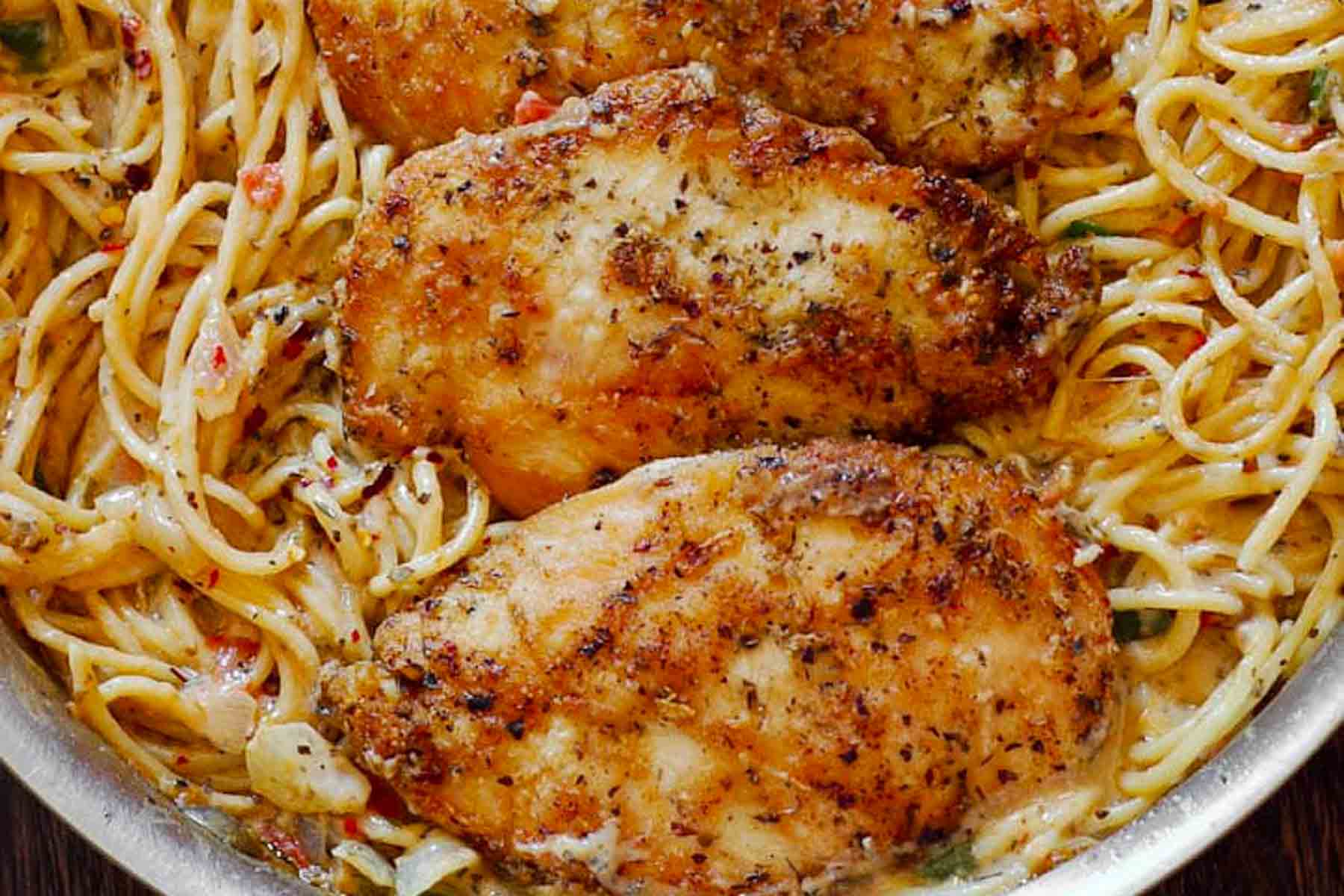
I've been cooking this exact creamy white wine Parmesan chicken pasta for almost a decade, and I can tell you exactly why it works when so many other "quick pasta dinners" taste like warm milk and noodles. It's based on a pasta bianca style technique you see in Italian kitchens: you build the sauce right on top of the pan drippings, not in a clean pot. When you dredge the chicken in flour and sear it properly, you're not just browning meat - you're creating a caramelized crust on the bottom of the pan that becomes the backbone of the sauce. Once you learn how to use that fond plus cheap dry white wine and off‑heat Parmesan, you can turn almost any weeknight pasta into something that tastes like it came out of a trattoria kitchen.

That's where the magic begins. I deglaze with Pinot Grigio (the cheap stuff - I use the same $5 bottle I keep for weeknight cooking), scrape up every browned bit, and let it dissolve into heavy cream and freshly grated Parmesan. The sauce tastes like you simmered it for an hour, but it takes 30 minutes start to finish. My readers have made this over 2 million times, rated it 847 times with five stars, and the number one comment I get is always the same: "This tastes like authentic Italian restaurant pasta." That's because you're building the sauce the way Italian kitchens do - from the drippings, not from a jar. Once you make it this way, with real technique behind it, you'll never go back to plain cream sauce again.
If you're looking for more inspiration, check out my complete guide to pasta recipes or browse the best Italian chicken pasta dishes to find your next weeknight favorite.
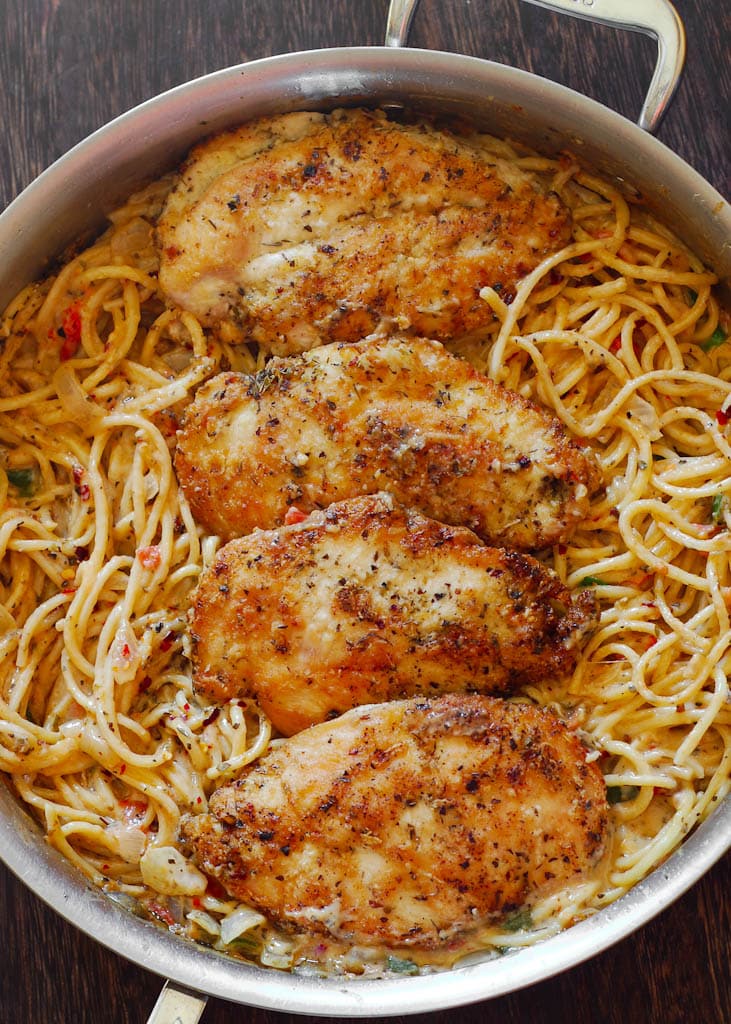
Why This Recipe Works (My Fond‑First Method)
The Fond‑First Pan Sauce Method
Here's the real difference between "pretty good" creamy pasta and the kind people still talk about a week later: everything that matters happens before the cream goes anywhere near the pan. I coat thin‑sliced chicken breasts in seasoned flour and sear them in hot olive oil until the outside is deeply golden and the bottom of the skillet is covered in browned, stuck‑on bits. Those bits are called fond, and they're pure concentrated flavor - if you skip this step or start with a clean pan, you're asking cream and cheese to do all the work.
After the chicken comes out, I melt butter right into that fond, soften onion, garlic, and tomatoes, then hit the pan with a splash of dry white wine - usually a $5 Pinot Grigio I keep on hand just for cooking. The wine does two jobs at once: it dissolves every browned bit off the bottom of the skillet and it adds acidity so the cream sauce doesn't taste flat or heavy. Only once the wine has reduced slightly do I stir in room‑temperature heavy cream and freshly grated Parmesan with the heat dialed down. Adding the cheese off the heat keeps the sauce silky instead of grainy and is the main reason this tastes like an Italian restaurant dish instead of something thrown together with jarred Alfredo.
I call this my fond‑first pan sauce method, and it's the exact technique my readers use across my other wine‑based chicken pasta recipes. Once you get comfortable building sauces this way, you can swap in different wines, aromatics, and herbs and still get that same restaurant‑level creaminess and depth in under 30 minutes.
Why Dry White Wine Is My Secret Ingredient
The wine isn't just for show here; it's doing real work in the pan. When it hits the hot skillet after the chicken, it dissolves every bit of fond off the bottom and adds just enough acidity to keep the cream and Parmesan from tasting flat or cloying. I use cheap, dry Pinot Grigio - about a $5 bottle from the grocery store - because it's neutral, not oaky, and doesn't fight the sauce. The alcohol cooks off in about a minute, and what you're left with is a bright, savory backbone that makes the sauce taste like it simmered much longer than it did. Skip the wine and the sauce will still be creamy, but it won't have that layered, restaurant-style flavor that makes people think you spent all night on it.
Plus, use your own add-ons: Substitute your favorite pasta, try different herbs, or toss in extra veggies to make it your own. Or add spice, just like I did in Spicy Chicken Lazone Pasta.
Ingredients for Creamy Italian Chicken Pasta
Chicken
- Boneless skinless chicken breasts - I use thin-cut (Costco Kirkland or Perdue thin-sliced) because they brown fast and stay juicy. If you only have thick breasts, butterfly them; 30 seconds of knife work beats rubbery chicken any day.
- All-purpose flour - The flour crust is what creates the fond and gives the sauce its body. Skip it or swap in almond flour and you'll lose that restaurant-style texture.
- Salt, black pepper, garlic powder, Italian seasoning - I season the dredge, not just the chicken. Kosher salt seasons more evenly (see my explanation on Kosher Salt vs. Table Salt), garlic powder sticks better than fresh here, and basic store-brand Italian seasoning works perfectly.
The Flavor Base: Butter, Oil, and Aromatics
- Olive oil - Regular olive oil for searing; I save extra-virgin for finishing, not for smoking over high heat.
- Butter - Unsalted, so I can control the salt in the sauce. Real butter only; margarine won't give you the same flavor or emulsification.
- Yellow onion - Half a small onion, diced. Yellow softens into sweetness; white works in a pinch, but I reach for yellow for that subtle sweetness.
- Fresh garlic - Four cloves, minced or pressed. This is where fresh actually matters; it perfumes the butter and cream instead of disappearing.
Wine + Dairy
Parmesan cheese - A wedge of real Parmesan, freshly grated. The powdery stuff and pre-shredded tubs have anti-caking agents that make the sauce grainy and sad. Grating a wedge is the single biggest upgrade you can make.
Dry white wine - I use a cheap, dry Pinot Grigio (around $5) for deglazing and acidity. It pulls every bit of fond off the pan and keeps the cream from feeling heavy. "Cooking wine" is a hard no here.
Heavy cream - Full-fat, preferably slightly warmed from the counter so it emulsifies easier. Half-and-half works in a lighter version, but you'll lose some of that silky, coat-the-pasta texture.
Best Pasta for Creamy Sauce
I always go with long pasta shapes for creamy sauces because they twirl and trap the sauce better than short shapes. Spaghetti is my ride-or-die here, but fettuccine and linguine are close seconds. If you only have penne or rigatoni, it'll still taste great - the sauce just won't cling the same way. Want to know which pasta shape works best for different sauces? I break it all down in my guide to types of pasta shapes and when to use each. Cook it al dente (a minute less than the package says) because it's going to finish cooking in the sauce for a couple minutes and you don't want mush. If you're not sure what al dente actually means, here's how to cook pasta al dente the right way.
Here's a tighter, more expert-feeling version of that section that avoids repeating the earlier "wine explainer" and reads like a decision guide instead of filler.
Wine and Dairy Notes
I use neutral Pinot Grigio because it's dry, neutral, and doesn't add sweetness or bitterness. Sauvignon Blanc works too. Chardonnay can work, but avoid anything oaky or buttery because it'll compete with the cream - though if you want a richer, buttery sauce, try my Chardonnay Chicken Pasta where that oakiness is the whole point.
For the cream, full-fat heavy cream gives you that restaurant-style, silky texture that clings to the pasta and doesn't break under heat. I like to pull it out of the fridge while I prep the chicken so it's closer to room temperature and emulsifies more easily in the pan. You can use half-and-half if you're lightening things up, but expect a thinner sauce and plan to reduce it a few extra minutes. I've tested both, and when I want that "coat the back of the spoon" finish, heavy cream wins every time.
How to make Creamy Italian Chicken Pasta
Below are the set by step instructions with photos. The full printable recipe instructions and ingredient quantities is above in the recipe card.
1. Prep and Dredge the Chicken
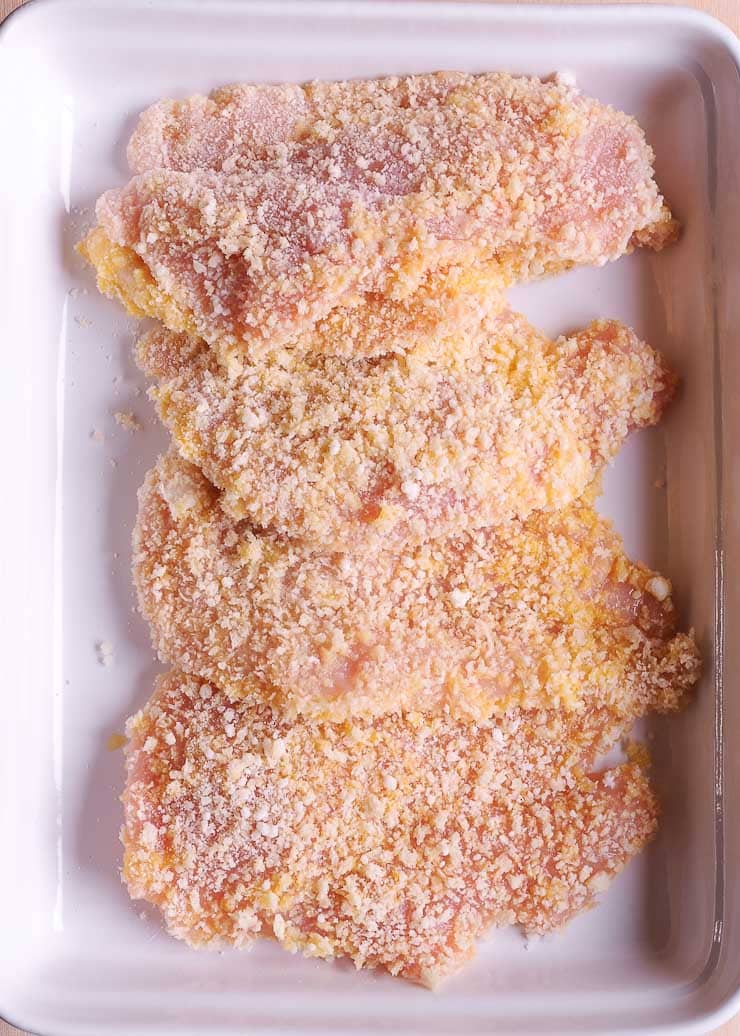
Pat your chicken breasts completely dry with paper towels - this is the step everyone rushes and then wonders why their chicken doesn't brown. Wet chicken steams instead of sears, and you lose the fond before you even start. If you're using thick chicken breasts, slice them horizontally so they're thin and even - I'm talking half-inch thick max.
In a shallow dish, whisk together the flour, salt, black pepper, garlic powder, and Italian seasoning. Press each chicken breast into the flour mixture with tongs, flip it, press again, and make sure it's fully coated. Don't just dust it - you want a visible layer of seasoned flour clinging to the surface. That coating is going to become the base of your sauce, so commit to it.
2. Sear for Golden Crust
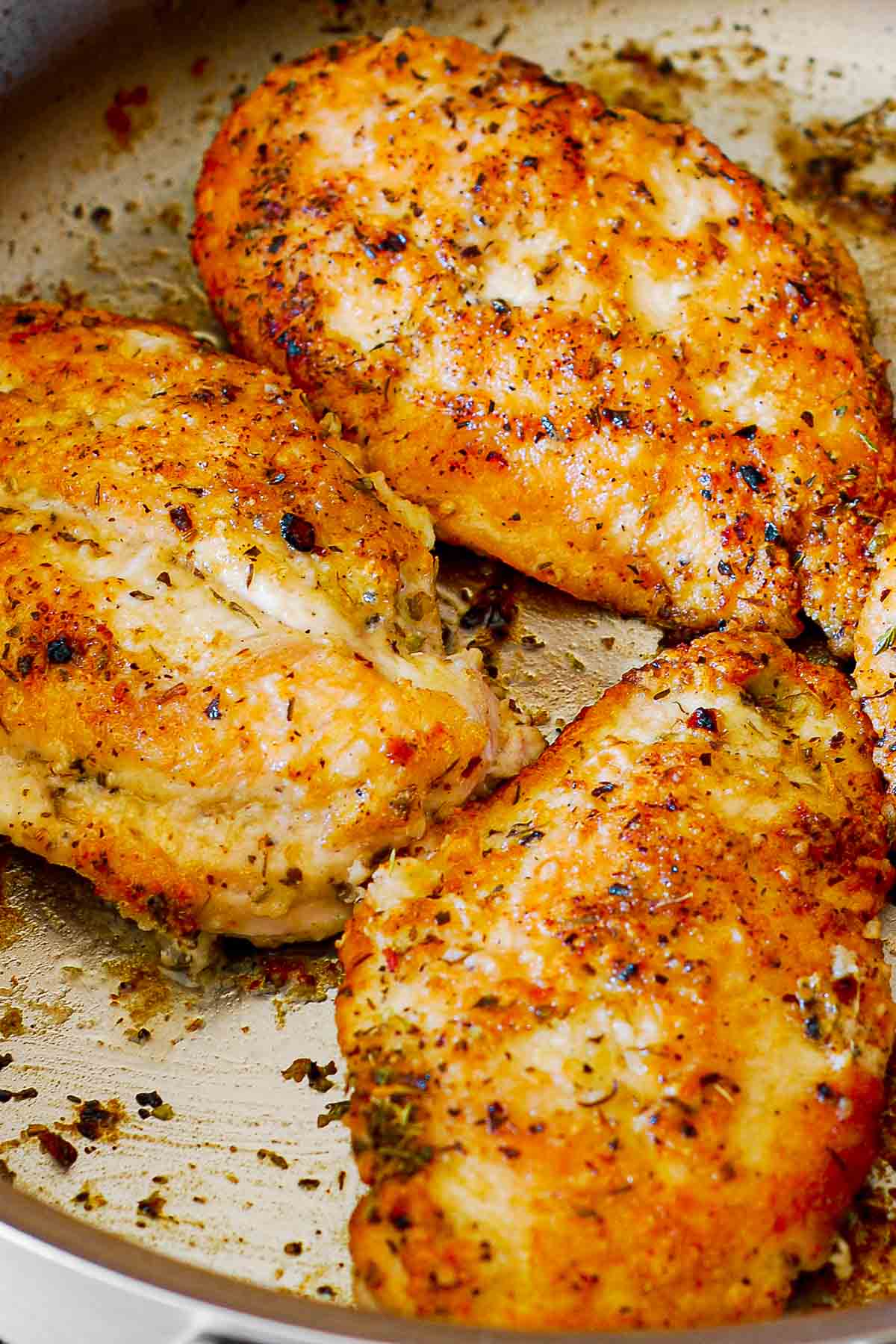
Heat your olive oil in a large skillet over medium-high heat until it's shimmering - that's your visual cue that it's hot enough. Lay the chicken in the pan gently (don't drop it or the oil will splatter) and leave it alone. I mean it. Don't poke it, don't flip it, don't check on it every 30 seconds. Let it sear undisturbed for four to five minutes until the bottom is deeply golden brown. Flip it once - just once - and cook the other side for another four to five minutes. The flour coating should be crispy and golden, and the chicken should be just cooked through. Transfer the chicken to a plate and tent it loosely with foil. Look at your pan - see all those gorgeous brown bits stuck to the bottom? That's the fond, and that's about to become your sauce. Do not wash this pan.
3. Build the White Wine Parmesan Sauce
This is my favorite part because it's when the kitchen starts smelling like an Italian restaurant. Keep the skillet on medium-high heat and add the butter. Once it's melted and foaming, toss in the diced onion and sauté for about three minutes until it's soft and starting to turn translucent. Add the minced garlic and diced tomatoes and cook for one more minute - just until the garlic smells amazing and the tomatoes start to soften. Sprinkle in the tablespoon of flour and stir it around for 30 seconds to cook off the raw flour taste.

Now pour in the white wine and immediately start scraping the bottom of the pan with a wooden spoon or spatula. All those stuck-on bits will dissolve into the wine - that's the deglazing step, and it's non-negotiable. Let the wine bubble and reduce for about a minute. Lower the heat to medium, then add the heavy cream, freshly grated Parmesan, Italian seasoning, salt, and red pepper flakes. Stir everything together and let it simmer gently for three to five minutes, stirring occasionally, until the sauce thickens enough to coat the back of a spoon. Taste it - this is when you adjust the salt and add more if it needs it.

4. Cook Pasta Al Dente
While the sauce is simmering, bring a big pot of salted water to a
rolling boil. I salt it generously - the water should taste like the
ocean. If you've never been sure how much salt to add, I have a whole
post on how to salt pasta water that'll change your pasta game forever. Cook your spaghetti according to the package directions, but pull it one minute early. Al dente means it still has a slight bite in the center, and that's what you want because the pasta is going to finish cooking in the sauce. Before you drain it, scoop out half a cup of the starchy pasta water and set it aside - this is your secret weapon for adjusting the sauce consistency later. That starchy water helps emulsify the pasta sauce
and makes everything silky and cohesive. Drain the rest, but don't
rinse the pasta. You want that surface starch to help the sauce cling.
5. Combine and Finish
Add the drained pasta directly into the skillet with the sauce and toss everything together over low heat. If the sauce looks too thick or the pasta isn't fully coated, add a splash of that reserved pasta water - a little goes a long way. Let the pasta simmer gently in the sauce for two to three minutes so it soaks up all that creamy, garlicky, wine-kissed flavor. Taste it one more time and adjust the seasoning if needed.
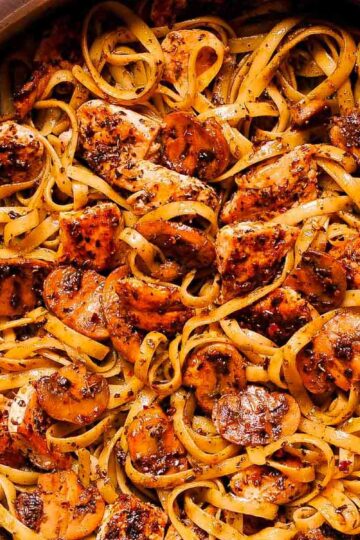
Slice the chicken into strips or leave the breasts whole - I usually never slice them because it looks prettier and allows my guests to decide whether when to cut into them - and nestle them back into the skillet on top of the pasta, or plate the pasta first and lay the chicken on top. But you can also choose to slice them - either way works. Finish with extra Parmesan, a little fresh parsley if you're feeling fancy, and maybe a crack of black pepper. Serve it in warm bowls and watch everyone go quiet while they eat.
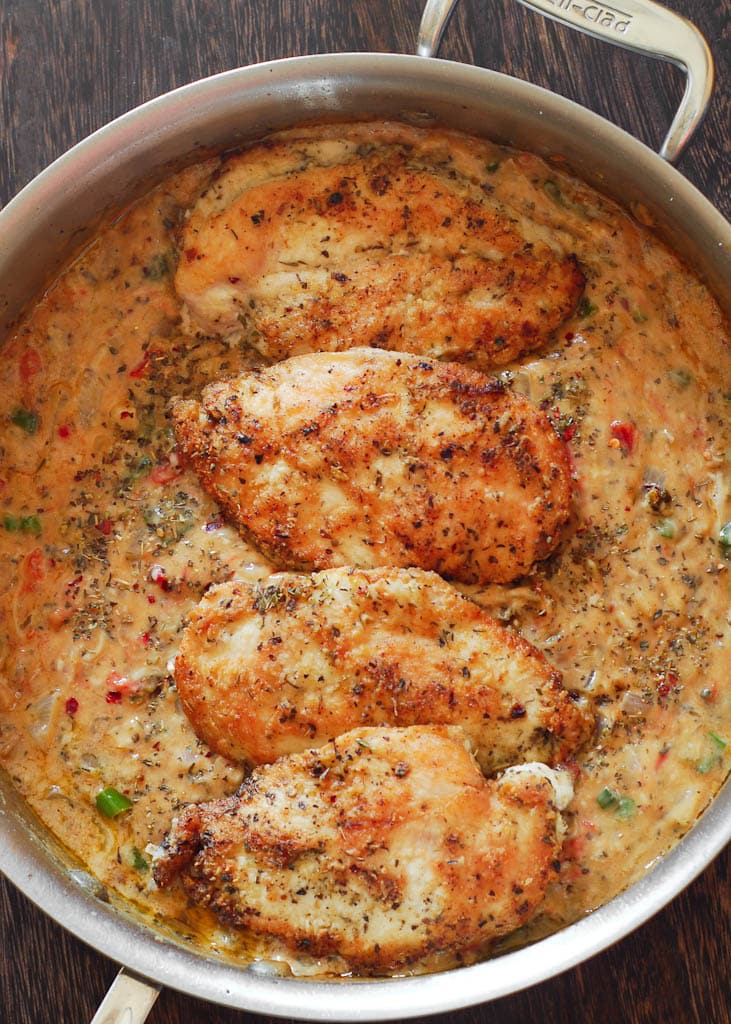

Creamy Italian Chicken Pasta
CLICK on STARS to REVIEW the RECIPE, then CLICK OK
Equipment
- large skillet
- Large pot for pasta
- Tongs
- Whisk or wooden spoon
- Colander
Ingredients
For cooking chicken:
- 4 thin boneless skinless chicken breasts (or 2 thick ones, halved horizontally and paper towel dried)
- ½ cup flour
- 1 teaspoon salt
- ¼ teaspoon black pepper
- 1 teaspoon garlic powder
- 2 teaspoons Italian seasoning
- 2 tablespoons olive oil
Pasta:
- 12 oz spaghetti
White Wine Parmesan Sauce:
- 4 tablespoons butter
- 1 small yellow onion (or use ½ onion) chopped
- 4 garlic cloves minced
- 2 small tomatoes diced
- 1 tablespoon flour
- 1 cup heavy cream
- 1 cup white wine
- ½ cup Parmesan cheese shredded
- 1 teaspoon Italian Seasoning
- ½ teaspoon salt more to taste
- ¼ teaspoon crushed red pepper flakes
Instructions
Prepare chicken breasts
- Cut chicken breasts horizontally to make them thin. Or, use thin chicken breasts to begin with.
- Paper towel dry the chicken and set aside.
- In a large bowl, combine flour, salt, black pepper, garlic powder and Italian seasoning. Stir well to blend.
- Using a fork or tongs, coat the chicken breasts in the flour mixture by pressing into the mixture with tongs and then flipping the chicken over to coat the other side. Set aside.
Cook chicken
- Heat 2 tablespoons of olive oil in a large skillet over medium-high heat.
- Once the skillet is hot, place flour coated chicken breasts in the skillet and cook for 4 to 5 minutes on each side, until golden brown on both sides and cooked through, turning once between cooking, about 8-10 minutes.
- Remove chicken from pan and set aside.
Make sauce
- Add butter, diced yellow onion and minced garlic cloves to pan. Cook on medium high until onions and garlic are translucent, about 2 minutes.
- Next add tomatoes and 1 tablespoon flour to pan. Whisk to combine.
- Now add heavy cream, wine, Italian Seasoning, salt and red pepper flakes.
- Bring mixture to a simmering point and then add ½ cup of shredded Parmesan cheese. Use a whisk or a wooden spoon and mix it in until you have a smooth mixture.
Cook pasta
- Cook pasta according to your package instructions in salty water. I like pasta that is neither too hard nor too soft, so I always cook it Al Dente.Drain, but do not rinse.
Assembly
- Add cooked pasta to the skillet with the sauce and stir to combine on low heat for 2-4 minutes. Taste and add salt, if needed.
- Return chicken to skillet on top of the pasta and allow it to warm up for an additional 5 minutes.
- Serve chicken either on top or next to pasta and sprinkle with Parmesan cheese, if desired.
Video
Notes
Troubleshooting: Why Your Creamy Pasta Sauce Breaks
I've broken this sauce in just about every way possible - usually when I'm rushing, distracted, or grabbing the wrong cheese. Here's exactly what goes wrong and how I fix it in my own kitchen.
Sauce Too Thin
- Give it time, not high heat. Let the sauce gently bubble for 3-5 minutes on medium-low so it naturally reduces and thickens. Cranking the heat will "thicken" it right into a broken, oily mess.
- Use a tiny slurry if you overshoot with pasta water. Whisk 1 teaspoon flour with 2 tablespoons cold water, stir it into the simmering sauce, and let it cook for 1-2 minutes until it tightens back up.
- Finish the pasta in the sauce. Adding the spaghetti straight into the skillet and letting it simmer for a couple of minutes lets the starch do its job and gives you that glossy, emulsified finish.
Sauce Grainy, Greasy, or Separated
- Watch the cheese and the heat. Freshly grated Parmesan goes in off the heat or on the lowest possible simmer. If the pan is too hot, the cheese seizes and the fat separates instead of melting smoothly.
- Add cheese in batches. I sprinkle it in two or three handfuls, stirring each one fully in before adding more, instead of dumping the whole pile in at once.
- If it breaks, don't panic. Take the pan off the heat, splash in a couple tablespoons of warm cream or hot pasta water, and whisk like you mean it. It won't be perfectly restored, but you can usually pull it back to "no one will notice at the table."
Sauce Tastes Flat or Bland
Finish with lemon, can never go wrong here. A squeeze of fresh lemon juice at the end (start with ½ teaspoon) completely wakes up the sauce. I didn't start doing this until many, many rounds of testing, and now I notice when it's missing.
Salt more than you think. Cream mutes salt, so the sauce should taste slightly more seasoned than you want before it hits the pasta. Once the pasta and starchy water join, it all evens out.
Honor the wine like Europeans doc (yes!). The dry white wine is doing more than deglazing - it's the backbone that keeps all that cream and cheese from tasting heavy. Skip it and you'll need extra lemon or more aggressive seasoning to get the same lift.
Variations and Ingredient Swaps
Add Heat
If you want to turn up the spice, try my Louisiana Chicken Pasta with Cajun seasoning and a kick of cayenne, or go full New Orleans-style with Chicken Lazone Pasta.
Dairy-Free Version
I've tested both full-fat coconut milk and unsweetened oat cream, and oat cream wins. Coconut milk adds a faint coconut flavor that doesn't belong in a savory Italian pasta, even when you use the unsweetened stuff. Oat cream (I use the Oatly barista blend) behaves almost identically to heavy cream - it emulsifies, it thickens, and it doesn't add any competing flavor.
For the Parmesan, start with two tablespoons of nutritional yeast and taste as you go. Nutritional yeast has that nutty, cheesy flavor, but it doesn't melt the same way, so the sauce won't be quite as silky. You can also use store-bought dairy-free Parmesan made from cashews and nutritional yeast - Violife makes a good one.
Swap the butter for olive oil or dairy-free butter. The sauce will be slightly less rich, but it'll still have that creamy, clingy texture. I've served this version to people who didn't know it was dairy-free and they cleaned their plates without asking questions.
Gluten-Free Version
Use Jovial brown rice spaghetti or Barilla Gluten Free. They're the only brands I trust not to fall apart. Cook one minute under and finish in the sauce.
For the dredging flour and the tablespoon of flour in the sauce, use a gluten-free all-purpose blend (I use Bob's Red Mill 1-to-1) or cornstarch. If you use cornstarch, use half the amount because it thickens more aggressively than flour. I've done both and prefer the all-purpose blend because it creates a better crust on the chicken.
Double-check your chicken broth and Italian seasoning labels. Some brands add malt flavoring or wheat-based fillers.
Lower-Calorie Option
Swap heavy cream for evaporated milk - not sweetened condensed milk, not regular milk, but evaporated. It has a similar richness to cream but with about half the fat, and it behaves well in a sauce as long as you keep it at a gentle simmer. The sauce will be thinner, so give it an extra three to four minutes to reduce. I've made this version when I was trying to eat lighter and it's genuinely good - not the same as the full-fat version, but satisfying in its own right.
You can also reduce the butter by half and use olive oil for the sauté instead. The sauce won't have quite the same silky mouthfeel, but the technique and flavor are still there.
Serving this over zucchini noodles or roasted spaghetti squash cuts carbs entirely without touching the sauce. I've done this when I wanted the creamy, indulgent sauce but didn't want the pasta.
Make Ahead, Storage, and Reheating
I've made this the night before dinner parties and it's better the next day - more depth, melded flavors, and no sweating over the stove when guests arrive.
Make the sauce up to two days ahead and store separately from the pasta. Don't combine them or the pasta absorbs all the sauce. Cook pasta fresh before serving.
Refrigerate leftovers for up to four days. The pasta will absorb sauce overnight (totally normal). I've gone five days but four is best.
Reheat on the stovetop over low heat with a splash of cream, milk, or pasta water. Never microwave on high - you'll break the cream and get greasy separation.

Perfect Pairings
- Sides: Serve Creamy Chicken Pasta with Olive Garden-style salad, or Zesty Brussels Sprout Coleslaw. Delicious with roasted vegetables like honey carrots, Garlic Lemon Green Beans or Zucchini Carpaccio.
- Bread: What can be better than a slice of freshly made Dutch Oven Bread dipped into the creamy pasta sauce? Authentic Italian Bruschetta and crostini are also perfect for soaking up extra sauce.
- Wine Pairing: Stick with what's in the recipe-cheap dry white wine pairs seamlessly with the buttery sauce.
- Fresh Finish: Top with chopped parsley, lemon zest, or extra shaved Parmesan for brightness.
More Creamy Chicken Pasta Recipes You'll Love
If you loved this creamy Italian chicken pasta, you're going to want to bookmark these next. Each one uses a similar technique - sear, deglaze, build the sauce - but with different flavors and ingredients that keep weeknight dinners from getting boring.
Same Technique, Different Flavors
- Creamy Lemon Garlic Chicken Pasta - Lighter and brighter, this one uses lemon zest and juice to cut through the cream. Perfect for summer when you want creamy but not heavy.
- Pesto Chicken Pasta - White wine meets basil pesto in this herby, garlicky version. The pesto adds depth without extra cream.
- Creamy Chicken Pasta with Spinach and Cherry Tomatoes - Packed with veggies and uses the same white wine Parmesan base. Great for sneaking greens into dinner.
- Chardonnay Chicken Pasta - If you want a richer, more buttery sauce, this version uses oaked Chardonnay instead of Pinot Grigio.
Bolder Flavors
- Creamy Chicken Pasta with Bacon - Swaps the white wine for a tomato-cream sauce and adds crispy bacon and spinach. Richer than the original with a smoky-sweet thing my kids request constantly.
- Chicken Lazone Pasta - Spicy, creamy, and loaded with Cajun seasoning. This is what I make when I want heat.
- Louisiana Chicken Pasta - Parmesan-crusted chicken in a spicy New Orleans-style cream sauce. Bold and indulgent.
Browse the full pasta category or check out my guide to choosing the best Italian chicken pasta for your mood.
Originally published September 13, 2017. Completely updated May 30, 2026 with new technique instructions, troubleshooting guide, and tested variations.

Julianne says
We’ve made this twice now and it is consistently amazing. Serve with lemon broccolini, which balances the cream sauce beautifully.
Ruth Riddell says
This is wonderful! For UK friends I used Elmlea double light and it tasted fabulous. Thank you for this recipe.
Sonia Walton says
DELICIOUS!! just perfect. I forgot to flour the chicken however it came out just as yummy. I did the sauce with just a bit of Parmesan for those who don’t like cheese in my house.😊. Thank you for sharing this.
Olya says
Sounds like you nailed it, Sonia!
BrianneP says
Holy Smokes! This is DELICIOUS!!! My favorite youtuber The Wads shared your recipe and made in in a video. Literally just made this about 30 min ago and It will be made again and again. 6 family members adults to the youngest 4 year old all loved it. I made it with a splash of apple cider vinegar and chicken broth instead of wine, so good. Thank you!!
Olya says
Brianne, this is perfect for kids! It's delicious, filling and good choice on a splash of ACV!
Lindsay says
Can I use stewed tomatoes instead if fresh? Or will that change everything? It looks so good I want to make it tonight but I want to do it right.
Olya says
You can definitely use stewed tomatoes!
Jo says
1st time I’ve commented on a recipe-& I dona lot of cooking & baking! But we just finished this for dinner-& what a treat!! The sauce is so FRESH tasting & flavorful! Changes I made due what I had on hand: fresh chives as a sub for scallions, bow tie pasta, a dry rose wine (as it was in the fridge already opened), additional red pepper flakes. I also added some dry bread crumbs to the chicken coating & fresh basil in both sauce & chicken coating. Could easily be a special meal for company. Thanks for a DELICIOUS dish!!
Olya says
Thank you, Jo for making this dish and sharing your additions to the sauce! They all sound amazing!
Cathy says
This was delicious! I used half and half instead of heavy cream and it was just as good. I find that cooking with white wine can leave a strong “bite” I don’t care for, so I used 1/2 cup wine and 1/2 cup chicken stock. Even the picky teenagers enjoyed it. Hats off to any health conscious Italians who never cook with butter or cream, but that’s what makes this dish and many others damn good. We use Italian seasoning to give the chicken a certain flavor that we associate with Italian style food. Perhaps your comments would be put to better use if you critique the actual dish, rather than ranting on your soapbox and doling out health advice. Felice di mangiare!
Paula says
This recipe looks so delicious! I’m trying to use items I have at home so I was wondering can I substitute some sour cream for the heavy cream and also I don’t have dry white wine, The wine I have is called crisp white and it’s a little more on the sweet side. Not sure that would work. What do you think?
Olya says
Sour cream as well as crisp white wine would be fine!
Matt says
It’s bad enough to have the cheese in the sauce, but NO, you go on and add Butter and Heavy Cream to it! Where is your health is heading to, I suggest you should have a good look at your arteries and find out how illiterate you are? And , don’t call it an Italian recipe ever again, because we Italians never use Butter or Cream in our cooking, we only use healthy Olive Oil in our cooking. Think about it and please don’t reply to my comment, just look after yourself and others. Thanks.
Nettie says
Matt, please post a recipe you would use. Thanks
I rated this dish so I could post a reply to Matt; I have not made the dish.
Laura says
You should try looking out for others and being less rude
Becky says
Oh please. You can’t tell me that all Italian food is healthy. I’m diabetic and I can tell you that when I eat pasta my blood sugar will be higher the next day. But I do it every now and then.
If you don’t want to make it don’t. But I don’t really think having this dish once in a while is going to kill you. Gotta run. I’m in the middle of preparing this meal and I plan to enjoy every bite.
Olya says
Haha Becky! I adhere to the same philosophy. It would be madness to eat this everyday, but it's equally way too strict as well as unrealistic not to eat cheese, pasta, butter, cream, etc. ever!
Becky says
By the way we had it for dinner last night and it was delicious. I didn’t change a thing. Used all the butter and all the heavy cream.
Olya says
And how it should be:)
Emily says
Maybe, you shouldn't use the word illiterate in a post that has at least 5 grammatical errors. Following your lead, I'll offer some unsolicited advice to a stranger: please stop being a pretentious stronzo. ... Your statement about Italians is simply wrong. Secondly, how about focusing on improving your own kindness instead of "worrying" about a random strangers health.
Melissa says
Can I sub something for the white wine? I just never have it on hand.
Olya says
You can always use chicken stock instead.